
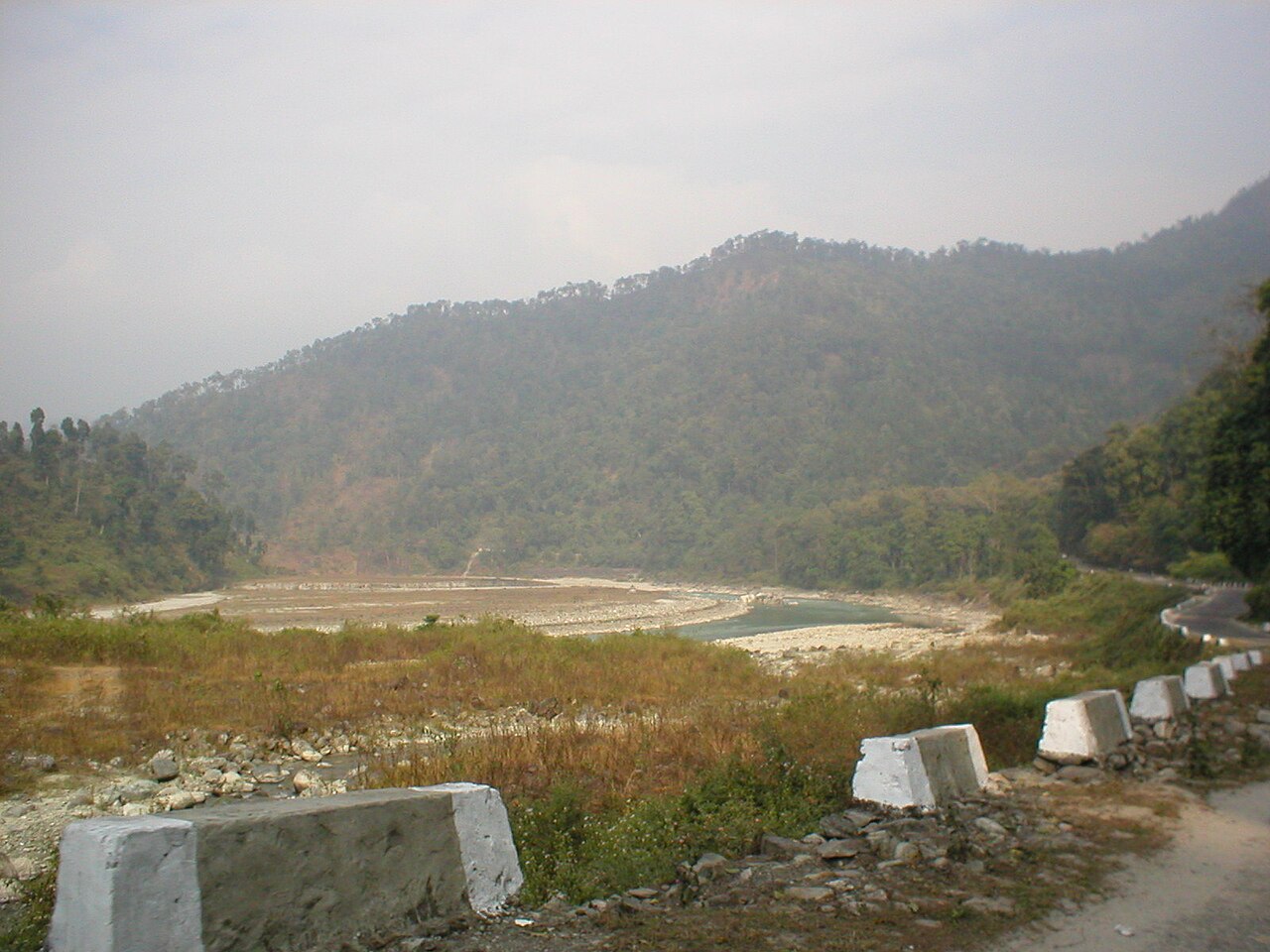
Nearly three years after a glacial lake outburst flood tore down the Teesta in October 2023, families in Kalimpong, West Bengal, are still living in makeshift relief camps, with the river closer to their doors than before.
The flood began with the breach of South Lhonak Lake in upstream Sikkim and affected 80,000 people. A 2025 study in Science estimated that it carried 270 million cubic metres of sediment downstream; a central government committee found the riverbed in Kalimpong rose by six to 14 metres. Floods followed in the monsoons of 2024 and 2025.
Bijay Pradhan, 36, had a house and a family living partly from farming and livestock before the flood. He is now a daily-wage labourer supporting his mother, wife and two children in a camp at Teesta Bazaar. In the hamlet of Gafur Busty, 10 families live in plastic, bamboo and tin rooms inside an unfinished market building; another 32 families from Melli stay at Labar Bhotay, on forest land beside NH10, under a temporary arrangement with the forest department, afraid of eviction.
Residents say there was no working early-warning system that night; police went door to door with sirens. Weather stations had been installed at South Lhonak and Shako Cho lakes less than three weeks before the breach, a year late, and the sensors that would detect a sudden drop in the lake were not yet in place.
Counting the damage has dragged on. A first estimate in October 2023 put damaged houses at around 550; a later survey recorded 104, with 11 added. Completely damaged houses get 75,000 rupees and partly damaged ones 5,000. A re-survey begun in July 2025 is finished, and 116 houses are to be built, but Madan Chettri of the residents' group Teesta Sangrakshan Mancha said in September that the project still awaited state finance approval. Sikkim, the worst hit, sanctioned 4,100 houses and paid rental help; West Bengal never declared the flood a disaster. The Kalimpong district collector did not respond to Mongabay-India.
"The winter dry season is when flood mitigation work must happen," said Praful Rao of the Kalimpong group Save The Hills. Eklavya Sharma, former director of ICIMOD, said states must share monitoring data and warnings, because "rivers do not follow administrative boundaries", and people in flood-prone areas need regular drills.
Photo: Sandip Bhattacharya / Wikimedia Commons (CC BY 2.0). The picture shows the Teesta beside National Highway 10 near Rangpo.
Source: Mongabay India

Comments
(0)