
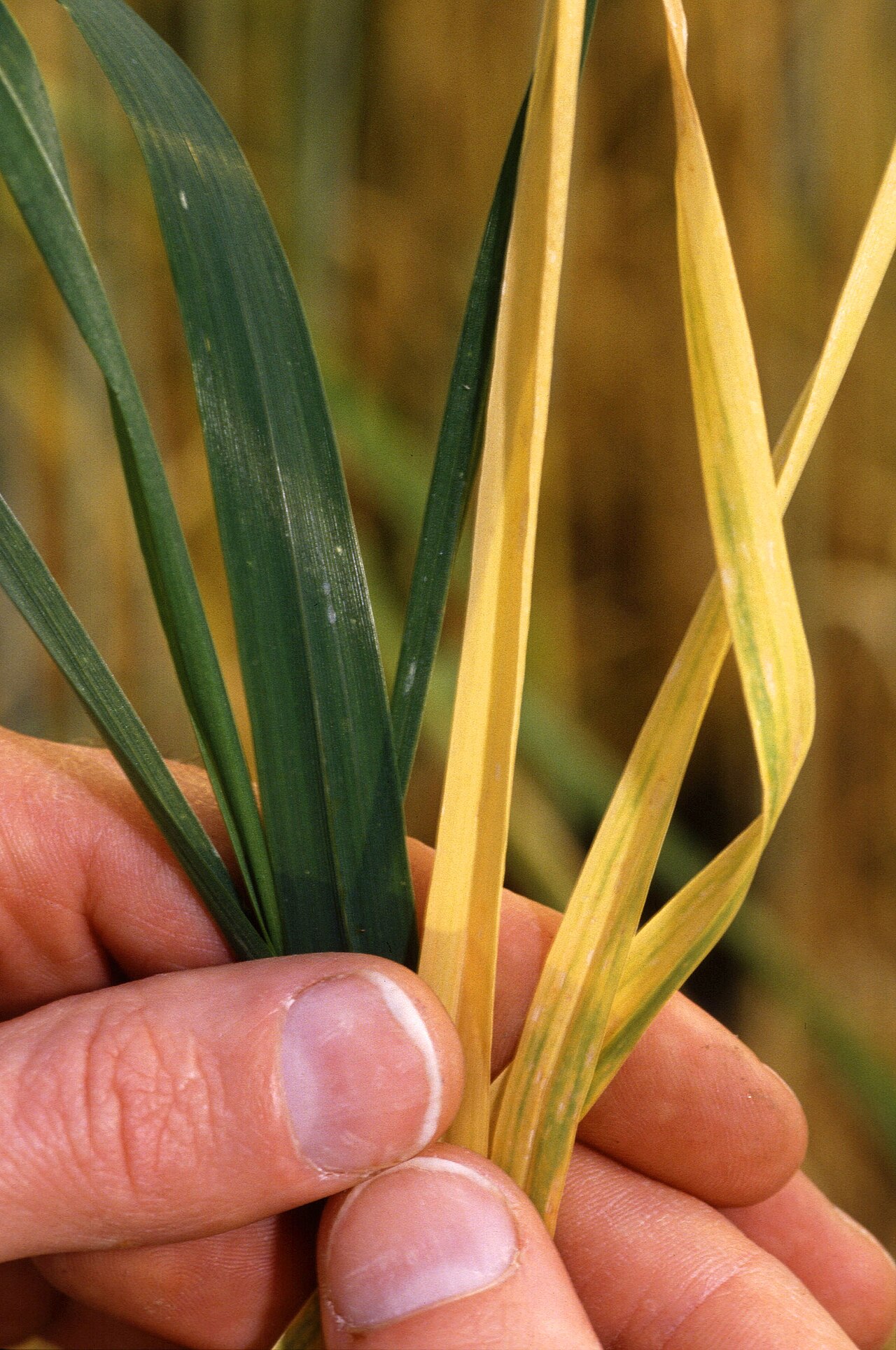
Winter barley varieties bred to tolerate Barley Yellow Dwarf Virus (BYDV) should be treated as risk reducers only, because they do not remove the threat of the disease, Teagasc entomologist Dr Louise McNamara told the recent Crops Forum in Ireland.
"There is great interest in tolerant and resistant varieties for the control of BYDV. But it is only one tool," she said, warning that relying on a single tool could weaken a disease control plan. Sales figures show that 83% of the winter barley seed area certified in Ireland in 2026 had tolerance or resistance to BYDV.
Many of these varieties were first tested where a different BYDV species dominates, so Teagasc ran validation trials at its Crops Research Centre at Oak Park, Co. Carlow. The trials confirmed three species in Ireland, BYDV-MAV being the most frequent, with others in combination with BYDV-PAS or BYDV-PAV.
Across six trials over four years comparing susceptible and tolerant varieties, sprayed and unsprayed, susceptible varieties showed clearly more symptoms in unsprayed plots. Tolerant varieties still showed some symptoms, though far fewer. Insecticide reduced symptoms in both.
On yield, losses appeared at medium virus pressure, when every susceptible variety gained significantly from insecticide. Tolerant varieties yielded more overall and gained less from spraying. In a high-pressure year, susceptible varieties again responded strongly to insecticide, while tolerant varieties showed no significant yield difference between sprayed and unsprayed plots.
The report is by Richard Halleron for Agriland.
Photo: Wikimedia Commons (public domain)
Source: Agriland


Comments
(0)