
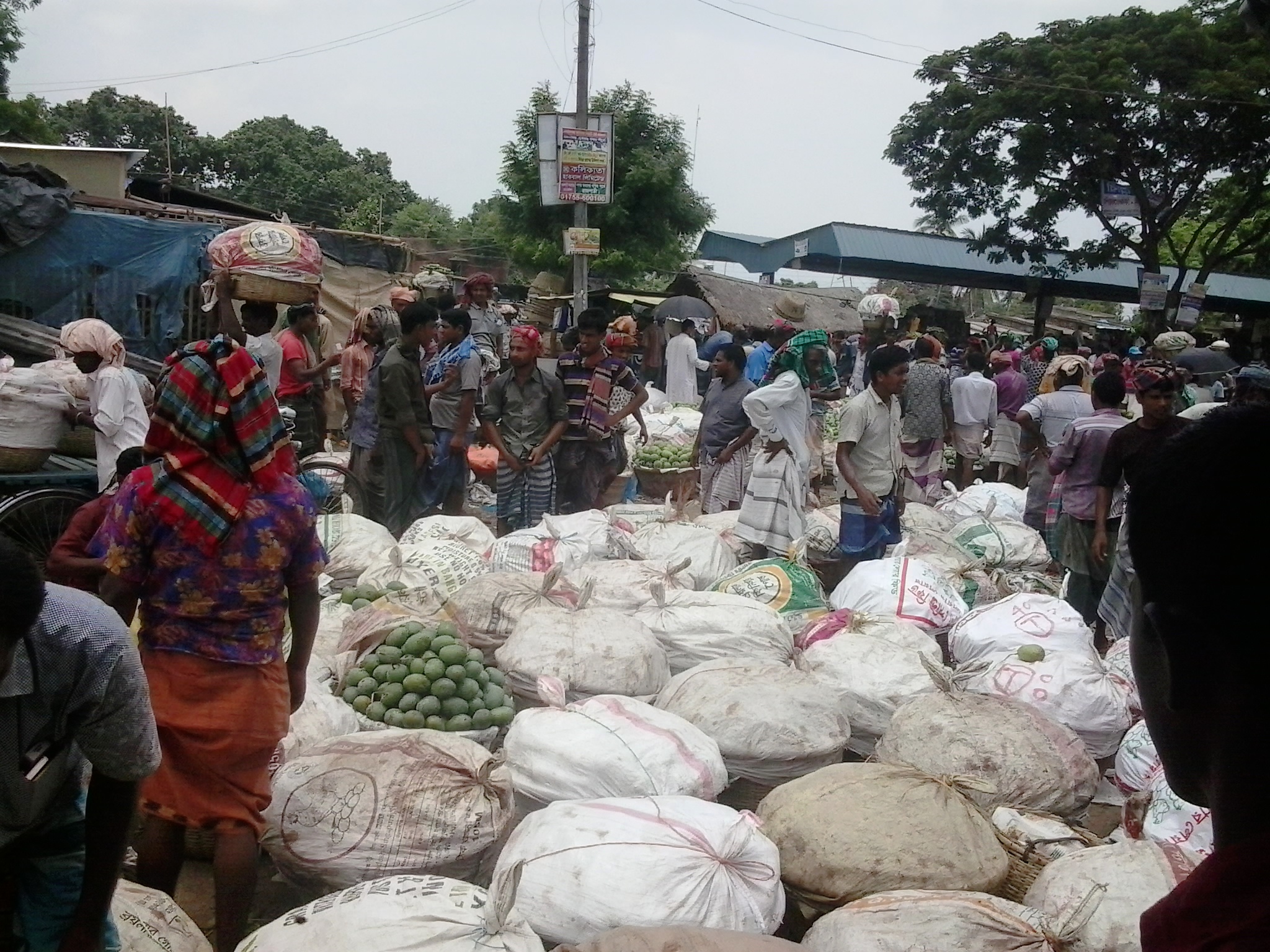
Md Tarek Rahman, member secretary of the Amjanatar Dal, wrote in a Facebook post on Wednesday, 1 April 2026, that fake orders had caused losses to the mango business he runs online, and alleged that the people who harassed him most in this way were those he called the "brothers" of Jamaat-e-Islami. Jagonews24 reported the post that day, and The Daily Ittefaq carried the same account that evening, including his figures and the story of a two-maund order of Gopalbhog mangoes that ended at a police station. Neither report carried a response from Jamaat-e-Islami, and the claims in the post rest on his own account.
According to the post, Tarek Rahman was once a businessman in information technology (ICT). He wrote that during the time of the ousted Awami League government he tried repeatedly for a government job and sat viva after viva without success, and that he later started selling mangoes to make a living and, in the words of the Jagonews24 report, to escape hunger and poverty. He sells through social media, the kind of trade Bangladeshi sellers call f-commerce, after Facebook, where most such small shops are run.
What he wrote about cash-on-delivery orders
In the post he described how f-commerce had been going for him. The previous year, he wrote, he had boosted some posts, Facebook's paid promotion of a page's posts, and was taking orders on cash on delivery with zero advance. A great many orders came in. But about 10 per cent of them, by his estimate, were fake: the buyer would take the mangoes if he felt like it and, if not, would simply stop answering the phone.
He then began the practice of taking an advance of Tk 500 per order. After that, he wrote, the number of orders fell, but the losses stopped.
He went on to allege that the people who harassed him most with fake orders were the Jamaat "brothers", and that, unable to hold their own against him in political rivalry, they set out to damage his business. The Daily Ittefaq summed this up as his allegation that Jamaat workers had deliberately placed fake orders because of a political dispute. The allegation is his; the reports gave no evidence for it beyond his account and no reply from the party.
The two-maund Gopalbhog order
As a real example, he described one order. The wife of a deed writer, he wrote, ordered Gopalbhog mangoes and found them medium-sized. Gopalbhog, he explained in the post, is a rather small mango, but a very sweet one. To take revenge on him, by his account, she then ordered two maunds of mangoes, and he sent them without taking any advance. After that she would not take them.
He wrote that he then complained at the police station, and that the police, understanding that it was harassment, called the couple in. According to the post, the couple wept, asked what they would do with two maunds of mangoes, and apologised. In front of the police they opened the boxes, and the officers ate two mangoes to test them. Because the mangoes were tasty and sweet, he wrote, the police gave the couple 10 kg and kept all the rest themselves, paying for them.
The post, as the two papers reported it, did not name the couple, the police station or the date of the order, and neither report included an account from the couple or from the police. In the Rajshahi mango trade a maund (mon) is customarily counted as 40 kg, as orchard owners in Bagha upazila told The Daily Ittefaq in June 2025, when they complained that wholesalers were taking an extra five kilograms per maund, known locally as dholon, at a time of falling prices.
The same report gave the season's prices per maund at Bagha market in June 2025: Lokna at Tk 550 to 600, Himsagar at Tk 1,400 to 1,600, Langra at Tk 1,200 to 1,300, Fazli at Tk 850 to 1,000 and Amrapali at Tk 1,400 to 1,600. Orchard owners said prices in Dhaka had fallen because the long Eid-ul-Azha holiday came at the peak of the season, after a year of low output and high prices. According to the agriculture department, of Rajshahi's nine upazilas, Bagha alone had 8,570 hectares of mango orchards, growing Gopalbhog, Himsagar, Amrapali, Langra, Totapuri, Fazli, Ashwina and Lakhmanbhog among other varieties.
Gopalbhog, one of the season's first mangoes
The mango (Mangifera indica, of the family Anacardiaceae) is considered indigenous to the eastern part of the Indian subcontinent, including Bangladesh, according to Banglapedia, the national encyclopedia, which calls it the "king of fruits". Banglapedia names Rajshahi, Nawabganj (now Chapainawabganj) and Dinajpur as the districts that produce the superior commercial varieties, and lists Gopalbhog among the elite varieties alongside Khirsapat, Langra and Fazli. Its Bengali edition says about 100 varieties of mango are found in the country. The trees flower from January to March, and fog, rain or cloudy weather during flowering harms the setting of fruit, the encyclopedia notes. Ripe mangoes are eaten fresh, green ones go into curries and dal, and both are made into jam, jelly, squash, chutney and pickle.
Gopalbhog is one of the earliest of the named varieties to reach the market. In Rajshahi the district administration fixes the dates from which each variety may be picked and sold, to keep immature and chemically ripened fruit off the market. The calendar for the 2025 season, the last before the post, was announced on 7 May 2025 at a meeting chaired by the deputy commissioner, Afia Akhter, with the Department of Agricultural Extension (DAE) and growers and traders present, The Daily Ittefaq reported. Under it:
- all guti (local seedling) mangoes from 15 May;
- Gopalbhog from 20 May;
- Ranipasand or Lakhmanbhog from 25 May;
- Himsagar or Khirsapat from 30 May;
- Langra and the banana mango from 10 June;
- Amrapali and Fazli from 15 June;
- BARI Aam-4 from 5 July, Ashwina from 10 July and Gourmoti from 15 July;
- Katimon and BARI Aam-11, which bear through the year, at any time.
In the event of a disaster, growers could pick early with the permission of their upazila nirbahi officer. The start date for guti mangoes had been 4 May in 2023 and 13 May in 2022, the same report noted.
Satkhira, in the south-west, is earlier still. Because of its soil and weather the district's mangoes mature before those of other regions, and for 2025 its administration allowed Gobindabhog and Gopalbhog to be sold from 5 May, Himsagar from 20 May, Langra from 27 May and Amrapali from 5 June, The Daily Ittefaq reported on 4 May 2025. A Facebook post written in early April, then, came several weeks before the new season's first Gopalbhog; the experiences it described were from his trade in the previous season and before.
Mango in Bangladesh by the numbers
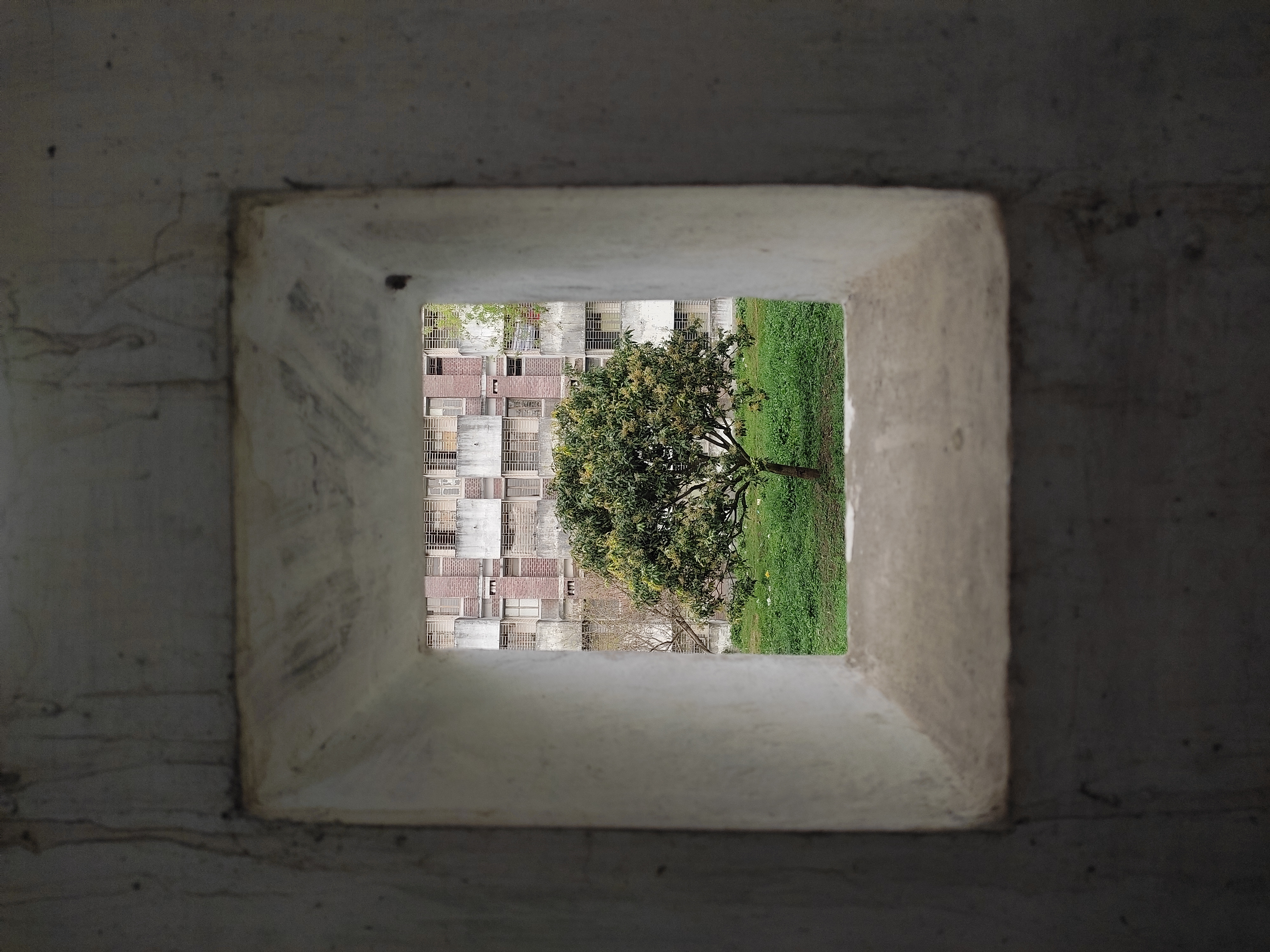
By area and output, mango is the country's leading fruit. In a May 2024 article in The Daily Ittefaq, a professor of horticulture and dean of the Faculty of Agriculture at Bangladesh Agricultural University, Mymensingh, citing the Bangladesh Bureau of Statistics (BBS, 2023), gave these figures: in 2022-23 Bangladesh produced 1,482,937 tonnes of mangoes from 123,998 hectares, an average yield of 11.96 tonnes per hectare; in 2000-01 the country had produced 187,880 tonnes from 50,626 hectares, at 3.77 tonnes per hectare. He wrote that Bangladesh then ranked seventh in the world in total mango production, and that the government had declared the mango tree the national tree in 2010.
Mango is grown in every district, he wrote, but commercially it is centred on Chapainawabganj, known as the country's mango capital, together with Rajshahi, Naogaon, Natore, Satkhira, Meherpur, Kushtia, Dinajpur, Thakurgaon, Rangpur and the hill districts. Among the trade's problems he listed poor transport from orchard to market, the lack of scientific packaging and the shortage of storage at grower and trader level; among its opportunities, the marketing of mangoes and mango products online.
District figures from the DAE show the scale of the trade in the main belt. At the May 2025 meeting in Rajshahi, officials said the district had 19,603 hectares under mango orchards, with an expected average yield of 13.26 tonnes per hectare and a production target of about 260,000 tonnes, and that the trade in the district was expected to reach about Tk 1,700 crore. Satkhira's agriculture department put the district's orchards at about 5,000 on 4,135 hectares, with a 2025 target of 62,800 tonnes.
How mango selling moved online
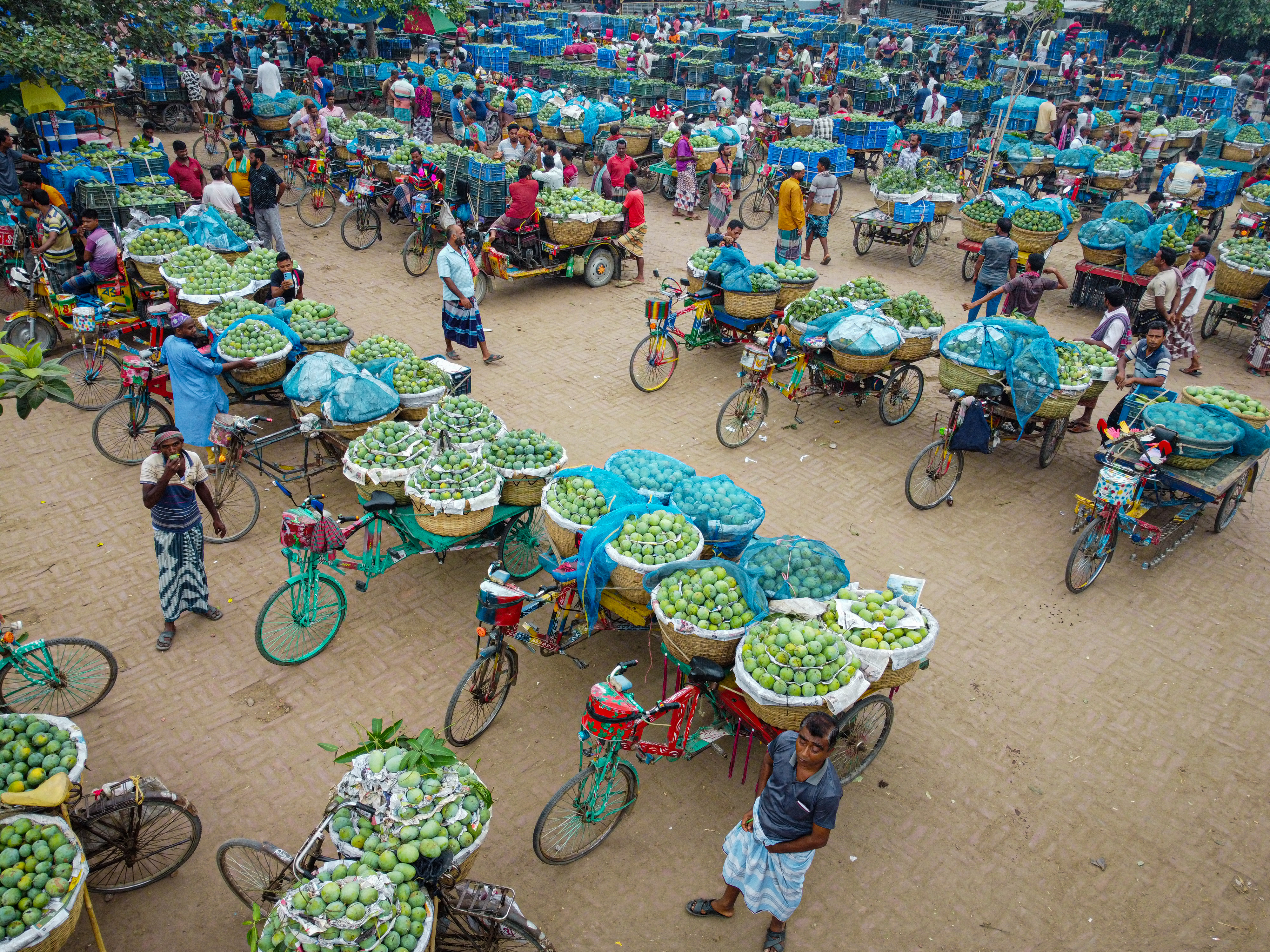
Selling mangoes through Facebook pages and couriers was well established years before Tarek Rahman's post. In June 2020, during the Covid-19 pandemic, The Daily Star reported from Chapainawabganj that young traders were increasingly selling online. Muhammad Nazrul Islam, deputy director of the DAE in the district, told the paper that more than 300 young entrepreneurs were in the business. One seller in Chhatrajitpur, Shibganj upazila, said he had run an online mango business from his village home for eight years, owned an orchard on ten bigha of land, and had sold more than 250 maunds that season through his Facebook page, mostly to Dhaka by courier, packing the fruit himself. Another, in Maharajpur, Sadar upazila, had sold more than 100 maunds of Gopalbhog, Khirsapat and Langra in his first season on a Facebook page. The district's DAE target that season was about 200,000 tonnes from 33,035 hectares.
The state postal service has joined the trade too. On 15 April 2025 the Bangladesh Post Office announced that its Speed Post service would carry mangoes and other summer fruit to 25 districts, among them Rajshahi, Dhaka, Satkhira, Khulna, Natore, Bogura and Dinajpur, within 24 hours, and to most other district towns within 48 hours, except Bandarban, Khagrachhari and Netrokona. A parcel could weigh up to 30 kg, and the charge was Tk 10 for the first kilogram and Tk 5 for each further kilogram. Speed Post, added on 3 June 2018, is a counter service: the parcel is booked at the post office and collected at the window by the recipient, who shows the message received.
The wider f-commerce trade is large. In July 2024 The Daily Ittefaq, citing estimates of the e-Commerce Association of Bangladesh (e-CAB), reported that more than 500,000 Bangladeshis had their own business pages on Facebook, that f-commerce entrepreneurs ran an estimated 200,000 to 250,000 pages, and that regular buying and selling took place on about 60,000 of them. A May 2023 report in the same paper, citing a study by the Centre for Policy Dialogue (CPD), put the country's e-commerce market at 6.6 billion US dollars at the end of 2022 and projected that it could reach 10.5 billion dollars by 2026.
Why cash on delivery invites fake orders
Cash on delivery has long dominated online shopping in Bangladesh. In an April 2016 interview with The Daily Star, the chief executive of the online shop Bagdoom said that surveys put cash on delivery at 75 per cent of e-commerce transactions, and noted its costs: sellers must keep change ready, and couriers carrying cash risk losing it or being robbed.
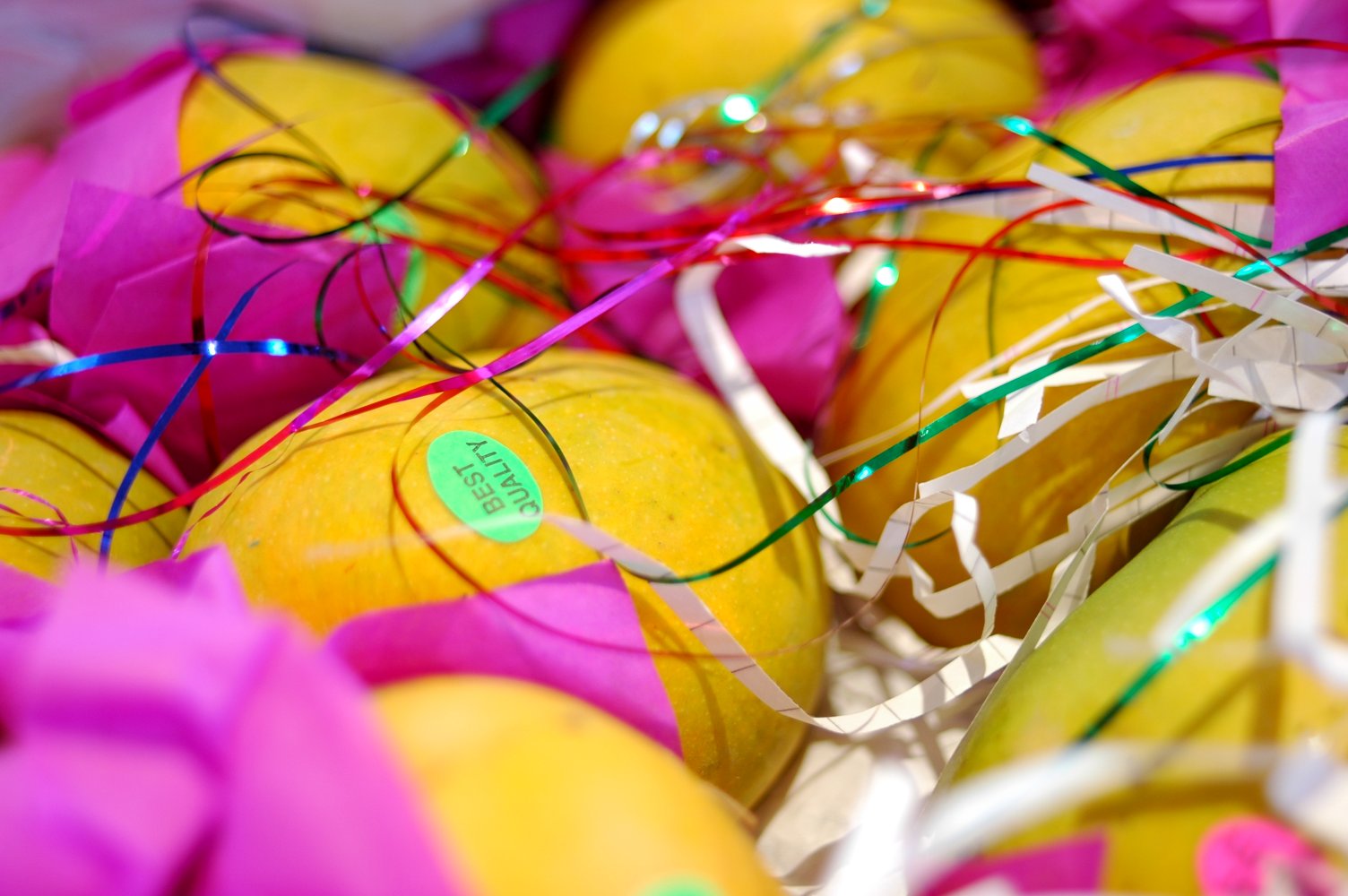
The fake order, in which a customer places an order and then does not receive the product, is the other cost. Writing in January 2017, Future Startup, a Dhaka publication on start-ups, described it as a persistent and often expensive problem that happens mostly with cash on delivery, in a market where card payment was largely absent, mobile financial services such as bKash and Rocket had only partly solved payment, and complaints about delivery partners were common. It reported the measures shop owners said they used, noting that no single one removes the problem:
- taking the delivery charge in advance before confirming an order; e-Haat of Bandarban said on a Facebook group that this had brought its fake orders down to nil;
- calling the buyer after the order is placed and again before dispatch;
- looking at the buyer's social media profile before accepting an order;
- refusing to bargain, which some owners said discourages buyers who are not serious;
- selling good-quality products, which entrepreneurs believed draws serious customers.
Tarek Rahman's Tk 500 advance is close to the first of these measures, and the result he described, fewer orders but no more losses, is the trade-off those shop owners reported.
What the 2021 digital commerce guidelines require
Online selling in Bangladesh has been governed since July 2021 by the Digital Commerce Operation Guidelines, the first such guidelines in the country, issued by the commerce ministry's WTO cell by notification on Sunday, 4 July 2021, The Daily Ittefaq reported at the time. The paper reported them as news for customers of companies such as Evaly and Alesha Mart who had paid in advance and were receiving neither their goods nor refunds on time. Among the provisions the paper reported:
- the seller must hand the product to the delivery agent within 48 hours of the customer's payment and inform the customer by SMS;
- delivery must be made within five days of payment if buyer and seller are in the same city, and within ten days if they are in different cities, with shorter times for daily necessities;
- if the seller fails to deliver on time, the advance must be refunded through the same channel the customer used to pay, whether card, bank or mobile banking;
- the product's description, price, taxes and delivery and other charges must be stated clearly, and fake or adulterated goods may not be displayed;
- multi-level marketing is not allowed.
These provisions set out a seller's duties once a buyer has paid in advance. Tarek Rahman's post described the problem from the other side: orders placed without any payment, which he said he answered by asking every buyer for an advance.
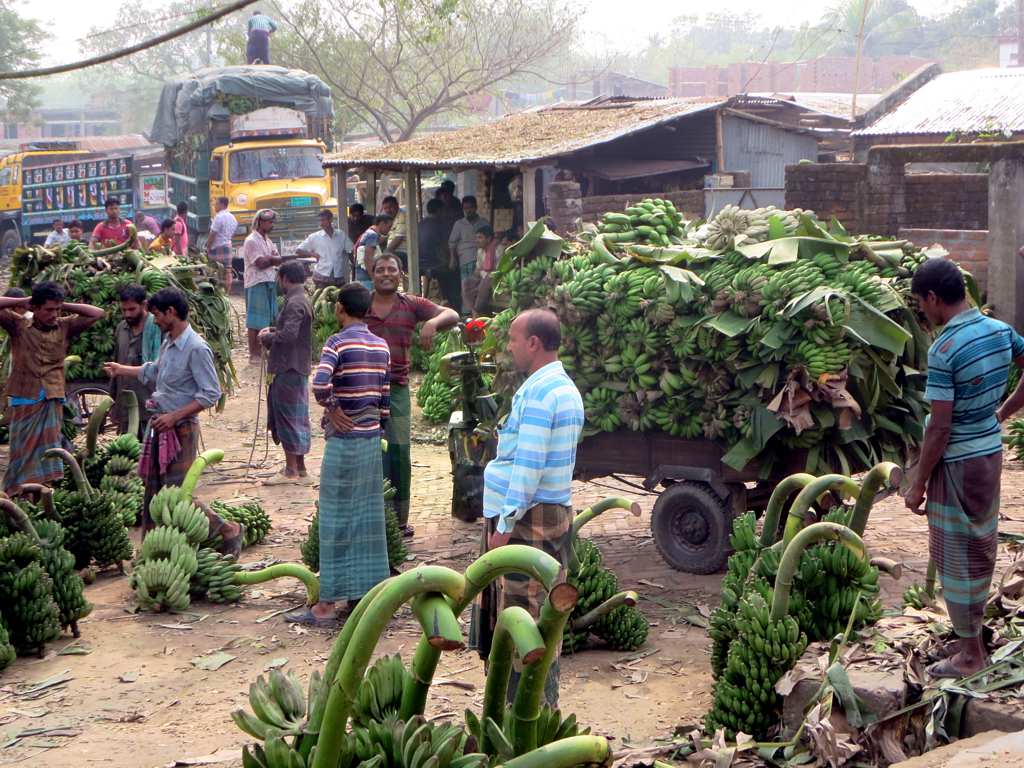
Photo: Ferdous / Wikimedia Commons (CC BY-SA 4.0)
Sources: Jagonews24, The Daily Ittefaq, Banglapedia, The Daily Star, Future Startup
Comments
(0)