
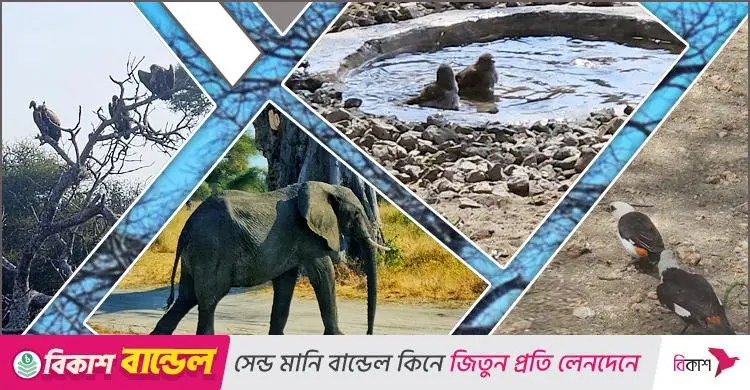
The first destination of my Tanzania trip was the enchanting Tarangire National Park. Right at the park entrance, nature seemed to give me a special welcome. I saw wonderful birds, and the colourful fisher birds in particular touched my heart. Birdlife here is so varied that the whole place seemed to float on nature's song.
The park's real wonder began when a huge herd of elephants appeared in front of us. From calves to adults, seeing so many elephants together was a first in my life. Watching elephants live so close in nature's lap, their movements and their family bonds, was an indescribable feeling.
Then, one after another, I saw giraffes, zebras and countless wild animals large and small, which until then I had only been used to seeing on the Discovery Channel. Now they were alive in front of me, an experience to remember for a lifetime.
About the park
Tarangire National Park lies in Tanzania's Manyara region and is named after the Tarangire river that flows through it. In the dry season, from June to November, the river becomes the only source of water for the area's animals, so thousands of zebras, wildebeest, Cape buffalo, antelope and other mammals gather here, drawing hundreds of tourists every day.
The park covers about 2,850 square kilometres, or 1,100 square miles, and is known for its varied landscape. Granite ridges, river valleys, swamps and seasonal grasslands are scattered with a remarkable mix of baobab, acacia and adansonia trees.
Wildlife and birds
The park's biggest attractions are its large elephant population and dense baobabs. Thousands of tourists come every year just to see these giants. Also found here are giraffe, zebra, impala, eland, Grant's gazelle, lion, leopard, caracal, African wild dog, olive baboon, vervet monkey, banded and dwarf mongoose, dik, topi, baboon, vultures, ostrich and finches.
The park is home to more than 550 bird species, making it a paradise for birdwatchers. From flamingos to colourful rollers, hornbills and herons, the birds dance to nature's rhythm. Another interesting fact: in 2015 a white giraffe was seen in the park, its white colouring possibly due to a genetic trait called leucism.
Getting there
Tarangire National Park is just two hours from the town of Arusha, and Lake Manyara National Park is only 70 km away, so it can be the ideal starting point if you plan to visit several parks.
Tarangire was a unique chapter of my Tanzania trip. Seeing animals so close in the heart of nature awakens a different sense of life. I plan to visit more national parks, but the memory of this park will stay with me all my life.
If you love nature, want to see wildlife or want a real safari experience, Tarangire is waiting for you.
Source: Jagonews24. First published in Bengali on The Agro News.

Comments
(0)