
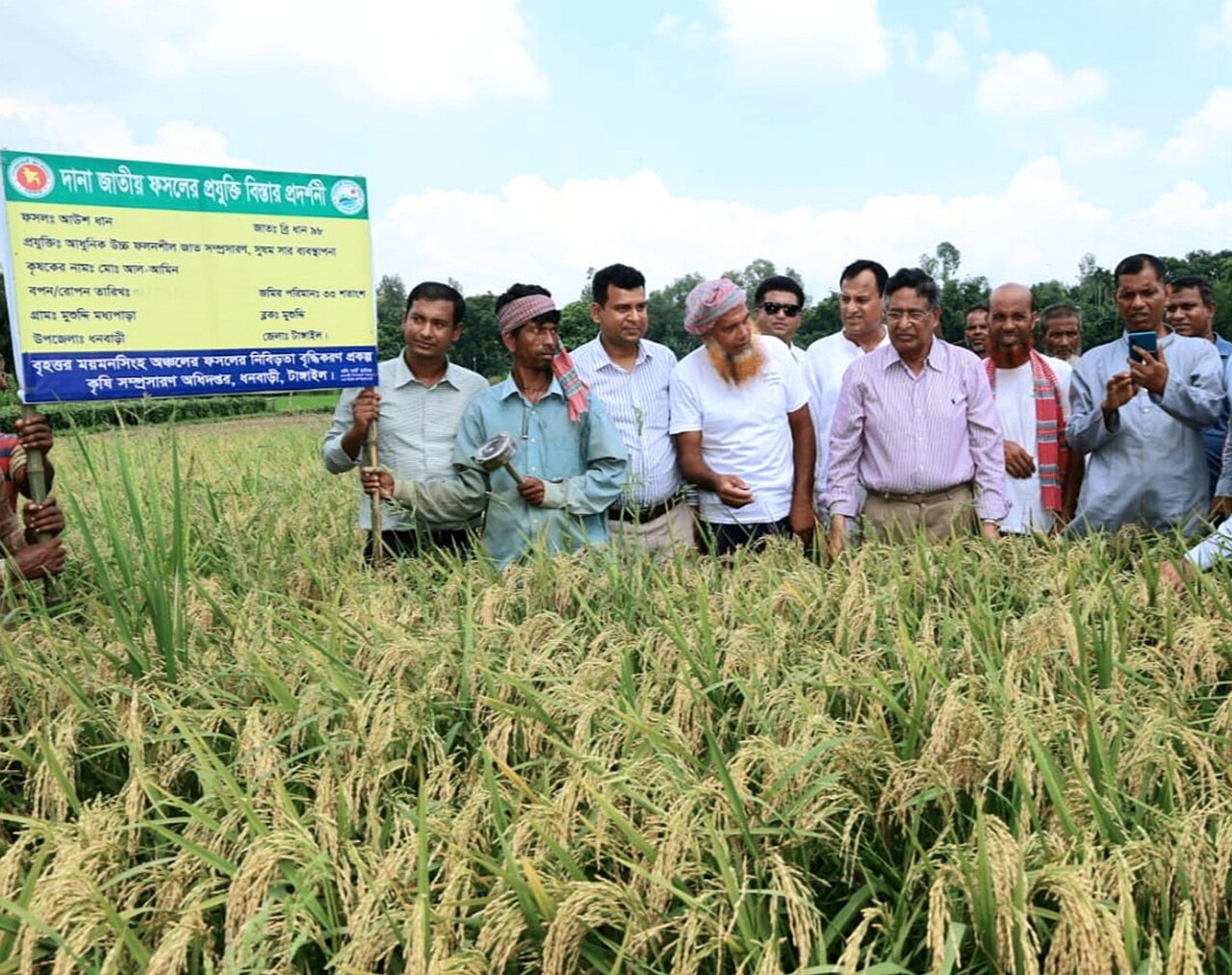
Farmers in Tangail are testing four climate-smart rice practices on their own land and judging for themselves which ones suit local conditions, according to the International Rice Research Institute (IRRI). A delegation from the World Bank, Bangladesh's Department of Agricultural Extension (DAE) and IRRI visited the trials and several community seed production groups in the Tangail Cluster on 6 November.
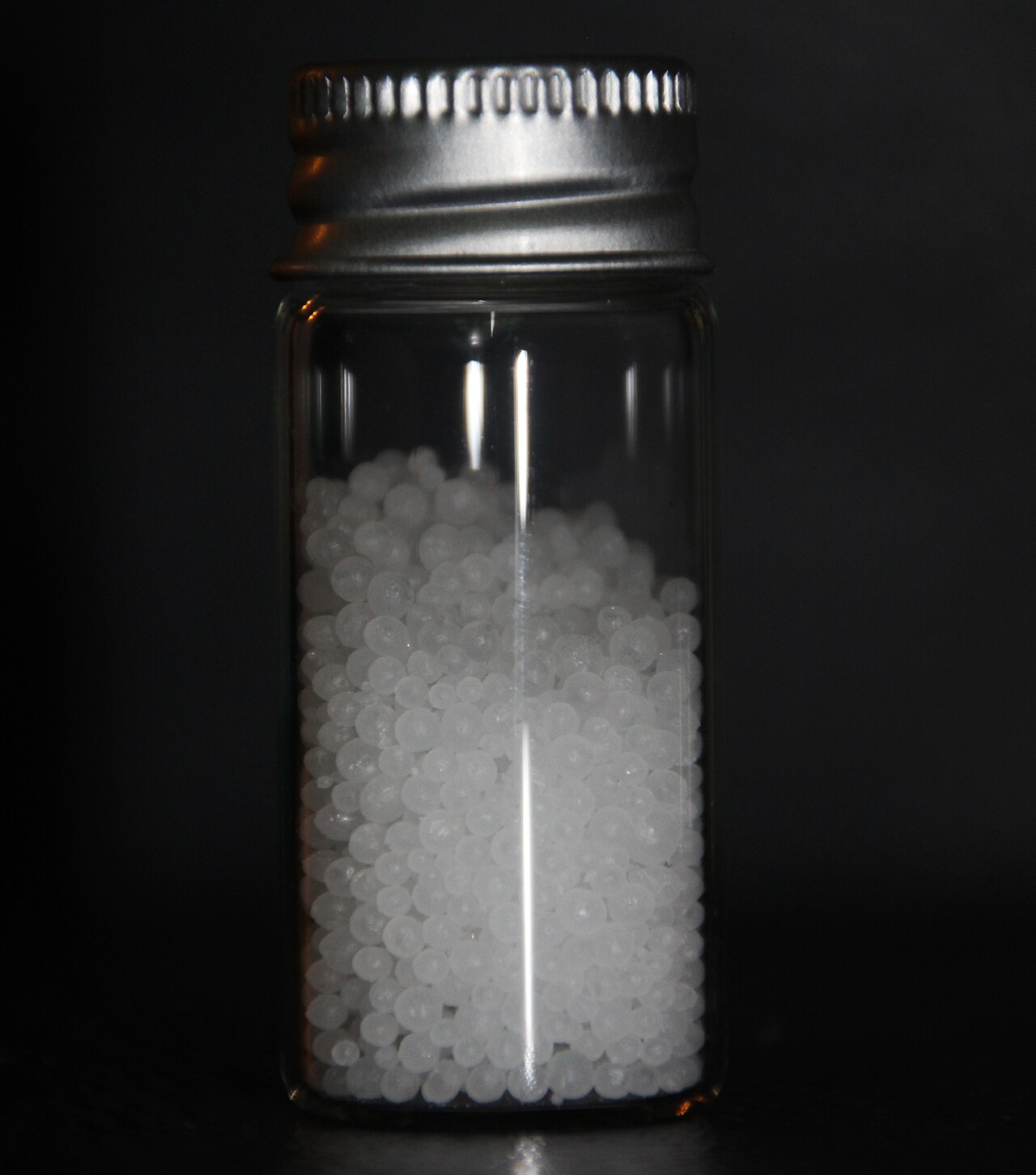
The work is part of the Technical Assistance for Re-structuring Agricultural Public Support for Transitioning to a Sustainable Food System (TARAPS) project. The four trials are the Triadic Comparison of Technologies (TRICOT), in which farmers compare rice varieties under their own field conditions; Urea Deep Placement (UDP), which aims at more efficient fertiliser use; wet direct-seeded rice (Wet DSR), an alternative to transplanting seedlings; and Dealer-Customer Demonstrations, which pass technical advice through local input dealers.
The farmers described concrete gains. Md. Kalam, who took part in the TRICOT trials, said that of the three varieties he tested he preferred BRRI dhan103, because its slender grain could fetch a better price, he expects a higher yield, and its timing leaves room for a crop such as mustard after the rice harvest. Muhammad Ali Hussain, who tried UDP, said the crop looked just as healthy while needing a single fertiliser application instead of repeated broadcasting, cutting spending on both fertiliser and labour.
For Arjina Akter, who grows direct-seeded rice, the main advantage is cost. "Direct seeding can reduce our cultivation costs by almost half compared to transplanting, as we do not need to prepare a separate seedbed and require less labour," she said, adding that the rice matures about 10 days earlier, freeing the land for another crop.
The delegation also met community seed production groups set up with technical support from IRRI Bangladesh. Their women members described the training they had received and the difficulty of keeping seed quality high and supply reliable. Mosammat Sahara Begum, a group member, said the women produce rice seed on their own land, sell it easily in the local market, and can supply newly introduced varieties that local agricultural offices do not yet carry.
Dr. Mohammad Rakibuzzaman Khan, the TARAPS component director at DAE, said continued engagement was needed so that improved technologies reach farmers in ways that fit their needs and fields. "The value of climate-smart agriculture lies in its ability to deliver practical benefits to farmers," said Ashoka Okumura, the World Bank's task team leader for TARAPS. IRRI's lead specialist for seed systems, Dr. Muhammad Ashraful Habib, said innovations make an impact when farmers help evaluate them and when quality seed is available to sustain their adoption.
The farmers' accounts point to two practical gains: lower input bills through deep-placed urea and direct seeding, and a shorter season that makes a second crop such as mustard easier to fit in. The visitors said the trials also show where further technical support is still needed.
Photo: Press Information Department / Wikimedia Commons (public domain)
Source: IRRI
Comments
(0)