
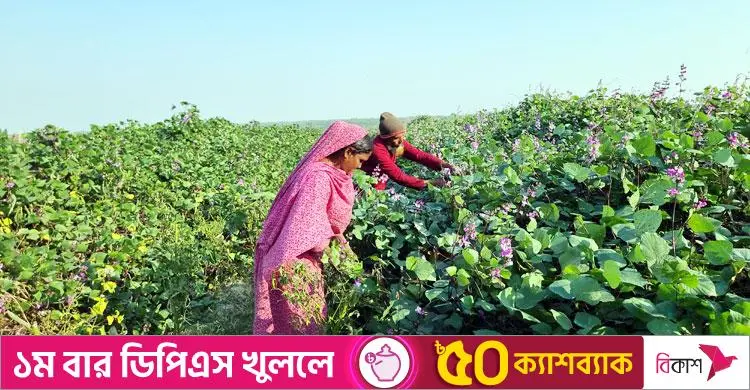
Some 200 farmers in Sawdagarpara village of Barabagi union in Barguna's Taltali upazila have changed their fortunes by growing vegetables on saline land. About a decade ago the village was making losses on paddy because of salinity; now it is known as the "vegetable village". The farmers jointly grow different vegetables all year round on land that once lay idle, and about Tk 7 crore worth of vegetables from here are now sold each year to different parts of the country.
Vegetable farming first began on the initiative of local farmer Shahadat Matubbar. Seeing his success, most of the village's farmers gradually took it up. They now grow beans, bitter gourd, cucumber and other vegetables commercially on about 650 acres, and vegetables are now grown on about 80 percent of the village's land. This has improved farmers' living standards and created jobs for many who were unemployed.
Beans as far as the eye can see
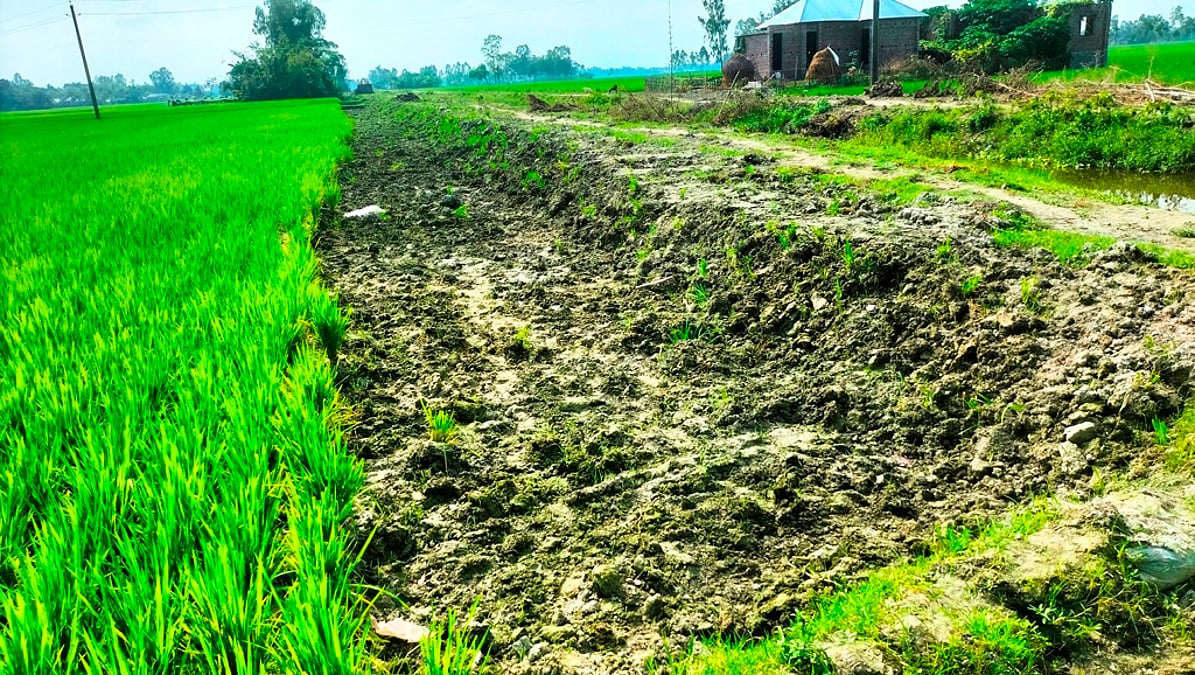
In Taltali's vegetable village, farmers were busy across the wide fields. As far as the eye could see there were only bean plants. Grown on trellises on raised beds cut from the soil and given special care, every plant was hanging with flowers and beans. Alongside the farmers, many unemployed men and women were busy picking beans for a daily wage. Because the same vegetable is grown on all the land, there is no way to tell whose plot is whose, but each works on their own land. Every day the picked beans are packed into sacks and sent through local wholesalers to Barguna and other districts.
Nurjahan Begum works alongside her husband growing vegetables. She told Jago News: "We used to grow paddy, but it didn't bring much profit. Seeing someone in the village grow vegetables, we bought land for Tk 50,000 and started. This year, in one season, I sold about Tk 3 lakh worth of bitter gourd and cucumber from the field. Now there are bean plants in the field. Every afternoon the wholesalers take the picked beans and sell them in different parts of the country, and every week they pay us. We are doing much better growing vegetables than before."
Mohammad Delwar Hossain, one of the farmers, told Jago News that he used to fish in the river. Seeing the success of vegetable farming, he took land on advance and started growing vegetables. With the profits he has bought cattle, pays for his children's education and lives comfortably.
Nazneen Begum, a farmer from the same village, told Jago News that she earned little when she grew paddy. Seeing the profits in vegetables, she bought land and started growing beans and other vegetables. Her eldest son has now completed a master's degree and the family has become financially secure.
Another farmer, Md Abdul Mannan Fakir, told Jago News: "At first three people in the area started growing vegetables. Seeing them, many of us nearby thought there was profit in vegetables and none in paddy. So I started growing vegetables instead of paddy on my land. This year about Tk 7 lakh worth will be sold from one vegetable field. Now almost all the farmers in Sawdagarpara have given up paddy for vegetables."
Jobs and joint farming
Agricultural entrepreneur Shahadat Matubbar, who brought success to vegetable farming here, told Jago News: "I started growing vegetables first. Now there are about 220 vegetable farmers, and two or three workers work under each of them daily. Besides locals, many young men and women from neighbouring unions are picking beans. They are paid Tk 300 a day plus meals. We all grow vegetables together, but each tends their own land. At the end of the day all the vegetables are counted and gathered in one place, and then the wholesalers come and take them. In two seasons a year, about Tk 6–7 crore worth of vegetables are sold from this village to Barguna and other areas."
Agriculturist CM Rezaul Karim, additional deputy director of the Department of Agricultural Extension (DAE) in Barguna, told Jago News the village is now an example of success in growing vegetables on saline land by raising the soil. With the advice and support of the agriculture department, farmers here sell crores of taka worth of vegetables a year. The success of Sawdagarpara is inspiring farmers in other areas too, and with the department's support, the vegetable growers here are expected to do even better in future.
Dr Abu Syed Md Zobaidul Alam, deputy director of DAE in Barguna, told Jago News: "The vegetable village in Barguna's Taltali upazila is a milestone. In particular, women workers get priority among the workers here. Last year they got high prices from chilli, so this year they have grown beans. They grow every crop jointly, which is why they are more successful."
He said: "From this vegetable village, we hope Barguna will emerge as a model for the whole country, because as far as I know there is no other joint vegetable farming this large anywhere in the country. We in the agriculture department applaud such work and are always with them to give the support they need."
Source: Jagonews24. First published in Bengali on The Agro News.
Comments
(0)