
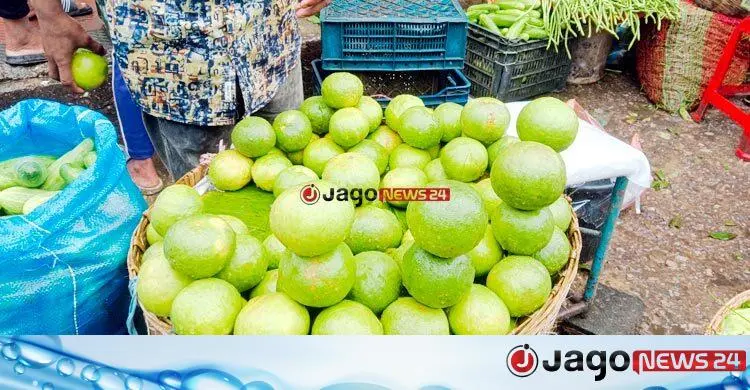
Satkora is a citrus fruit much loved by food lovers for its distinctive aroma and taste. Nothing compares with it in cooking beef or mutton. From tourists from across the country to important state figures, everyone who comes to Sylhet puts beef bhuna cooked with satkora at the top of their menu.
Although satkora is called Sylhet's traditional fruit, it is mainly imported from India all year round and then exported from Sylhet to countries around the world, which is why it is known as Sylhet's satkora.
Just one hectare grown
Satkora barely features in the agriculture department's list of more than 50 fruits grown in the Sylhet region. In fiscal 2024-25, of the division's four districts, only Sylhet district grew satkora, on just 1 hectare, yielding only 1 tonne.
Satkora was once seen in the Sylhet region, but that picture has almost vanished. Satkorakandi village in Barlekha upazila of Moulvibazar was once known for the fruit; locals say only a handful of trees remain there now, with little production.
Department of Agricultural Extension (DAE) officials say commercial satkora cultivation in Sylhet has almost stopped because of climate change, disease and lack of interest in growing it. As a result, the country's satkora market now depends on imports from India.
According to people involved in the trade, satkora imported from India meets domestic demand and is also exported to countries in Europe and the Middle East.
Imports fall after losses
Traders say imports from India are lower this year because of losses in the satkora business last year. A visit to Bandarbazar, Ambarkhana and Kadamtali markets in Sylhet city found very little satkora on sale. What is available in a few shops is still small and not fully mature. Depending on quality, a single satkora sells for Tk 40 to Tk 80, and some shops ask even more.
Traders say large quantities of satkora usually come from the Indian border states of Assam and Meghalaya before Eid-ul-Azha, but this year imports are low and there is a shortage.
Mosaid Ali, a satkora seller at Bandarbazar, said: "Demand for satkora rises several times during Eid. Expatriates buy a lot to take back when they come home. But this year there is little satkora in the market."
Sujon Mia, a satkora wholesaler at Kadamtali fruit market, said importers face various problems despite strong demand in Sylhet. About 500 to 600 sacks of satkora are now imported from India every day.
Importers pay the government Tk 76 in tax per kg of satkora, he said. With other costs, traders are making losses at current selling prices, but they keep importing only to preserve Sylhet's tradition.
Md Nazmul Alam Lizon, owner of the satkora importer Bashundhara Enterprise, said satkora has all but disappeared from Sylhet. It grows on the high hills of Assam, Mizoram and Meghalaya in India, and importers bring it from India. Imports have fallen, he said: once four or five Sylhet traders imported satkora, but after repeated losses all but one or two have quit.
"Passed off as Sylhet's own"
Md Rakibul Islam Rumon, horticulturist at the Horticulture Centre in Khadimnagar, Sylhet, said the satkora found in Sylhet is not really Sylhet's own product but is imported from India. There are many satkora orchards in Karimganj in India, across the Zakiganj border, but no such orchards are seen in Sylhet. Satkora is being passed off as Sylhet's own brand, he said.
The Citrus Research Institute at Jaintapur in Sylhet is researching the fruit, but production in Sylhet is very limited, he said. "We have planted some satkora trees ourselves, but they grow very slowly. Even after a long time they have not yet borne fruit."
Md Mosharraf Hossain Khan, additional director of the DAE's Sylhet division, said satkora was once Sylhet's pride, but commercial production is now almost non-existent. Market demand now depends on Indian satkora, and part of it is exported abroad under the name "Sylheti satkora".
Source: Jagonews24. First published in Bengali on The Agro News.
Comments
(0)