
By Professor Noman Faruque and Samiran Biswas
The United Nations and other sources put Bangladesh's population at about 175.7 million in 2025. The population in 2050 is harder to pin down, because it depends on birth and death rates, migration, population momentum and social change. One popular projection puts it at about 214.7 million in 2050. According to World Economics, the population could approach about 214 million around 2050. The UNFPA says that if current trends hold, Bangladesh's population could peak in 2053. Given slowing growth and the limits of the projections, many analysts think the 2050 population is unlikely to fall outside a range of "high-low" models.
What will shape the population
- Birth rate: Bangladesh's birth rate has been falling for decades. If it falls quickly (two children or fewer per couple on average), population growth may slow. If the spread of development, education and health care is disrupted, the birth rate could rise again.
- Death rate and health care: better health care, lower child mortality and longer life expectancy will increase the population, while disease prevention, diet and health awareness can limit growth.
- Migration: internal migration from village to city and emigration abroad can change how the population is distributed. If more people go abroad, that can hold back population growth.
- Population momentum: if a country has a large youth cohort that will reach child-bearing age, momentum drives future growth. Even if the birth rate falls, that cohort can add to the population.
- Education, especially of women, and family planning: wider education and awareness will increase the use of family planning, bringing the birth rate further under control. Economic progress usually brings a trend towards smaller families.
- Environment and climate: floods, converted farmland, cloudy weather, coastal erosion and reduced access to land will leave some areas with less habitable land, which may lead to migration or resettlement and affect population density and structure.
- Urbanisation: more rural people are expected to move to cities for their amenities, transport and job opportunities, but limited urban infrastructure can create population pressure.
- Policy and planning: if the government and policymakers actively intervene in education, health and urban planning, there will be scope to keep growth under control, through family planning, health programmes and population policies.
Challenges and opportunities
The challenges include pressure on limited land and infrastructure (housing, water, sanitation, electricity); food security, the need for higher food production, shrinking farmland and environmental change; floods, sea-level rise and waterlogging; demand for hospitals, schools, transport and jobs; a growing elderly population needing social protection and health care; and urban management problems such as traffic, housing shortages and spreading slums.
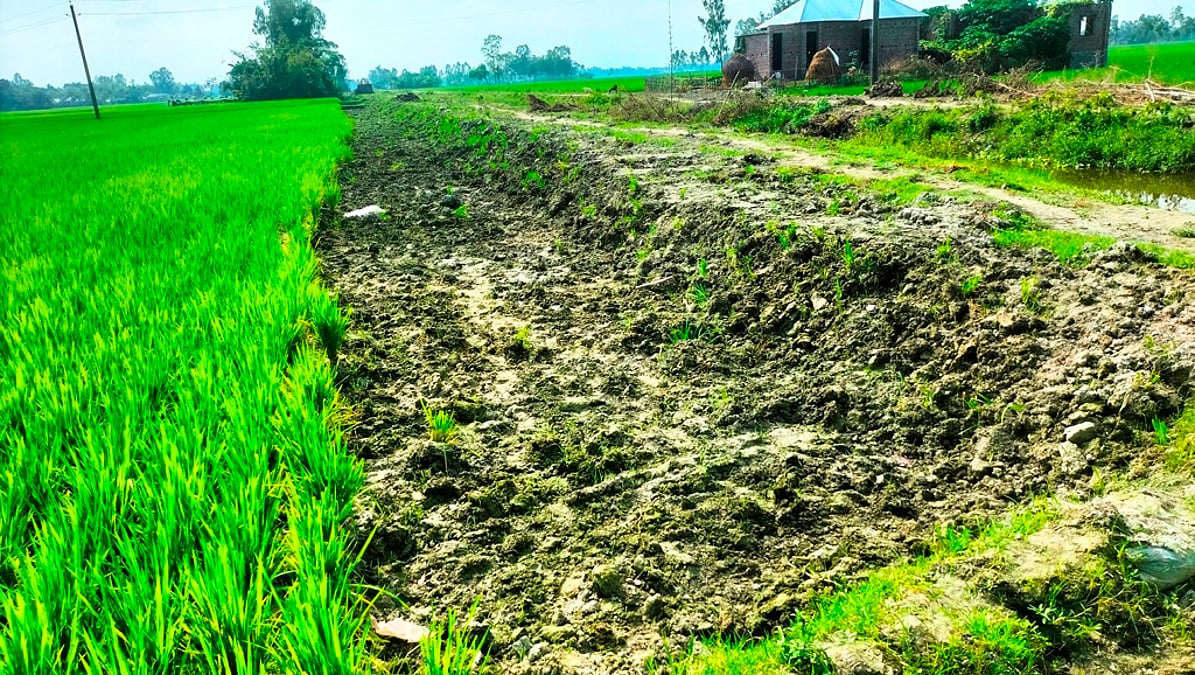
Loss of farmland is a central concern. According to a Bangladesh Bureau of Statistics project, farmland shrank by about 1.98 per cent between 2015 and 2023, from about 74,388 square kilometres to 72,916 square kilometres. Some 2,500-3,000 hectares of cultivable land are turned to non-farm use each year. According to the 2008-2019 agricultural census, about 4 lakh acres of farmland became uncultivable or were converted to other uses within a decade. The main causes are urbanisation, industrialisation, the spread of buildings and infrastructure, and unregulated land use.
The opportunity lies in the working-age population (15-64 years). If it is put to good use, the economy and development can accelerate, with jobs in manufacturing, services and technology, a large domestic market and rising local production and consumption. Investing in human capital, education and public health will bring large returns in the long run.
Three pillars: food security, nutrition security and safe food
Food security means that every person at all times has physical and economic access to enough safe and nutritious food for an active and healthy life. It has four elements: availability (enough food produced and supplied), access (people's purchasing power or ability to obtain food), utilisation (the capacity to eat, store and make use of nutrition) and stability (the continuity of all these over the long term). Food security is not just about quantity or supply; it is bound up with people's economic capacity, markets, natural disasters and political stability. Climate change, war and global crises now threaten it.
Nutrition security means that nutritious food and the necessary health care are easily available to everyone, so that they can grow and live healthily. Eating enough is not enough; the diet must be balanced, with the right mix of protein, vitamins, minerals and calories. Nutrition security is a step beyond food security: having food does not guarantee nutrition. Poverty, ignorance, superstition, eating habits and mothers' education are major influences, and malnutrition is a leading cause of child deaths, stunting, weakness and lost productivity.
Safe food is food free of harmful chemicals, germs, pesticides or adulterants and not harmful to the human body. If food is not safe, food and nutrition security cannot make up for it; it can cause poisoning, foodborne disease and long-term health risks. Often food and nutrients are there, but the food is not safe, and that can make the whole system fail. In developing countries chemical use, adulteration, poor storage and weak markets all make food unsafe. To ensure sustainable development, a society or state must secure all three pillars together: food security, nutrition security and safe food. That needs not just food supply but access to safe and nutritious food for better health, and it is impossible without the combined efforts of government, society and individuals.
LDC graduation and the farm sector
"LDC 24 November 2026" means that Bangladesh will graduate from least developed country status on 24 November 2026. An LDC is a country whose economy, human resources and infrastructure have not reached a high level of development. The UN and related bodies declare a country an LDC on the basis of socio-economic indicators such as income, the human development index and infrastructure. LDCs receive special benefits: duty-free or reduced-duty access for exports, international aid, technology transfer and technical assistance.
24 November 2026 has been chosen as Bangladesh's graduation date. If performance and the process go to plan, Bangladesh will leave the LDC list on that day and gain developing-country status. Under a WTO decision, a "capacity transition facility" will be given for three years from graduation to help deal with the challenges that follow. The likely effects and challenges are reduced or ended tariff benefits, export difficulties, changes in aid and support, new status and opportunities, and pressure to prepare.
Graduation will create some positive opportunities but also bring big challenges for important sectors, including agriculture. In particular, import duties on farm inputs such as seed, fertiliser, pesticides and machinery may rise by 6 to 12 per cent. That would raise production costs and hurt farmers financially. If government farm subsidies are also cut, farmers will have to bear extra costs for irrigation, seed, fertiliser and machinery, which could reduce their capacity to produce.
In the current global and economic climate, lower subsidies and higher import duties could deeply affect farm output and food security. Subsidies on fertiliser, seed, fuel and irrigation make farming more resilient; without them costs rise, which can sap farmers' willingness and ability to produce. Higher import duties push up food prices for ordinary consumers. The changes could also hurt the production and supply chain of non-human food such as animal feed, putting the country's food security and farm economy at risk overall.
Rising diesel and electricity costs may also disrupt irrigation, directly hurting crop output. These challenges could become major obstacles to meeting targets for food security, nutrition security and safe food production. Meanwhile farmland is shrinking every year, and the population may pass 20 crore by 2050. Food demand will then rise sharply, which will be hard to meet with the country's current farm production infrastructure.
Against this background, the writers say, now is the time for an integrated, long-term plan. Policymakers should cut taxes on farm inputs, promote technology-based sustainable agriculture, invest more in agricultural research and ensure direct support for farmers. Only then can future food security and agriculture be made sustainable.
The writers: Noman Faruque is a professor at Sher-e-Bangla Agricultural University and a registered trainer for GlobalG.A.P.; Samiran Biswas is an agriculture and environment specialist in Dhaka.
Source: Jagonews24. First published in Bengali on The Agro News.
Comments
(0)