
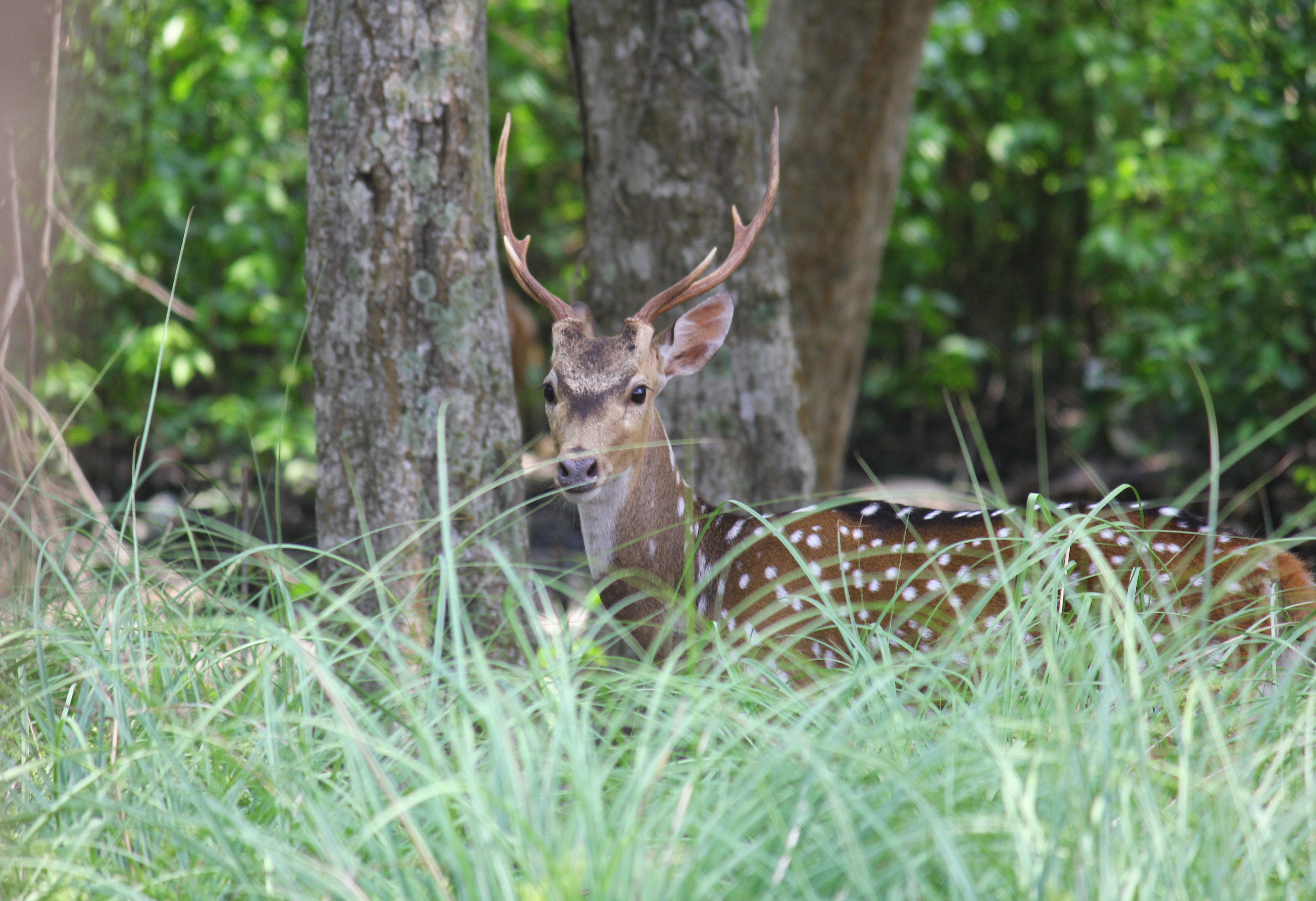
Forest guards of the Sundarbans East Forest Division arrested a man at Dimer Char in the Kochikhali area of the Sharankhola range on the morning of Saturday, 4 April 2026, and seized about 4,000 feet of mala snares, the rope traps used to catch deer, the Forest Department said. The department accuses the man, whom it named as Chhagir Khan, 40, of South Char Duani village in Patharghata upazila of Barguna district, of poaching deer. Five other men fled when they sensed the guards were near, according to the department. Jagonews24 reported the arrest on 5 April 2026, and Ajker Patrika also carried a report on 4 April of a deer poacher held with mala snares in the Sundarbans.
The divisional forest officer (DFO) of the Sundarbans East division, Rezaul Karim, told Jagonews24 that a case had been filed under the forest law against the man arrested with the snares at Dimer Char, and that he would be sent to court in Bagerhat on the morning of Sunday, 5 April. The report did not say which sections of the law the case cited. The accusations are the Forest Department's; on the date of the report the man had not been tried.
How the arrest happened, according to the Forest Department
According to the Forest Department, guards on a regular patrol at Dimer Char in Kochikhali on Saturday morning saw snares laid in the forest. They searched the area and, the department said, caught the man in the act. Along with the 4,000 feet of mala snares, they seized a scale used for weighing meat, 2 kilograms of white polythene, plastic sacks, rice, lentils and other supplies.
The department said five other men escaped after noticing the guards. The report did not name them, did not say whether a search for them was continuing, and did not mention any deer found caught or killed at the spot.
Forest officials and people living beside the forest had described in earlier reports how deer poaching in the Sundarbans is organised. Poachers usually carry bundles of rope into the forest, make the snares there, and afterwards pack them in sacks and hide them in the ground to use again, villagers and several people previously convicted of poaching told Prothom Alo in November 2025. In January 2026, residents near the forest at Koyra told the same newspaper that poachers enter the forest disguised as fishermen, carrying rope with their nets, set the traps inside, and when an animal is caught cut the meat and bring it out to sell.
Kochikhali and the Sharankhola range
Kochikhali is in the Sharankhola range of the Sundarbans East Forest Division. Banglapedia, the national encyclopedia published by the Asiatic Society of Bangladesh, lists it under the name Tiger Point (Kachi Khali) among the most visited places in the forest, along with Katka, Hiron Point (Nilkamal) and Dublar Char; Katka draws tourists for its landscape and wildlife and has a forest rest house and an observation tower. In a report from June 2025, Prothom Alo described the Kochikhali area as a wildlife sanctuary within the Sharankhola range.
The Bangladesh part of the Sundarbans lies under two forest divisions and four administrative ranges, Chandpai, Sharankhola, Khulna and Burigoalini, and has 16 forest stations; it is further divided into 55 compartments and 9 blocks, according to Banglapedia. The Sharankhola and Chandpai ranges come under the Sundarbans East Forest Division, which comes under the Forest Department's Khulna circle. The Sundarbans was declared a reserve forest in 1875. In 1977, three wildlife sanctuaries, Sundarbans West, Sundarbans South and Sundarbans East, were established in the south of the forest under the Bangladesh Wildlife (Preservation) (Amendment) Act, 1974. UNESCO says the three sanctuaries cover 139,700 hectares and are regarded as core breeding areas for a number of endangered species.
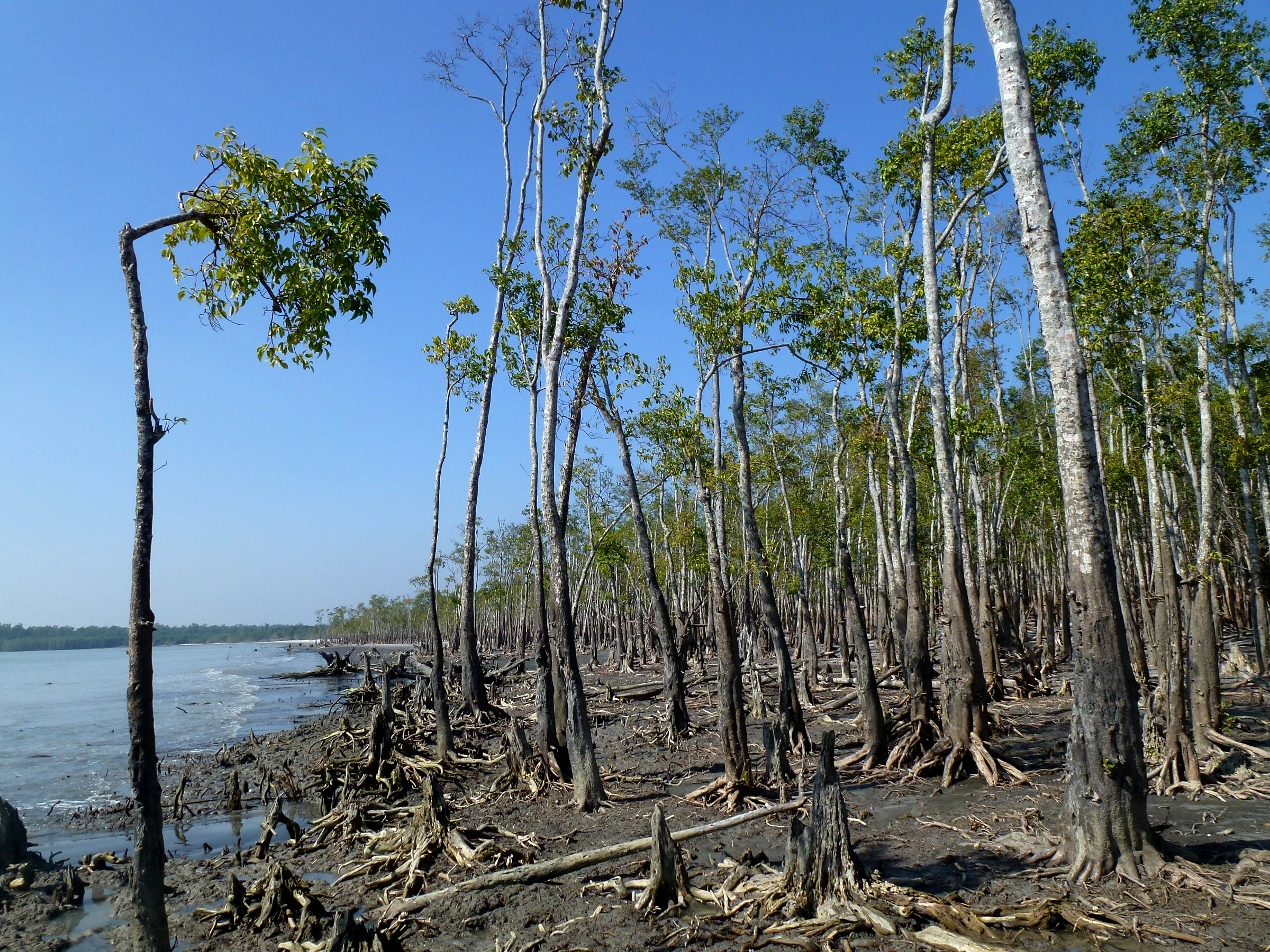
The Sundarbans East Wildlife Sanctuary is a low-lying area of flat islands cut by waterways. The Baleshwari river brings it some fresh water, but otherwise its waters are saline and rise and fall with the tide. Its commonest tree is the sundari (Heritiera fomes), from which the Sundarbans is generally thought to take its name, mixed with gewa and passur.
Sharankhola upazila of Bagerhat district shares its name with the range. Banglapedia, citing the 2011 census, gives the upazila an area of 756.60 square kilometres and a population of 119,084, and says a major part of it belongs to the Sundarbans. It is bounded by Morrelganj upazila to the north, the Bay of Bengal to the south, Mathbaria and Patharghata upazilas to the east, and Mongla upazila to the west. Its main rivers are the Baleshwari, the Haringhata and the Bhola, and it became a thana in 1907. Bagerhat district, whose court was to receive the arrested man, covers 3,959.11 square kilometres and had 1,476,090 people at the 2011 census.
Patharghata, across the Baleshwar
The arrested man's home upazila, Patharghata, lies at the southern end of Barguna district. Banglapedia gives its area as 387.36 square kilometres and its population at the 2011 census as 163,927. It is bounded by Mathbaria and Bamna upazilas to the north, the Bay of Bengal to the south, Barguna Sadar upazila and the Bishkhali river to the east, and Sharankhola upazila and the Haringhata river to the west. Its main rivers are the Bishkhali, the Haringhata and the Baleshwari. Banglapedia gives agriculture as the main source of income for 60.3 percent of the upazila's people, and paddy, hilsa and shrimp are its main exports; Char Duanti Bazar is among its notable markets.
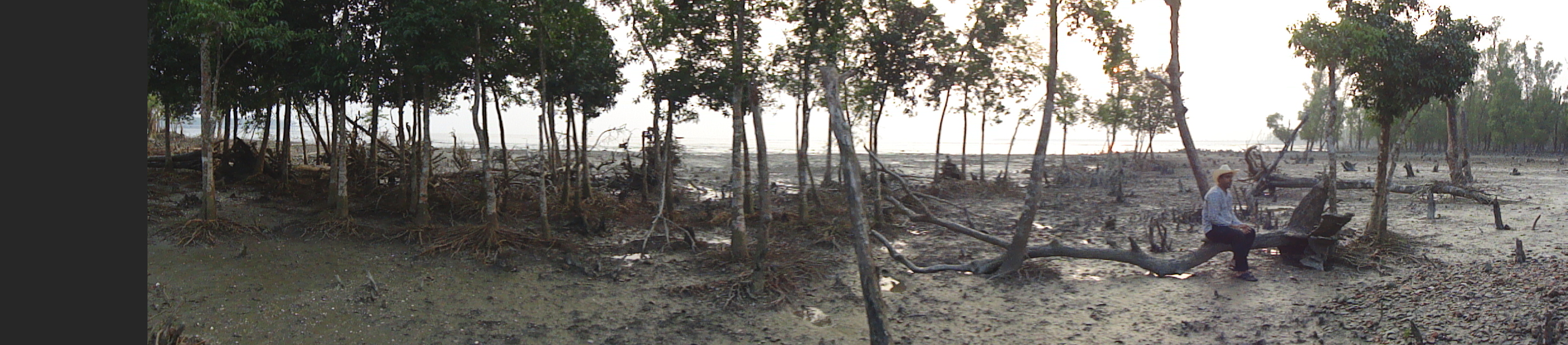
The Baleshwar river separates Patharghata from the forest. UNESCO describes the Sundarbans Reserve Forest as lying between the Baleswar in the east and the Harinbhanga in the west. Prothom Alo wrote in June 2025 that Patharghata lies on the east bank of the Baleshwar and the Sundarbans on the west bank, and that, according to local residents, poachers cross the river at night to enter the forest.
Forest officials had named the crossing before. In January 2026 the Forest Department told Prothom Alo that in the East division snares were set most often in the Dhanmari, Jongra, Mora Pashur, Kokilmoni and Kochikhali areas, and that at Kochikhali and Kokilmoni people coming from Patharghata crossed the Baleshwar to enter the forest and set traps. Asked who set the snares, DFO Rezaul Karim said selling deer meat was the occupation of many people around the Sundarbans, and named parts of Patharghata upazila and Sharankhola among places where, he said, deer had been hunted for generations.
Kochikhali had seen a similar arrest the previous year. On 30 June 2025, the Forest Department detained a man from Patharghata near the Sukhpara canal in the Kochikhali wildlife sanctuary area, with 300 mala snares, a knife, a saw and plastic rope, Prothom Alo reported. Two others who had come to set traps escaped into the forest, the DFO said then, adding that more than 3,000 deer snares had been recovered in the previous two months. That arrest came during the Forest Department's three-month ban on entering the forest, which starts on 1 June each year to protect wildlife in the breeding season, when foresters, tourists and the public are barred from the forest.

Mala snares and the other traps
Poachers in the Sundarbans use four kinds of snare to catch deer, all made of nylon rope, the Forest Department told Prothom Alo in January 2026. The mala snare was the one set most often:
- Mala (garland) snare: a rope is stretched from one tree to another some distance away, and many nooses are hung from it side by side like a garland.
- Chitka snare: a circular trap set one at a time.
- Gola (neck) snare: a noose set a little above the ground that catches a deer by the neck.
- Hata (walking) snare: a noose set near the ground that catches a deer by the leg.
In the eight months from May to December 2025, the Sharankhola and Chandpai ranges of the East division recovered 61,010 feet of mala snares, 380 chitka snares, 2,000 hata snares and 20 feet of gola snares. The West division said it had recovered 1,200 feet of mala snares, 1,200 feet of gola snares and 748 hata snares over two years. In the same two years the two divisions seized 1,148 kilograms of deer meat from poachers. The East division filed 22 cases against 69 people and arrested 62 of them; the West division filed 50 cases against 130 people and arrested 19. Catching poachers red-handed while they set snares was more common in the East division, Prothom Alo reported.
Patrols in November 2025 show how much rope can be found in a few days. Over three days the Forest Department recovered 9,410 feet of snares from patrol-post areas of the forest, among them an 800-foot snare from the Charputia patrol post area and about 200 feet of mala snares strung between keora and goran trees in the Adani-Gurguri forest, Prothom Alo reported. In the same week, a joint coast guard and police raid on a hut at Kanainagar beside the Pashur river near Mongla recovered 32 kilograms of deer meat, two heads, eight legs and a snare 2,500 metres long, and one man was detained. Villagers told the newspaper that deer move most where keora trees are plentiful, and that poachers lay long rope snares they call doya along the deer's paths.
The Forest Department had changed the way it searches. Guards now walk through the forest in lines in what officials call parallel line searching, advancing like a comb so that snares are found quickly, DFO Rezaul Karim said in November 2025. Walking in the forest carries the risk of tigers and crocodiles, he said, but guards stay safe by counting off regularly and talking as they move. "Deer must be saved, otherwise the tiger will not survive either," he told Prothom Alo. In January 2026 he said the East division had two SMART patrol teams, which went out on two patrols a month, each lasting two weeks at a stretch; the West division also had two such teams.
Snared deer and arrests in the months before
The Kochikhali arrest followed a run of snare finds reported in the first three months of 2026. On 17 January, a foot patrol led by the assistant conservator of forests of the Khulna range, with staff of the Baniakhali forest station, the Hodda patrol post and the Nalian forest station, heard a deer struggling near the Fultala canal, close to Hodda village in Koyra upazila. A doe had been caught by one leg and was hanging from the rope. The guards cut her free and she ran back into the forest. The 12-member team recovered about 60 snares, some of them mala snares, but found no poachers, Prothom Alo reported.
"Recovering the meat of a dead deer is no achievement. Protecting deer before they are hunted is our success," the assistant conservator of forests of the Khulna range, Shariful Islam, told the newspaper. Hunters and the buyers and sellers of meat were being identified, he said, and rewards had been announced for catching poachers.
On 2 March 2026, guards from the Hayatkhali patrol post freed a pregnant deer from a trap in the forest beside the Keyabunia canal and seized 27 chitka snares during a day-long patrol, without finding any poachers. The area is high ground that does not flood at high tide, so herds of deer shelter there, the post's acting officer said. The West division's forest officer, A Z M Hasanur Rahman, said staff walking in parallel lines had found the deer and released it into the forest in good health.
A week later, on 9 March, a joint patrol from the Koyra and Hayatkhali posts came upon two boats in the same Keyabunia canal area. The men on board left the boats and fled into dense forest. In one boat the guards found a slaughtered deer; from the other they recovered 20 snares, two machetes and a knife. The deer was buried on the court's order. "Patrols have increased, which is why more snares are being recovered now," Hasanur Rahman told Prothom Alo. "Often live deer caught in snares are rescued and released into the forest." The aim, he said, was to protect deer before they were hunted, not to recover them afterwards.
The spotted deer of the Sundarbans
Two species of deer are mainly found in the Sundarbans, the spotted deer, called chitra horin in Bengali, and the barking deer, or maya horin; spotted deer are far more numerous, bdnews24.com reported in February 2025. Banglapedia lists five deer species in Bangladesh, of which the sambar is the largest and the barking deer the smallest, and notes that apart from the spotted deer of the Sundarbans, the populations of the others have fallen alarmingly because of indiscriminate hunting, human interference and loss of habitat.
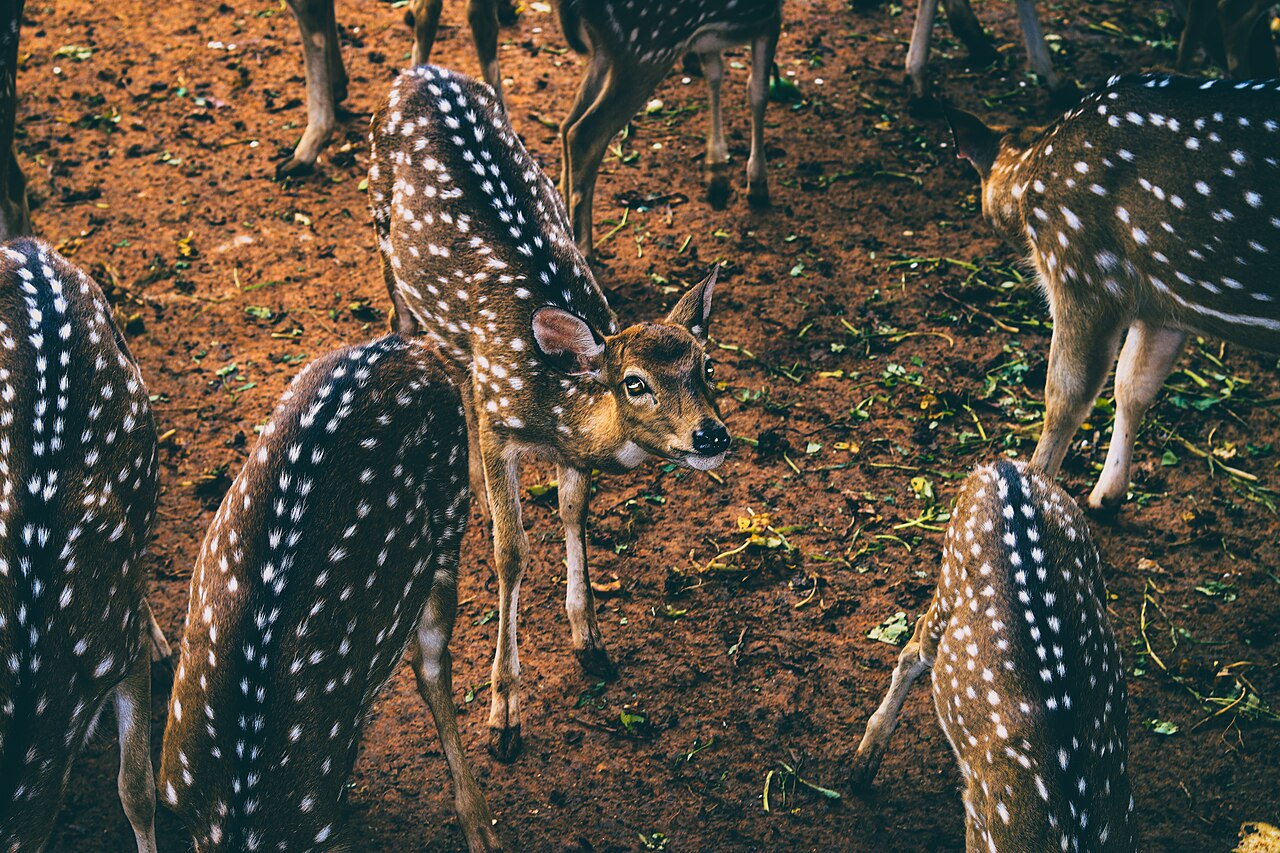
The spotted deer, or chital (Axis axis), is a medium-sized deer standing about 70 to 95 centimetres at the shoulder, Banglapedia says, with a rufous brown coat marked by white spots that last throughout life, a dark stripe along the back, and a white belly, throat and inner legs; an adult weighs about 85 kilograms. Adult males carry antlers with three tines. Once found in almost all the country's forests, the species is now confined in Bangladesh mainly to the Sundarbans, where it lives along forest edges in herds of 10 to 30 animals with two or three stags, and gatherings of several hundred are not unusual. It grazes, preferring green grass less than 10 centimetres tall. It breeds readily, with no fixed mating season; a single fawn is born after a gestation of about seven months. Hunting for meat and skins has reduced its numbers sharply since the 1950s, the encyclopedia says.
The chital stays within about 300 metres of cover and, when alarmed, flees and then hides in dense undergrowth. In the wild it usually lives five to ten years because of predation and competition. The IUCN Red List classes the species as least concern because it occurs over a very wide range with many large populations.
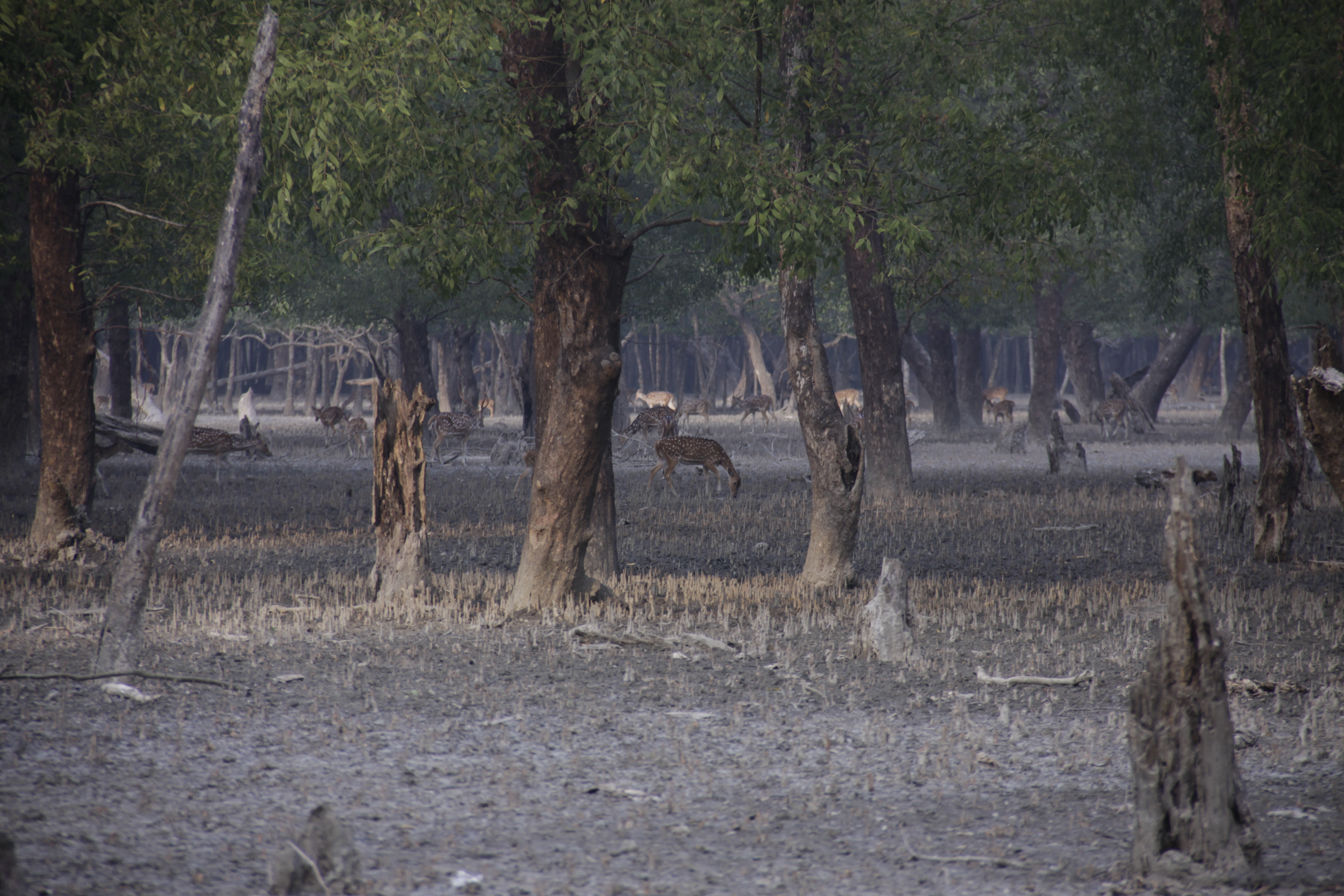
Deer numbers in the Sundarbans had risen over two decades. According to a survey by the International Union for Conservation of Nature (IUCN) in December 2023, there were 136,604 deer in the Sundarbans, against 83,000 in 2004, bdnews24.com reported in February 2025. Mihir Kumar Doe, the chief conservator of forests for the Khulna region, told the news site that pirates used to roam the forest all year and that more than 50,000 people from around the country used to attend the Rash Mela at Dublar Char at the end of each year, when many deer were hunted. Regular patrols, fewer pirates and the end of the Rash Mela had reduced hunting considerably, he said. In the dry season, when water in the creeks dries up, deer move about more and poachers become more active, he added.
Deer, tigers and the snare threat
Deer are the tiger's main food in the Sundarbans. The government's Tiger Action Plan (2018-2027) says the number of tigers an area can hold depends on how many deer are available there, and that at least 500 deer are needed for each tiger. Spotted deer are the tiger's main prey in the forest, followed by wild boar and barking deer. M A Aziz, a professor of zoology at Jahangirnagar University and a tiger specialist, told Prothom Alo in January 2026 that a tiger needs one deer of 50 or 60 kilograms every week. His team's 2023 study had found enough deer, he said, but the rate at which snares were being set was a cause for concern.
The snares also catch tigers. On 4 January 2026, the Forest Department rescued an injured tiger caught in a chitka snare set for deer near Sharkir Khal, in the Mongla part of the East division. A tiger lost a leg in a similar trap in 2012, and in 2014 another tiger that broke free of one later died, Prothom Alo reported. The Tiger Action Plan names deer snares as one of the threats to tigers, and says many forest users set them as a second source of income because there is demand for deer meat in local markets.
The Forest Department's latest tiger survey, published in October 2024, counted 125 tigers in the Bangladesh Sundarbans, up from 114 in 2018 and 106 in 2015. The survey was carried out in January, April and November 2023 and March 2024 over 2,240 square kilometres of forest, using 657 camera traps and counts of footprints along 1,306 kilometres of creek banks. It found 2.62 tigers per 100 square kilometres and 21 cubs or young tigers, against five in the two earlier surveys. The survey team linked a fall in tiger numbers in the Satkhira part of the forest to poachers and a shortage of prey deer, Prothom Alo reported.
Demand for deer meat
Residents near the forest told bdnews24.com in February 2025 that deer meat sold for 500 to 600 taka a kilogram in villages beside the Sundarbans and for 1,000 to 2,000 taka in district towns, and that 15,000 to 20,000 taka was asked for a live deer. Because deer meat was cheaper than beef or mutton, demand for it was rising, they said, and buyers often refused to pay for meat without seeing the animal, so poachers sometimes brought live deer into villages to slaughter them.
Professor Anwarul Quadir, executive director of the Sundarbans Academy in Khulna, told the news site that several times more deer were hunted than the meat and skins seized by law enforcers suggested, and that raids mostly caught the men carrying meat while the main poachers and traffickers escaped; those arrested, he said, returned to the same work after a few days in jail because of weak laws. The chief conservator, Mihir Kumar Doe, said isolated hunting still took place but far less than before, and that the Forest Department struggled to control crime in so large a forest with few staff.
The government offered rewards to people who gave information about wildlife crime in the Sundarbans. For deer, the reward was 20,000 taka for information exposing a crime inside the forest and 10,000 taka for one outside it, bdnews24.com reported.
What the wildlife law said on the date
On 4 April 2026, wild animals in Bangladesh were protected by the Wildlife (Conservation and Security) Ordinance, 2026 (Ordinance No. 9 of 2026), issued on 7 January 2026 and in force from that day. Section 54 of the Ordinance repealed the Wildlife (Conservation and Security) Act, 2012, while providing that cases filed under the old law would be settled as if filed under the Ordinance. The Jagonews24 report said only that the case had been filed under the forest law; it did not name the Ordinance or any section.
Schedule 1(kha) of the Ordinance, headed "Protected animals", lists the spotted deer (Axis axis) and the barking deer (Muntiacus muntjak), along with the hog deer and the sambar. The schedule says these animals may not be hunted, harassed, transported, bought, sold, imported or exported in any circumstances without a licence or possession certificate, except for research or scientific needs. The Ordinance defines hunting as killing, catching or poisoning a wild animal or any similar attempt, driving an animal for any of those purposes, or injuring or harming it. The provisions most relevant to deer snaring, as published on the government's Laws of Bangladesh website, were these:
- Section 41(3) and section 44: hunting an animal listed in Schedule 1(kha) is punishable by up to three years in prison, a fine of up to 300,000 taka, or both; a repeat offence by up to five years, a fine of up to 500,000 taka, or both.
- Section 41(5) and section 44: collecting, possessing, buying or selling the meat, body parts or trophies of such an animal without a permit is punishable by up to one year in prison, a fine of up to 100,000 taka, or both; a repeat offence by up to two years, a fine of up to 200,000 taka, or both.
- Section 19: in a sanctuary or national park no one may enter without authorisation, hunt, harass or frighten any wild animal, or use hunting materials, weapons, chemicals or poison; breaking these rules is punishable by up to three years in prison, a fine of up to 300,000 taka, or both, and a repeat offence by up to five years, a fine of up to 400,000 taka, or both.
- Section 10: all wild animals, their body parts and meat are treated as government property, and no one may possess, buy, sell or transport a wild animal or its parts without a licence, possession certificate or permit.
- Sections 36 and 37: forest officers under the Ordinance, police officers of sub-inspector rank and above, coast guard officers of petty officer rank and above, and others named may seize wild animals, meat and the weapons, vehicles and equipment used in an offence, and may arrest a person suspected of a cognisable offence without a warrant, then take him before a magistrate without unnecessary delay.
- Sections 46 and 47: offences under sections 19, 41(1), 41(2) and 41(3) are cognisable and non-bailable and are tried by a Court of Sessions; offences under sections 41(4) and 41(5) are cognisable and bailable; offences other than those under sections 19, 41(1), 41(2) and 41(3) are tried by a first-class judicial magistrate.
Under section 47, a court takes up an offence under the Ordinance only on a written complaint from an officer empowered by the chief wildlife warden or from a person harmed by the offence.
Photo: Ashis Kumar Datta / Wikimedia Commons (CC BY-SA 4.0)
Sources: Jagonews24, Ajker Patrika, Prothom Alo, bdnews24.com, Laws of Bangladesh (Legislative and Parliamentary Affairs Division), UNESCO World Heritage Centre, Banglapedia (Asiatic Society of Bangladesh), Wikipedia

Comments
(0)