
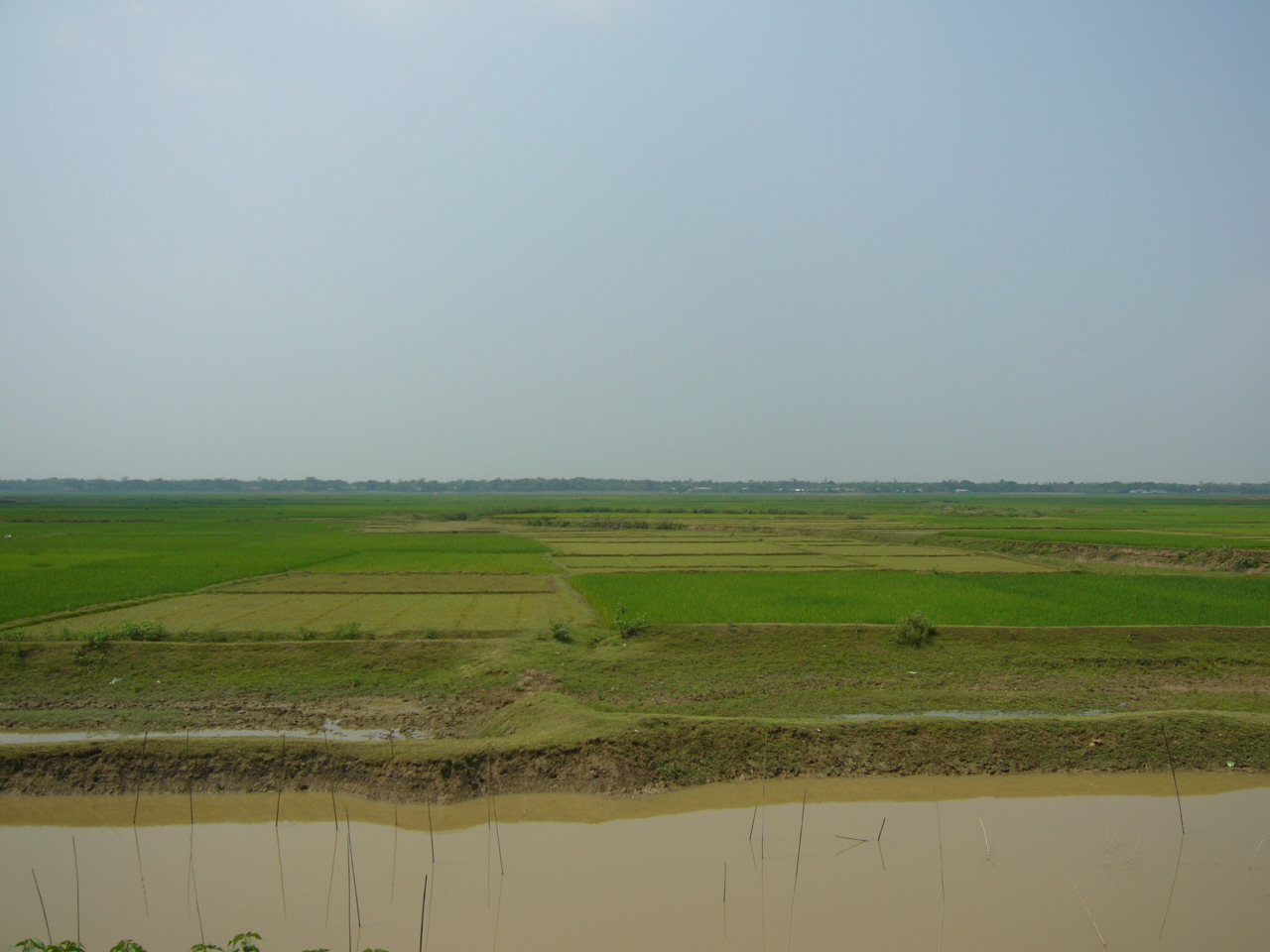
Sunamganj's haor wetlands have run short of water at the start of the boro season, because they dried out early and there is no other way to irrigate. Seedbed preparation has stalled, and farmers fear several hundred hectares of higher land in almost every upazila may be left unplanted.
The district office of the Department of Agricultural Extension has set a target of 223,521 hectares of boro rice and 10,468 hectares of seedbeds this season. The department says the target will not be met unless another source of irrigation is found.
Seedbeds lie bare in most haors, including Dauka, Damrai, Dekhar and Kangla in Sadar upazila and Shoni, Matian, Mahalia and Gurmar in Tahirpur. Where seedlings should be sprouting, cattle graze, and the higher ground has cracked.
Farmers say water usually stays in the haors until the end of the Bengali month of Kartik, with boro preparation starting in late November. This year it drained by the end of October, and with little rain the soil hardened fast. Pumping water costs an extra Tk 3,000 to 5,000 per keyar (a local land unit), and with few canals, ponds or rivers nearby there is no alternative.
Rafiq Mia, a farmer in Damrai haor in Kathair union, said there is no way to hold water and the land is splitting as it dries, while bringing water from the river is costly. Another farmer, Mofizul, said 22 of his 29 keyars have dried out and he cannot farm them without water.
Omar Faruk, deputy director of the extension department in the district, said production will suffer if seedbeds do not get enough water. Farmers want deep tube wells, but those cannot be installed overnight; field officers are advising farmers in the meantime, he said.
The report is by Krishi Shomoy's Sunamganj correspondent.
Photo: Shahnoor Habib Munmun / Wikimedia Commons (CC BY 2.5)
Source: Krishi Shomoy

Comments
(0)