
By Nusrat Jahan Baishakhi
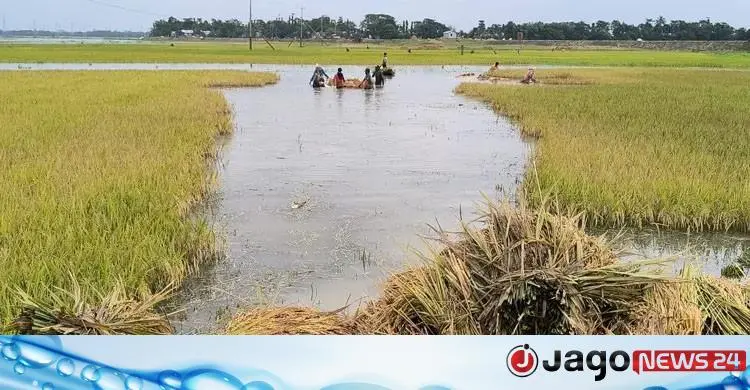
Across the vast haors of Sunamganj, known as the daughter of the haors, the green abundance is gone. Where ripe paddy should be swaying in the wind at this time, and farm households should be celebrating the golden harvest, there is now water everywhere. Beneath it lie a year of dreams, labour and hope of thousands of farmers. This cruel face of nature has silently taken away their only support.
Torrential rain in Meghalaya and Cherrapunji in India has turned Sunamganj district into a sea of sorrow. Where farmers should be rejoicing over a bumper crop stretching to the horizon, there is weeping. This loss of the crop just before the golden paddy could be brought home is not only a loss for thousands of farmers but a warning sign for national food security.
The scale of the loss
This year boro rice was grown in 137 haors in Sunamganj, with a target of 14 lakh tonnes of paddy. Paddy on 5,500 hectares has already been lost, and as rivers keep rising, paddy on about 20,000 to 25,000 hectares is still at serious risk. When the embankments of Dekhar haor, Korchar haor, Tangua, Khai and Pakhimara haors gave way one after another, the farmers' cries may have reached the hills of Meghalaya.
A farmer's life is always uncertain: drought one time, heavy rain another, pests and disease another. But for haor farmers this disaster is worse. They wait most of the year for a single crop, which is their household's joy, sorrow and strength to survive. When that crop goes under water, it is not just the land that sinks but a family's future.
As every year, early floods and heavy rain have upended farmers' lives. This year's flash flood came with no warning. Just before harvest, the haor water rose rapidly, and before farmers could understand what was happening, the golden paddy vanished under dark water. Many went into the water as a last effort to cut it, but it was an unequal fight. Food was floating in the water, but the farmers had no time to eat. The depth, the current and the lack of time defeated them.
More than an economic loss
This one crop was everything to them. Their children's education, the family's food, the hope of repaying loans and even their dreams for the future depended on it. Losing the crop is not just an economic loss but a mental breakdown. Many farmers are lost and cannot see how to start again. Many grew paddy on loans; now they carry the debt and must also fight to feed themselves. This is not the picture of one region but of our wider reality.
When we sit in towns with a plate of food in front of us, we rarely think where the rice comes from or at what cost it reaches us. The Sunamganj disaster shows that behind our food are the sweat, labour and sacrifice of countless people. It also raises questions: why are farmers so helpless in such disasters every year, and why can no advance preparation or effective action be taken? Broken embankments, weak water management and a lack of adequate support repeat the same picture again and again.
A call for real steps
Farmers are fighting not only nature but mismanagement. Easing their plight needs timely steps, first of all replacing the haors' temporary embankments with scientific, durable ones. Emergency aid, loans on easy terms, compensation and sustainable plans for the future are the demands of the time. Not just sympathy but real action is needed, because the country survives only if its farmers survive, and so does its food security.
Yet despite all this adversity, farmers have not learnt to give up. They may go into the water again, the land will dry again, and they will sow seed anew, because a farmer cannot survive without hope. The dreams that have sunk in Sunamganj's water are not only the farmers' but a loss for everyone, and we should feel this grief too, since all of us are tied in some way to this soil and these farmers.
May today's disaster not remain just a news story but become the start of change. Because Bangladesh's economy depends on agriculture, a loss to farmers is a loss to all and a threat to the country's food security. Standing by farmers in this disaster is our moral duty. If we stand by them together, the foundation of the economy will grow stronger, helping the country become economically strong and hold its head high in the world.
The writer is a student in the English department at Eden Mohila College.
Source: Jagonews24. First published in Bengali on The Agro News.

Comments
(0)