
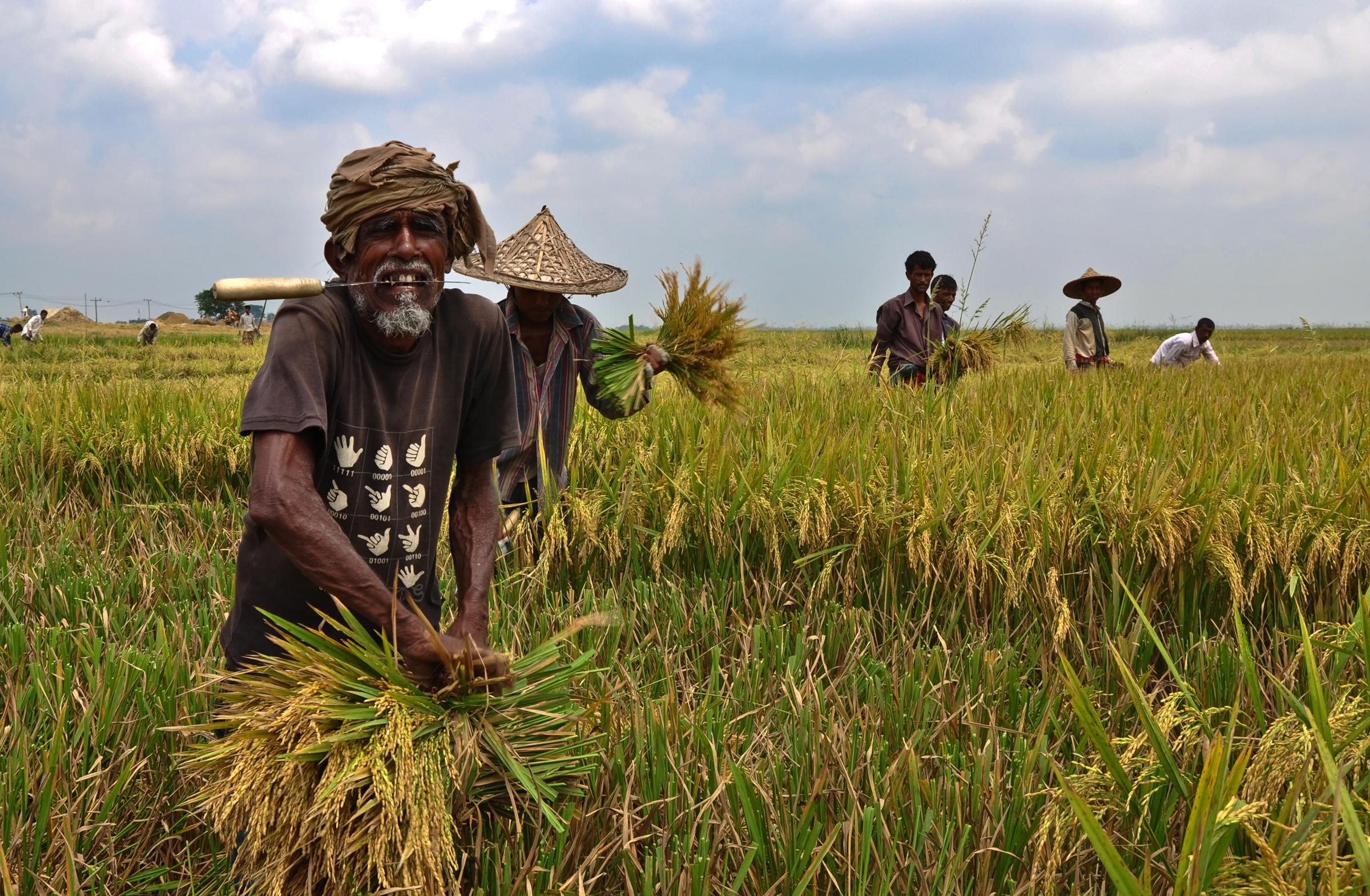
On 27 May 2026, the eve of Eid-ul-Azha, farmers in the haors of Sunamganj faced the festival without the boro rice that normally feeds their families for a whole year. Heavy rain and waterlogging, followed by a spell of very heavy rain and hill runoff, had drowned much of the crop in the district's wetland basins, Jagonews24's Sunamganj correspondent Lipson Ahmed reported that evening. The district administration said it had finalised a list of affected farmers and sent it to the higher authorities, but no one could say when the promised government assistance would reach them.
"Tomorrow is Eid. I had hoped to bring home the rice from the haor, keep a year's food and sell the rest. That never happened. All the rice went under water. Now how will I buy new clothes for the children for Eid? I cannot afford it," Islam Uddin, a farmer of Dekhar Haor in Sunamganj, told the reporter, breaking down in tears as he spoke.
He was not alone, the report said: there was distress in every farming household of the area. Of some 10 lakh farmers in the haor, the crop of more than a lakh had been submerged by rainwater, and it is this one harvest that provides their food for the whole year.
A year's food under water
Farmers in several haors of the district described the same loss. Latif Mia, also of Dekhar Haor, told Jagonews24: "I grew rice with great hope but gained nothing. All the rice went under rainwater. If I got the government aid now, I could at least keep the children happy at Eid."
Another farmer, Rahmat Ali, said: "We should have been happy with our families after bringing in the rice. Instead, after losing it, there is only despair and worry. I cannot sleep at night thinking how we will get through the year."
Abdul Mia, a farmer of Karchar Haor, said: "We toiled from morning to evening, and the crop was good. But it all went under water before we could bring it home." Mufacchir Rahman, a farmer of Shanir Haor, said: "This should be a time of Eid festivity in the haor. Instead the whole area is silent. The whole year's food has drowned. There is no Eid for us this time."
Earlier reports from the district showed how the loss had built up over the weeks before Eid. On 30 April bdnews24.com found farmers at Shialmara in Sadar upazila wading waist- and chest-deep to cut rotting paddy after three or four days of heavy rain and runoff. Farmers told the paper that half their crop had been lost, that they could not cut half of what remained for want of labourers, and that paddy they had already cut had sprouted for lack of sun and was now fit only as duck feed. Small, marginal and landless farmers who had grown the crop on borrowed money were left helpless, the report said.
On 13 May Prothom Alo described a farmer of Dekhar Haor, the largest haor in the district, who in a normal year stores more than 300 maunds of paddy and needs about 40 maunds for his household's food. With much of his land under water, he said he was now only trying to secure the family's food for the year, that he had borrowed for the season, and that a haor farmer takes four to five years to get out of debt after a year like this. Some of the paddy he had cut lay stacked for four days in the bad weather before it could be threshed, and part of it sprouted; a trader declined to buy it, saying the quality was poor. The Jagonews24 report of 27 May made the same point: with no sunshine, much of the rice that farmers recovered from the water began to germinate.
How the season's rain drowned the crop
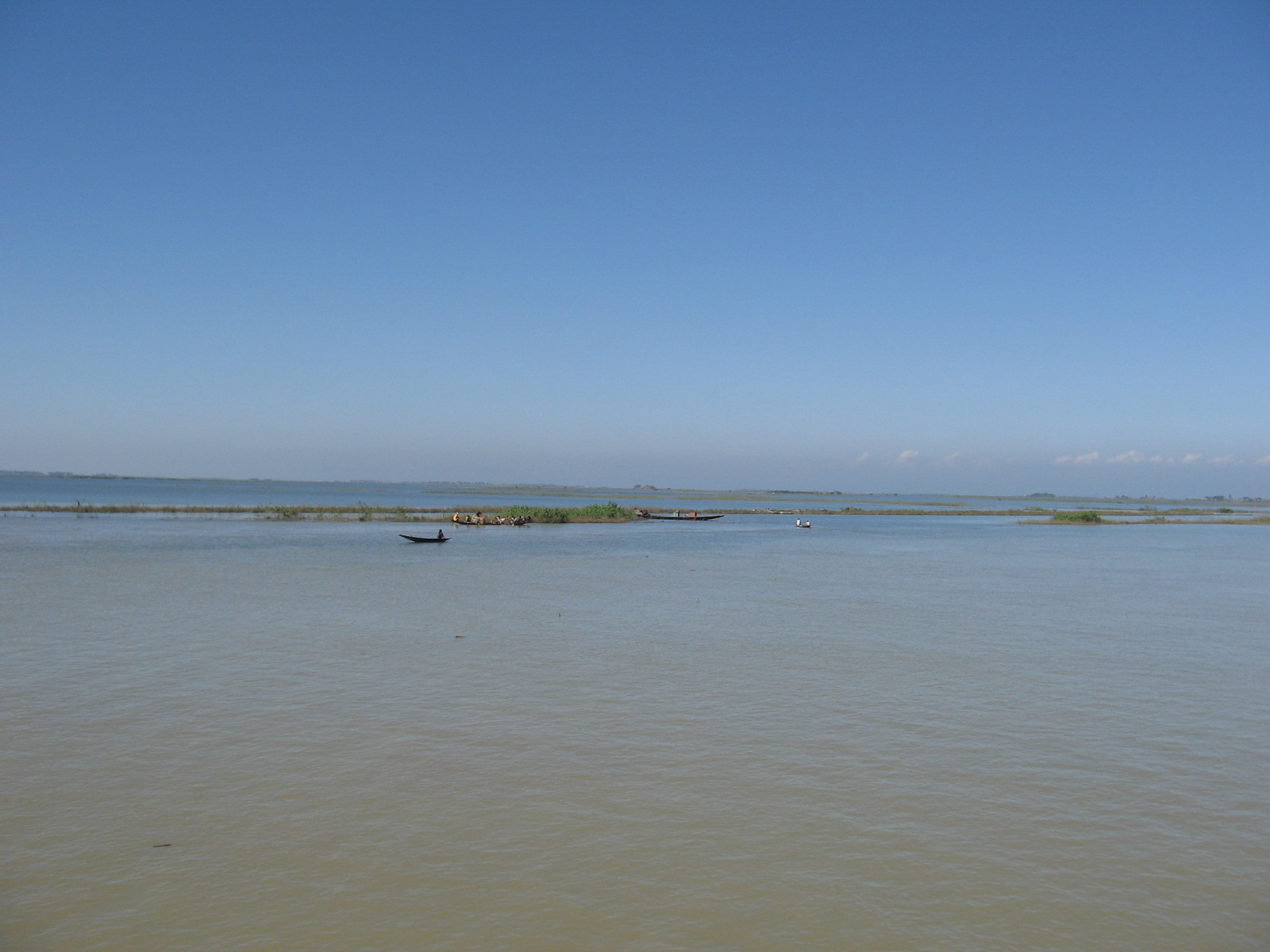
According to Jagonews24, excessive rain began in Sunamganj towards the end of March 2026 and caused waterlogging in many of the district's 137 haors. The district administration, the agriculture department and the Bangladesh Water Development Board (BWDB) tried to drain the water, but the farmers' rice went under in continuous heavy rain later in the season.
The trouble was visible early. On 19 March Prothom Alo reported that several days of heavy rain, storms and hail had left waterlogging in the Joarbhanga and Kanlar haors of Sadar upazila, Karchar Haor in Bishwambharpur, the Khai and Pakhimara haors in Shantiganj, Chhayar Haor in Shalla, Halir Haor in Jamalganj and Shanir Haor in Tahirpur. The district deputy director of the Department of Agricultural Extension (DAE), Mohammad Omar Faruk, then put the boro area at 223,500 hectares and said 370 hectares had been damaged by hail. According to the BWDB, 602 kilometres of embankment were being repaired and built that season through 710 projects in the district's 12 upazilas at a cost of Tk 145 crore, and the work was not yet finished. The general secretary of the Haor and River Protection Movement in Sunamganj, Obaidul Haque, said the deadline for the embankment work had passed on 28 February and blamed unplanned embankments for the waterlogging in some haors.
The worst damage came in the last week of April. bdnews24.com reported on 30 April that the BWDB had forecast floods and advised that 80 percent of the ripe paddy in the haors be cut by 28 April, but heavy rain started on 25 April. In the 24 hours of 27 and 28 April the board recorded 133 millimetres of rain at Laurergarh, 76 mm at Chhatak, 137 mm at Sunamganj and 205 mm at Derai, against only 27 mm on the same date a year earlier. Prothom Alo said the 137 mm at Sunamganj on the Monday night was the highest of the season and came with heavy runoff from the hills upstream.
At that point, bdnews24.com reported, the rivers had not overtopped and no embankment had broken in the district: the ripe crop lay drowned in rainwater that could not drain from the haors. Bijon Sen Roy, general secretary of Haor Bachao Andolan, a campaign for the protection of the haors, told the paper that unplanned embankments and the soil dug for them had silted up haors, rivers and water bodies year after year, so that the water had nowhere to go. The harvest slowed sharply: by 29 April in 2025 about 83 percent of the district's paddy had been cut, the DAE's figures showed, while in 2026 only 47.662 percent had been cut by the time of the report.
The official count and the farmers' count
The estimates of the damage rose through May, and farmers and campaigners said all along that the official figures understated it. On 30 April the agriculture department put the boro paddy submerged and spoiled at about 9,548 hectares, worth about Tk 200 crore, bdnews24.com reported. Bijon Sen Roy of Haor Bachao Andolan said that by the movement's count at least 60,000 hectares had gone under water and paddy worth about Tk 1,000 crore had been lost. Prothom Alo reported the same day DAE figures of 13,079 hectares submerged and 2,047 hectares damaged, with 113,811 hectares, or 51 percent, harvested.
By 13 May, Prothom Alo reported, the DAE put the area damaged by excessive rain and upstream runoff at 20,550 hectares and the value of the lost paddy at about Tk 500 crore, with 84.93 percent of the crop cut. Of the district's 223,511 hectares of boro, 165,275 hectares lay in the low haor and 58,236 hectares on higher non-haor land, and the production target was about 14 lakh tonnes. The deputy director said the final assessment had not been made and the damage would rise. In its report of 27 May, Jagonews24 gave the official figure as 20,000 hectares, while affected farmers and farmers' organisations claimed that about 40,000 hectares of paddy had gone under water in the district.
The counts of affected farmers also differed. According to the district administration, Jagonews24 reported, 1,29,559 farmers in Sunamganj were affected by excessive rain and waterlogging in 2026. On 16 May the English edition of Prothom Alo reported that the district had 378,705 farming families and 365,777 registered farmers, 223,807 of them small and medium farmers and 49,124 landless, and that paddy fields of around 98,000 farmers had been affected. On 30 April haor campaigners had told bdnews24.com that nearly all of the district's three and three-quarter lakh farmers had been affected to some degree.
Sunamganj was the hardest hit of a wider disaster. On 8 May The Daily Star quoted Md Selim Khan, additional secretary of the extension wing of the Ministry of Agriculture, as saying that boro on about 11 percent of the cropland of the haor region, or 49,073 hectares, had been damaged and that a further 17.5 percent was at risk, after embankment breaches and unusually heavy April rain. According to the ministry, more than 236,000 farmers in the seven haor districts, Sylhet, Sunamganj, Brahmanbaria, Habiganj, Moulvibazar, Netrokona and Kishoreganj, were facing losses, and officials put the damage at about Tk 1,047 crore. Prothom Alo reported on 16 May that Sunamganj and Netrokona together accounted for around 71 percent of the crop loss so far.
Aid promised before Eid
On 29 April, Prothom Alo reported, Prime Minister Tarique Rahman told parliament that farmers affected by heavy rain in the haor region would be identified and given government assistance for three months. On 4 May Disaster Management and Relief Minister Asadul Habib Dulu said financial and food assistance would be given for three months to around 100,000 families affected by the floods in the haor region, bdnews24.com reported.
The next day, 5 May, the minister visited Sunamganj with Agriculture Minister Mohammad Aminur Rashid and other officials. At a meeting at the Sunamganj Circuit House he said the government would prepare a corruption-free and accurate list of affected people, the Dhaka Tribune reported, and he later formally launched the three-month assistance programme by distributing financial support among affected farmers of Karchar Haor in Bishwambharpur upazila. The same day the Ministry of Disaster Management and Relief allocated 10 tonnes of rice and Tk 250,000 in cash for 500 disaster-affected people in Sunamganj, based on an initial list from the district administration, bdnews24.com reported.
On 8 May The Daily Star reported that officials were preparing lists of affected farmers and that emergency support would begin within days and run for the next three months; the minister had announced earlier that food assistance would be given through a special card system. By 16 May the details were still not settled. Officials of the local administration and the agriculture department told Prothom Alo that severely affected farmers might receive Tk 7,500 a month, moderately affected farmers Tk 5,000 and less affected farmers Tk 2,500, with a proposal of 20 to 30 kilograms of rice each, but that no final decision had been made. Disaster Management and Relief Secretary Md Saidur Rahman Khan told the paper that lists had so far arrived from two districts, that each family would receive 15 kilograms of rice a month for three months along with a card for fixed cash support, and that assistance would be given before Eid-ul-Azha.
Local farmers and organisations told Prothom Alo that there were already allegations about the preparation of the beneficiary lists and that local political figures had become involved; they asked that genuine victims be assured of help. A farmer of Dekhar Haor said he had heard the local union parishad member was collecting names, but that his name had not been included. Sunamganj Additional Deputy Commissioner (General) Md Matiur Rahman Khan said a preliminary list had been compiled through field inquiries and was being verified.
By 27 May the list was complete. The DAE deputy director in Sunamganj, Omar Faruk, told Jagonews24: "Boro rice was grown on 2,23,511 hectares in Sunamganj this year. But waterlogging from rain submerged the rice of many farmers. We have prepared their list and handed it to the district administration." Additional Deputy Commissioner Md Matiur Rahman Khan said the list had been sent to all the relevant higher authorities. "Those who cultivated land have been included in the list of affected farmers. But I cannot confirm when they will receive assistance," he said. Farmers told the reporter that if the aid had come before Eid, they might have been able to bring smiles to their children's faces.

Debt, straw and the Eid market
For haor families the loss of the boro crop reaches far beyond the dinner plate. A farmer in Netrokona told The Daily Star in its report of 8 May that the haor gives only one crop a year and that the money from selling the rice pays for the children's schooling, medical care and every other household expense. Of more than 40 farmers the paper spoke to across the seven haor districts, more than 25 said the situation had trapped them in a cycle of debt. A Dekhar Haor farmer who had cultivated 1.2 hectares, half of it on leased land on which half the crop goes to the owner, told the paper he had expected more than 100 maunds but saved 50, that his family needed at least 70 maunds, and that selling paddy at Tk 700 a maund would not cover his loan and interest. The economist Abdul Bayes, a former vice-chancellor of Jahangirnagar University, told the paper that food aid alone would not solve the crisis and suggested loan rescheduling, repayment in instalments or interest waivers.
The lost harvest also meant lost straw, the main fodder for haor cattle. The Dekhar Haor farmer quoted by Prothom Alo on 13 May said there would be a fodder shortage because enough straw could not be gathered from the drowned fields, and that the whole area faced the same problem. In the Kishoreganj haors Jagonews24 reported on 10 May that straw had rotted in the continuous rain and fields lay under water, so that many farmers were selling cows and goats before Eid because they could not feed them, and that some in the trade expected an effect on the sacrificial animal markets of the coming Eid.
The festival itself was fixed on 18 May, when the National Moon Sighting Committee, meeting at the Islamic Foundation in Baitul Mukarram, announced that the Zil Hajj moon had been sighted and that Eid-ul-Azha would be celebrated across Bangladesh on 28 May, bdnews24.com reported. The government had declared a seven-day holiday from 25 to 31 May. It was on the evening before that Eid that the Jagonews24 report recorded the silence in the Sunamganj haors.
Sunamganj and its haors
A haor is a large bowl-shaped depression that fills with river and rain water in the monsoon and dries out in the post-monsoon months, Banglapedia explains. The haor basin of north-eastern Bangladesh is bounded by the Meghalaya hills of India to the north and holds about 47 major haors and some 6,300 beels. Rivers rising in the Indian hills flood the plains up to six metres deep, and the plains stay under water for seven to eight months; in the dry season most of the water drains away, exposing rich alluvial soil that is widely cultivated for rice. According to Banglapedia, the entire Sunamganj district is covered by haors, and Saneer (Shanir) Haor and Dekar (Dekhar) Haor are among the most prominent haors of greater Sylhet.
Sunamganj district covers 3,526.12 square kilometres in Sylhet division. It is bounded by Meghalaya to the north, Habiganj and Kishoreganj districts to the south, Sylhet district to the east and Netrokona district to the west, and its main rivers are the Surma, the Kushiyara, the Dhamalia and the Jadukata, according to Banglapedia. The 2022 census counted 2,695,496 people in the district. In the 2011 census, 66.99 percent of the district's households named agriculture as their main source of income. The district has 12 upazilas, and in 2026 its farmers cultivated boro in 137 large and small haors.
Boro, the single crop, and the race against early floods
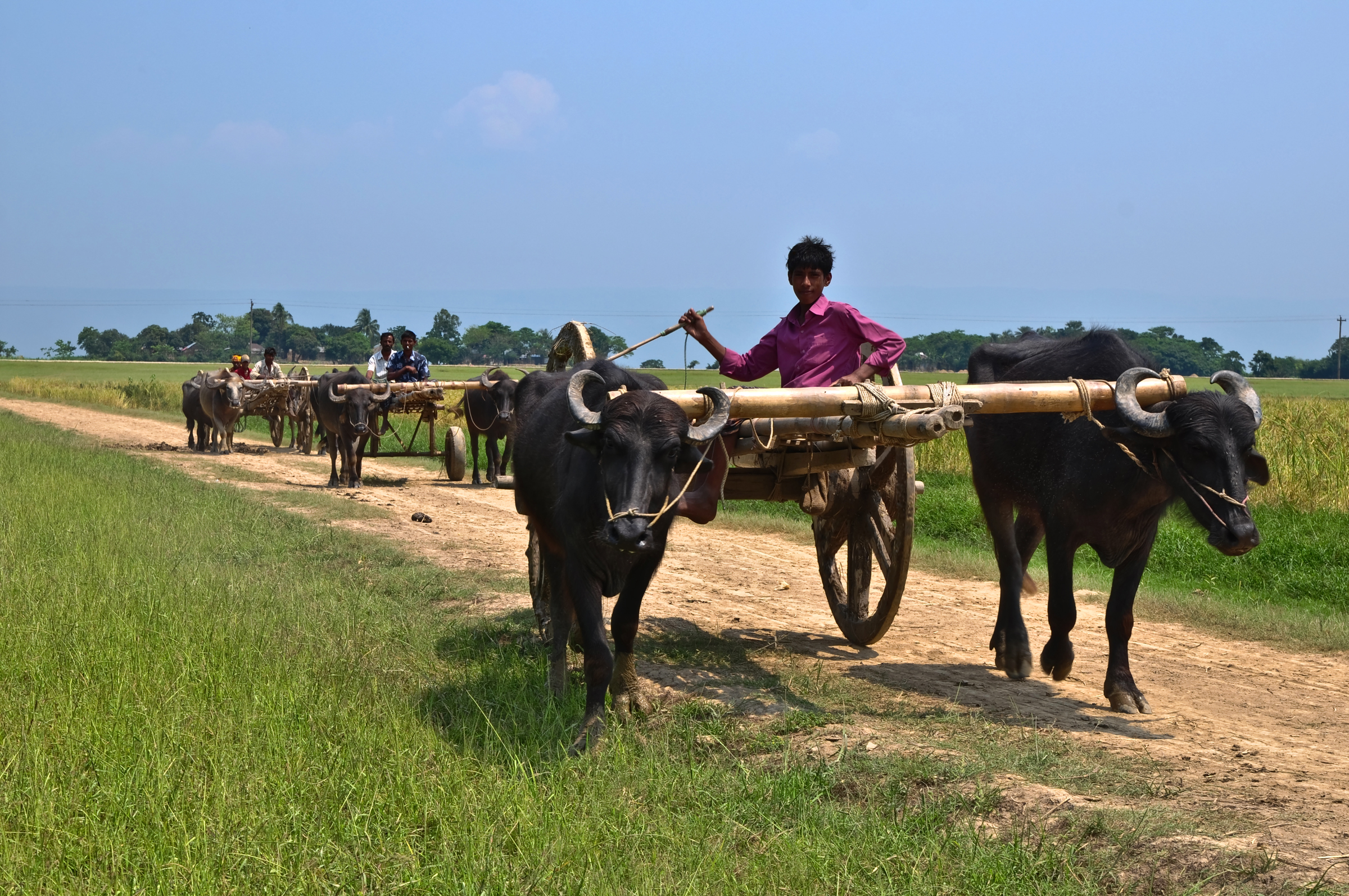
Boro is the dry-season rice of Bangladesh. It is grown largely on irrigation, transplanted between December and February and harvested between April and June, and it provides about 55 percent of the country's total rice production, The Daily Star wrote on 8 May. The national boro area for 2025-26 rose 3.29 percent on the previous year to 50.50 lakh hectares, with a production target of 2.24 crore tonnes, the paper reported; output had risen from 2.01 crore tonnes in fiscal 2022 to 2.13 crore tonnes in the 2024-25 season.
In the haors the crop is a race against the early flood. At a press conference on 4 May at Bangladesh Agricultural University (BAU) in Mymensingh, reported by Jagonews24 on 6 May, the lead researcher of a BAU project on short-duration boro, Professor Habibur Rahman Pramanik, said that 60 percent of the country's rice is produced in the boro season and 18 percent of boro output comes from the haors. Early floods damage about 10 percent of the haor crop almost every year and sometimes all of it, he said. His team's analysis of 36 years of data found that about 50 percent of flash floods in the haors came in May and about 42 percent in the second half of April, with fewer in late March and the first half of April, so that harvesting before mid-April greatly reduces the risk.
The variety most widely grown in the haors, BRRI dhan92, takes about 160 days, he said, and is usually not ready until mid-Baishakh, when the early floods arrive. Short-duration varieties such as BRRI dhan88, BRRI dhan101, BRRI dhan113, BRRI dhan105 and BRRI dhan25 take about 145 days and can be harvested about 15 days earlier from the same planting. To harvest in the first half of April, seedlings must be transplanted by 10 January; in the project's trials BRRI dhan88 planted on 26 December was cut on 8 April. He said the short-duration varieties yield one to one and a half tonnes less, which makes farmers reluctant to grow them, and that mechanisation, with transplanters and harvesters, is essential because the whole haor crop ripens at once.
Lessons from 2017
Haor farmers' fear of the pre-monsoon flood rests on hard experience. In April 2017 flash floods and heavy rain inundated croplands across the haors of the north-east. The Dhaka Tribune reported on 8 April 2017 that flood water had entered the Sunamganj region on 28 March and kept rising, and that officials said at least 27,000 hectares in the district were already under water. Farmers there alleged that irregularities and delays in the BWDB's embankment works had caused their losses: they said the board had received Tk 55 crore in the 2016-17 fiscal year to repair and build boro protection embankments in 48 haors of the district, and that the work, due to begin in December, had begun in February, so that most embankments were unfinished when the flood struck.
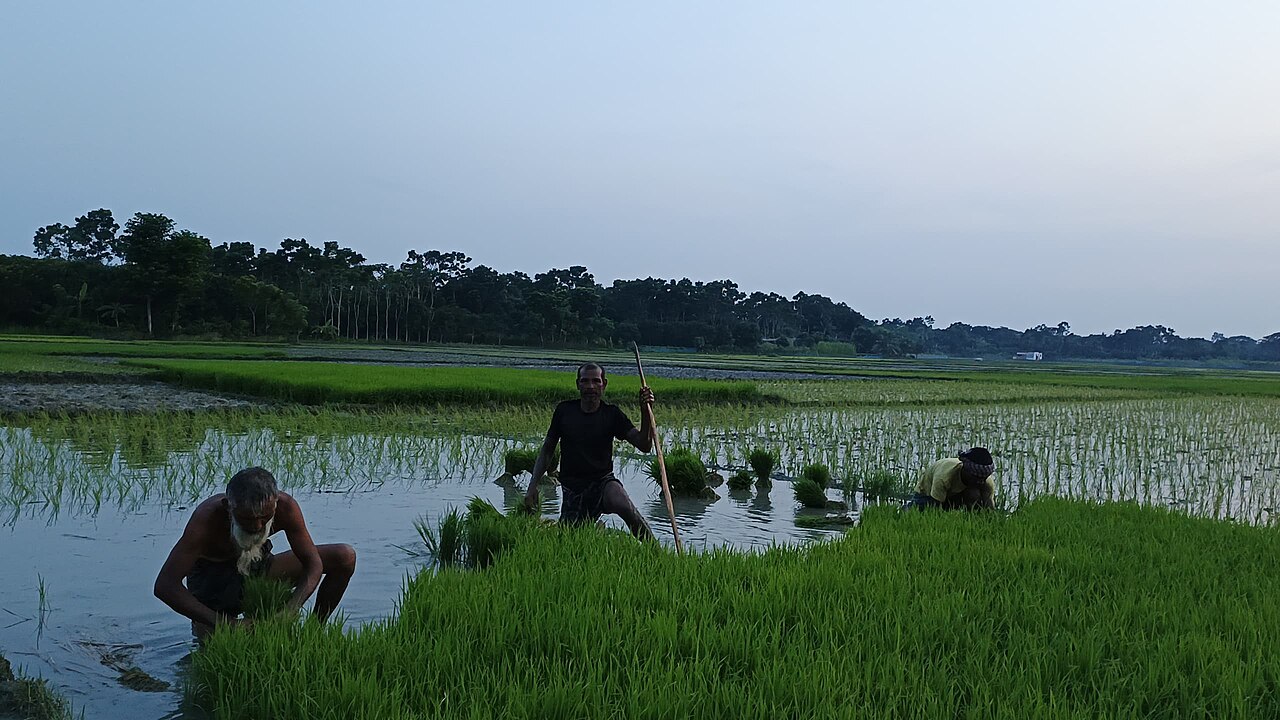
Photo: Balaram Mahalder / Wikimedia Commons (CC BY-SA 3.0)
Sources: Jagonews24, Prothom Alo, bdnews24.com, The Daily Star, Dhaka Tribune, Banglapedia, Wikipedia
Comments
(0)