
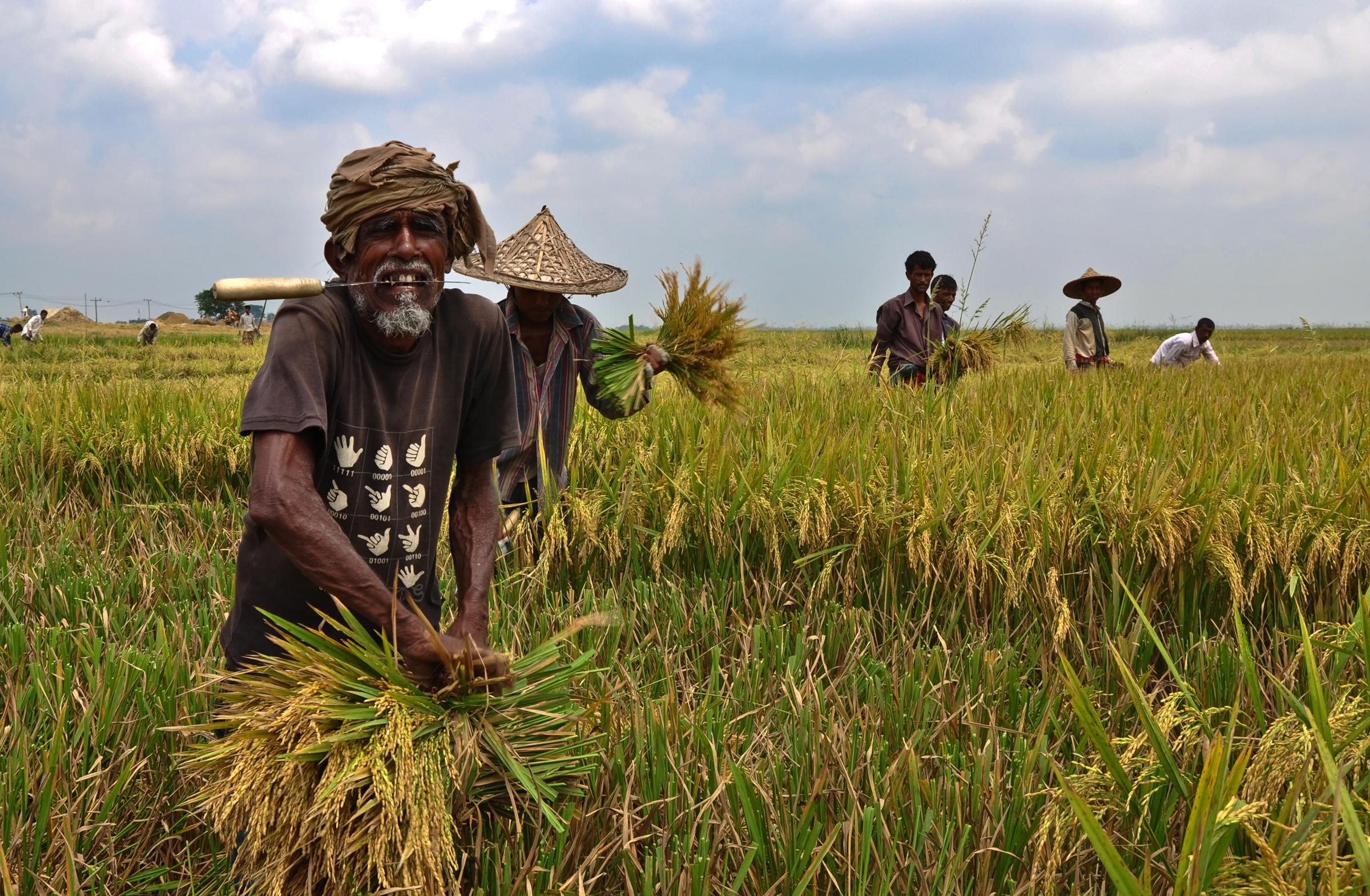
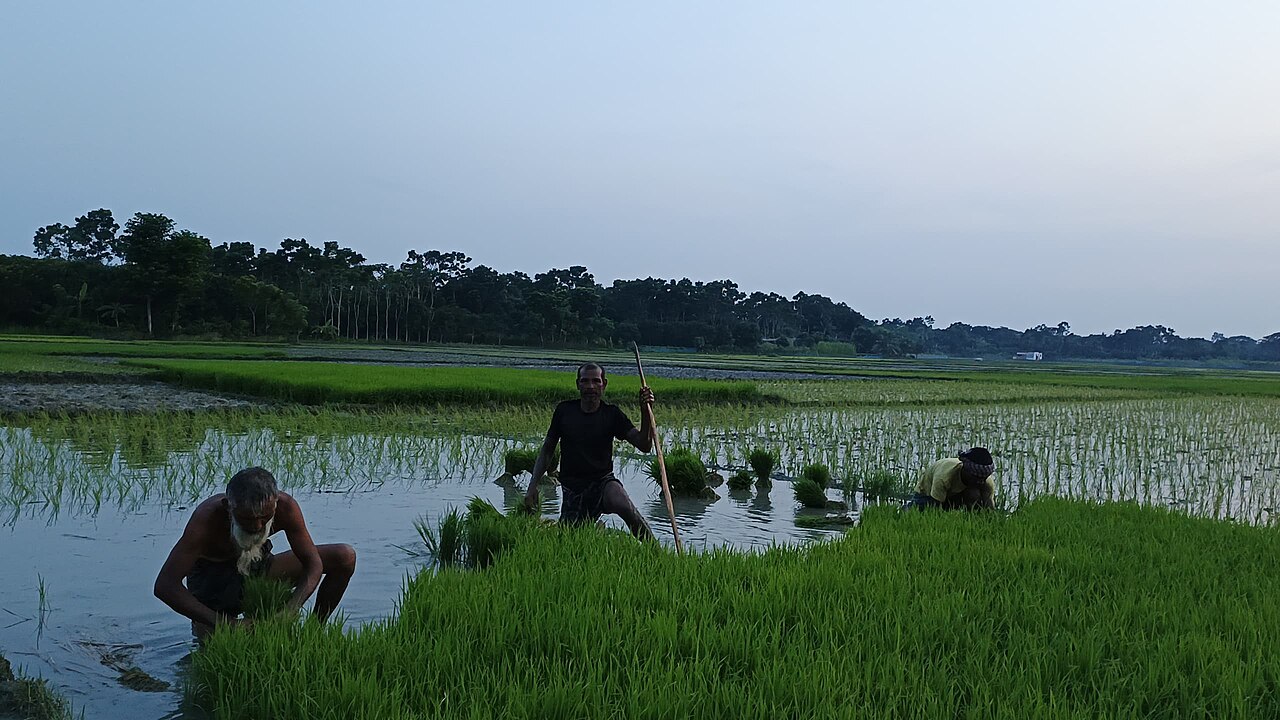
On the first day of the Bengali new year, Tuesday 14 April 2026, more than a lakh farmers went into at least 25 haors of Sunamganj with sickles as the sun rose, to begin cutting boro paddy. According to Jagonews24's report that day, men cut the crop in the fields while women threshed it on the threshing floors and spread it out to dry in the sun.
The report said favourable weather had given a good boro yield across Sunamganj's 137 haors that season. A haor is a bowl- or saucer-shaped shallow wetland in north-eastern Bangladesh that fills with river and canal water in the monsoon and becomes a vast stretch of open water. Boro rice is grown on this land in the dry season, and farmers aim to bring it in before the monsoon water arrives.
The agriculture department's figures
According to figures the district agriculture department gave Jagonews24, farmers in Sunamganj had grown boro on 223,500 hectares that season, and the department put the production from this land at 1,370,300 tonnes of paddy.
Earlier, on 10 April, ATN News reported, citing the Department of Agricultural Extension (DAE), that boro had been sown on 223,511 hectares in the district with a production target of about 1.4 million tonnes. By then about 114 hectares of paddy, including the early variety BRRI dhan96, had been cut, with the early harvest under way mainly in the haors of Madhyanagar, Jamalganj, Shantiganj and Bishwambharpur upazilas. The same report said 577 combine harvesters and more than 6,000 labourers were working on the harvest, and there were plans to hire 50 more harvesters.
Omar Faruk, deputy director of the DAE in Sunamganj, told Jagonews24 on 14 April that the haor harvest had begun, farmers were cutting their paddy happily and the department was advising them in the field. Bringing in the paddy of the whole haor area could take until the middle of May, he said.
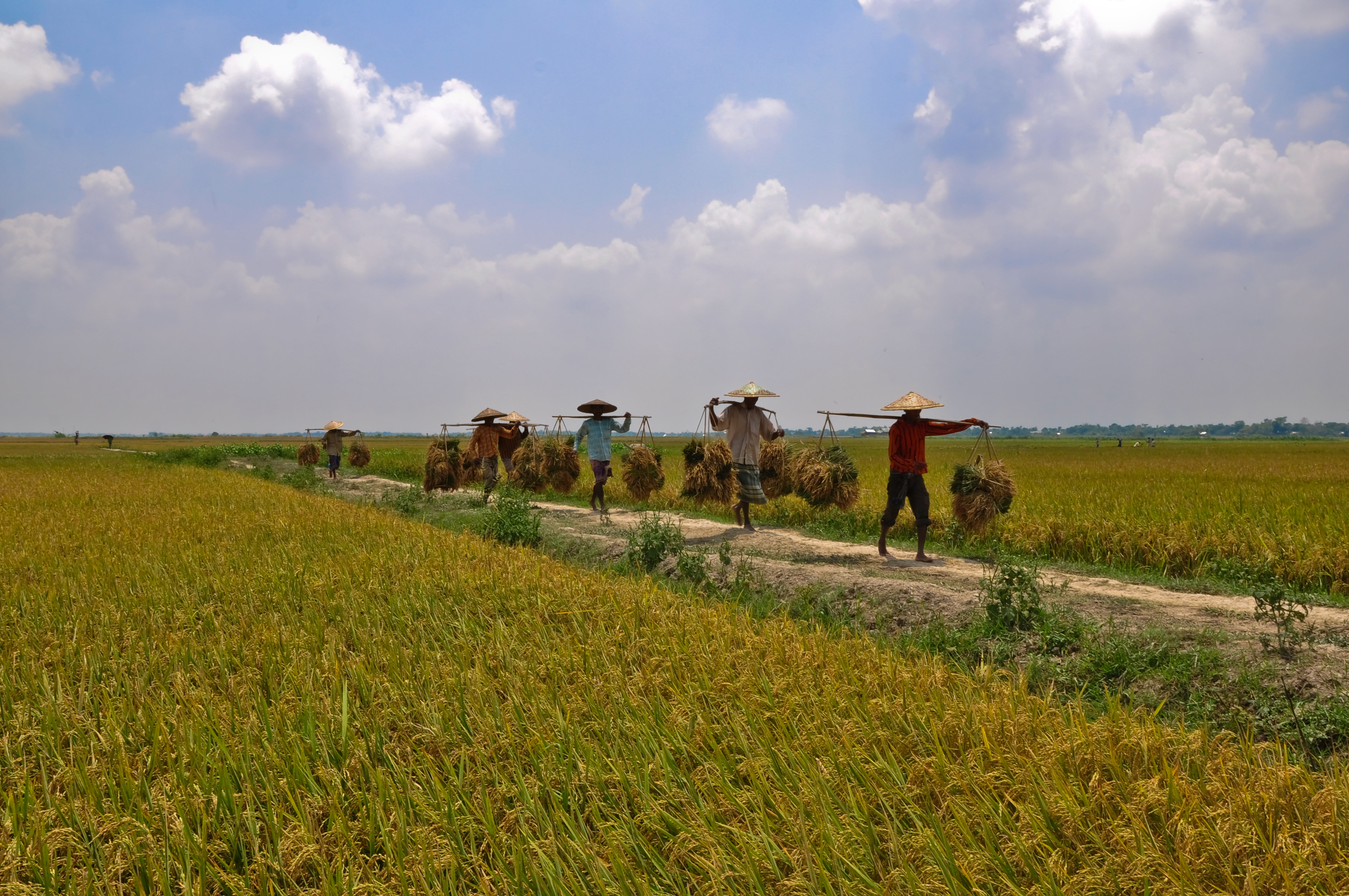
Harvesting after weeks of worry over rain
Ziaul Haque, a farmer in Karchar haor, told Jagonews24 he was very happy to bring home the boro he had planted with such effort on the very first day of Boishakh. Nazrul Islam, another farmer in the same haor, said bringing in hard-grown paddy on the first day of Boishakh was a joy of its own.
Saju Mia, a farmer in Dekhar haor, said the way the rain had started he had feared he would not be able to bring in his paddy that year, but that day he was cutting it with hired labourers. Shafi Mia, also of Dekhar haor, said haor farmers' hopes rest on this crop, and only when it is brought home do the district's 10 lakh farmers smile.
The worry was real. The Daily Ittefaq reported that on 11 April the Gujauni embankment in Dekhar haor suddenly broke and water began pouring into the haor. Thousands of farmers from nearby villages came with bamboo, baskets and spades and closed the breach after about two hours, but some low-lying land had already gone under. Citing the district DAE, the paper said Dekhar haor, where people from three upazilas including Sadar own land, has more than 45,000 hectares, of which 24,214 hectares were cultivated that season.
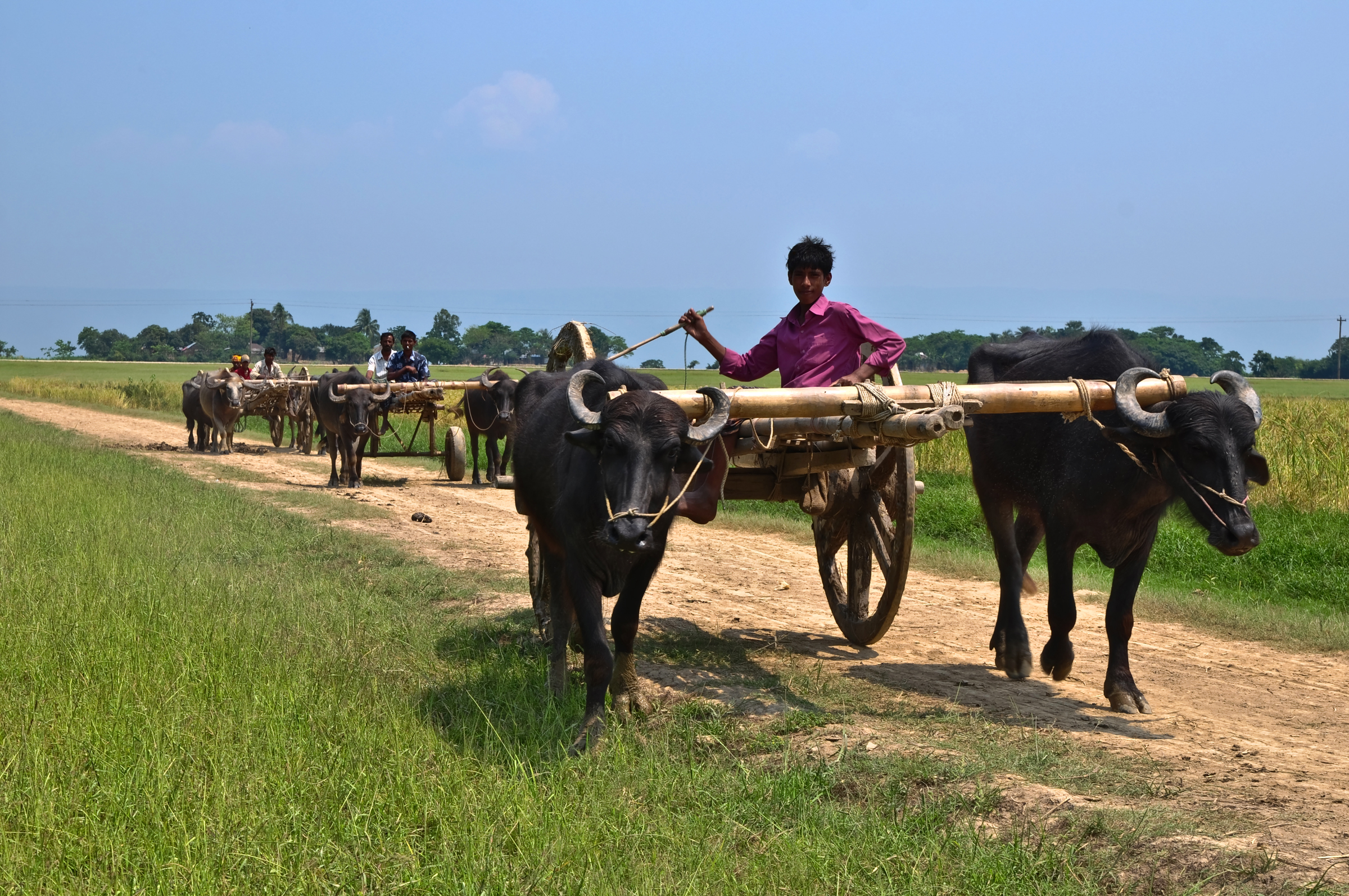
Dependence on a single crop
Ittefaq's report called boro paddy the "only crop" of Dekhar haor, and said farmers had been anxious about it for the whole of the previous week. A farmer in Jamalganj told ATN News that 15 of his 80 kear of boro land were then under water because of waterlogging. That is why the harvest weeks from late Chaitra through Boishakh matter so much to haor farmers. Pohela Boishakh is observed in Bangladesh on 14 April, and in 2026 it was the day the Sunamganj haor harvest got fully under way.
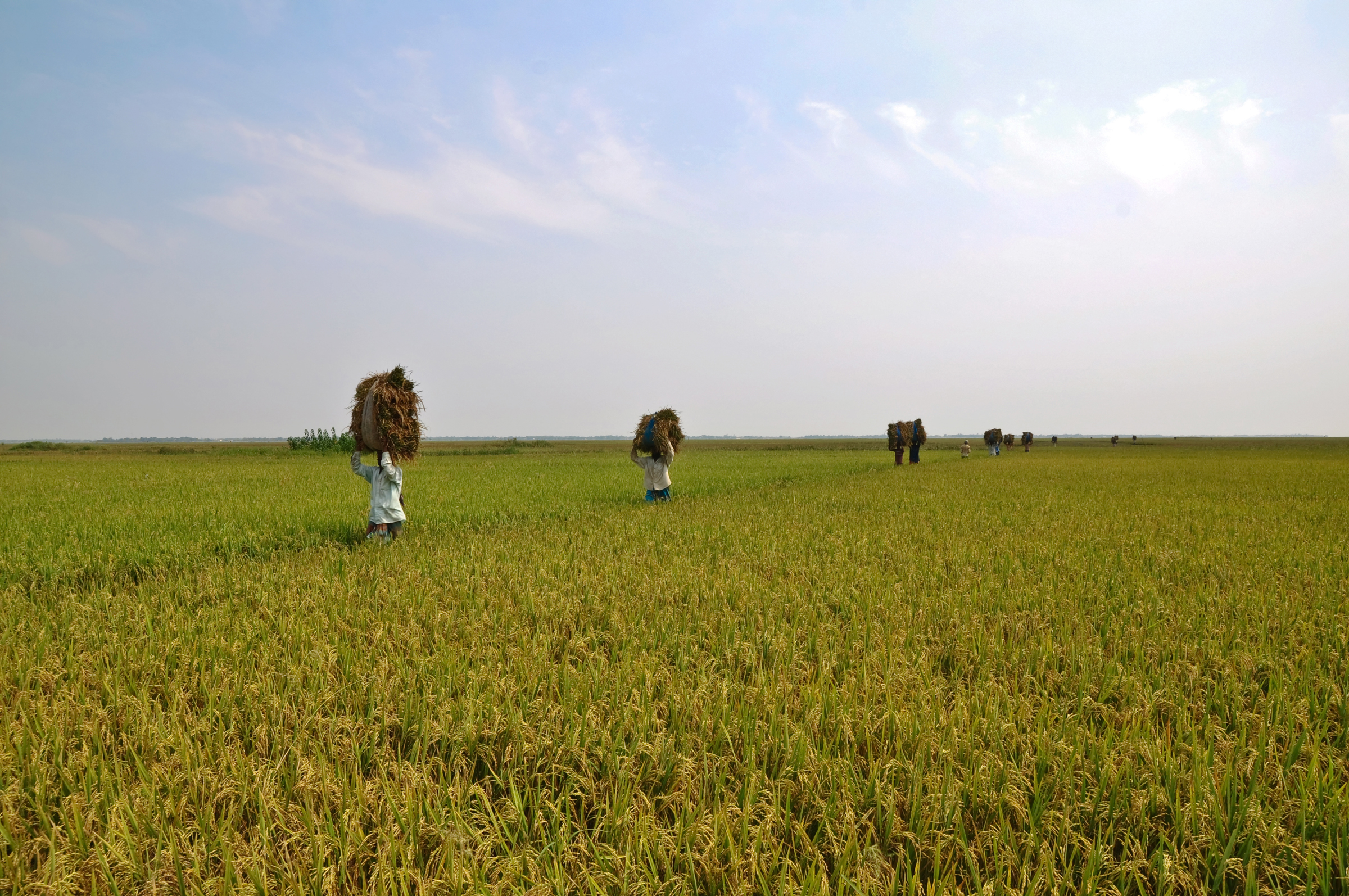
Photo: Balaram Mahalder / Wikimedia Commons (CC BY-SA 3.0)
Sources: Jagonews24, ATN News, The Daily Ittefaq, Wikipedia
Comments
(0)