
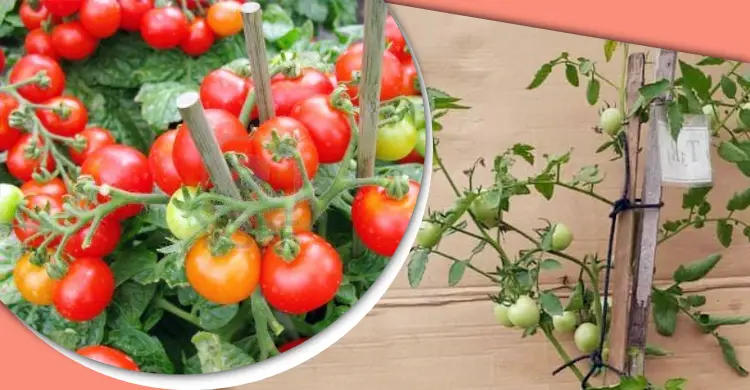
Tomato is a winter vegetable, but it is valued all year round for its nutrition and many uses. Although tomatoes yield well in winter, they do not do so in summer, so summer tomato prices are beyond the reach of ordinary people.
A team of researchers at Sher-e-Bangla Agricultural University (SAU) is working to grow high-yielding tomatoes in summer too. According to the researchers, one of the main reasons for low yields is tomato wilt disease, which kills almost every plant it infects.
The researchers claim, however, that the disease can be prevented completely not through high-yielding varieties but simply through biological treatment of the soil. They used mustard oil cake to treat the soil and achieved complete success.
They expressed hope that farmers would profit from this method and that it would make high-yielding tomato production possible, helping to meet summer demand for tomatoes. If yields match demand, prices will also come within reach of ordinary people, they said.
The research team
The research, funded by the University Grants Commission of Bangladesh, was led by Prof Dr Md Belal Hossain of the Department of Plant Pathology at SAU, assisted by master's student Md Ariful Islam.
The researchers said warm temperatures and humidity are an ideal environment for fungi, bacteria and plant nematodes. In summer the soil is very warm and humid, so tomato plants are easily attacked by fungi, bacteria and plant nematodes.
Prof Dr Md Belal Hossain said most summer tomatoes are grown in the north-west of the country. If a plant is attacked by wilt, it dies without fail. So although summer tomatoes fetch good prices, farmers lose interest in growing them. As a result, most tomatoes available in summer are stored winter tomatoes, which are also very expensive.
Symptoms of wilt
Describing the symptoms, he said the disease can strike at any stage of growth and does great damage. The older leaves of an infected plant bend downwards and droop, and gradually the whole plant wilts and dies. Brown spots appear on the stem and roots. First the leaves of the branches on one side of the stem turn yellow, then other parts yellow too. As the disease advances, all the leaves turn yellow and finally the whole branch dies. In this way the whole plant slowly dies.
Treating the soil
On prevention, the researcher said the disease usually occurs in summer because both soil temperature and humidity are high. If soil temperature and humidity can be reduced, bacteria, fungi and plant nematodes will not find a favourable environment.
For this, the soil should be treated biologically by mixing a set amount of mustard oil cake into it seven days before planting tomato seedlings. Tomato seedlings planted in treated soil will not get wilt. For the treatment, 500 grams of mustard oil cake is used with 10 kg of soil, and the mixed soil must be dried for 7 to 10 days.
He added that if this simple soil treatment can be spread among farmers, they will profit, tomato prices in the market will fall, and fresh tomatoes will be available.
Source: Jagonews24. First published in Bengali on The Agro News.


Comments
(0)