
A two-decade genomic analysis of a commercial sugar beet breeding programme has mapped in new detail how hybrid seed production has reshaped the plants used to make it, according to a study published online on 19 September in Theoretical and Applied Genetics. The researchers say the results give breeders a clearer guide to managing disease resistance and genetic diversity.
The work was carried out by INRAE, France's national agriculture and environment research institute, with Universite Paris-Saclay and AgroParisTech, together with United Beet Seeds, the company formed in 2024 by Groupe Florimond Desprez and DLF Seeds that includes the SESVanderHave and Maribo Seed brands. Augustin Desprez is the lead author.
Commercial beet seed comes from three-way hybrids: a male-sterile female line is crossed with a maintainer line to make a hybrid female parent, which is then crossed with a separate pollen-producing male line. Combined with monogermy, which gives one seedling per seed and allows precise machine planting, this system turned beet seed into a mechanised industry.
The team analysed 1,285 breeding lines and 11,099 individually genotyped plants from 1998 to 2018, in three eras. The genetic distance between the male and female pools widened, with Fst rising from 0.25 to 0.27 and the share of strongly differentiated markers from 19.3% to 22.7%, a sign of deliberate heterotic pool management to maximise hybrid vigour. Diversity within the male pool slipped from 0.35 to 0.33, a side effect breeders will want to watch.
A region on chromosome 3 holding the Rz1 gene, which gives resistance to rhizomania, a soil-borne virus that can cut yields by 50% or more, came in two versions split almost entirely by pool: one in more than 90% of male lines, the other mostly in the female pool. Around BvBTC1, a gene that controls bolting, the study found 15 versions spread in complementary patterns.
The study also tracked a beet cyst nematode tolerance region on chromosome 5, introduced in the early 2000s, as it spread from 9% of lines in the earliest era to 43% in the latest. That gives seed companies a real timeline for how fast a valuable new resistance trait can move through a commercial breeding pipeline.
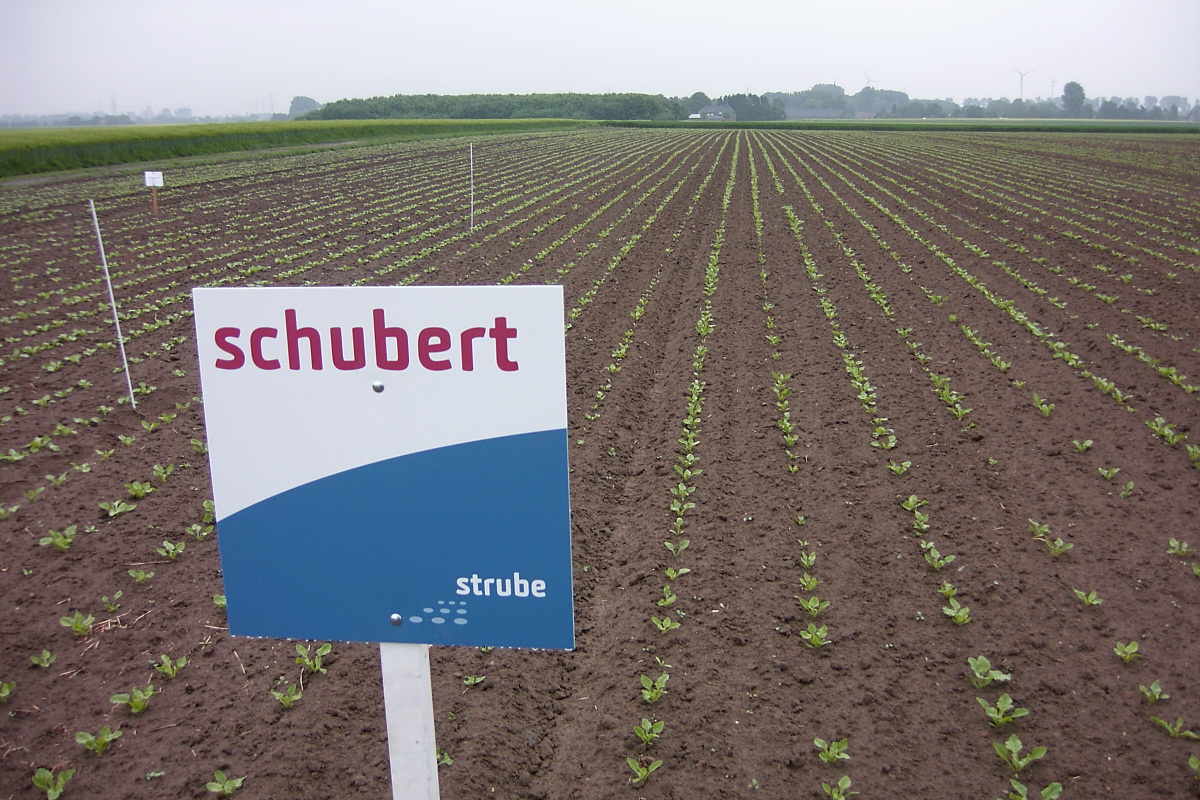
Photo: Blonder1984 / Wikimedia Commons (Public domain)
Source: Global Agriculture



Comments
(0)