
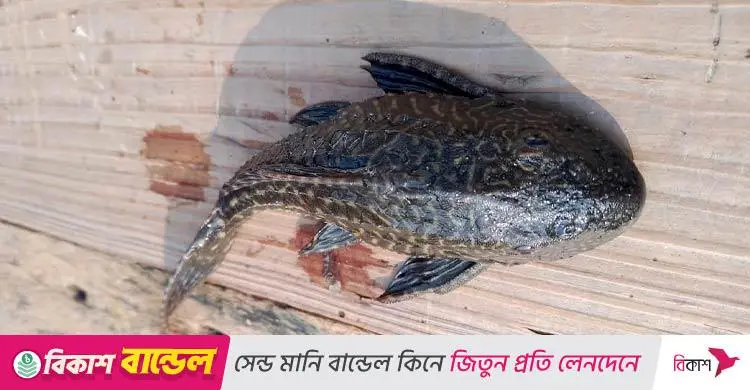
The sucker fish is generally regarded as a toxic, low-value fish, and its spread is reducing fish in rivers, raising fears of disaster. Now a solution may be at hand: a group of students, researchers and entrepreneurs at Sher-e-Bangla Agricultural University (SAU) has succeeded in making balanced, quality animal feed from sucker fish.
From problem to resource
After about a year of research, the team made nutritious feed for cats and other animals using sucker fish, and field trials have been completed successfully. The project was funded by the international organisation IAAS World. The young researchers placed fourth worldwide in IAAS World's Global Project Competition 2024 with the theme "Producing animal feed from sucker fish".
The project was supervised by Professor Dr Kazi Ahsan Habib of the Faculty of Fisheries and Marine Science, lecturer Nazmus Sakib Anik of the Department of Fisheries Biology and Genetics, Professor Golam Mohammad Patwary of the Faculty of Animal Science and Veterinary Medicine and lecturer Abdur Rahman Rafi.
Team member Niamul Islam said that alongside the current "waste to wealth" theme, they wanted to establish "problem to wealth", showing how a problem like sucker fish can be turned into a resource. The feed achieved 70 per cent success in its first test and good results in the second. Marketing it through a commercial company could reduce pressure on feed imports, he said.
A way to control the fish
Professor Kazi Ahsan Habib said sucker fish harm aquatic ecosystems and have spread from the Buriganga to the haor region; controlling them is necessary but difficult. SAU is researching how to make feed for poultry, cats, dogs and other pets from sucker fish. The feed was tested on cats with the hoped-for results; the cats eat it.
The team is working on further formulations to suit dogs and poultry. If a commercial company markets it, it would offer a way to control sucker fish, he said, and efforts are under way to make poultry, fish and other animal feed from unconventional organic materials.
Source: Jagonews24 (reported by Saeed Ahmed). First published in Bengali on The Agro News.
Comments
(0)