
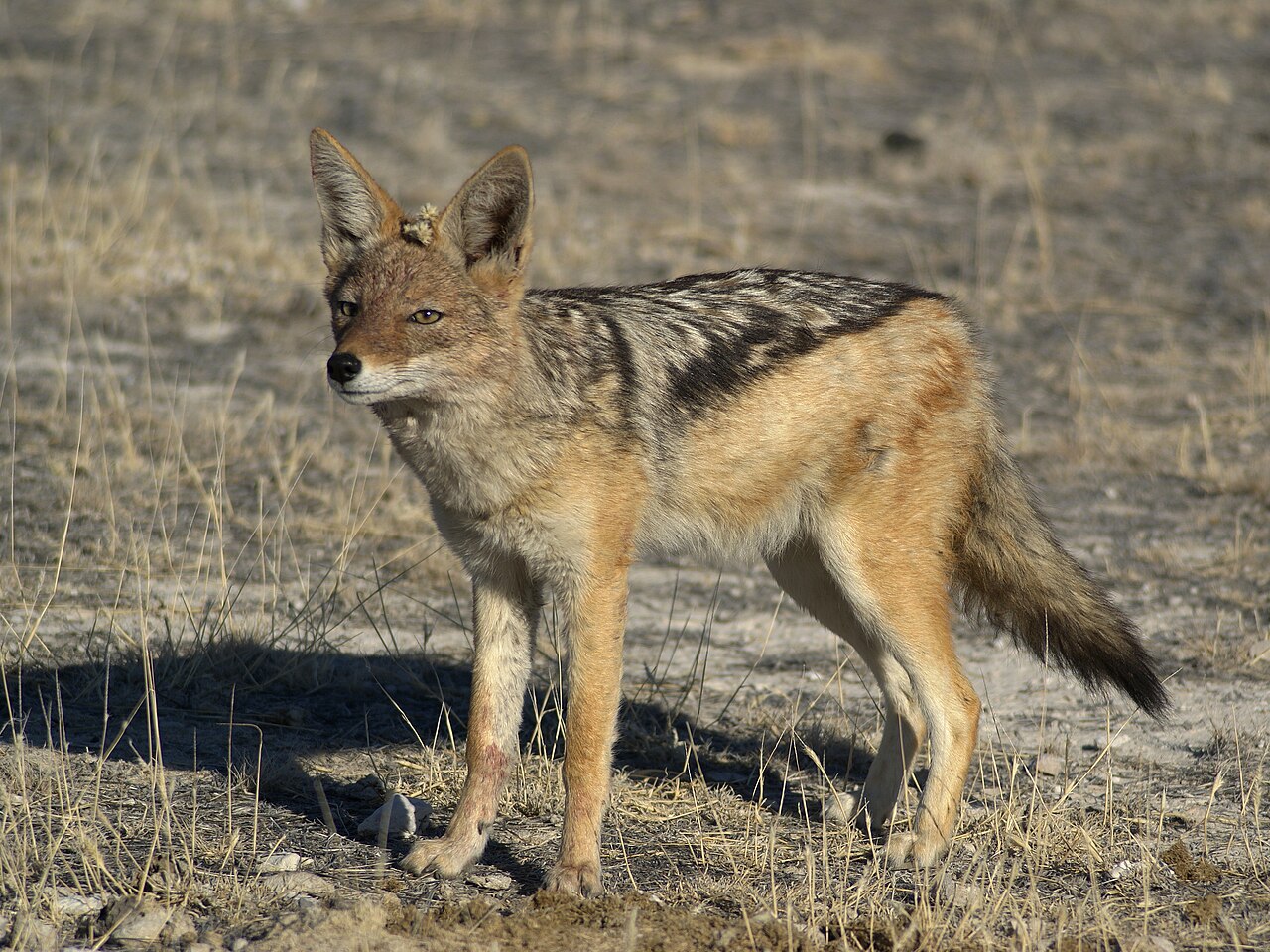
A Stellenbosch University researcher has built an automated sensor network that films black-backed jackals at night on farms and sends the footage to the cloud without human intervention, aiming to help sheep farmers deal with a predator that culling has not controlled, Food for Mzansi reported.
Black-backed jackals prey on sheep and cause heavy livestock losses, along with financial and psychological stress, for small-scale, subsistence and emerging farmers. Megan le Roux, a doctoral student in the university's digital signal processing laboratory, said legal control methods, including "calling and shooting at night" with recorded distress calls, have not solved the problem, and ecologists believe culling disrupts jackal social structure, leading younger females to breed and other jackals to move in, which may even increase predation. She said jackal numbers have risen significantly in South Africa's livestock areas, probably because of habitat loss and a decline in their natural enemies.
For her master's degree in electronic engineering, Le Roux developed a biotelemetry system of wireless sensor nodes placed at fixed points on a farm. A passive infrared sensor detects movement and triggers a low-light camera to record 30-second clips, which each node sends over long-range Wi-Fi through an access point to Google Drive, while the nodes also log temperature and humidity at set intervals. Unlike conventional camera traps, it needs no manual battery changes or SD-card collection.
After testing in simulation software, the system was deployed on a rural farm and an equestrian farm. In a five-day trial from 5 to 10 November 2025 it reliably captured footage by day and night and transmitted 709 clips, about 1.3 gigabytes of data, with no one touching it.
Le Roux said the data on the hunting, feeding and breeding of jackals and other mesopredators could help farmers and wildlife biologists understand their behaviour and, in the long term, support more ethical and ecologically sustainable ways of managing problem animals. The laboratory is run by professors Riaan Wolhuter and Thomas Niesler.
Photo: Hans Hillewaert / Wikimedia Commons (CC BY-SA 4.0)
Source: Food for Mzansi
Comments
(0)