
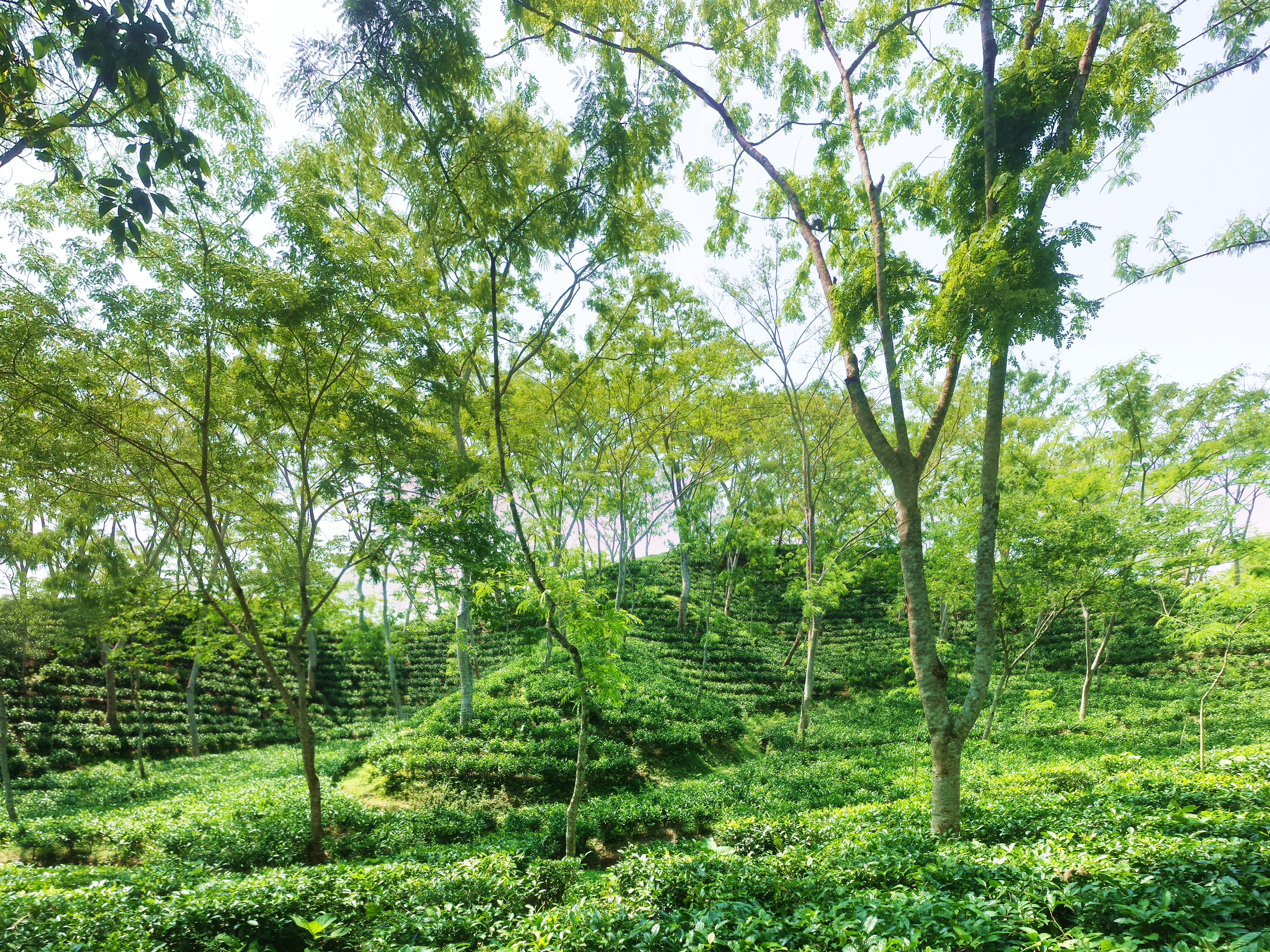
In Srimangal upazila of Moulvibazar district, a young man named Debjyoti Chakraborty Dwip treats and cares for sick and injured animals on his own initiative. Riding a bicycle through town neighbourhoods, village paths and the workers' lines of the tea estates, he gives medicine to sick dogs and dresses their wounds. His work was described in a feature by Jibon Pal published by Jagonews24 on 9 March 2025. According to the report, he has made standing by these animals his own duty, and he does it at his own expense rather than under any organisation or project.
A large part of his salary goes on treatment
Jagonews24 reported that Dwip works as a medical assistant at a private clinic in Srimangal town. Although he holds a job, his heart is with the helpless animals, and he spends a large part of his monthly salary on their medicine and food. A few friends and elder brothers sometimes lend a hand to encourage him.
Many people have offered to support his work with money, the report said, but Dwip has carried on buying medicine and food from his own earnings rather than taking help from others. On his birthday, as a good deed, he treated 10 dogs in different parts of the town. Among them were 'Monty', a dog of the Srimangal Government College area, and 'Bittu' of the Picher Mukh area.
According to the report, Dwip has been treating sick animals since 2018. Besides dogs, the animals he has cared for include doves, mynas, sparrows, squirrels, cats and monkeys. The animals, in turn, have taken him as their own: they run to him as soon as they see him and start to play, as if with someone close. Sometimes in town neighbourhoods, sometimes on village tracks and sometimes in the tea garden lines, he arrives by bicycle beside an animal that is in trouble or has fallen ill, treats it and looks after it.
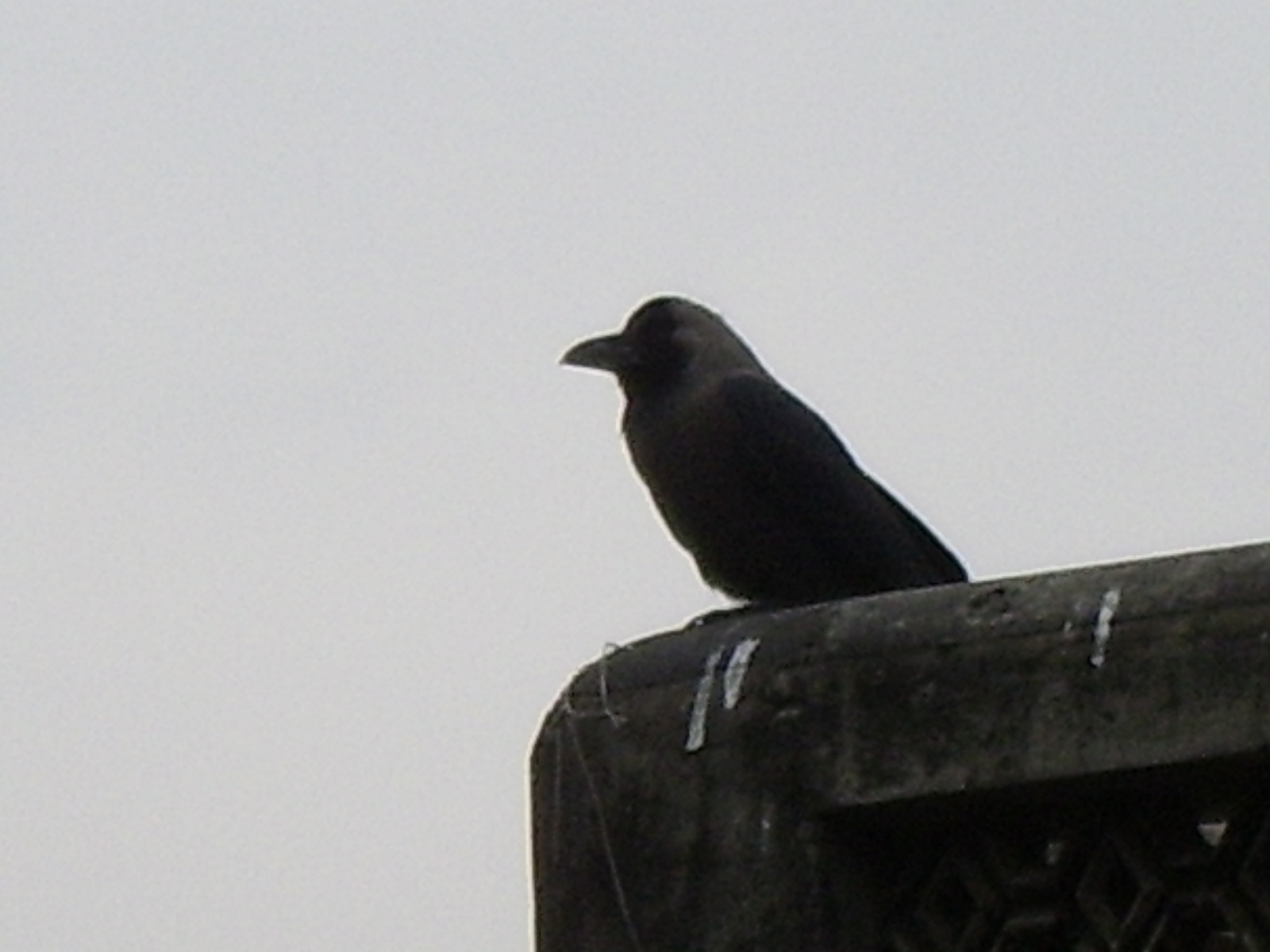
An injured crow handed to the Forest Department
The feature described an incident shortly before it was published. Word came that a crow was lying injured on a road. Dwip rushed to it on his bicycle, rescued it and gave it first aid. He then handed the bird to a Forest Department worker so that it could recover safely, and the report said the forest worker would later release it into the open sky.
Banglapedia describes crows as perching birds of the family Corvidae. Bangladesh has two species. The jungle crow (Corvus macrorhynchos) is a glossy jet-black bird, smaller than a kite, with a heavy bill and a deep, hoarse caw; it breeds from March to May. The house crow (Corvus splendens) is told apart by its grey neck and smaller size. It lives close to people and, in Banglapedia's words, is the most familiar bird in towns and villages, a useful scavenger that eats almost everything. It breeds from April to June. Both species are found throughout the country.
Banglapedia adds that crows are considered very intelligent. They are gregarious and at times gather in large roosts, but each pair builds its own nest, a simple platform of twigs, in which five or six greenish to olive eggs are laid. Both parents incubate the eggs and feed the young. The koel builds no nest of its own: it often throws out a crow's eggs and lays its own in the crow's nest.
Rescuing and releasing wild animals falls to the Forest Department under the law. Under the Wildlife (Conservation and Security) Act 2012, in force at the time of the report, the Forest Department's Chief Conservator of Forests serves ex officio as Chief Warden, and the conservator and divisional forest officers in charge of the wildlife and nature conservation circle serve as Additional Chief Warden and Wardens. Section 9 of the Act says that if keeping a captured, rescued or seized wild animal in a cage or in confinement puts its life at risk, steps must be taken to release it into a suitable natural habitat. Section 30 empowers the government to set up rescue centres to give treatment, food, shelter and security to injured, seized, confiscated, abandoned or donated wildlife, and to issue guidelines for releasing animals from those centres into nature. By handing the crow to a forest worker, Dwip passed its further care to the body that holds that responsibility.
Cycling round the tourist spots to clear litter
According to Jagonews24, Dwip is also known in Srimangal as a cyclist. On his rides he visits the scenic spots and clears rubbish on his own initiative to make visitors aware of the problem. When tourists who come to Srimangal on Fridays leave the place dirty, the report said, he cleans it up the next day so that his tourist town stays clean and tidy.
Students from various educational institutions come to Srimangal's tourist spots on study tours. In the report's words, they leave food plates, packets, water bottles and other litter wherever they go, and clearing it up to raise awareness is one of Dwip's main activities. The report said the work has had a positive effect on people and that the young man has become well known for it.
Srimangal is a well-known travel destination. Banglapedia lists among the upazila's tourist spots the Basu Deva temple at Bhunabir village, Hail Haor, Lawachara National Park, the Bangladesh Tea Research Institute, the mini museum of Sitesh Ranjan Dev, Bharaura Lake, the Magurchhara Khasia punji and gas field, and the Denston Cemetery. Its entry on Moulvibazar district names the tea research institute, Lawachara, Bharaura Lake and Magurchhara as the Srimangal attractions.
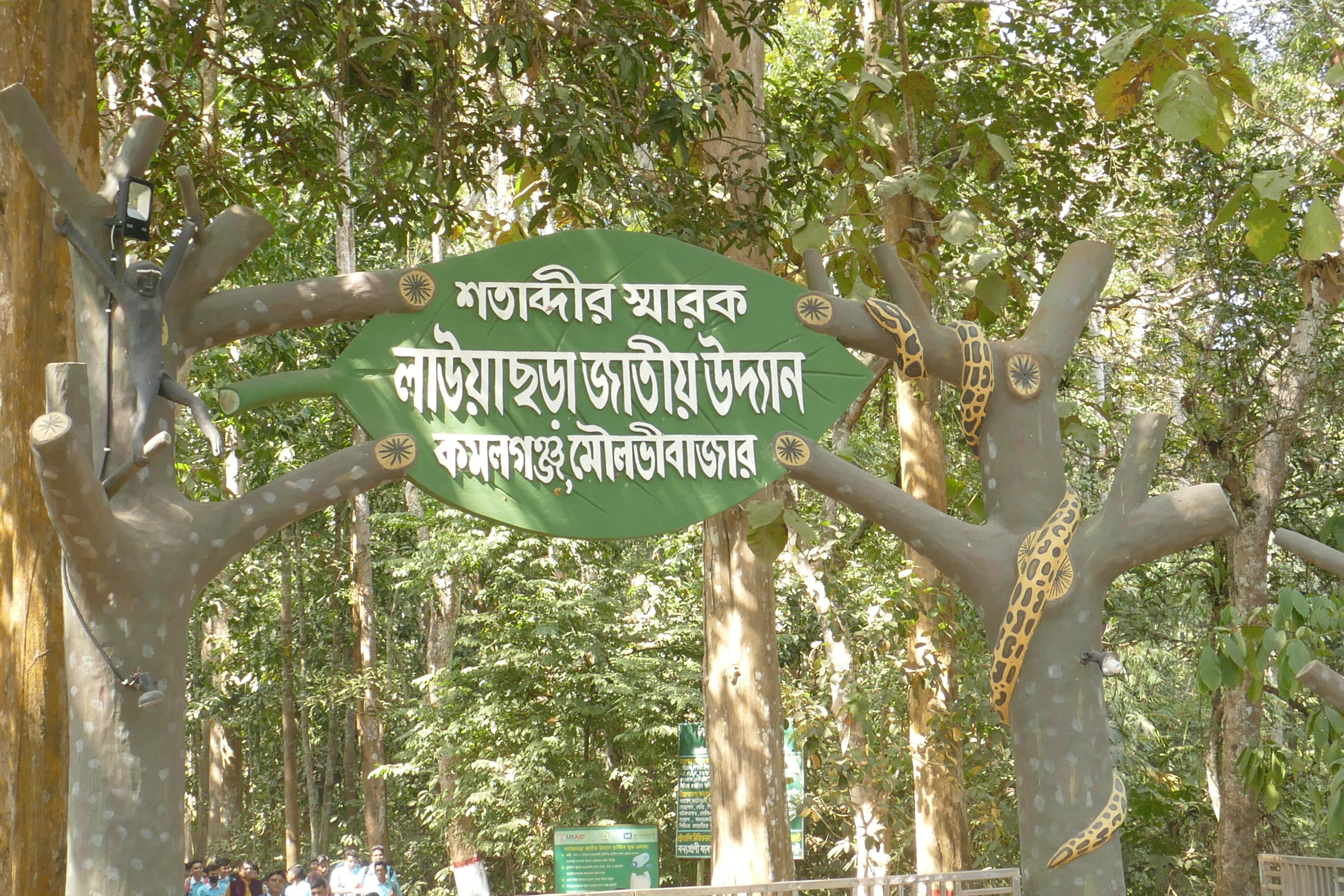
Lawachara National Park lies about 8 kilometres from Srimangal town, in Kamalganj upazila of Moulvibazar. The government declared it a national park on 7 July 1996. Its roughly 1,250 hectares of semi-evergreen and mixed deciduous forest form part of the 2,740-hectare West Bhanugach Reserved Forest. Figures from the USAID-supported Integrated Protected Area Co-Management (IPAC) project put the park's species at 460: 167 plants, 246 birds, 20 mammals, six reptiles, four amphibians and 17 insects. In and around a forest like this, plastic and food packets left behind spoil more than the view: they foul the habitat of the animals that live there.
One tree every week
Dwip's work does not stop at animal care and cleaning. Jagonews24 reported that a few years earlier he had begun planting one tree every week during the planting season, on his own initiative. To show what a useful friend a tree is, he also made an awareness video. The report quoted its message: "The sapling planted today will become a shade tree in fifteen years. It will help shelter and protect your next generation."
The value of shade trees is especially visible in Srimangal's tea estates. Banglapedia's entry on tea says shade trees are a vital and integral part of tea cultivation, because tea plants need about 50 per cent diffused sunlight for optimal physiological activity. Leguminous trees are used mainly to improve soil nutrition; their roots help conserve soil moisture and take up nitrogen from the air. In Bangladesh, Albizia chinensis and A. moluccana give semi-permanent shade, while A. odoratissima, A. procera, A. lebbeck and Derris robusta serve as permanent shade trees. The tea plant does best at 18.33 to 29.44 degrees Celsius, with well-distributed rainfall of more than 1,400 millimetres a year and well-drained sandy loam soil with a pH of 4.5 to 5.5.
Srimangal: an upazila of tea, haor and forest
According to Banglapedia, Srimangal upazila in Moulvibazar district covers 450.73 square kilometres. It is bounded by Moulvibazar Sadar upazila to the north, the Indian state of Tripura to the south, Kamalganj to the east and Chunarughat, Bahubal and Nabiganj upazilas to the west. Srimangal thana was formed in 1912 and later became an upazila; the municipality was formed in 1935. The upazila has one municipality and nine unions, and the census figure Banglapedia gives for its population is 318,025. Its main rivers are the Bilash (Gopla), Gopbia, Phulchhari, Udnachhari and Barmachhari, and Hail Haor is its notable wetland.
The upazila's main crops are tea, paddy, betel leaf, rubber, potato and vegetables. Pineapple, jackfruit and lemon are its main fruits, and tea, pineapple, lemon and betel leaf its main exports. Banglapedia lists 15 tea factories, two rubber processing plants, 55 dairy farms and 30 poultry farms there. Srimangal Government College, whose area dog 'Monty' was among those Dwip treated, is listed by Banglapedia among the upazila's noted educational institutions.
At the centre of Srimangal's tea identity is the Bangladesh Tea Research Institute (BTRI). Banglapedia records that, to solve problems in growing and manufacturing tea, the then Pakistan Tea Board decided in 1952 to set up its own research station, and the Pakistan Tea Research Station began work at Srimangal on 28 February 1957. After independence it was raised to an institute in 1973 and named the Bangladesh Tea Research Institute. It is an autonomous body under the Bangladesh Tea Board and one of the institutes of the National Agricultural Research System (NARS). Located about 3.2 kilometres from Srimangal town, it has developed 13 high-yielding, quality tea clones, BT1 to BT13.
Ownerless animals and the Animal Welfare Act
Most of the dogs and cats Dwip treats are street animals. Their protection is governed by the Animal Welfare Act 2019 (Act No. 12 of 2019), enacted on 10 July 2019, which repealed the Cruelty to Animals Act of 1920. Its preamble says that animal welfare must be ensured by preventing cruelty to animals, showing kindness and keeping animals responsibly.
The Act defines 'animal' as all mammals other than humans, birds, reptiles, and aquatic animals other than fish. An 'ownerless animal' is one without an owner or claimant, or whose owner or keeper cannot be found after reasonable inquiry. Under section 7, no ownerless animal may be killed or removed except for the reasons the Act sets out, and killing one is an offence. Section 16 sets the penalty for that offence at up to six months' simple imprisonment, a fine of up to 10,000 taka, or both. Knowingly feeding an animal poisonous food or medicine that causes its death or permanent disability, or maiming it with intent to harm, carries up to two years' simple imprisonment, a fine of up to 50,000 taka, or both.
In the Act, the 'authority' is the Director General of the Department of Livestock Services or a veterinary surgeon of the department to whom he delegates power. Under section 14, if an animal appears to the authority to be in a critical condition, or someone reports that it is, the authority may act to relieve it and may call on the police station, the fire service and the local authority for help. Section 15 allows animals taken into care to be sent to a government veterinary hospital or the local authority for treatment and care. The Act's definition of a 'keeper' includes a person who voluntarily takes an animal into his or her care.
Banglapedia describes the Department of Livestock Services (DLS) as the government department responsible for veterinary coverage and for livestock development and extension services. Its work began in 1893 through the British government's Civil Veterinary Department, the same year the Bengal Veterinary Institute and Veterinary Hospital were founded, and it was renamed the Directorate of Livestock Services in 1960. Its head office is at Prani Sampad Bhaban on Krishi Khamar Sarak, Farmgate, Dhaka. In Srimangal, its field office is the Upazila Livestock Office and Veterinary Hospital, Srimangal, and the veterinary surgeons there are the people to consult when a pet or street animal is sick or injured.

Street dogs, rabies and the vaccination drive
Caring for street dogs is bound up with rabies. The World Health Organization's fact sheet of 5 June 2024 says rabies is a serious public health problem in more than 150 countries and territories, mainly in Asia and Africa. It is a viral, zoonotic, neglected tropical disease that kills tens of thousands of people every year, 40 per cent of them children under 15. Dog bites and scratches cause 99 per cent of human cases, and once the virus reaches the central nervous system and symptoms appear, the disease is fatal in virtually all cases. Rabies infects mammals, including dogs, cats, livestock and wildlife, and spreads through saliva, usually by bites, scratches or direct contact with the eyes, mouth or open wounds.
WHO says vaccinating dogs, including puppies, through mass campaigns is the most cost-effective way to prevent rabies in people because it stops transmission at its source, and that culling free-roaming dogs is not effective. Teaching children and adults about dog behaviour, bite prevention, what to do after a bite or scratch and responsible pet ownership is an essential extension of vaccination. WHO recommends pre-exposure vaccination for people whose work, such as animal disease control, may bring them into direct contact with infected animals, but notes that it does not replace care after a suspected exposure.
WHO's guidance is that anyone bitten or scratched by a potentially rabid animal should immediately wash the wound thoroughly with soap and water for at least 15 minutes and seek post-exposure prophylaxis (PEP) without delay. PEP consists of wound washing, a course of human rabies vaccine and, when indicated, rabies immunoglobulin. WHO classes touching or feeding animals, or licks on intact skin, as category I, which needs only washing of the skin. Nibbling of uncovered skin or minor scratches without bleeding are category II, which need wound washing and immediate vaccination. Bites or scratches that break the skin, or saliva on mucous membranes or broken skin, are category III, which also need immunoglobulin. People who look after street animals should ask a doctor about protecting themselves.
Bangladesh moved from killing dogs to vaccinating them in late 2011. A WHO feature published on 27 September 2014 said that an estimated 2,000 people had died of rabies in Bangladesh every year and that dogs had been killed indiscriminately for decades. Under a new national strategy, large-scale dog vaccination began in late 2011, former dog killers were trained as dog catchers, and people bitten by dogs could get rabies vaccine free of charge at health centres in all 64 districts. Citing government figures, the feature said rabies deaths fell by about 50 per cent between 2010 and 2013.
A study published in The Lancet Regional Health - Southeast Asia in July 2024 says Bangladesh launched its National Rabies Elimination Programme in 2011 to end dog-mediated human rabies through a One Health approach. It is led by the Communicable Disease Control (CDC) division of the Directorate General of Health Services, working with the Department of Livestock Services and the Local Government Division. Mass dog vaccination began in 2011 in Cox's Bazar municipality and was later carried out for at least one round in all 64 districts. The study estimated the national dog population at 1,668,140, and found that an average of 21,295 dogs per district were vaccinated each year out of an estimated 26,065. It recorded 879 human rabies cases between 2011 and 2023, with the highest number, 106, in 2014 and 26 in 2020, and noted 66 public District Rabies Prevention and Control Centres. The authors projected that, if the trend held, Bangladesh would have zero human rabies cases by 2030, in line with WHO's 'Zero by 30' goal. They also cited the lack of consistently implemented long-term birth control programmes as a likely reason for the high number of dogs.
Photo: Mar11 / Wikimedia Commons (CC BY-SA 4.0)
Sources: Jagonews24 (9 March 2025), Banglapedia (Sreemangal Upazila, Maulvibazar District, Crow, Tea, Bangladesh Tea Research Institute, Department of Livestock Services), Animal Welfare Act 2019 and Wildlife (Conservation and Security) Act 2012 (bdlaws), World Health Organization (rabies fact sheet, 5 June 2024; Bangladesh feature, 27 September 2014), The Lancet Regional Health - Southeast Asia (July 2024), Wikipedia (Lawachara National Park), Upazila Livestock Office and Veterinary Hospital, Srimangal



Comments
(0)