
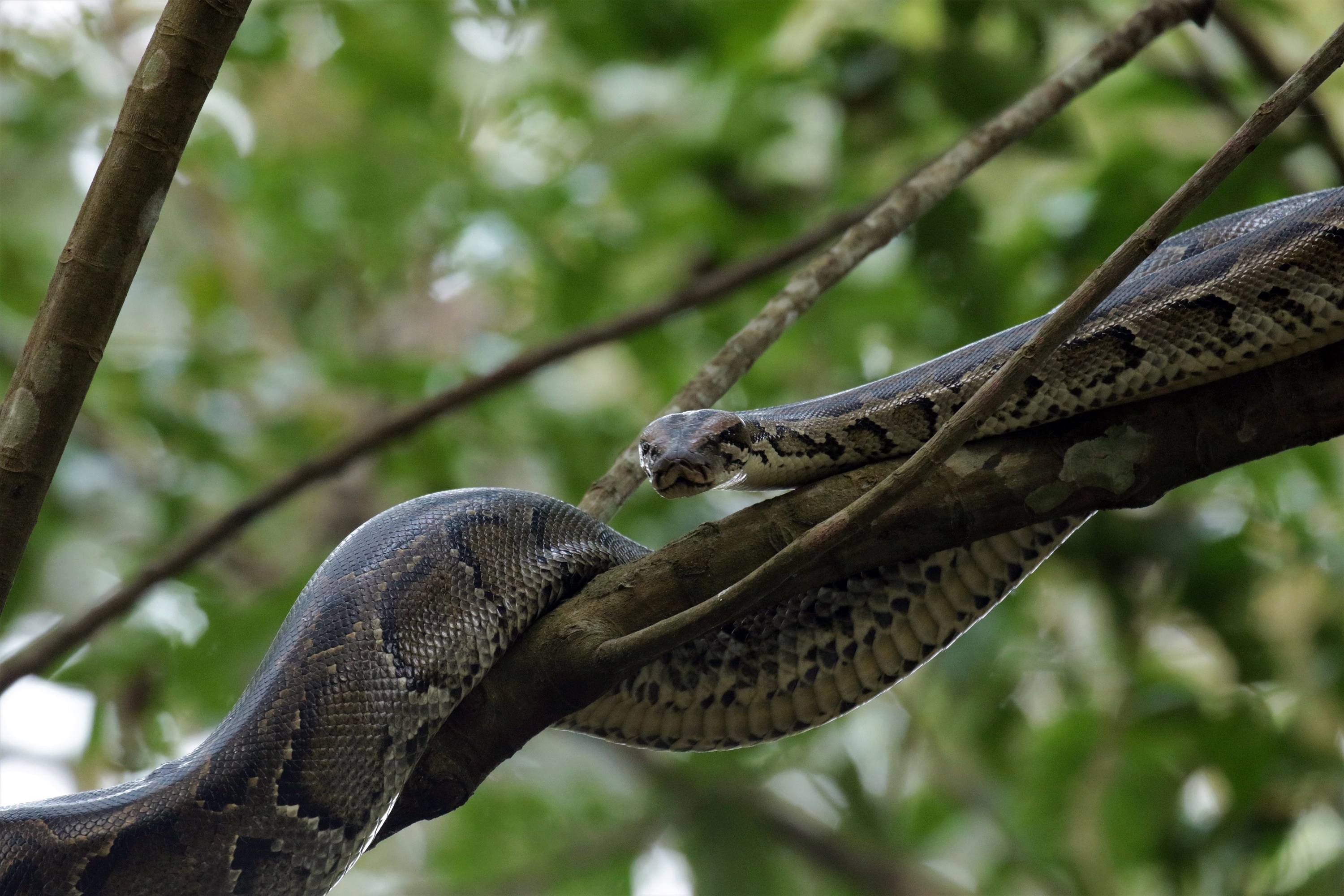
A python about 18 feet long was rescued unharmed from a residential area of Sreemangal upazila in Moulvibazar district on the afternoon of Tuesday, 21 July 2026. Members of the Bangladesh Wildlife Service Foundation, a wildlife rescue and care centre based in Sreemangal, took the snake from beside the Pul Bandhan Community Centre and handed it over to the Sreemangal range office of the Forest Department. The foundation's director estimated the snake's weight at 30 to 35 kilograms, and the Sreemangal forest range officer said it would be released in the forest, Jagonews24 reported that afternoon.
How the python was found
According to the report, a local man, Washim Mia, saw the large python while walking along the road beside the Pul Bandhan Community Centre. As word of the snake spread, panic broke out among people in the area, and some of them wanted to kill it.
Some residents instead informed the Bangladesh Wildlife Service Foundation. Its director, Swapan Dev Sajal, came with the environmental activists Rajdeep Dev Deep and Babul Robidas, and the three rescued the python without harming it and took it away. The snake was then handed over to the Sreemangal range office of the Forest Department.
Swapan Dev Sajal told Jagonews24 that the rescued python was about 18 feet long and weighed an estimated 30 to 35 kg. Md Nazmul Islam, the Sreemangal forest range officer, told the paper that the python would be released in the forest. The report did not say which of Bangladesh's two python species the snake belonged to, did not describe any injury to it, and reported no one hurt.
The steps were the same as in the other rescues reported from Sreemangal in the months before: people who find a large wild animal near their homes call the foundation instead of attacking it, its team catches the animal, and the animal is handed to the Forest Department's local range office, which arranges its release.
A second python in less than a week
The 21 July rescue came less than a week after another in the same upazila. On Thursday, 16 July 2026, which was World Snake Day, a large python was rescued at about 11:30 am from a house in the North Bharaura area near the No. 5 bridge in Sreemangal, The Daily Inqilab and bdnews24.com reported. Members of the family told bdnews24.com that their ducklings and chicks had been disappearing mysteriously for several days, and that in the morning they saw a big python climbing the wall of the house towards a nearby tree. Many people advised them to kill it, the homeowner said, but the family called the foundation instead.
Swapan Dev Sajal, with the environmental activists Rajdeep Dev Deep and Ridon Gour, rescued that python unharmed and handed it to the Sreemangal range office. The Forest Department said that after the necessary health checks the snake would be released in Lawachara National Park or another safe natural forest, Inqilab reported.
That rescue took place two days after the death of the foundation's founder, Sajal's father. bdnews24.com reported that Sajal was then observing havishyanna, the Hindu mourning rite, during which, he said, the scriptures say a mourner should not leave the house. He told the paper that when he heard that a python was in danger he felt it was his father's work, that he went out in his mourning clothes as a mark of respect to his father, and that he and his brother would try to continue the wildlife conservation work their father had begun for as long as they lived.
Pythons had turned up in Sreemangal's homes and tea gardens before. At about 9:30 pm on Monday, 8 June 2026, a python about 7 feet long entered a house in the upazila. The family contacted the foundation; Swapan Dev Sajal and Rajdeep Dev Deep rescued the snake and handed it to the Sreemangal range office of the wildlife and nature conservation division, and it was released in Lawachara National Park at around 10 pm with the Forest Department's help, Dhaka Times reported. On 5 October 2025, workers at the Khaichhara tea garden in Sreemangal saw a python about 12 feet long and weighing 21 kg beside a lake in the garden. The garden managers informed the foundation, whose director and Rajdeep Dev Deep rescued the snake at about 12:30 pm, and it too was handed to the Sreemangal range office, Desh Rupantor reported.
Smaller snakes are handled the same way. On the night of Monday, 6 April 2026, members of the foundation rescued a kalnagini, the golden flying snake, from a house in the staff quarters of the Sreemangal upazila health complex, and it was released in Lawachara National Park through the Forest Department, The Daily Jugantor reported. A range officer of the Forest Department's Wildlife Management and Nature Conservation Division in Moulvibazar told the paper that the snake was non-venomous. Banglapedia, the national encyclopedia, describes the golden flying snake, Chrysopelea ornata, as a snake that can glide from higher branches to lower ones.
The foundation and its founder
The foundation's founder and chairman died at about 9:05 am on Tuesday, 14 July 2026, a week before the 21 July rescue, Prothom Alo, The Daily Star Bangla and bdnews24.com reported. He had for decades rescued, treated and rehabilitated injured, sick and endangered wild animals and returned them to their natural habitats, Prothom Alo wrote. The Forest Department, law enforcement agencies, other wildlife rescue organisations and ordinary people turned to his centre when they found an endangered wild animal near people, the paper said, and thousands of animals treated under his care went back to the wild.
His interest in wildlife began in his teens, his family told Prothom Alo. He kept animals and went hunting with his father at a time when the country had few strict restrictions on hunting, and he hunted for a while after his father's death in 1986. Later, realising the need for conservation, he gave up hunting and devoted himself to rescuing wild animals. He first set up a small care centre for injured wild animals in the yard of his own house on Mission Road in Sreemangal town; it was later moved to a garden house in the West Bharaura area and was then established as the Bangladesh Wildlife Service Foundation under government rules. bdnews24.com reported that he set up the foundation in 2011 on the advice of a former governor of Bangladesh Bank, after which its work expanded and many animals were released after treatment in Lawachara and other natural habitats.
In January 1991, bdnews24.com recorded, he was attacked by a large bear in the Patrakhola tea garden while chasing away wild boar. He lost an eye, his nose, part of his cheek and face and his teeth, and after a long struggle and several plastic surgeries at the Combined Military Hospital in Dhaka he recovered; he used to call the years that followed his 'second life'. His house in Sreemangal became known locally as a 'mini zoo', the paper wrote, although it was in fact a shelter for injured and helpless wild animals, and he relied on the income of his own fish farm to pay for their food, treatment and care.
Among the animals rescued in his four decades of work, bdnews24.com listed electrocuted slow lorises, pythons, fishing cats, civets, spectacled langurs, wild boar, eagles, tokay geckos and many kinds of snakes. Banglapedia lists a mini museum named after him among the tourist spots of Sreemangal upazila. After he fell ill, his two sons carried on the rescue and care work, Prothom Alo and The Daily Star Bangla reported.
Sreemangal, between tea hills and the haor
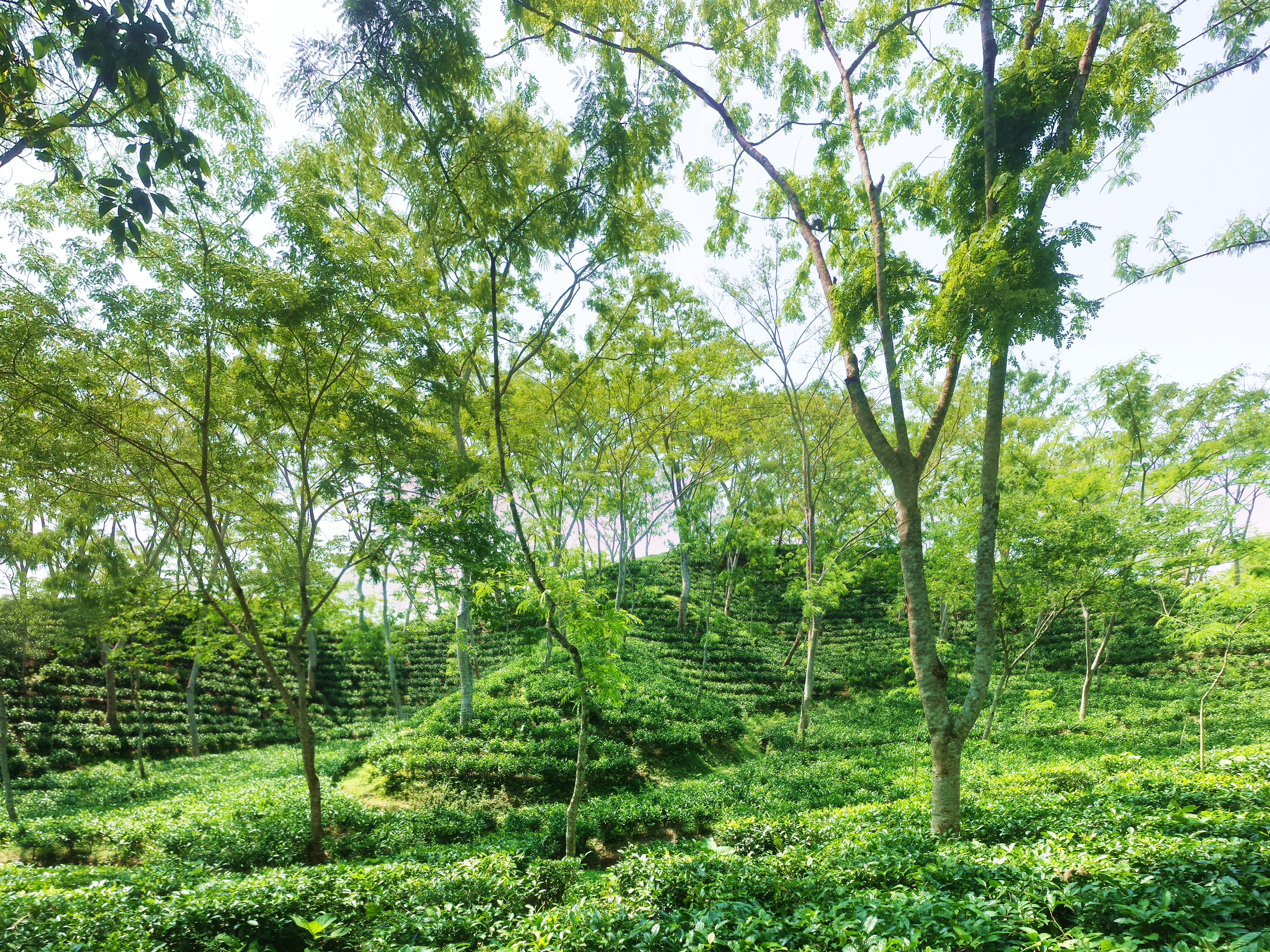
Sreemangal upazila covers 450.73 square kilometres of Moulvibazar district in north-eastern Bangladesh, according to Banglapedia, published by the Asiatic Society of Bangladesh. It is bounded by Moulvibazar Sadar upazila to the north, the Indian state of Tripura to the south, Kamalganj upazila to the east and Chunarughat, Bahubal and Nabiganj upazilas to the west. Its main rivers are the Bilash (Gopla), Gopbia, Phulchhari, Udnachhari and Barmachhari, and Hail Haor is its best-known wetland. Sreemangal thana was formed in 1912 and its municipality in 1935; the upazila has one municipality and nine unions, and Banglapedia gives its population as 318,025.
Tea heads the list of the upazila's main crops. Banglapedia lists tea, paddy, betel leaf, rubber, potato and vegetables as its main crops and pineapple, jackfruit and lemon as its main fruits, and counts 15 tea factories and two rubber processing plants among its manufactories. The Bangladesh Tea Research Institute is in the upazila. Lawachara National Park, Hail Haor, Bharaura Lake and the Magurchhara Khasia punji and gas field are among the sights the encyclopedia lists.
The reported rescues show how close this landscape brings people and large snakes: a lake inside the Khaichhara tea garden in October 2025, a staff quarter of the health complex in April 2026, a family house in June, a house in North Bharaura on 16 July and, on 21 July, a roadside beside a community centre.
The two pythons of Bangladesh
Pythons are called ajagar in Bengali. Banglapedia describes them as massively built non-venomous snakes, whose girth relative to their length exceeds that of almost all other snakes, with powerful teeth but no venom apparatus; they kill their prey by constriction and eventual suffocation. The name ajagar, it says, comes from the python's habit of preying on goats and similar animals. Pythons feed on mammals, birds and reptiles but seem to prefer mammals, among them rats, hares, goats, sheep, jackals and deer.
A note published in 2024 in the journal Reptiles & Amphibians by researchers of the Deep Ecology and Snake Conservation Foundation states that the Burmese python (Python bivittatus) and the reticulated python (Malayopython reticulatus) are the only pythons found in Bangladesh. Citing a 2018 photographic guide to the country's wildlife, it says that Burmese pythons exist in all divisions of the country, whereas reticulated pythons have been recorded only in Sylhet and Chittagong divisions. Sreemangal is in Sylhet division, where both have been recorded. Citing the IUCN Bangladesh Red List of 2015, the note adds that both pythons are seen occasionally in forests but also in gardens, farms and other habitats modified by people, and that their prey includes lizards, birds and mammals such as rodents, monkeys, small carnivores, deer, wild boar and domestic animals.
Banglapedia uses older names: it lists the country's two pythons as the rock python, Python molurus, and the reticulated python, says the rock python may reach a length of about 5.7 metres, and places both in the mixed evergreen forests of the north-eastern and south-eastern parts of the country. The Burmese python was treated as a subspecies of the Indian python until 2009 and is now recognised as a separate species. Pythons are mostly semi-arboreal snakes of forest regions, Banglapedia adds, but they are also found in rivers, haors and jheels; they swim strongly and usually stay near the bank, partly or wholly under water with only the tip of the snout showing.
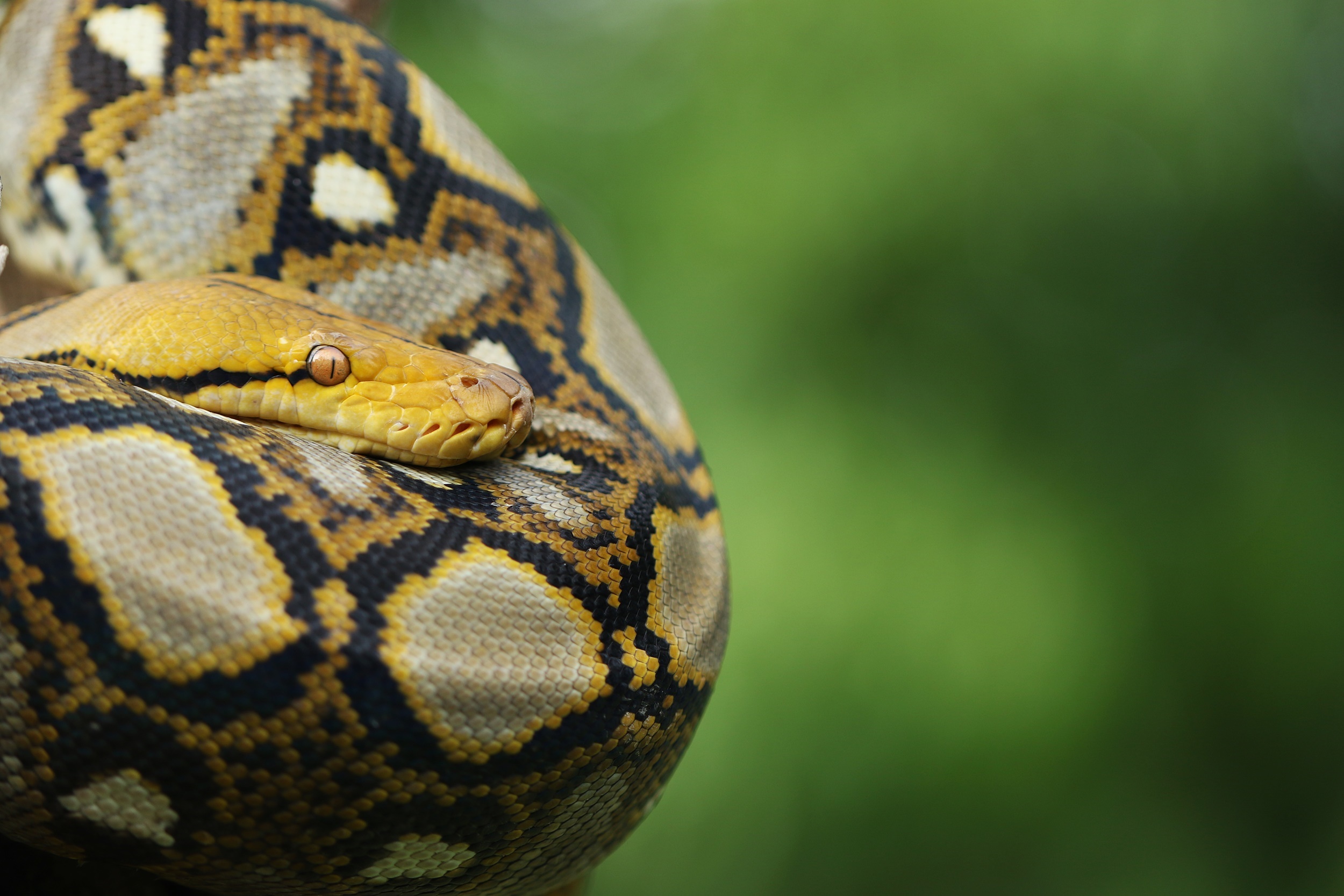
The Smithsonian's National Zoo and Conservation Biology Institute describes the Burmese python as one of the six largest snakes in the world. Lengths over 15 feet (4.6 metres) are common and the average is 10 to 16 feet (3 to 4.9 metres), with females tending to be larger than males. Its base colour can be pale tan, yellowish-brown or grey, with large dark brown or olive blotches outlined in cream or gold. It has no fangs; many back-curving teeth grip prey and stop it escaping. It swallows prey whole, its jaw bones joined by tissue that lets the jaws open around an animal several times as wide as its head, and the presence of domestic fowl and pigs draws it into farming areas. The reticulated python is the world's longest snake, and like the Burmese python it is a non-venomous constrictor and a strong swimmer.
Banglapedia records that python breeding in Bangladesh starts between December and February and that the eggs are laid three to four months later; the female broods them by coiling around them and takes no care of the young after hatching. For the Burmese python, the Smithsonian gives an average clutch of 30 to 60 eggs, with up to 100 possible. The female stays coiled around the eggs, without feeding, until they hatch, which may take two months or more, and warms them by twitching her muscles. Hatchlings measure 31 to 46 centimetres and fend for themselves at once. Burmese pythons become sexually mature at four to five years and live about 20 to 25 years in human care.
Snakes on the roads and in the tea gardens around Lawachara
Lawachara National Park, where the Forest Department released the June 2026 python and the April kalnagini, has been studied for its pythons. In September 2013 Prothom Alo reported on the Bangladesh Python Project, a study of the park's pythons that had begun in May 2011 with the help of the Forest Department and the organisations Orion Society and Carinam Bangladesh. The researchers had recorded 39 species of snake in the park, the most numerous being keelbacks, among them the Himalayan keelback, rat snakes, golden flying snakes, trinket snakes, vine snakes and green pit vipers; pythons and king cobras were also found.
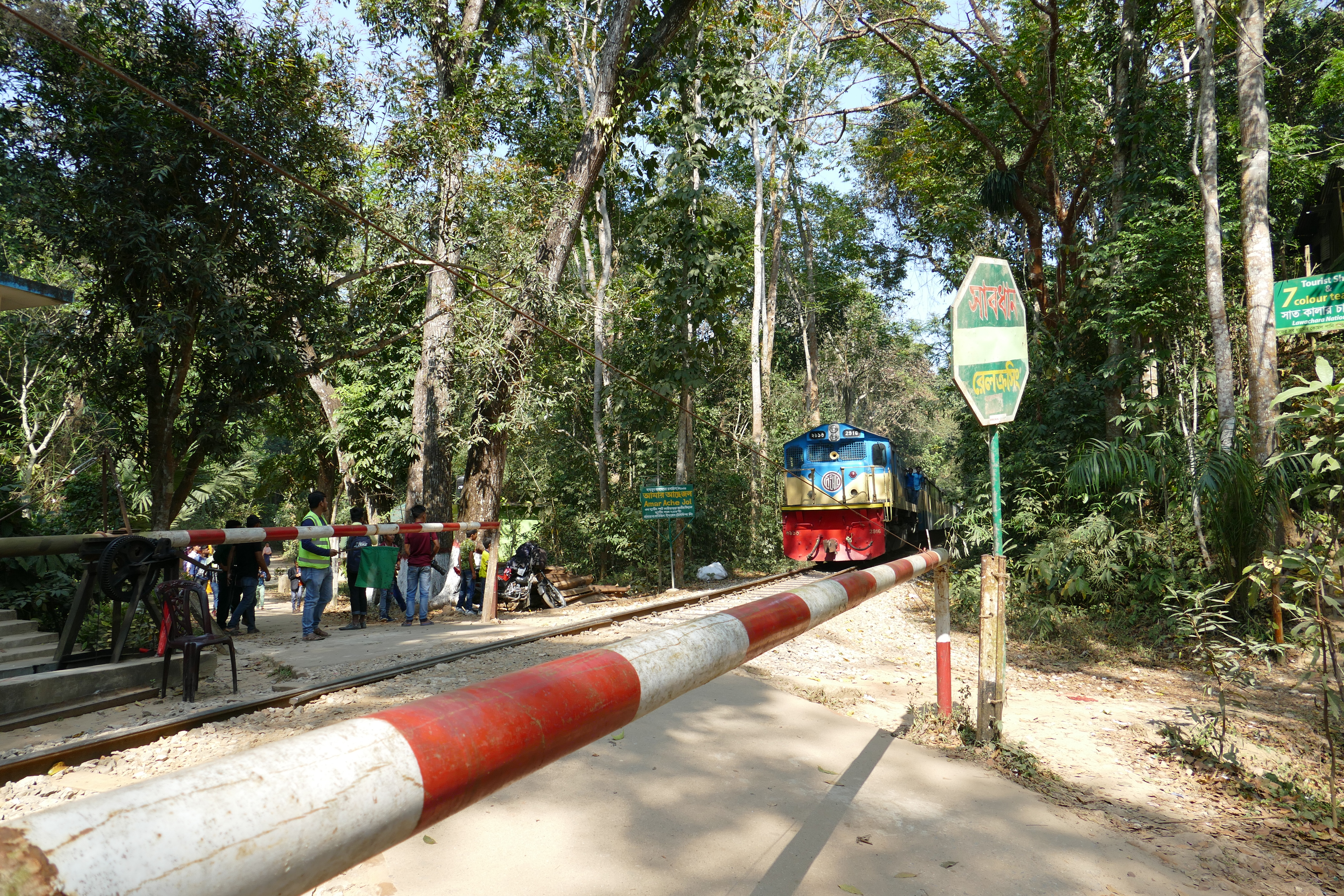
The same study found about a thousand dead snakes in the park area over two years, in the months from Baishakh to Kartik, when snakes move most. The Sreemangal-Bhanugach road, about 7 kilometres of which runs through the park, and the Dhaka-Sylhet railway were killing four or five snakes almost every day, the researchers said. Snakes were also being killed in the tea gardens and nearby villages: out of a lack of awareness, people in the gardens beat snakes to death on sight, timber thieves killed them, and pesticides used in the tea gardens harmed them.
The project's lead researcher told the paper that a small transmitter had been fitted to one of the park's pythons on 13 July 2013 to learn where it lived and moved. Its radio signal showed that the python had travelled more than 1.5 kilometres in a month and was then staying in a village. The area where snakes could range in the park was small, about 1,200 hectares, he said, while a python can travel 40 kilometres in a single monsoon season. Pythons eat junglefowl, deer and rats, he said, and help keep the balance of nature; if snakes decline, attacks on crops by rats and insects will increase. He called for more research, public awareness and a role for the government and tea garden managers.
A protected but declining snake
On the IUCN Red List of Threatened Species, the Burmese python is listed as Vulnerable, in an assessment published in 2012, while the reticulated python, which has a very wide distribution, is listed as Least Concern in an assessment of 2018. The Smithsonian notes that the Burmese python is widespread across its native range but that its numbers are diminishing: snakes encountered in the bush are often killed for their skin or meat, or simply because they are snakes, and hundreds of thousands are killed each year for skins made into shoes, belts and other goods. In parts of southern Florida in the United States, by contrast, the species has become invasive.
In Bangladesh, Banglapedia records that both pythons have become rare, and it lists the rock python as critically endangered and the reticulated python as endangered in the country. It also notes that python skin has commercial value. The encyclopedia's entry on snakes says that most of the country's roughly 90 snake species are non-venomous and harmless to people, and that snakes as a whole eat a huge quantity of animals that are considered pests on crops; several non-venomous species help to control rats and mice. The Smithsonian makes the same point for pythons: snakes are essential rodent controllers, and without them many crops are destroyed by mice.
What the law said in July 2026
On 21 July 2026, wild animals in Bangladesh were protected by the Wildlife (Conservation and Security) Act 2026, Act No. 86 of 2026, dated 10 April 2026. Section 1 of the Act says it is deemed to have taken effect on 7 January 2026, and section 54 repealed the Wildlife (Conservation and Security) Act 2012, while cases already filed under the old law continue as if it had not been repealed. The provisions that bear on a python found near people are these, as set out in the official text on the government's Laws of Bangladesh website:
- Section 10(1): no one may rear or keep in captivity a wild animal, or possess, buy, sell or transport one, without a licence, possession certificate or permit, as the case may be.
- Section 10(3): all wild animals, their body parts, meat and trophies are considered the property of the government.
- Section 10(4): cruelty to a wild animal is an offence punishable under the Act; cruelty includes beating, teasing, blindfolding, keeping an animal confined without need, frightening it, causing it suffering in transport, killing it with electric wire fences and publishing cruelty to wild animals on social media.
- Section 12(1): where a wild animal becomes a threat to human life, or is physically disabled or has a contagious or incurable disease, a wildlife warden, with the approval of the chief wildlife warden or an empowered officer and stating the reasons, is to take effective measures to remove, cull or, as the case may be, rehabilitate it, and must report the matter to the advisory board and the scientific committee within 15 days.
- Section 14: a rescued, seized or captured wild animal is to be released into a suitable natural environment, although it may be kept confined if it risks spreading disease or needs nursing.
- Section 34: the Forest Department may set up rescue centres to give wild animals treatment, food, shelter and security, and may make guidelines for releasing animals from them into nature.
- Section 4(2): the government is to take steps to ensure the necessary number of treatment centres and veterinarians for the welfare and protection of wild animals.
Under these rules the python found beside the community centre belonged to the state, beating or tormenting it would have been cruelty punishable under the Act, and the law asks that a rescued animal be released into a suitable natural habitat, as the range officer said would be done.
The Smithsonian's guidance on snakes is to leave a snake seen in the wild alone and to encourage others to do the same, not to assume that every snake is venomous, and not to attack one that does not threaten one's safety. On 21 July, residents of the area called the foundation rather than act on the calls to kill the snake. Catching a large python is work for trained rescuers and the Forest Department, and nothing in this report is advice to handle one.
Photo: Adnan azad asif / Wikimedia Commons (CC BY-SA 4.0). The top picture shows a python in a tree in Lawachara National Park, photographed in December 2015, as background; it is not the snake rescued on 21 July 2026.
Sources: Jagonews24 (21 July 2026), bdnews24.com (14 and 16 July 2026), Prothom Alo (11 September 2013, 14 July 2026), The Daily Star Bangla (14 July 2026), The Daily Inqilab (17 July 2026), Dhaka Times (9 June 2026), Desh Rupantor (5 October 2025), The Daily Jugantor (7 April 2026), Banglapedia (Asiatic Society of Bangladesh), Reptiles & Amphibians (Mahamud et al., 2024), Smithsonian's National Zoo and Conservation Biology Institute, IUCN Red List of Threatened Species, Wildlife (Conservation and Security) Act 2026 (Laws of Bangladesh, bdlaws.minlaw.gov.bd)
Comments
(0)