
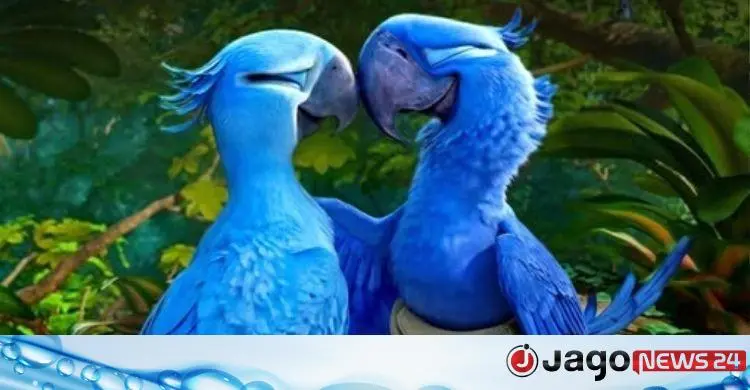
Remember the animated film Rio? Its story followed the love, adventures and loss of two blue macaws, Blu and Jewel. The first film was made in 2011 and the sequel in 2014.
But the blue bird of the film is not an imaginary species. Blu and Jewel are Spix's macaws, scientific name Cyanopsitta spixii. The real story of this bird is even more remarkable than the film, because a bird once lost from the wild is now being brought back to nature. The film was made mainly to raise awareness of conserving this endangered bird.
A bird of the Caatinga
Spix's macaw is a medium-sized member of the parrot family. Its body is covered in shades of blue, with a greyish head and bright blue wings. It is the only species in the genus Cyanopsitta and is named after the German naturalist Johann Baptist von Spix. It is somewhat smaller than many other large macaws.
Its natural home was the Caatinga of north-eastern Brazil, a distinctive environment of dry and semi-dry woodland. The bird depended especially on riverside gallery forest along seasonal watercourses. Certain trees in this habitat were vital to it for nesting, shelter and food.
Little is known about the wild life of Spix's macaw, because for a long time its numbers were so low that there was little chance to observe its natural behaviour. Research shows it ate various seeds, fruits and plant parts, including the seeds of Cnidoscolus quercifolius and the fruit of Jatropha mollissima. It was recorded moving in small groups, usually nested in natural tree hollows and bred around the rainy season.
Lost from the wild
Human activity played a large part in the macaw's decline. Destruction and alteration of its limited natural habitat steadily reduced suitable places for it to live, and illegal trade in wild-caught birds also cut its numbers.
Its heavy dependence on one particular Caatinga habitat made environmental change even more devastating. By the end of the twentieth century the number of wild Spix's macaws had fallen alarmingly.
Importantly, Spix's macaw was never declared fully extinct. In 2019 the IUCN classified it as "Extinct in the Wild": no natural population remained in the wild, but some birds still survived in captivity under human care.
The last confirmed wild bird was seen around 2000. Later sightings were claimed at various times, but none was accepted as a confirmed wild bird. The only hope was to increase the captive birds through breeding and return them to nature in the future.
Back in Bahia
After a long conservation and captive-breeding programme came a historic moment. In 2022 Spix's macaws began to be released into the wild in Bahia, Brazil. In two rounds, a total of 20 captive-born Spix's macaws were released, together with 15 blue-winged macaws, and their movements were monitored regularly.
Releasing the birds is not the end of the work. Whether they find food in the new environment, mix with other birds and build nests is all kept under watch.
The most hopeful news came in 2023. A pair among the released birds laid eggs in an artificial nest cavity and successfully hatched chicks. According to researchers' records, this was the first hatching of Spix's macaw chicks in the wild in more than three decades, and one chick successfully fledged. Blu and Jewel may be fictional, but the real story of their species comes close to the film's.
The bird that human activity drove from the wild is now being brought back to its old home. But this cannot yet be called complete success: building a stable, self-sustaining wild population will need longer-term conservation, breeding and habitat protection. The story of Spix's macaw is therefore not just the story of a rare bird, but of the danger of extinction, the consequences of destroying nature, and the hope of bringing a lost species back through human effort.
Source: Jagonews24. First published in Bengali on The Agro News.

Comments
(0)