
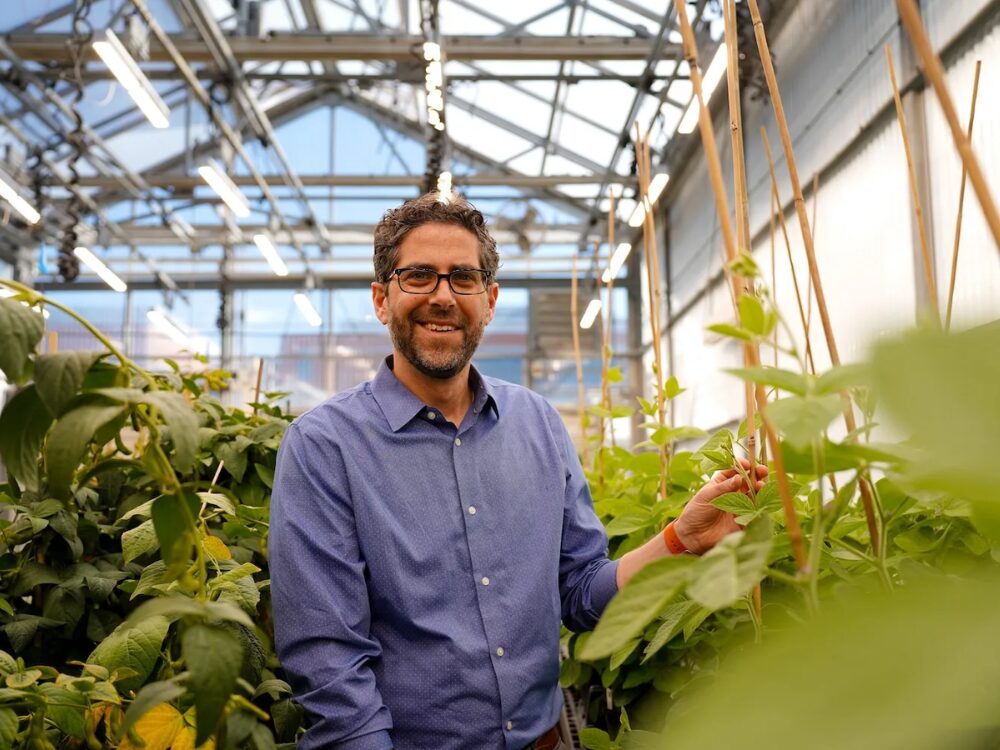
Spearhead Bio has closed an oversubscribed $1.62 million seed round to advance a genome engineering platform aimed at one of CRISPR's main shortcomings in crop breeding: inserting or replacing large pieces of DNA precisely at chosen locations in a plant's genome. BioGenerator Ventures and Danforth Technology Company (DTC) led the round, with QRM Capital, Grit Road Partners, St. Louis Port Authority Helix Fund, SDH Capital and other investors taking part.
The company launched a couple of years ago out of DTC, a subsidiary of the Donald Danforth Plant Science Center in St. Louis, Missouri, and is the third company to come out of DTC. The new money gives it runway to show how its Transposase Assisted Homology Independent Targeted Insertion (TAHITI) technology can bring faster, more controlled introduction of genes into both transgenic and non-transgenic crops. Founder Keith Slotkin says the technology "saves our partners years of development time and millions of dollars in crop improvement."
In crop breeding, CRISPR works as molecular scissors: it finds a specific sequence in the genome and cuts or disables it, for example switching off the genes that make wheat susceptible to powdery mildew, far faster than conventional breeding. But CEO Mike Bielski says CRISPR is notoriously poor at inserting new genetic material precisely. It often places it at random, disrupting other genes and plant function and making downstream breeding harder. In his comparison, CRISPR can change single letters in a paragraph, turning the word wood into food, but cannot add or move whole sentences.
TAHITI is built on transposable elements, stretches of DNA present in every genome that Slotkin describes as nature's own gene-editing machinery. Spearhead fuses a transposable element directly to Cas9 or Cas12a, so that when CRISPR makes its cut, TAHITI glues new genetic cargo into that break. The result is a new class of large genome edits: rearranging, cutting and inserting big pieces of DNA under control, where in nature such moves happen at random over thousands or millions of years.
"There are so many different things you can do when you have the ability to precisely move large pieces of DNA to where you want them," Bielski says. "It's everything from stacking traits to complete replacement of genes." For seed companies, Slotkin argues, the gain is efficiency: engineering today runs at an efficiency below 1% and needs an enormous pipeline, whereas TAHITI lets a company find its desired rearrangement much faster.
The technology works in both transgenic (GMO) and non-transgenic applications. The latter is the bigger commercial opportunity, Bielski suggests, because it opens a faster and cheaper regulatory pathway; instead of an additional three years and $80 million to take a trait through deregulation, Slotkin claims, the process will be much faster. Spearhead is in active discussions with partners but is focused first on technical milestones. It is working with industry partners on a soybean transposable element and on replacements that delete and add DNA at the same location without introducing foreign DNA into the crop genome.
DTC CEO Tom Laurita has described Spearhead as possibly the most impactful new technology to come out of the Danforth Center. Bielski says the fundraising took a while, but once investors had done their diligence and understood that the company was not simply another CRISPR company, the round ended oversubscribed.
Source: AgFunderNews

Comments
(0)