
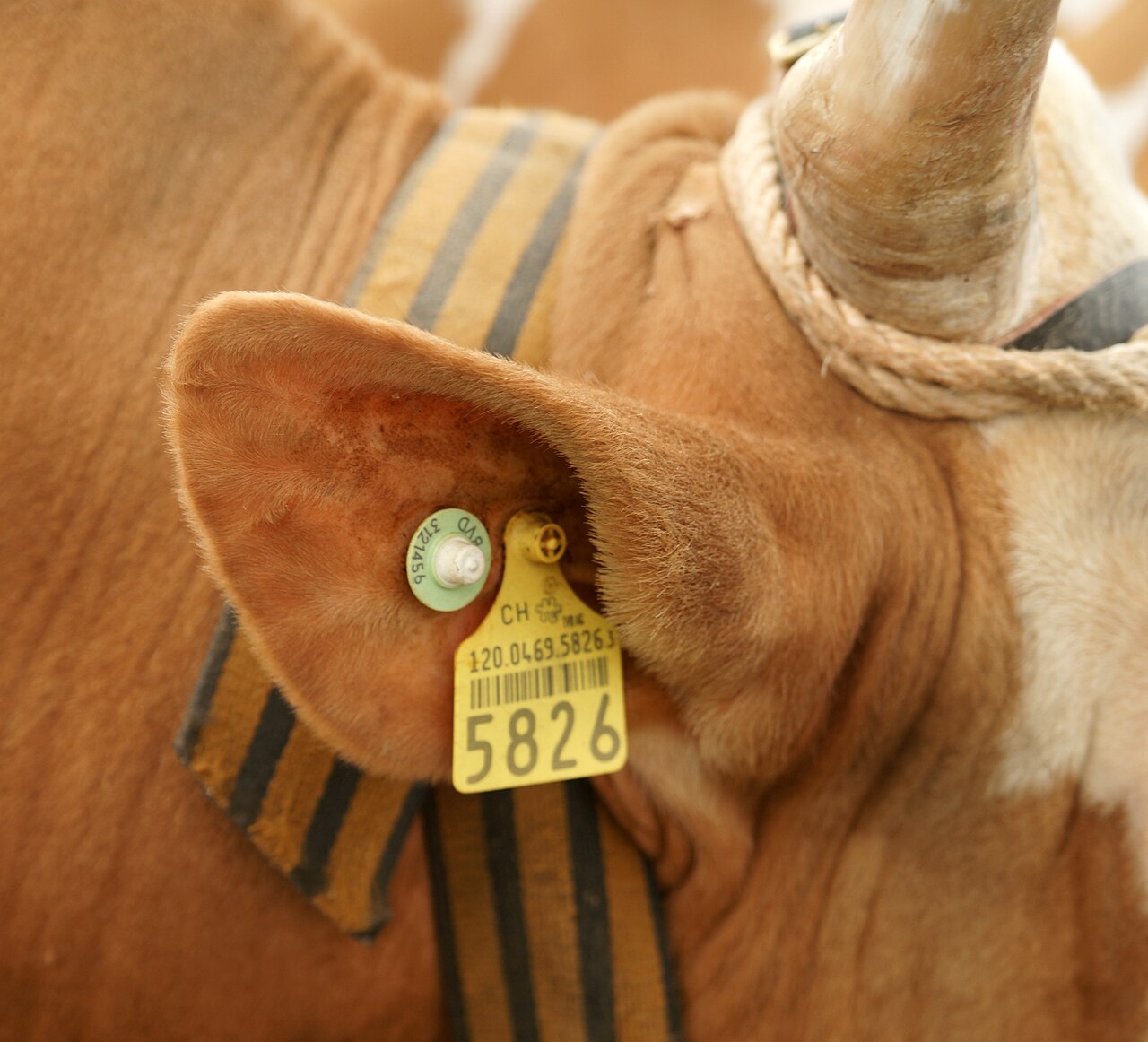
South Africa's Department of Agriculture has proposed stricter rules for identifying, registering and tracing livestock, and farmers and other interested parties have until 4 January 2027 to comment, Food For Mzansi reports. The draft regulations under the Animal Improvement Act, 1998 (Act 62 of 1998) were published in the Government Gazette on 6 October 2026 for 90 days of public comment.
The aim is a more structured system for identifying and registering animals, with the information held on the Integrated Registration System and Genetic Information System (Intergis). Owners of declared animals would have to identify them with approved devices linked to the owner's details and the holding where the animals are kept, and every animal would have to be identified and tagged before it is moved from one holding to another.
Depending on the species, identification could be by digital or analogue ear tag, microchip, brand or tattoo. Tags would be colour-coded: yellow for animals born in South Africa, green for imported animals and red for animals kept in areas sensitive to foot-and-mouth disease.
Owners would also have to register with the registrar and keep on-farm records of births, deaths, movements, medical treatments and withdrawal periods. A change of ownership would have to be registered on Intergis within seven days. Breaking the rules could be an offence punishable by a fine or up to two years in prison.
Moleke Maphile, a goat farmer from Bela-Bela in Limpopo, welcomed a central database. "Currently we keep records on paper, which can get lost or damaged. With a database, we can easily track births, deaths, vaccinations and sales, and prove ownership when there is stock theft," he said, adding that better information could help the government spot outbreaks such as foot-and-mouth disease sooner.
Kagiso Marule, a Gauteng farmer and founder of Live Stock Market, supports unique identification numbers that prove ownership but worries about how accessible the system will be to subsistence and small-scale farmers, who hold a large share of the country's livestock, and about how the information collected could be used. Written comments go to the Minister of Agriculture, for the attention of the Director-General, Department of Agriculture, 600 Lilian Ngoyi Street, Pretoria.
The report is by Patricia Tembo for Food For Mzansi.
Photo: Sandstein / Wikimedia Commons (CC BY-SA 3.0)
Source: Food for Mzansi

Comments
(0)