
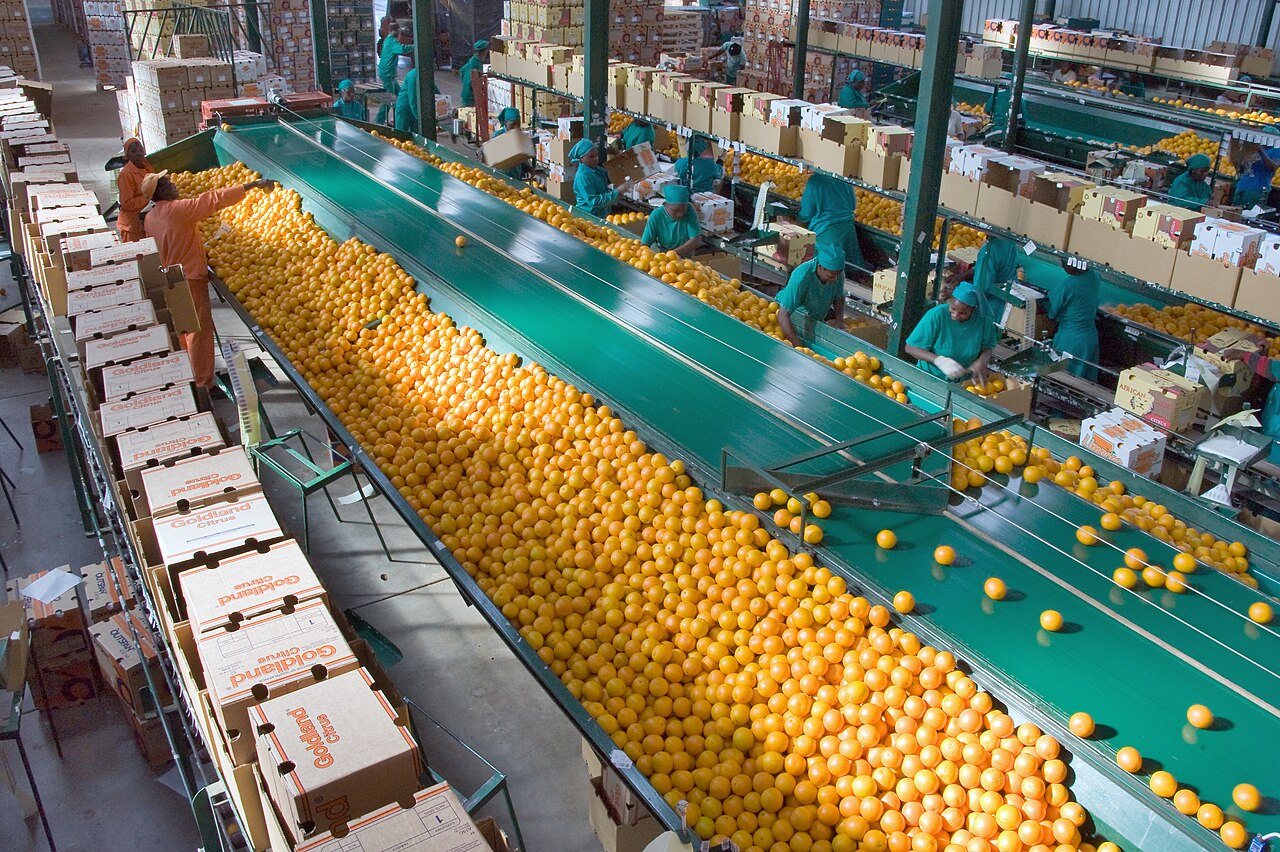
South Africa risks losing the benefit of new agricultural export markets unless it invests in packhouses, roads, ports and cold chains, Agriculture Minister Willie Aucamp and a panel of economists told the Packhouse Trade, Tariffs & Investment Conference in Paarl, held on 26 and 27 November.
Aucamp said post-harvest losses waste water, energy, money and labour, and that smallholders are hit hardest. "These losses represent wasted production, wasted water, wasted energy, and lost income," he said. He called packhouses strategic economic infrastructure that support value addition, technology transfer and skills, and said their capacity must keep pace with what farms produce.
Government's job is to negotiate export protocols and industry's is to turn that access into sales, he said. He pointed to the protocol letting South African cherries into China, said he expects to return to China early in 2027 to sign one for blueberries, and noted export protocols with Egypt for red meat. He also urged more attention to neighbouring countries, whose markets South Africa has not fully developed.
Paul Makube, senior agricultural economist at FNB, said more than 60% of the country's horticultural output is exported, so growers' prospects and rural jobs depend on export performance. Exporters need detailed knowledge of where demand and buying power sit within a market such as China, he said, and that research can guide which varieties farmers plant. With orchards expanding, packhouse investment must match the volumes expected; orchards are long-term commitments, so packing and marketing must adapt when tariffs or access change.
"Agricultural exports do not begin at the port," said the panel's moderator, Dr Francois Knowles, registrar of the Agricultural Produce Agents Council, describing a chain from production through packing, compliance and logistics. Buhlebemvelo Dube, an agricultural economist at the National Agricultural Marketing Council, named roads and ports as priorities: poor roads slow produce leaving farms and port delays put delivery commitments at risk. South African packhouses are already capable but need more investment to keep up with competitors, he said, and he urged the sector to look at practical uses of artificial intelligence to cut handling times.
Aucamp likewise urged operators to keep modernising with advanced sorting and grading technology, as rising input costs, disease outbreaks and climate pressures add to the strain. Farmer's Weekly's Glenneis Kriel reported from the conference, which also heard engineers' advice on finding packhouse bottlenecks, reported here on 28 November.
Photo: BruceHarryAnderson / Wikimedia Commons (CC0)
Source: Farmers Weekly South Africa

Comments
(0)