
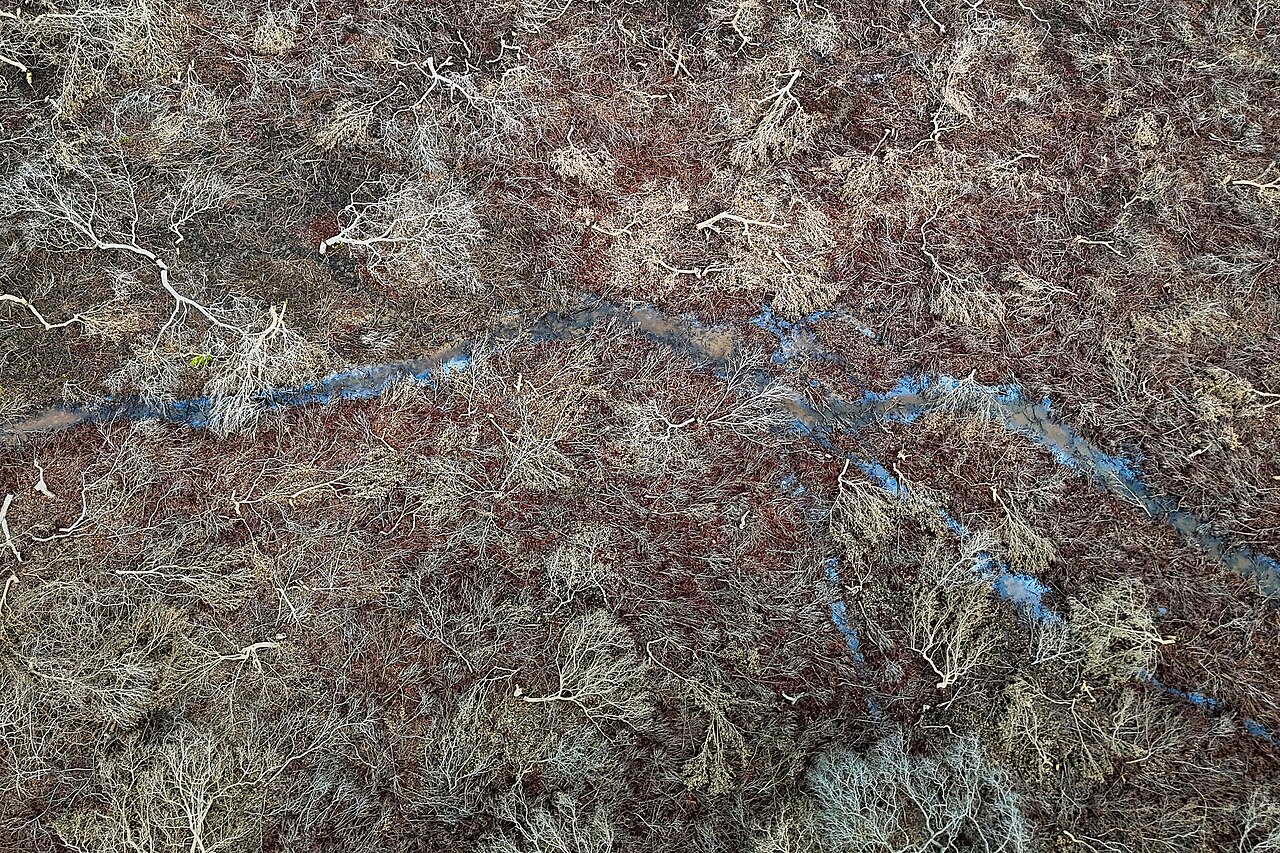
Nearly 6,000 acres of mangrove forest on Sonadia island in Maheshkhali upazila of Cox's Bazar have been cut down over the past eight years to make 50 shrimp enclosures, Samakal reports. The Department of Environment declared the island an ecologically critical area in 2006, which by law bars any change to its soil, water and natural environment or any commercial conversion.
The clearing began in 2017, when 9,466.93 acres of Sonadia's forest land, 8,000 acres of it mangrove, were allotted to the Bangladesh Economic Zones Authority (BEZA) for an eco-tourism park. After the handover the Forest Department closed its Sonadia office and stopped patrols; the park never progressed, but cutting went on until last year. The BEZA project has since been cancelled and the Ministry of Environment, Forest and Climate Change has taken up a new project to protect the island and remove encroachments.
The Department of Environment and the Forest Department have filed several cases naming more than a hundred people. Local sources quoted by the paper allege that influential activists of several parties are involved, which keeps them out of reach. S Hasanul Banna, a lawyer for the Bangladesh Environmental Lawyers Association (BELA), said the High Court ordered on 23 October last year that mangrove destruction stop and illegal enclosures be removed at Sonadia, Ghatibhanga, Tajiakata and Hamidar Dia, but the order has not been implemented.
Lying at the mouth of the Bay of Bengal about 11 kilometres north of Cox's Bazar town, the island is home to red crabs, turtles and thousands of migratory shorebirds, and is a vital site for the critically endangered spoon-billed sandpiper.
According to the figures in the report, Sonadia's mangroves once held 250 species of fish, 150 of snails and shellfish, 50 of crabs, 40 of shrimp, 170 of birds, 15 of mangrove plants and three of dolphins, among other animals, and more than half of them are now gone.
Dr Md Manzurul Kibria, professor of zoology at Chittagong University and a Halda river researcher, said Sonadia's mangrove is not just a coastal forest but the base of one of the country's most valuable ecosystems, with rich life below the mud as well as above the water. Cutting the mangrove for shrimp farms must stop at any cost, he said.
Photo: Ayman Nakib Badhan / Wikimedia Commons (CC BY-SA 4.0)
Source: Samakal
Comments
(0)