
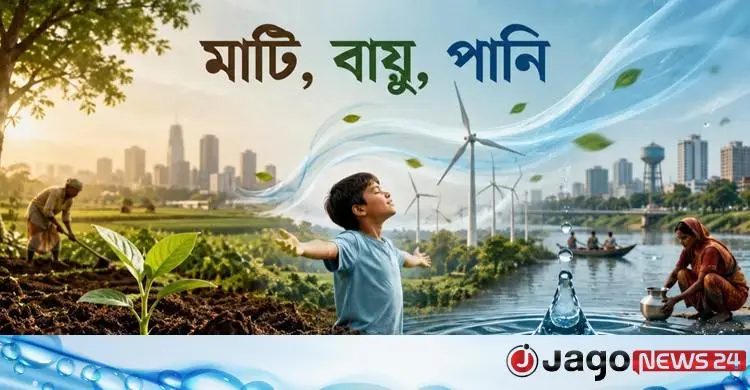
The three main elements of nature, soil, air and water, are an inseparable part of human life. "Healthy soil, clean air and pure water have sustained human civilisation. This store of life force is steadily running out, and will soon push the world into danger." Within these few sentences lies one of the world's biggest realities. Human development, industrialisation, urbanisation and consumerist lifestyles have put nature's basic resources under extreme pressure. Soil is losing its fertility, air is being polluted and sources of safe water are shrinking day by day. Not only the environment but the very existence of human civilisation now faces a deep crisis, so protecting the environment is not just a duty but a condition of humanity's survival.
Soil, air and water under pressure
Soil is not only a medium for growing crops; it is one of the world's largest living ecosystems. Billions of micro-organisms, earthworms, beneficial fungi and other organisms keep soil alive, and it is key to food production, forest growth and carbon storage. But excessive use of chemical fertiliser and pesticide, unplanned cultivation, deforestation and industrial waste are rapidly degrading soil health. Fertile land is becoming barren, organic matter is declining and farm production is at risk.
People breathe thousands of times a day, yet that air is now polluted. Vehicle smoke, factory emissions, fossil fuel use and forest destruction are increasing harmful gases in the atmosphere. Air pollution is raising breathing problems, lung disease, heart disease and other health risks, while rising greenhouse gases are speeding up climate change.
Life is unimaginable without water, yet the shortage of safe water is growing more acute in many parts of the world. Rivers, canals, beels and water bodies are being polluted by industrial waste, plastic and chemicals. Excessive extraction of groundwater is lowering the water table, and in many places salinity and arsenic contamination threaten human health and agriculture.
Climate change and agriculture
Climate change is now the environment's biggest challenge. Global warming is steadily raising the earth's average temperature, and its effects are already clear: heatwaves are intensifying, rainfall is irregular, floods and droughts are more frequent, cyclones are stronger, sea levels are rising and farm production is under threat. Bangladesh is one of the world's most climate-vulnerable countries. Rising salinity in coastal areas, river erosion, waterlogging and natural disasters are making the lives and livelihoods of farmers and ordinary people increasingly uncertain.
Agriculture depends entirely on a healthy environment. Without fertile soil, enough water, suitable temperatures and biodiversity, farm production is impossible. Because of climate change, farmers now face many problems: excessive heat is cutting rice yields, flowers and fruit are dropping, new pests and diseases are appearing, irrigation costs are rising and crops are being lost to drought and flood. Food security is therefore at risk, and there is no alternative to environment-friendly farming if safe food is to be ensured for future generations.
Biodiversity and plastic
Biodiversity plays a vital role in keeping nature in balance. Bees, butterflies, birds, fish and forest animals are all part of the environment. Today deforestation, excessive pesticide use and climate change are pushing many animals and plants towards extinction. The decline in bees is a particular concern: most of the world's food crops are pollinated by bees, and if bees disappear food production will be severely damaged. Conserving biodiversity therefore means protecting not just animals but the food and future of human civilisation.
Plastic pollution is one of today's biggest environmental problems. Single-use plastic is polluting our rivers, seas, farmland and cities. Plastic damages the natural structure of soil, blocks water flow and seriously harms animals. Microplastics are now entering food, water and even the human body, which could become a bigger health risk in future.
Carbon smart agriculture and technology
Carbon smart agriculture is becoming established worldwide as an important idea for protecting the environment and farming. Its main aims are to reduce carbon emissions, improve soil health, save water, increase production and build climate-resilient agriculture. Modern technology has created new possibilities here.
AI in agriculture, smart soil analysis, weather forecasting systems, agricultural drones, precision farming and digital farm management help farmers make the right decisions at the right time and reduce environmental damage.
Everyone's responsibility
Protecting the environment is not only the job of the government or an organisation; it is every person's responsibility. In today's world, protecting the environment is not opposed to development but a precondition for sustainable development. If we do not protect it, food shortages will grow, water crises will intensify, health risks will rise, damage from natural disasters will increase and biodiversity will be lost. Now is the time for effective action.
- At a personal level: reduce unnecessary plastic use, plant and care for trees, stop wasting water, live in an environment-friendly way and be careful about waste management.
- In agriculture: encourage organic fertiliser, test soil health, follow balanced fertiliser management, use water-saving technology and expand carbon smart agriculture.
- At social and national level: conserve forests and increase tree planting, expand renewable energy, control industrial pollution, extend environmental education and implement climate-resilient development plans.
Healthy soil, clean air and pure water are the lifeline of human civilisation, but our careless actions are steadily depleting these priceless resources. If nature's balance is destroyed, the progress of human civilisation will also stop. The earth is not our inheritance; it is a trust borrowed from future generations. Let us all pledge to protect healthy soil, ensure clean air and conserve pure water: save nature, save the earth and secure the future of human civilisation.
Source: Jagonews24. First published in Bengali on The Agro News.

Comments
(0)