
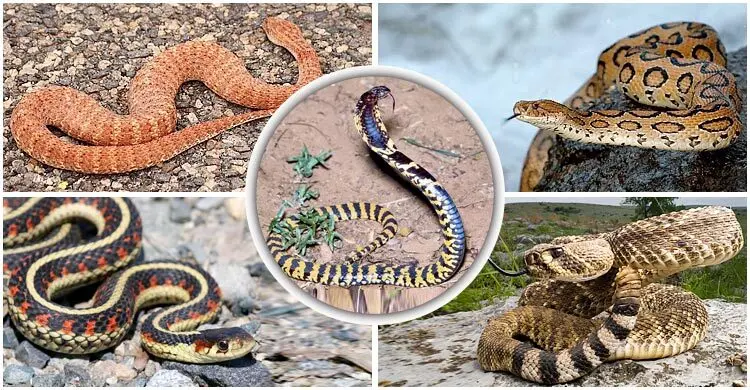
Everyone in Bangladesh is now alarmed by an outbreak of Russell's viper, whose bites have killed many people in many districts. But Russell's viper is not the only venomous snake in the country; many others live here, and almost every country in the world has snakes of many species.
Did you know that not all snakes lay eggs? Some species give birth directly to live young, and a single snake can bear around 80 young at once. Snakes are of two kinds, oviparous and viviparous: oviparous snakes produce young through eggs, while viviparous snakes give birth directly.
According to a National Geographic survey, 70 per cent of snakes are oviparous and 30 per cent viviparous. Live birth has many advantages. Many snakes eat the mother snake's eggs. Outside temperature is also crucial for controlling the young snake's body, and live birth removes that risk. Eggs need warmth to hatch, and once laid they are hard to move to a warm place. Many snakes live in cold climates, and they give live birth to keep their young warm.
Snakes that bear live young
Russell's viper, known to many in Bengali as chandrabora, is now the snake everyone fears. A female's breeding season runs from May to November, peaking in June-July. After mating the female keeps the fertilised eggs in her belly and six months later gives birth to 6-63 young. Delivering 10 young takes her two to three hours.
The rinkhals, known as the ring-neck spitting cobra, is entirely different from other cobras in its breeding habits. It is a very aggressive animal, and this special ability is thought to be why it can give live birth. Vipers and pit vipers are also on the list. Their natural habitats are Asia, Africa, Europe and North, Central and South America, and these venomous snakes prefer cold air.
The death adder is among the most venomous snakes in the world, but it is not at all aggressive. Found in Australia, it has long fangs and can give birth to 30 young at a time.
The western diamondback rattlesnake is among the largest rattlesnakes in the world. Found in the deserts of America and Mexico, it usually bears 10-20 young at a time and carries them in its body for six months.
The green anaconda is the world's largest snake. It can grow to about 20 feet long and weigh up to 150 pounds, but it is not venomous. Found in South America, it too bears live young rather than laying eggs.
The eastern garter snake is found in North America and is not very venomous. Garter snakes expel their young from the body right after birth. The young are usually six inches long and can later grow to two feet.
The eyelash viper is one of the most beautiful snake species. Found in South and Central America, it is quite venomous. The young of this yellow, brown, red and green snake are 7-8 inches long at birth.
Sea snakes and garter snakes
The yellow-bellied sea snake spends most of its life in water. Like all sea snakes it gives live birth: females go to shallow tidal pools to give birth, and keep the young in their bodies for six months. Sea snakes are mainly of the Elapidae family. Because they live in water there is no suitable place to lay eggs or keep them warm, so most sea snakes give live birth. Only the sea krait lays eggs.
Garter snakes belong to the colubrid family and are known as fascinating animals. They have unusual mating habits: several males approach a single female, so one female may breed with as many as 25 males. Female garter snakes can also store sperm for several years and release it for fertilisation when conditions are favourable, which improves their offspring's chances. A female garter snake is pregnant for two to three months and gives birth to 3 to 80 young at once.
Citing NDTV and CBS News.
Source: Jagonews24. First published in Bengali on The Agro News.


Comments
(0)