
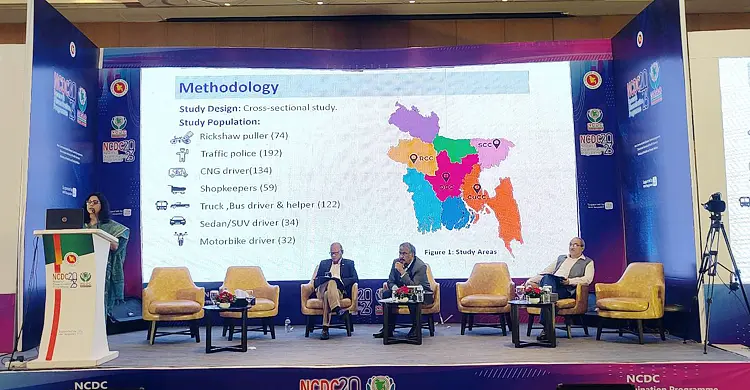
Every year 4,03,317 people in Bangladesh are bitten by snakes and about 7,511 of them die, according to a nationwide snakebite survey by the Non-Communicable Disease Control (NCDC) programme.
The findings were announced on Sunday morning (18 June) at an event at Hotel InterContinental in the capital to release results of the fourth Health, Population and Nutrition Sector Programme.
How the survey was done
The data were collected door to door from 62,000 households in 200 randomly selected primary sampling units (PSUs) across the country. The survey was a joint initiative of the medicine department of Chittagong Medical College and the Centre for Injury Prevention and Research, Bangladesh, with the participation of various institutions and organisations and the support of the Bangladesh Bureau of Statistics. In addition, the current physical and mental disabilities of 400 snakebite patients previously treated at Chattogram and Rajshahi medical college hospitals were assessed.
Who is bitten
The survey says that each year 244 people per lakh are bitten by snakes and about five die. Ninety-five per cent of all victims are in rural areas. A quarter of the bites are from venomous snakes; of those bitten, 10.6 per cent suffer physical effects and 1.9 per cent are left paralysed, the survey says.
Snakebites are most common in Khulna and Barishal divisions. Men aged 25 to 55 are bitten most often, near their homes, between dusk and midnight.
The survey found that about 80 per cent of people tie a knot on the limb after a bite, and 65 per cent first go to an "ojha" or traditional healer. Two in every thousand people lose a limb after a snakebite, and 2 to 23 per cent suffer various long-term physical illnesses. About 10 per cent suffer long-term depression after a bite.
Each snakebite costs the victim about Tk 2,000 in treatment.
Livestock also affected
The survey also found that animals other than humans are being bitten at an alarming rate. About 19,000 domestic animals are bitten by snakes every year, and 2,500 of them die, causing heavy financial losses each year.
Source: Jagonews24. First published in Bengali on The Agro News.
Comments
(0)