
On 4 November 2025 Jagonews24 published a lifestyle photo feature in Dhaka on one of the year's most visible fashion motifs, the snake. Trends come and go, the report said, but some symbols outlast them, and the snake had moved beyond jewellery and clothes to become part of the whole language of fashion, read at once as mystery, beauty and strength. The feature traced a line from the ornaments of the ancient world to Bulgari's Serpenti jewels, then to the necklaces worn by film stars and to printed dresses, bags and shoes, and it called 2025 the year of snake fashion.
That line is well documented. Museums hold snake bracelets close to two thousand years old, the trade press has followed the motif through the twentieth century, and conservation bodies have tracked the much less glamorous business in real snakeskin that sits behind the look.
Cobras, gold and the power of the ancient world
The snake design is no recent invention. As the report noted, coiled snake motifs appeared thousands of years ago in the ornaments of ancient Egypt, Greece and India, where the snake was taken as a sign of immortality, wisdom and rebirth, and royal women wore snake jewellery to show their power and beauty.
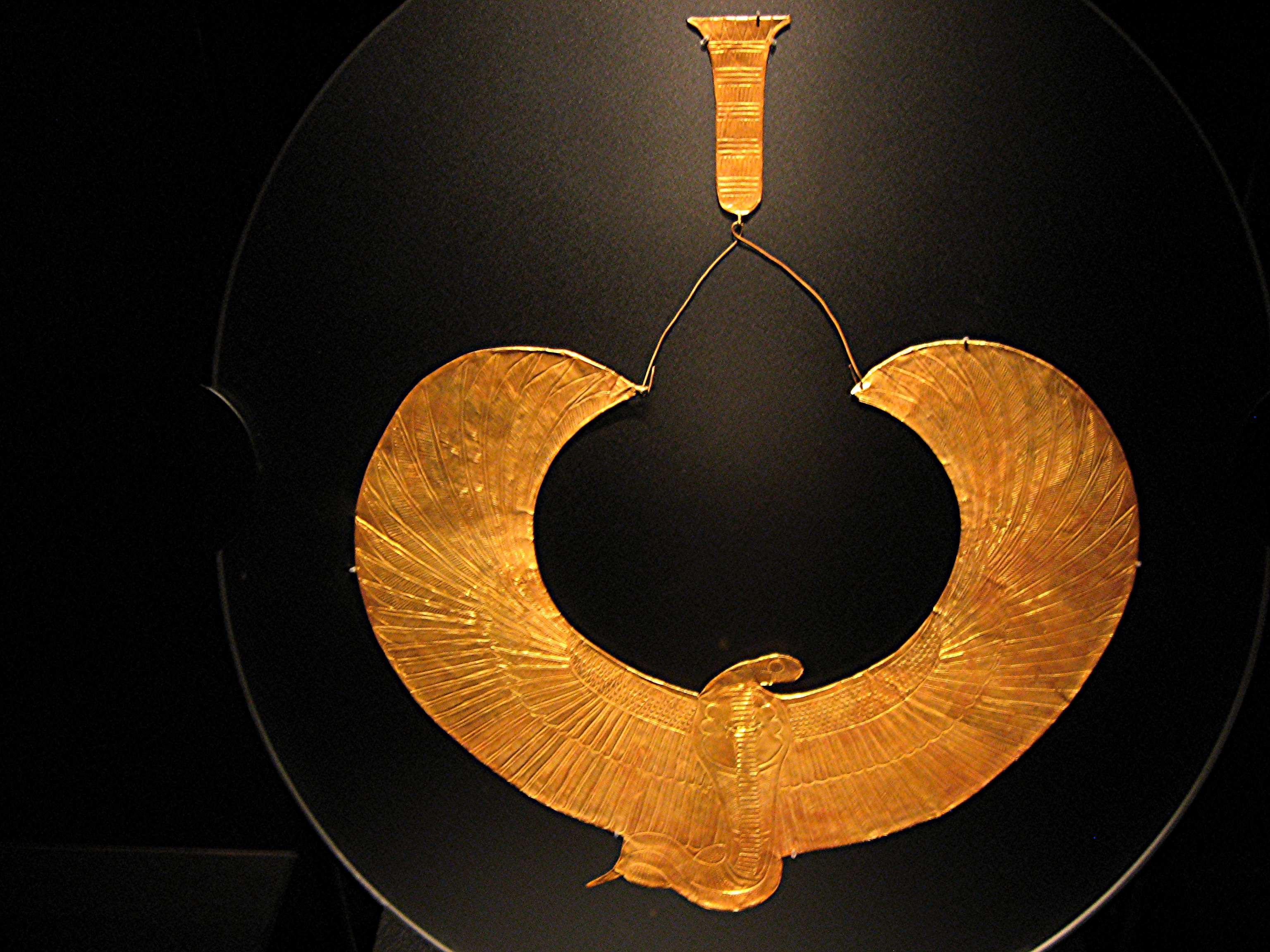
Egypt gives the clearest early case. The uraeus, the upright cobra worn on the heads of the pharaohs, either as a figure on top of the head or as a band around the crown, stood for sovereignty, royalty and divine authority. It was the sign of Wadjet, one of the earliest Egyptian deities, who was usually shown as a cobra and was the patron of the Nile Delta and protector of Lower Egypt. The cobra was believed to guard the king by spitting fire at his enemies. Among the gold laid on the mummy of Tutankhamun was a collar amulet of engraved sheet gold in the form of Wadjet as a winged cobra.
The same tomb holds one of the earliest known examples of the ouroboros, the snake that eats its own tail. It appears in the Enigmatic Book of the Netherworld, a funerary text of the fourteenth century BCE. The name is Greek and means tail-eating, and the image is generally read as eternal renewal, the cycle of life, death and rebirth.
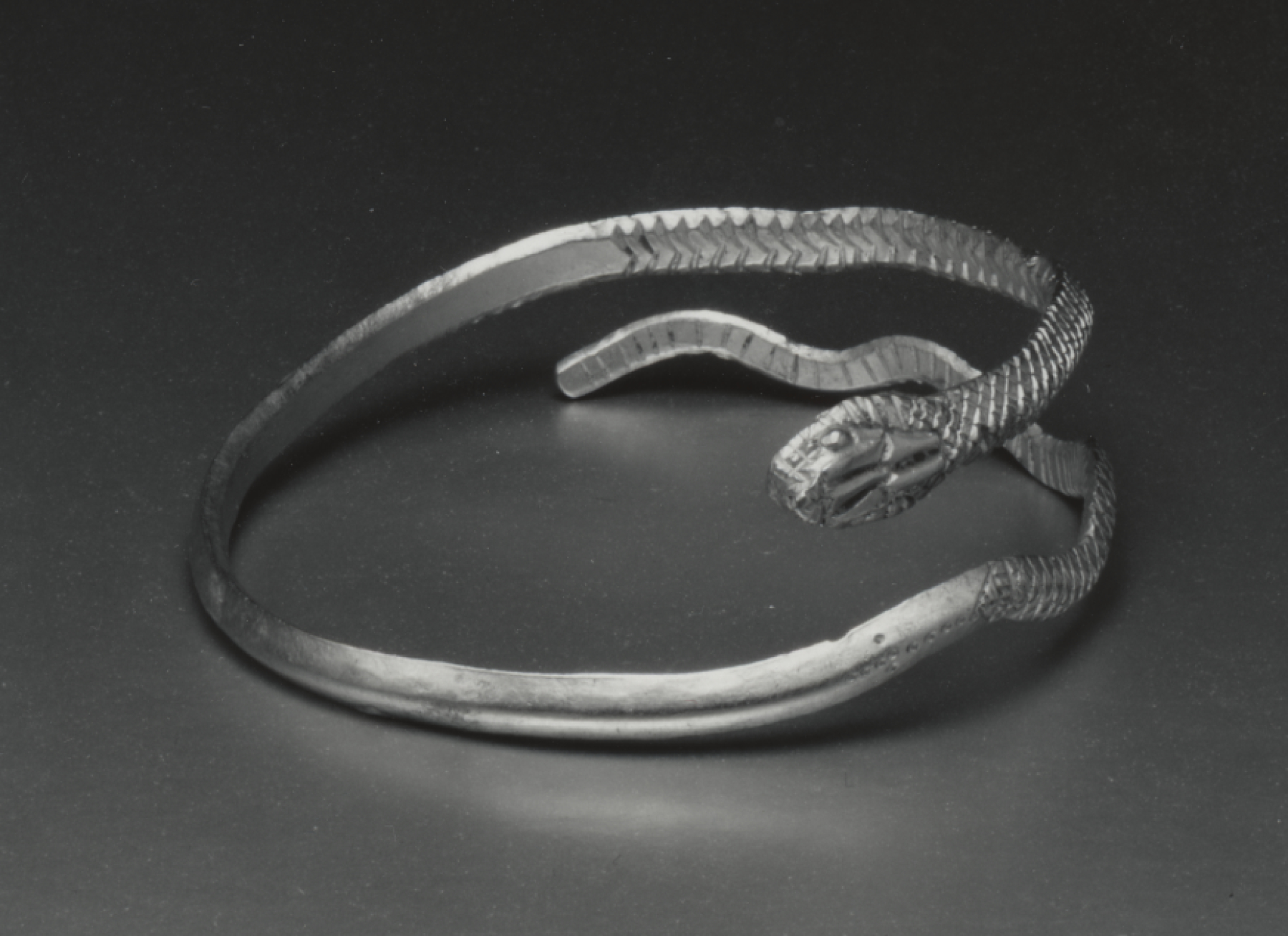
In the Greek and Roman world the motif became a staple of luxury. The Walters Art Museum in Baltimore, which holds a Roman snake bracelet of the first century AD, notes that solid-gold bracelets and rings in the form of snakes were among the most popular objects in Greek and Roman jewellery. They were often worn in pairs, on the wrist or the upper arm, and the snakes stood for fertility and were meant to ward off evil. The link with health came from the snake's habit of shedding its skin. Ancient writers saw renewal in it, and an account by Apollodorus says the serpent became the sign of the healing art because it sloughs the skin of old age, which is why a snake coils around the staff of Asclepius, the Greek god of medicine.
Snake crowns in the art of India and Bengal
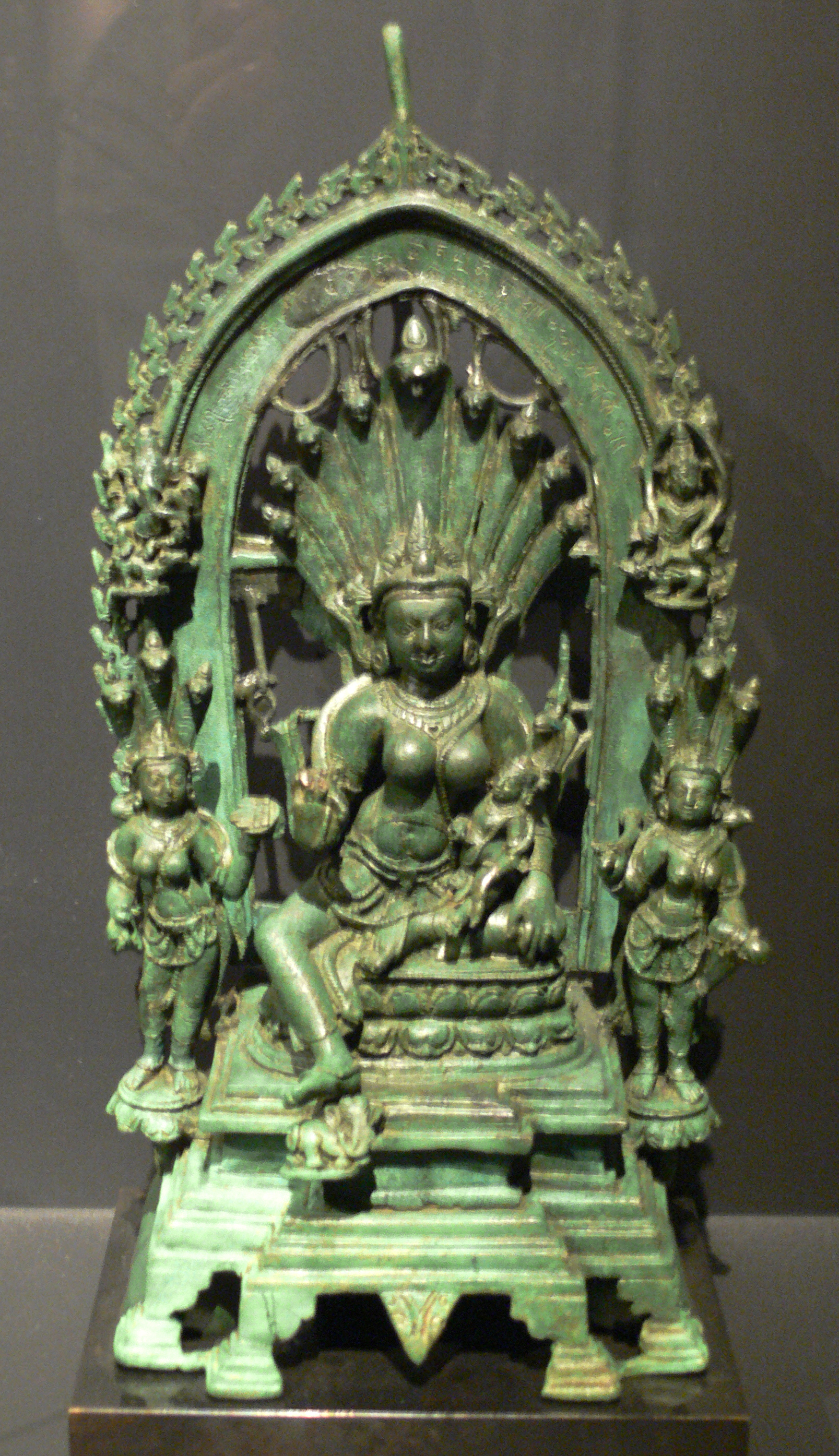
India, the third of the report's ancient examples, has its own long tradition, and part of it belongs to this region. Manasa, the snake goddess, is described by Banglapedia, the national encyclopedia of Bangladesh, as one of the most popular deities of Bengal and a local goddess of the region. Her images usually show her with two or four arms, wearing a crown of expanded snake hoods, with her son Astika beside her. Banglapedia counts more than 48 such images found in North Bengal and regards the one from Mangalkot in Bogra as the earliest.
Her worship follows the seasons. Hindus of all castes honour her in the months of Ashad and Shravan, the rainy season, when snakes move about most, asking for protection from snakebite, for prosperity and for the welfare of their children. The medieval Bangla poem Manasamangal makes her its central figure, in the tale of the merchant Chand Saodagar, his son Lakhindar, who dies of a snakebite, and Lakhindar's wife Behula, who wins back the family's lives with her dance. Place names in Bogra echo that story.
From a queen's ring to the fashion magazines
The modern jewellery story starts in the nineteenth century. In Victorian Britain the snake came to stand for everlasting love, and the best-known example is Queen Victoria's own serpent-shaped engagement ring, as the jewellery writer Sarah Royce-Greensill recalled in Spear's magazine in January 2025. In Paris, according to the same article, the jeweller Frédéric Boucheron gave his wife a snake collar in 1888 before a long journey, as a sign of protection and love. The house returned to that design in 1968 with its Serpent Bohème collection.
That year was a high point for the motif. The fashion editor Diana Vreeland sent a memo to her staff at Vogue in 1968 naming the serpent the motif of the moment in jewellery and asking to see it on every finger and wrist, a memo that both the watch magazine Time and Tide and Spear's cite. In the 1970s the designer Elsa Peretti's gothic-tinged snake pieces for Tiffany and Co drew on a rattlesnake rattle she had been given as a good-luck charm. Another famous piece is the snake necklace the actress María Félix commissioned from Cartier, 22 inches long and articulated, with more than 178 carats of diamonds. Spear's reported that it would be among the archive pieces at the Cartier exhibition at the Victoria and Albert Museum in London, which opened on 12 April 2025 and was scheduled to run until 16 November, so it was still open when the Jagonews24 report appeared.
Serpenti: from a wrist-wrapping watch to a global emblem
In the report's account, no modern brand has done more to establish the snake design than Bulgari, whose Serpenti collection renders the snake's smooth curves and glinting eyes in diamonds, gold and precious stones. For the house, the report said, the snake is not merely a design but an expression of artistry.
Bulgari was founded in Rome in 1884 by Sotirios Voulgaris, a silversmith from Epirus in Greece, and its flagship shop on Via Condotti opened in 1905. The serpent entered its work in the 1940s, as bracelets that wrapped around the wrist. In 1948 the firm made its first Tubogas watch. The name comes from a flexible gas pipe, which inspired the design: long bands of gold are wound around a steel core without soldering, and the coils interlock to hide the structure beneath, so that the bracelet bends and fits the arm. Time and Tide reported that the goldsmiths needed about fifteen more years to master the method fully.
From the middle of the 1950s Bulgari tried more naturalistic snake heads, some of them hiding the watch under a hinged cover. In the 1960s coloured enamel and stones were fitted into the scales. Fame arrived with Elizabeth Taylor, who spent more than two years in Rome for the film Cleopatra, released in 1963, at a time when the city's film boom had earned it the nickname Hollywood on the Tiber. A 1962 publicity still from the film shows her wearing a gem-set Bulgari Serpenti, although the snake armbands she wore in the film itself came from the 20th Century Fox props department. Her co-star Richard Burton is reported to have said that he introduced her to beer and she introduced him to Bulgari.
Production of the elaborate scaled designs ended in the middle of the 1970s. The snake returned for the firm's 125th anniversary in 2009 in a more geometric form, and the following year Paolo Bulgari gave Taylor a double-wrap pink gold Serpenti, her fourth. Since 2011 Bulgari has been part of the luxury group LVMH. From 2017 a series called Serpenti Through the Eyes Of invited outside designers such as Alexander Wang and Nicholas Kirkwood to reinterpret the snake, and the Serpenti marked its 75th anniversary in 2023.
On the necks and wrists of the stars
The heart of the Jagonews24 feature was its gallery of stars. It named Priyanka Chopra as one of the faces of the Serpenti collection, saying the snake jewellery at her neck or wrist reads as a sign of feminine strength and elegance. This luxury symbol, it added, had become hugely popular not only on international red carpets but among Indian stars as well, and it pictured these wearers:
- Samantha, in a snake-design neckpiece in which, the feature said, she looked confident.
- Tamannaah Bhatia, wearing a necklace of diamonds and gems in a snake design that the feature called a work of art in itself.
- Zendaya, the American actress, with viper-style rings and bracelets, described as a sign of the bold modern woman.
- Tripti, whose snake jewellery the feature called striking and mysterious.
- Isha Ambani, who wore a snake-design neckpiece at an event, which the feature said lifted her regal presence.
Zendaya is a Bulgari brand ambassador, and the Viper style she wears is a current branch of the Serpenti family: the Malaysian style magazine First Classe pictured her in pieces from that collection in January 2025.
The Year of the Snake on the catwalk and in the shops
Part of the moment had a simple calendar reason. The Chinese Year of the Snake began on 29 January 2025 and was due to run to 16 February 2026. It is a Wood Snake year, a combination last seen in 1965. Labels prepared for it in numbers. The Free Press Journal in India reported on 17 January that Vivienne Westwood had a limited jewellery line of snake chokers, coiled rings, bracelets and earrings; Chloé used the snake across clothes and accessories with red accents; Dior showed a gold and white collection inspired by the Serpens constellation; Vacheron Constantin engraved snakes on watches; and Loewe made cloisonné necklaces with the enameller Xiong Songtao. Bulgari, it said, showed its pieces at a Serpenti Infinito exhibition in Shanghai.
Hello magazine added knitwear and bags on 28 January: a Kenzo jumper with a gold-bead snake, a Tory Burch cardigan wrapped by a large beaded snake, a Gucci jacket with small embroidered snakes and a Coach tote in ruby red. Tiffany, Spear's wrote, marked the year with new pieces based on Peretti's originals.
So the Jagonews24 verdict, that 2025 was the year of snake fashion, with the motif spreading from jewellery and clothing to accessories and make-up, had plenty of company in the fashion press. Spear's described a fresh wave of serpent-themed jewellery, with the reptiles back at the top of designers' mood boards.
Prints, bags, shoes and what the symbol says
The report made clear that the trend went beyond gems. Snake prints and designs had become popular on dresses, blouses, shirts and trousers, with snakeskin prints at the top of the trends. Animal print is the general name for this style, in which a garment is made to resemble the skin, fur, feathers or scales of an animal, and it reaches handbags, footwear and even jewellery too. Real snakes offer designers plenty to copy: they can be striped, banded, spotted or solid in colour, with overlapping scales whose colour and sheen vary, and such patterns can serve as camouflage.
The feature said these prints convey strength and daring and were especially popular among modern working women. It also said fashion houses were using snakeskin designs in a way that produced artificial but realistic textures without harming animals. Bags, belts, wallets and shoes all carried the pattern, and snakeskin-pattern handbags and heels in particular had become red-carpet favourites, an expression of personality as well as style.
Why the snake and not some other creature? The report's answer lay in symbolism. The snake stands for strength and protection on the one hand and for transformation and rebirth on the other, and independent-minded women, it said, find in the motif a reflection of confidence, courage and self-respect. Those are close to the ideas that the cobra, the ouroboros and the shed skin carried in the ancient world. Trends come and go, the feature concluded, but the power of a symbol does not die.
Behind the look: the real snakeskin trade
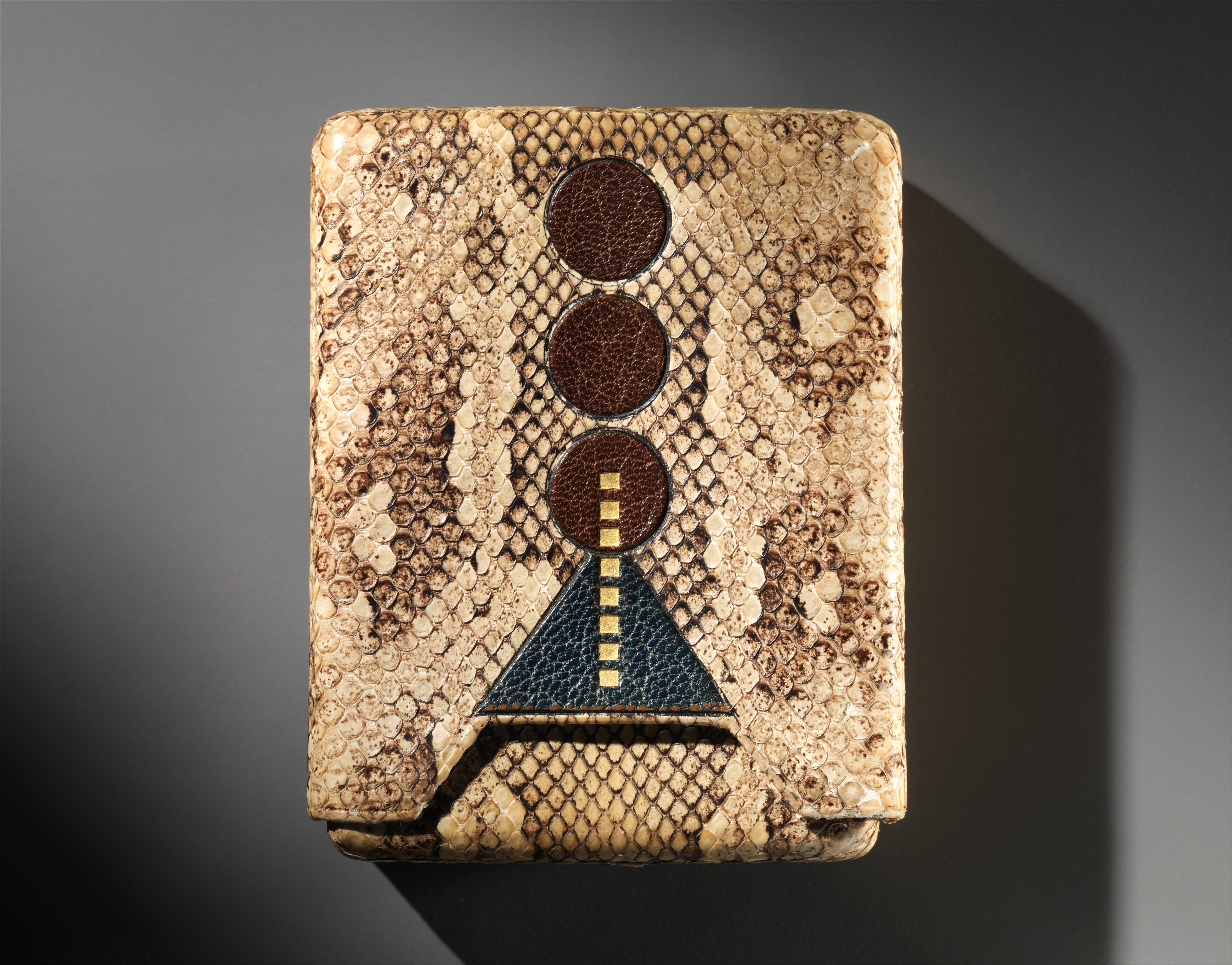
The artificial textures the report mentioned exist alongside a large trade in the real thing. Snake leather is counted as an exotic leather, in the same group as crocodile and lizard, and is made into belts, boots, shoes, handbags and wallets. The fullest public account is a 2012 report by the International Trade Centre, TRAFFIC and IUCN, the International Union for Conservation of Nature. It said that close to half a million python skins were reported as exported from South-East Asia each year, in a trade worth an estimated US$1 billion annually. Indonesia, Malaysia and Viet Nam were the main exporters, around 70 per cent of skins were re-exported through Singapore, and European Union countries, above all Italy, Germany and France, were the biggest importers.
The same report warned that skins were reportedly taken from wild animals beyond agreed quotas and laundered with false permits, and that large mark-ups along the supply chain gave a strong incentive to do so. More than 20 per cent of reticulated python skin exports from the region were declared as captive-bred, a claim whose commercial case the authors called not convincing. They did not consider trade bans an effective or fair answer. They asked instead for a traceability system across the fashion supply chain and for legally binding minimum skin sizes to protect immature snakes.
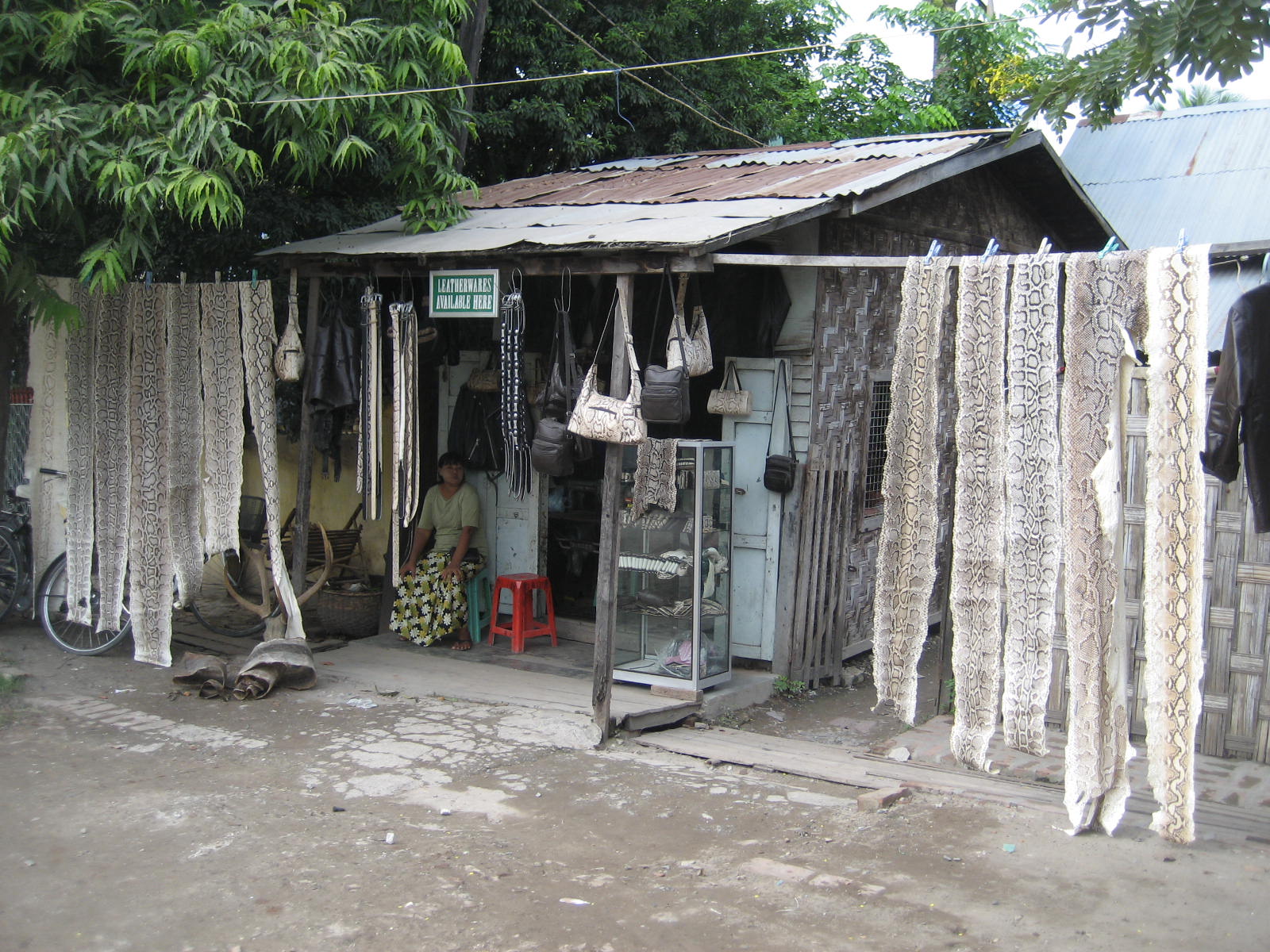
Later science added numbers. A study in PLOS ONE, reported in August 2017 by the Helmholtz Centre for Environmental Research (UFZ) with the Royal Zoological Society of Scotland, described the reticulated python, the longest reptile in the world, as one of the reptiles most traded for its skin, a commercial trade of about 80 years. Indonesia, Malaysia and Vietnam exported almost four million of its skins from 2002 to 2012, at least 75 per cent of them from wild harvests described as legal. The species is listed in Appendix II of CITES, the Convention on International Trade in Endangered Species of Wild Fauna and Flora, which allows trade only with special documents. The researchers found genetic differences between populations that could help check whether the origin stated on those documents was true. LVMH, which sells reptile leather goods, helped fund the work.
Fashion has also made its own moves. In December 2018 Chanel said it would stop using fur and exotic skins, including crocodile, lizard, snake and stingray, with a spokeswoman telling CNN that it was becoming increasingly difficult to source exotic skins that met the house's ethical standards, as Time magazine reported. The designer Stella McCartney uses no leather or fur in her work.
Snakes, skins and the law in Bangladesh
For readers in Bangladesh the motif sits close to home. Banglapedia counts about 90 snake species in the country, though more than a dozen have not been reported in recent decades. More than three-fourths are non-venomous, and fewer than half a dozen land snakes are highly venomous. Tanned snakeskin has a very high market value, the encyclopedia says, and the skins of the ajagar (python), golbahar, dadash, dhoda, dora and dudhraj have been used for handbags, purses, shoes and handicrafts. Live snakes have also been exported to Far Eastern countries as food.
The two pythons of Bangladesh show the cost of that value. Both the rock python, the largest snake in the country at about 5.7 metres, and the reticulated python have become rare. Banglapedia lists the first as critically endangered and the second as endangered, and notes that their hide is sought in trade.
The law in force at the time of the report was the Wildlife (Conservation and Security) Act 2012. It defines a trophy as the whole or any part of a dead or captive wild animal that has been treated or processed, and it names skin among its examples. Section 24 requires a licence from the Chief Warden or an officer empowered by him for anyone who wants to farm, produce, rear, import or export a wild animal, its body parts or a trophy for commercial purposes. Sections 28 and 29 bar import and export outside customs ports, without a licence and, where it applies, without a CITES certificate. Under section 40, breaking section 24 can bring up to one year in prison, a fine of up to 50,000 taka, or both, and up to two years or up to one lakh taka for a repeat offence. These rules concern the animal and its parts, not a pattern printed on fabric.
Photo: Walters Art Museum / Wikimedia Commons (Public domain). The top picture shows a Roman snake bracelet of the first century AD, as background.
Sources: Jagonews24 (lifestyle photo feature, 4 November 2025), Spear's ("Chinese new year ushers in fresh wave of serpent-themed jewellery", 31 January 2025), Time and Tide ("Why the serpent is so important to Bulgari", 29 January 2020), Viva, NZ Herald (23 April 2021), First Classe (10 January 2025), The Free Press Journal (17 January 2025), Hello (28 January 2025), Victoria and Albert Museum, International Trade Centre, TRAFFIC and IUCN (27 November 2012), UFZ via EurekAlert (30 August 2017), PEER (20 September 2017), Time (5 December 2018), Banglapedia, Wildlife (Conservation and Security) Act 2012 (bdlaws), Walters Art Museum, Wikipedia (uraeus, ouroboros, rod of Asclepius, Bulgari, Zendaya, Stella McCartney, snakeskin, animal print, Snake zodiac)


Comments
(0)