
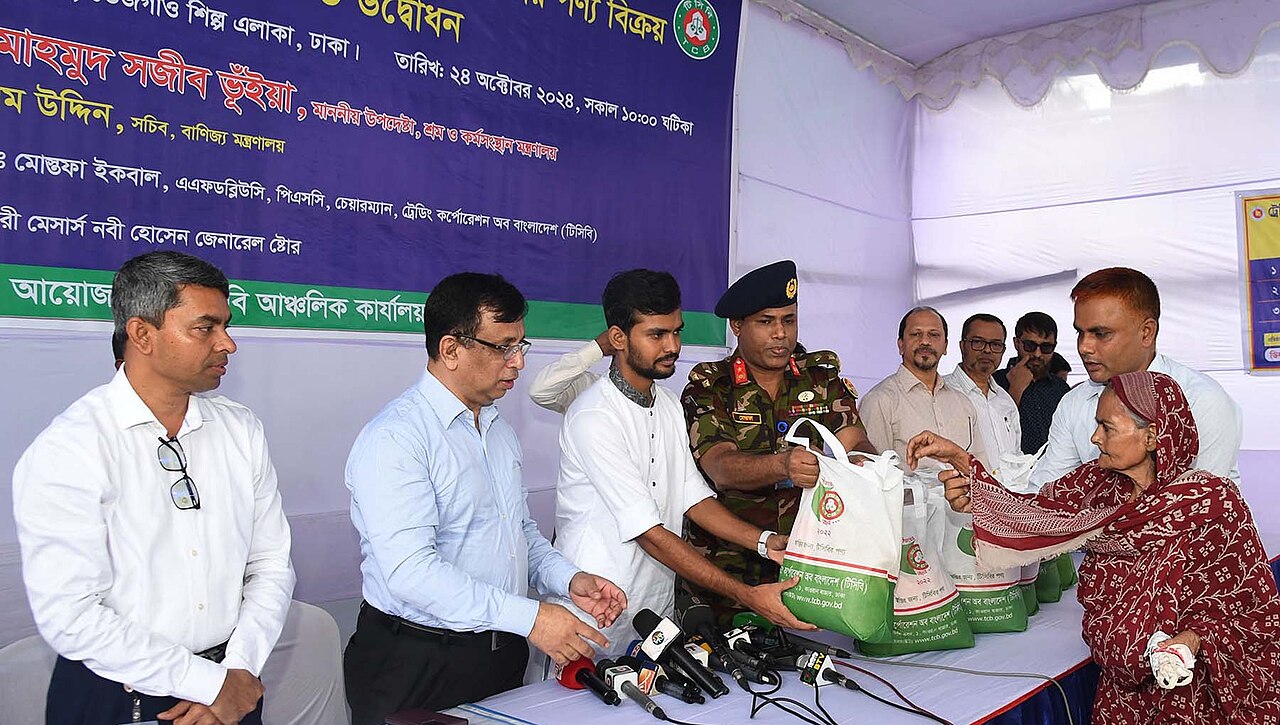
The Trading Corporation of Bangladesh (TCB) has not sold goods from mobile trucks for about six months. The last truck sale was in May, before Eid ul-Adha. As a result many low-income people in Dhaka and elsewhere can no longer buy daily essentials at low prices.
TCB sells in two ways. Through smart family cards, about 7.5 million families buy subsidised goods every month; a cardholder can buy five kilograms of rice, two litres of edible oil, two kilograms of lentils and one kilogram of sugar. The second way is the truck sale, where anyone can queue without a card for oil, sugar and lentils.
Buying those three items in the retail market costs Tk 700 to 720; from a TCB truck the saving is Tk 220 to 240. Over the past six months the prices of soybean oil, sugar, broiler chicken, eggs, fish and vegetables have all risen.
TCB spokesman Shahadat Hossain said truck sales are normally run before Eid ul-Fitr and Eid ul-Adha, and at other times when the government asks. In August and November 2024, for example, truck sales were expanded in two rounds because card distribution had fallen.
Last month the World Bank's Bangladesh Development Update said 8 million people had fallen into poverty over four years, mainly because high inflation cut real incomes, and about 62 million more live just above the poverty line. Economists say floating and temporary residents in cities usually get no card and depend on the trucks, so the sales should be widened rather than stopped.
Nargis Begum, a domestic worker in Arambagh Jheelpar in Dhaka, last bought from a TCB truck before Eid ul-Adha. Everything costs more now, she said; people keep promising her a card but it never comes, and being able to buy cheaply from the truck would at least help a lot.
Photo: Press Information Department / Wikimedia Commons (Public domain)
Source: Prothom Alo


Comments
(0)