
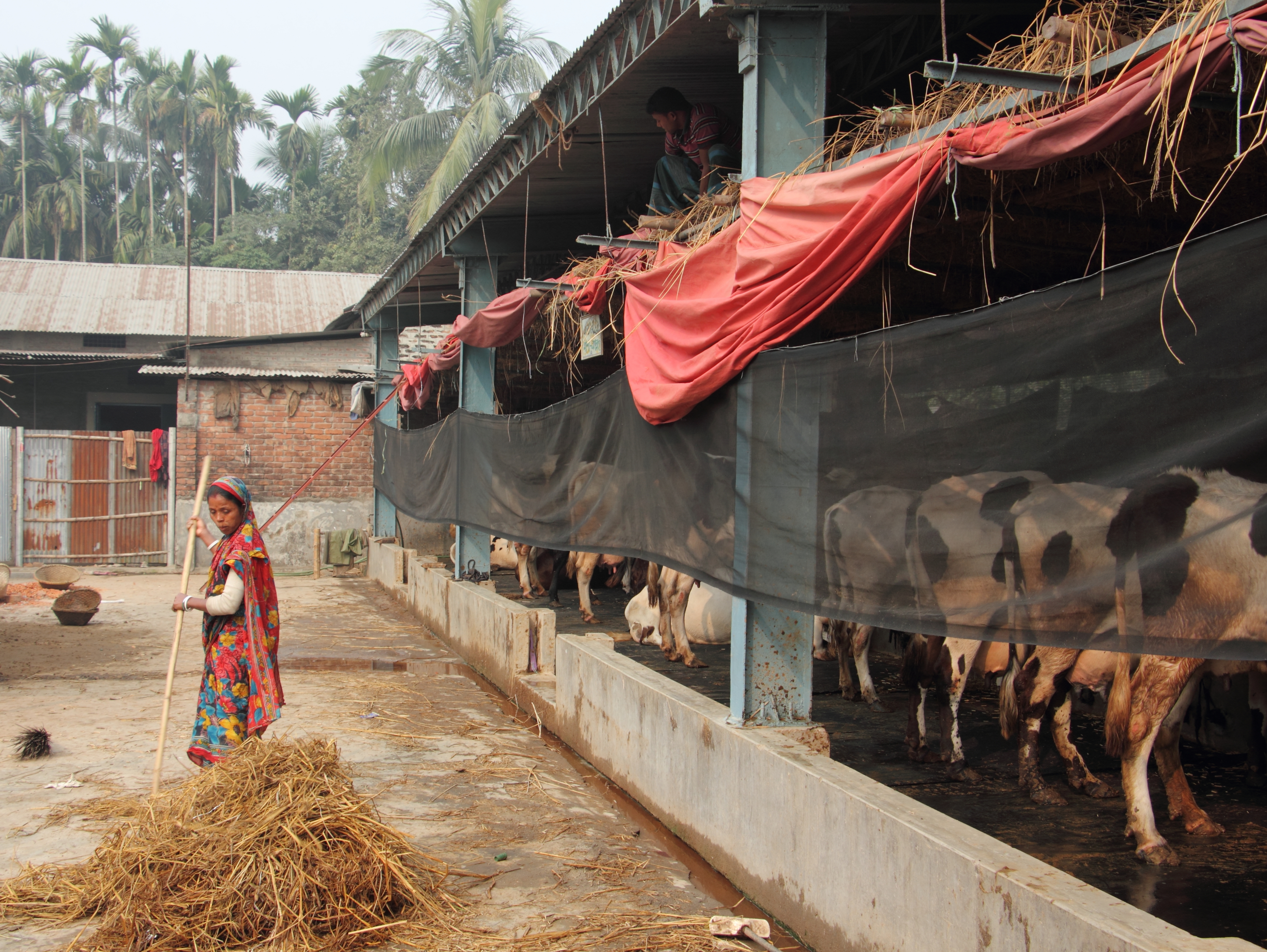
A question reaches The Agro News again and again: how does someone with little money start a dairy farm? With enough cash, buying cows is the easy part. The hard part, as the newsroom's staff correspondent wrote on 2 May 2025, is everything around the cows: where the farm stands, whether a veterinarian is close by, whether cattle feed can be bought nearby, what milk fetches locally and whether it can be sold easily every single day.
This guide keeps that writer's plan for a two-cow pilot farm and his budget, and checks it against the people whose job is dairy: the Department of Livestock Services (DLS), the Food and Agriculture Organization of the United Nations (FAO) and Bangladeshi researchers. You will learn what the plan assumes, where the national dairy sector stood when it was written, how to build a cheap but sound shed, how to feed, breed and milk the cows, how to keep accounts, and where to get help.
The two-cow plan: budget, income and costs
The writer aimed his plan at people who want to start very small, at the lowest cost, as a pilot project to learn the trade, or who simply have a small budget. His starting point was a budget of Tk 380,000 and two cows, each with her calf, giving at least 15 litres of milk a day. His cowshed measures 30 feet by 15 feet and must have electricity and water.
He divided the money into one-off costs and monthly costs. The one-off costs in his example were:
- Two milking cows: Tk 300,000
- Cowshed: Tk 60,000
- Electricity and water connection: Tk 20,000
On the income side he counted 20 litres of milk a day at Tk 50 a litre, or Tk 1,000 a day and Tk 30,000 a month. He did not count 30 litres because a 15-litre cow will not hold that yield through eight months of milking; the yield falls gradually, so he used an average of 10 litres a day per cow.
His monthly costs were:
- One worker's salary: Tk 7,000
- Feed: Tk 150 per cow per day, or Tk 9,000 a month for the two
- Medicine and other costs: Tk 2,000
- Total: Tk 18,000
That left, in his example, a monthly profit of Tk 12,000, and he estimated it would take 31 months, or two years and seven months, to recover the Tk 380,000 laid out at the start. With more cows, he noted, each cow carries a smaller share of the wage.
His strategy for keeping the income steady was to buy two more milking cows after eight months, as a second step. In that cycle, he argued, the farmer would never have to pay for feed and wages out of pocket. His figures leave out serious accidents and illness. They are one writer's example, not a government cost standard; prices of cows, feed and milk differ by district and year, so each line should be replaced with local prices.
Reading the numbers: milk price, feed and the asset sheet
The most sensitive figure in any dairy budget is the price paid for milk. In August 2022, The Daily Star reported that the farm-gate price of raw milk with 4 per cent fat had been set at Tk 46 a litre earlier that month, up from Tk 41. The same report said that, after a diesel price rise, feed costs had gone up by 10 per cent, and soybean meal and maize had risen by 40 to 50 per cent. A plan built on Tk 50 a litre needs a buyer who will pay that price, which is why the writer told readers to check local milk prices first.
Feed is the other large line. The FAO's Small-Scale Dairy Farming Manual, published in 1993 by its regional dairy team for Asia and the Pacific, says it is generally accepted that 1 kg of a good concentrate mixture supports the production of 2 kg of milk. It warns that as more concentrate is fed, the milk produced from each extra kilogram falls, the law of diminishing returns, and that this matters most when concentrate prices are close to, or above, the price of milk.
The writer closed his post by asking readers to work out what their farm would be worth after two and a half years: how many cows they would own and what those cows would be worth. The FAO manual gives a simple way to do exactly that. It sorts every payment and receipt into three groups:
- Capital items, which last long and cost a lot: land, buildings, equipment such as milk cans, and the animals themselves.
- Recurrent items, which are used up: roughage and concentrate feed, mineral mixtures, medicines, disinfectants and soap, plus services such as labour, artificial insemination and the veterinarian.
- Loans, instalments and interest, kept separate so that profit and cash flow can both be seen.
On the income side the manual lists milk and milk products, cow dung and compost. It recommends a single account book filled in every day, or at least every week, with receipts filed alongside, and a capital account that values the herd at the start and end of each year. It also reminds farmers that buildings must eventually be replaced, in about 20 years, and equipment in about 3 to 5 years, so money set aside for that depreciation belongs in an honest profit and loss account.
Bangladesh's milk gap as the plan was written
The writer's plan arrived in a country that still did not produce all the milk it needed. According to the DLS publication Livestock Economy at a Glance 2023-2024, prepared by its planning section from Bangladesh Bureau of Statistics data, milk production in fiscal year 2023-24 was 150.44 lakh metric tons, against a demand of 158.78 lakh metric tons. The demand figure is based on 250 ml of milk per person per day; availability stood at 234.45 ml per person per day.
Production had been rising every year. The same DLS table gives 119.85 lakh metric tons for 2020-21, 130.74 lakh metric tons for 2021-22 and 140.68 lakh metric tons for 2022-23. The country had 250.13 lakh cattle in 2023-24, along with 15.24 lakh buffalo.
Livestock as a whole contributed 1.80 per cent of gross domestic product at constant prices in 2023-24 (provisional) and 16.33 per cent of agricultural GDP, with a growth rate of 3.15 per cent. DLS also records that livestock gives direct employment to 20 per cent of people and part-time employment to 50 per cent.
Choosing the site and building a low-cost shed
The FAO manual lists what good housing must do: protect animals from heat and from extreme cold, keep construction and maintenance costs low, prevent feed being wasted, prevent injury, make it easy to remove dung and urine, and make feeding, milking and cleaning convenient. It recommends good ventilation and cheap, strong local materials such as bamboo. Build on a well-drained spot with a shallow drain around the shed.
For the standing, the area where each cow stands and lies, the manual gives these guidelines:
- A crossbred dairy cow needs a standing of about 1.60 m by 1.10 m: enough to lie down and get up easily, but not so much that she drops dung and urine on the standing.
- A rammed earth and gravel floor is the cheapest to build, sloped about 1 in 30 (3 per cent) towards the gutter; it must be kept level to stop pools of mud and urine forming.
- A rubble and cement floor or a concrete floor can be sloped less, at least 1 in 60 (1.5 per cent); for concrete, the manual gives a 7.5 cm layer of 1 part cement, 3 parts sand and 3 parts gravel, kept wet for 2 to 3 days while it sets.
- Partitions between adult animals are usually about 1.10 m apart, so the milker can reach each cow; they keep cows from trampling one another's udders. Barbed wire should never be used, and no nail or sharp edge should stick out.
- Calves need a separate area from the adult cattle.
A farmer short of money does not have to build everything at once. The manual describes a modular approach: first the living area for cows, heifers and calves; later, as milk income allows, a calf box, fodder store and exercise area; and finally separate space for concentrates, equipment, water and milk utensils. Dung can go to compost or a biogas digester, which also reduces flies.
Choosing cows: crossbreds and the milk-shed experience
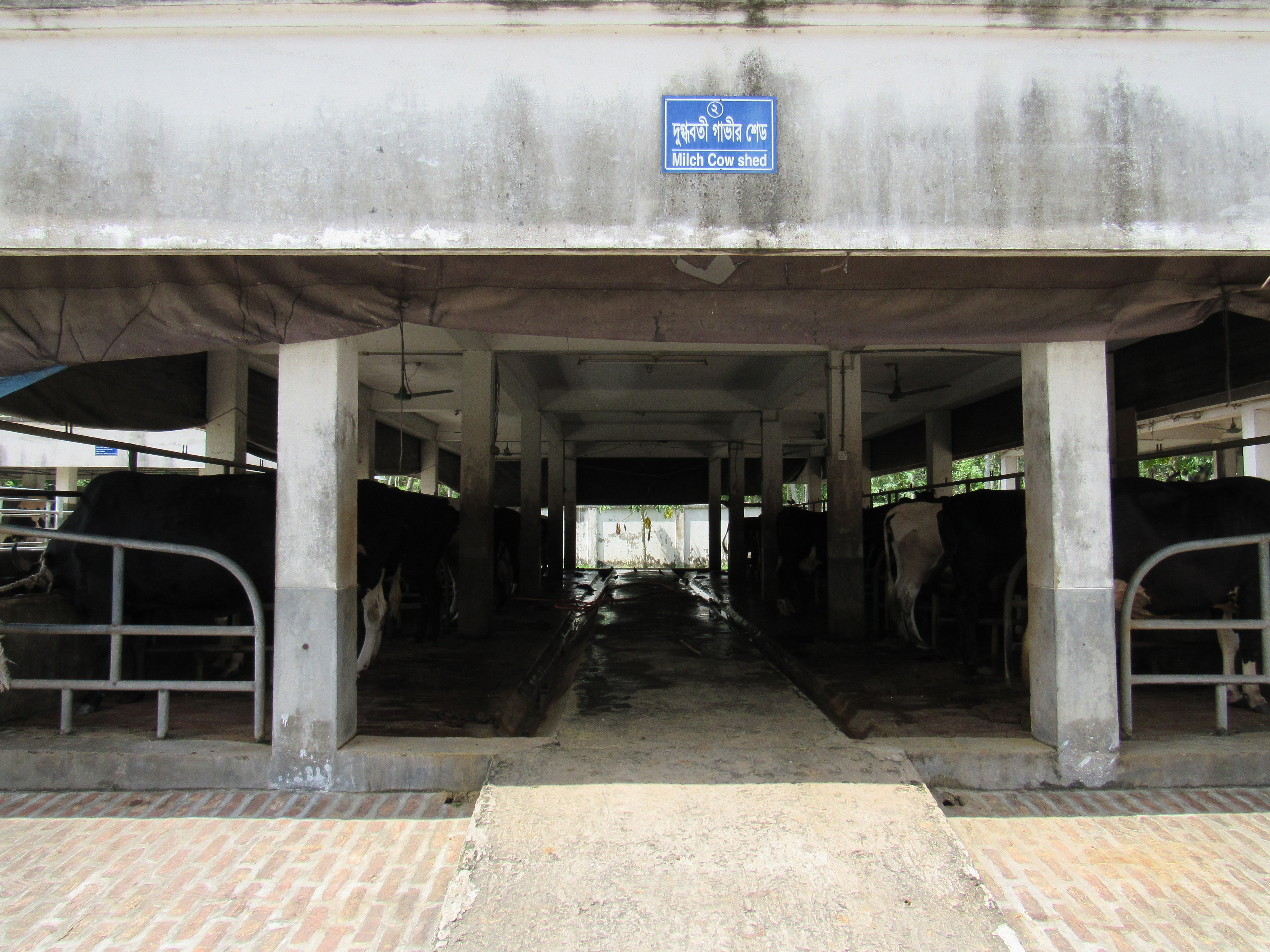
The writer's plan rests on two cows that each give at least 15 litres at their best, which in Bangladesh usually means crossbred cows rather than local ones. A 2010 study in Livestock Research for Rural Development by K M A Islam and colleagues surveyed 300 dairy farmers in 30 villages of the Baghabarighat Milk Shed Area, covering five sub-districts of Pabna and Sirajganj districts, where Bangladesh Milk Producers' Cooperative Union Ltd, known by its brand name Milk Vita, collects milk. It found that crossbred dairy cows, especially half Sahiwal and half Pabna milking cows, dominated over local or non-descript cows.
The study also found that distance from the Milk Vita centre shaped which cattle farmers kept and how they managed them, which supports the writer's advice to farm near a reliable buyer.
Buying a milking cow is also buying her breeding record. The FAO manual sets the target that a dairy cow should calve every 365 days, so that she spends most of her life in milk. A cow with long gaps between calvings eats for months without milking.
Feeding, water and fodder
Cattle are built to eat roughage. The FAO manual notes that the rumen of a cow alone may hold up to 150 litres. It gives a simple estimate of how much dry matter, the part of feed that carries the nutrients, a cow eats: about 3 per cent of her body weight a day. It adds that optimally 18 to 20 per cent of that dry matter should be crude fibre, which keeps the rumen working.
Water is often forgotten. According to the manual, cows need 4 to 6 litres of water for each kilogram of dry matter they eat, and dairy cattle should have continuous access to drinking water; where that is not possible, they should be offered as much as they can drink at least twice a day.
Concentrates fill the gap that grass cannot. Beyond the 1 kg of concentrate for 2 kg of milk rule, the manual stresses that a suitable mineral mixture should be given, either with the concentrates or as a separate lick, and that underfed cows may give little milk and may not conceive regularly, which lengthens the calving interval.
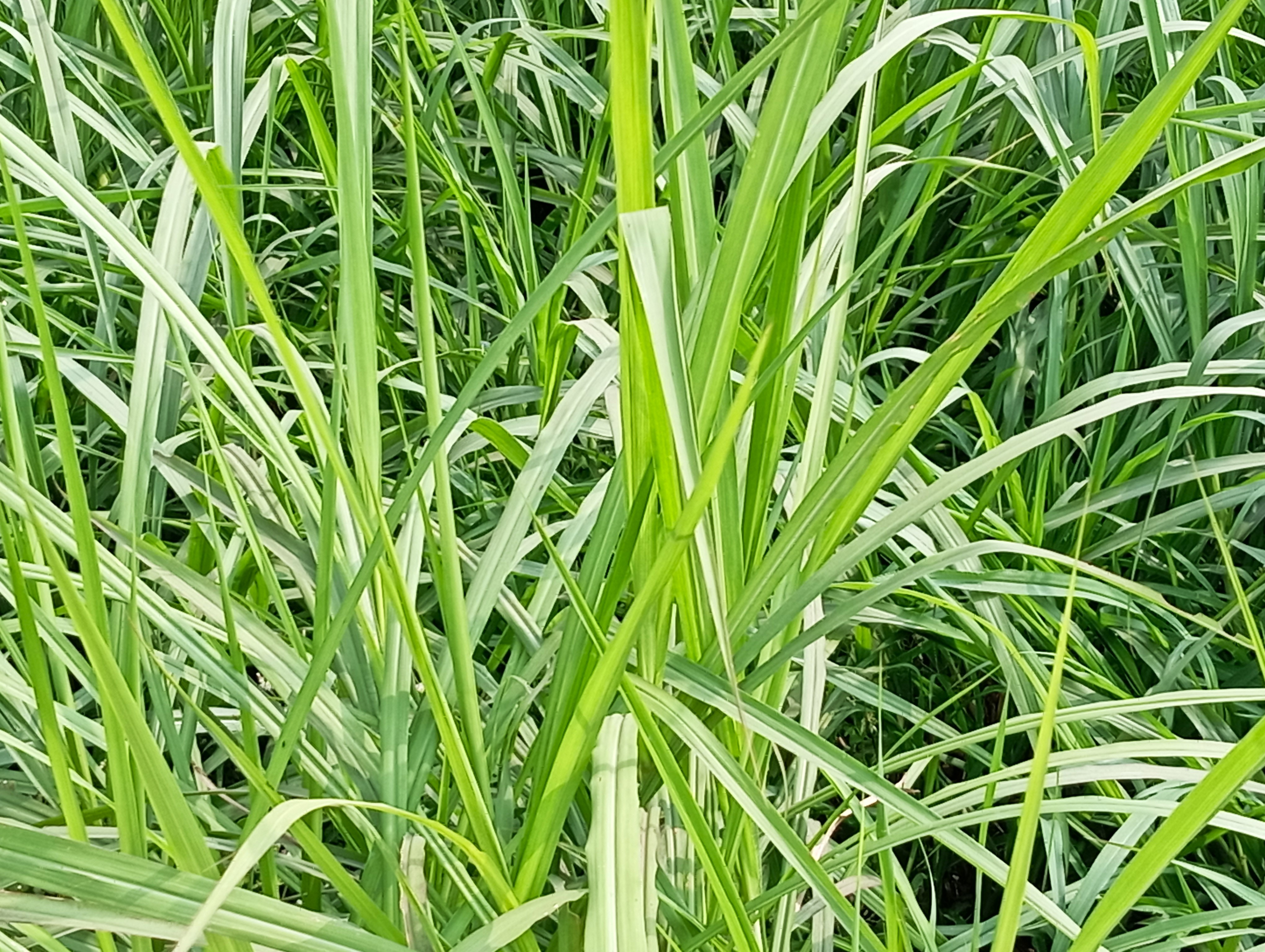
Growing green fodder cuts the feed bill. The manual names Napier grass, also called elephant grass, and its hybrids among the main fodder crops, notes that hybrid Napier can give very high yields under good management, and explains that Napier is planted from stem cuttings with two or three nodes, set at an angle in the soil. For a fodder variety and planting material suited to your area, ask the upazila livestock office.
Breeding, calves and clean milking
A two-cow farm earns only while its cows are in milk, so breeding is part of the budget. The FAO manual explains that a cow comes on heat about every 21 days (with a range of 18 to 24 days) and that the heat lasts about 18 to 20 hours. Watch early in the morning, in the afternoon and before bed, because some signs are easy to miss.
The manual's easy rule for artificial insemination is: if heat signs are seen early in the morning, inseminate in the afternoon of the same day; if they are seen in the afternoon, inseminate early the next morning. If there are no signs of heat 60 days after insemination, call the technician to check whether the cow is pregnant. A cow should be dried off, that is milking stopped, 60 days before her expected calving, so that she and her calf are ready.
For the newborn calf, the manual says colostrum is needed for at least 4 days, for nutrients, for protection against disease and to help the calf pass its first dung. If the calf stays with its mother, the first suckling should come within 3 hours of birth.
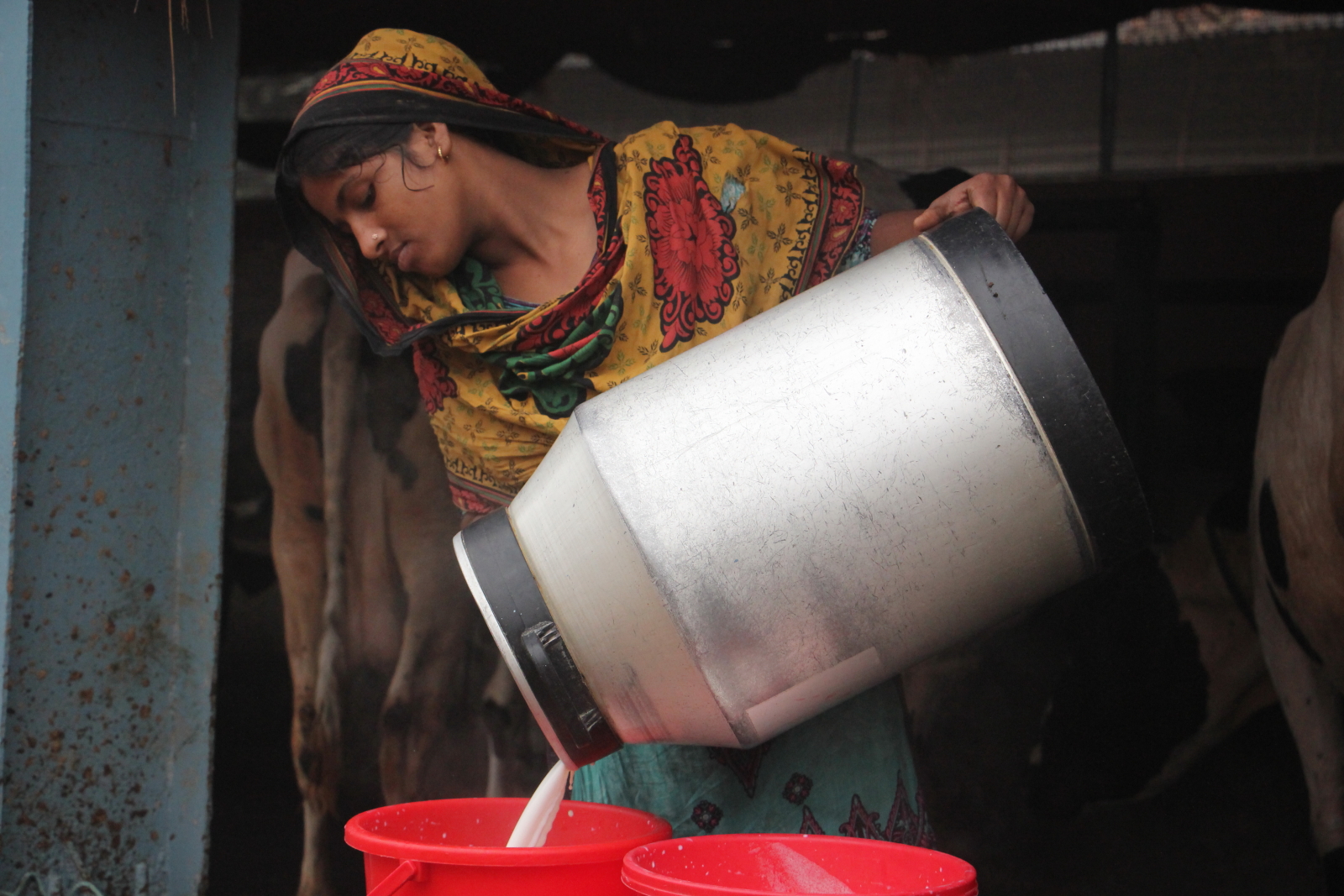
Clean milking protects the price. The manual's points include:
- Clean and sweep the milking area before milking and keep equipment clean, because bacteria multiply quickly in dirty utensils.
- Do not shout at, beat or frighten the cow; a relaxed cow lets down milk more easily.
- Milk soon after washing the udder, because the let-down reflex is present for 5 to 7 minutes after washing.
- Use one udder cloth for each cow, which greatly reduces the risk of spreading mastitis.
- Do not feed hay while milking, as dust can get into the milk; strain the milk and do not leave it in an open pail.
- A person who is ill should not milk, as the illness can pass to others.
Disease prevention and where to get help
The FAO manual lists among the important diseases of dairy cattle in the region anthrax, black quarter, brucellosis, haemorrhagic septicaemia, mastitis, tuberculosis and foot and mouth disease, along with parasites and metabolic problems such as bloat and milk fever.
A newer threat had reached Bangladesh by the time the plan was written. A study published in Frontiers in Microbiology in April 2024 by Mohammad Asir Uddin, Muhammad Tofazzal Hossain and colleagues records that the first reports of lumpy skin disease (LSD) outbreaks in Bangladesh came in July 2019, that the vector-borne disease reached virtually every district in 2019-20, and that 151 of 180 nodular tissue samples from suspected cattle tested positive for the virus.
The FAO manual's prevention measures are practical for any small farm:
- Vaccinate against the diseases present in your area, following a schedule prepared with the local animal health authorities.
- Deworm and control ticks and other parasites on a schedule your livestock officer advises.
- Never bring sick animals, or animals from an area with infectious disease, onto the farm, and keep sick animals apart from healthy ones.
- Watch for changes in feeding, behaviour, discharges or breeding and seek advice early; seek a diagnosis if an animal dies suddenly.
This article does not give medicine names or doses. For vaccination, treatment and any medicine, contact a registered veterinarian or the upazila livestock office: DLS runs livestock offices at division, district and upazila level. The department also implements the Livestock and Dairy Development Project, approved by the World Bank on 6 December 2018 with a US$500 million credit, whose stated aim is to improve the productivity, market access and resilience of smallholder farmers and agro-entrepreneurs in selected livestock value chains.
Photo: Syed Sajidul Islam / Wikimedia Commons (CC BY-SA 4.0)
Sources: The Agro News (Staff Correspondent), Department of Livestock Services (Livestock Economy at a Glance 2023-2024), FAO Small-Scale Dairy Farming Manual (1993), Livestock Research for Rural Development (Islam et al., 2010), Frontiers in Microbiology (Uddin, Hossain et al., 2024), The Daily Star, World Bank
Comments
(0)