
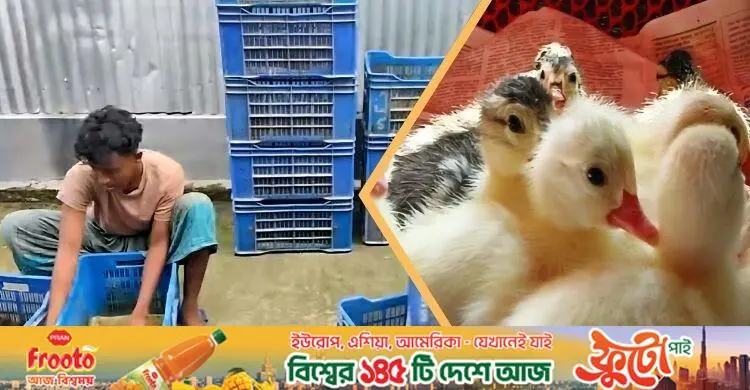
It was a dark night in 1997, with no electricity anywhere. That night, with a hurricane lamp and some rice husk, Shah Alam of remote Maheshrauhali village in Naogaon union of Tarash upazila, Sirajganj, sat down to an unusual experiment: hatching duck eggs artificially. His bold innovation that day has changed not only his own fortunes but the whole village. The once-neglected village has become one of the country's leading and largest duckling markets.
Shah Alam told Jago News: "The beginning was not easy at all." Hatching ducklings by the husk method began in Maheshrauhali with him, and technology later brought a revolutionary change to the trade. Over time, modern electric incubators have taken the place of husk and hurricane lamps.
Today there are commercial duckling hatcheries in almost every home in Maheshrauhali. The village now hatches 12 to 15 lakh ducklings a day in modern incubators. The villagers say the number would grow several times over with government support.
A village without unemployment
The upazila livestock department says duckling hatching has brought a huge boom to the whole village economy. Because of the duckling business alone, there is no longer any unemployment in the village, and women work alongside the men.
Local resident Abdus Salam told Jago News: "Every family in Maheshrauhali is involved in duck rearing and duckling hatching, and they live by it. Men and women are busy day and night collecting eggs, grading them, loading the incubators and caring for the ducklings after they hatch. Yet there was a time when they could barely make ends meet. The village is now known as the duck village. All working-age men and women are busy with ducks from morning till night. Lakhs of ducklings produced here meet local demand and go to farms in districts across the country."
Costs and returns
Hatchery owner Jamal Uddin said: "Ducklings of various breeds from this village, including Khaki Campbell, Beijing and Indian Runner, are of very good quality, so there is huge demand across the country. Every day wholesalers come with vehicles from the haor areas of Kishoreganj, Netrokona, Sunamganj, Sylhet, Barishal and districts of the north to collect ducklings. The ducklings are supplied in special cages."
He said he first bought a small incubator for Tk 50,000. After it succeeded, he installed two large incubators with capacities of 7,000 and 12,000 ducklings, costing about Tk 5 lakh. Each duckling now costs Tk 35 to 40 to produce and sells for Tk 80 to 90. Producing about 30,000 ducklings a month, he earns about Tk 3.5 lakh. But although the business has grown, they sometimes face losses when egg prices rise too far.
District Livestock Officer Dr AKM Anwarul Haque said vaccines and other technical support are being provided to expand this promising business. "Most people in the village are involved in duckling hatching. We have arranged regular advice and training for them in the field. But if they get low-interest loans, they will be able to expand the business further," he said.
Source: Jagonews24. First published in Bengali on The Agro News.

Comments
(0)