
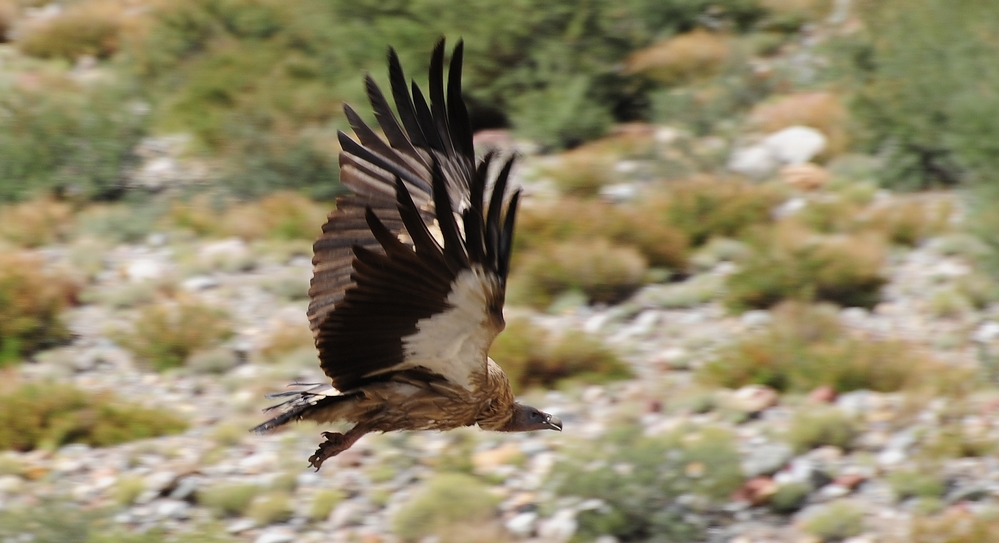
A rare Himalayan griffon vulture (Gyps himalayensis) was rescued in Sirajganj town on the night of Saturday, 13 December 2025, after the exhausted bird fell to the ground, unable to fly after a long journey. Mamun Biswas, chairman of the environmental organisation The Bird Safety House, took the vulture from the home of a resident, Pappu Sekh, in the town's Amlapara neighbourhood at about 9pm, and confirmed the rescue the next morning, Sunday 14 December. The bird had first been found by young men on the chars of the river Jamuna and kept for three days while it was given basic care.
How the bird was found and rescued
According to Pappu Sekh, the vulture came down to the ground because it could not fly. Some young men from the sandy chars of the Jamuna caught the sick bird and held it. When he heard about it, he brought the bird to his own house. After giving it first aid for three days, he informed Mamun Biswas, who runs The Bird Safety House. Mamun and his team then went to Pappu's home in Amlapara and carried the vulture away for proper care.
Mamun Biswas confirmed the rescue at about 11.30am on Sunday, 14 December 2025. "The tired vulture fell to the ground while flying a long way on its wings. This rare species is called the Himalayan griffon," he told Jagonews24. "I rescued it and am giving it food and medicine. We have contacted Molla Rezaul Karim, adviser to the Bangladesh Biodiversity Conservation Federation (BBCF), and the Rajshahi divisional office of Wildlife Management and Nature Conservation. We will hand the vulture over wherever they direct."
Conservationists stress that a weak or grounded vulture should not be handled by untrained people, both for the safety of the finder and for the bird. The usual advice is to keep crowds and dogs away and to inform the Forest Department or the nearest wildlife office quickly, so that trained staff can collect the animal and treat it. In this case the finders passed the bird to a known local bird rescuer, who in turn alerted the divisional wildlife office.
What kind of bird the Himalayan griffon is
The Himalayan griffon, or Himalayan vulture, is one of the largest birds of prey in the world. According to the species description compiled on Wikipedia, it is the largest of the Gyps vultures and the second largest Old World vulture after the cinereous vulture. It measures about 103 to 115 centimetres in length, with a wingspan of roughly 2.56 to 3.1 metres, and weighs between 6 and 12.5 kilograms, averaging around 9 kilograms. Its great size and broad wings let it soar for hours on rising columns of warm air rather than by flapping.
Like other vultures, it is a scavenger that feeds only on carrion, the flesh of dead animals. On the Tibetan Plateau, studies cited in the same description found that dead domestic yaks made up about 64 per cent of its food. The bird cannot sustain flapping flight for long and depends on thermals both to travel and to search for carcasses. It is highly social, often gathering in large flocks at a carcass, where a group can strip the soft tissue in well under an hour.
The Himalayan griffon breeds along the high mountains and plateaux of Central and South Asia, from Kazakhstan, Afghanistan and Iran through Pakistan, northern India, Nepal, Bhutan and western China to Mongolia, at elevations between about 1,200 and 5,500 metres. It nests on inaccessible cliff ledges, usually lays a single egg, and the breeding season begins around January. Young birds are known to wander far from the breeding range, and it is mostly these juveniles and immatures that turn up in the plains of the Indian subcontinent.
The species breeds in loose colonies, typically of five to seven pairs; in northern India eggs are laid between late December and early March, captive incubation lasts about 54 to 58 days, and the young stay with their parents for six to seven months. At a carcass the Himalayan griffon dominates most other scavengers but gives way to wolves, snow leopards and the even larger cinereous vulture. It tends to eat the fleshy parts and leave the offal, and may wait near a carcass for several days. In the high Himalayas it historically fed at sky-burial grounds, which gave it a place in local culture.
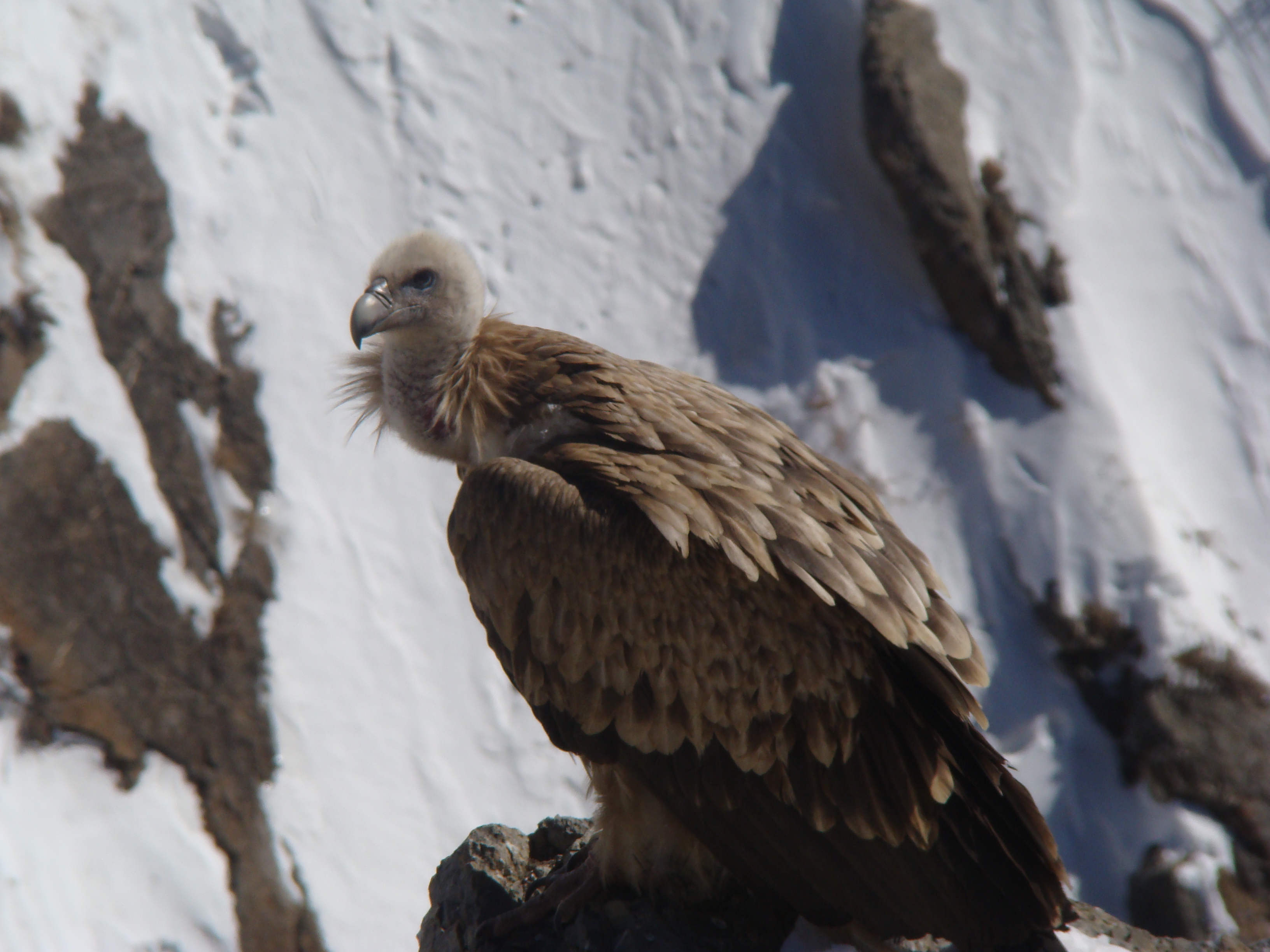
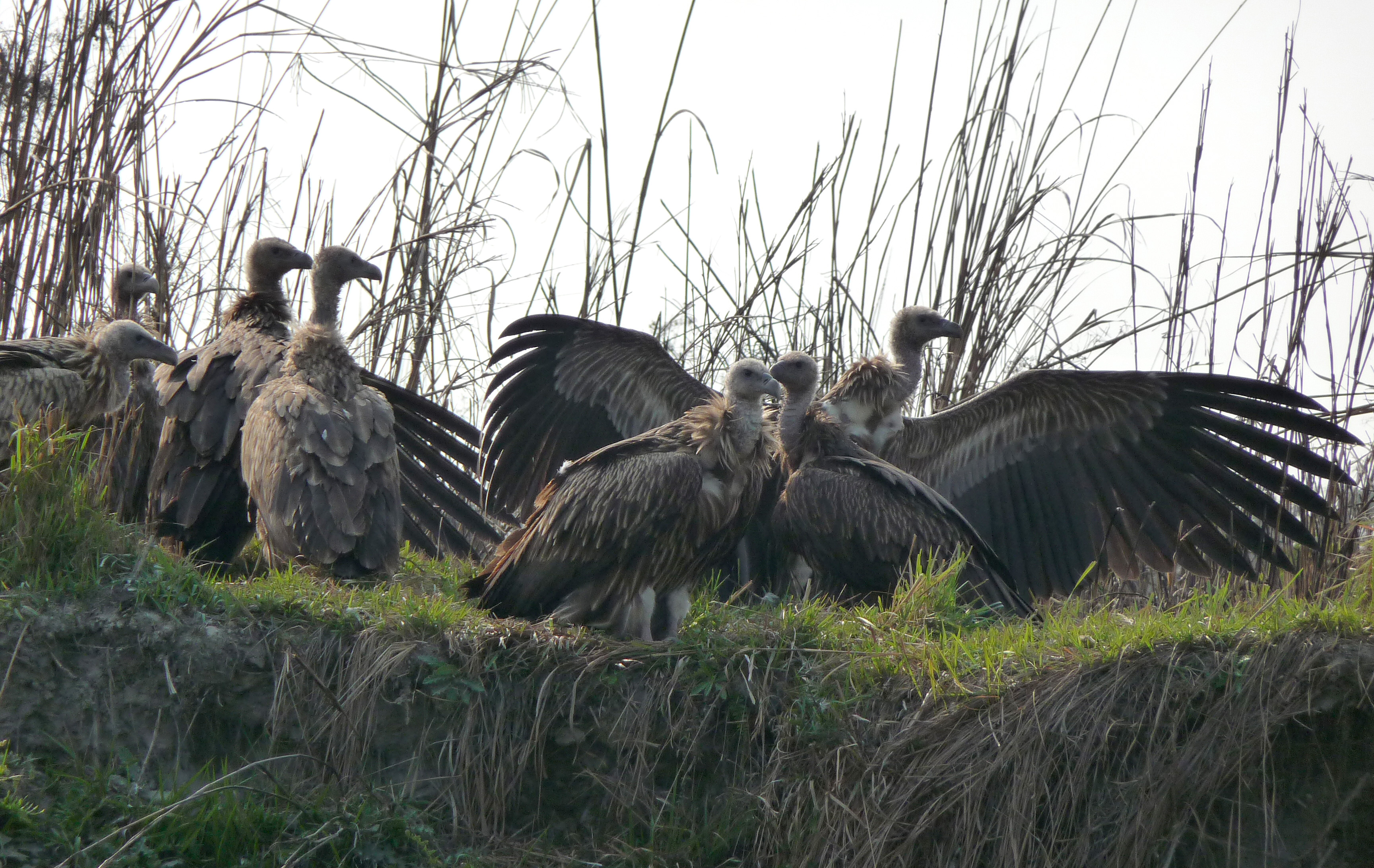
An adult Himalayan griffon is easy to recognise by its sheer size and pale colouring. According to the description on Wikipedia, the body and the coverts on the upper wing are a pale sandy buff, almost whitish in some birds, contrasting sharply with the dark brown flight feathers and tail, a pattern that stands out when the bird soars overhead with its long wing 'fingers' spread. The head and neck carry whitish down that turns yellowish in adults, below a long pale ruff; the bare facial skin is pale blue and the bill yellowish. Younger birds are darker below and have a pale bill.
Why it comes to Bangladesh in winter
Bangladesh lies far to the south of the Himalayan griffon's breeding mountains, yet the bird is a regular winter visitor. As Prothom Alo reported in January 2021, the vultures move down from the cold, icy Himalayas and the Tibetan Plateau towards the warmer plains around November and December, and return in March. The journey can cover about 1,000 kilometres, and many of the birds that reach northern Bangladesh are young and inexperienced.
The long flight leaves them weak. The same report noted that a griffon that normally weighs about 13 kilograms can drop to just 4 or 5 kilograms by the time it reaches Bangladesh, and that the birds often cannot find enough food after landing. Exhausted and underweight, they come down in open fields, on chars and near villages, where curious people sometimes mistake them for sick or dangerous animals and catch them, as happened in Sirajganj.
Because it is mostly young, inexperienced birds that reach the plains, the arrivals in Bangladesh are often in poor condition. The Himalayan griffon is a strong high-altitude flier, recorded crossing Himalayan passes, yet vagrant birds of this species have turned up as far away as Thailand, Myanmar and Singapore, which shows how far a wandering juvenile can stray from the mountains.
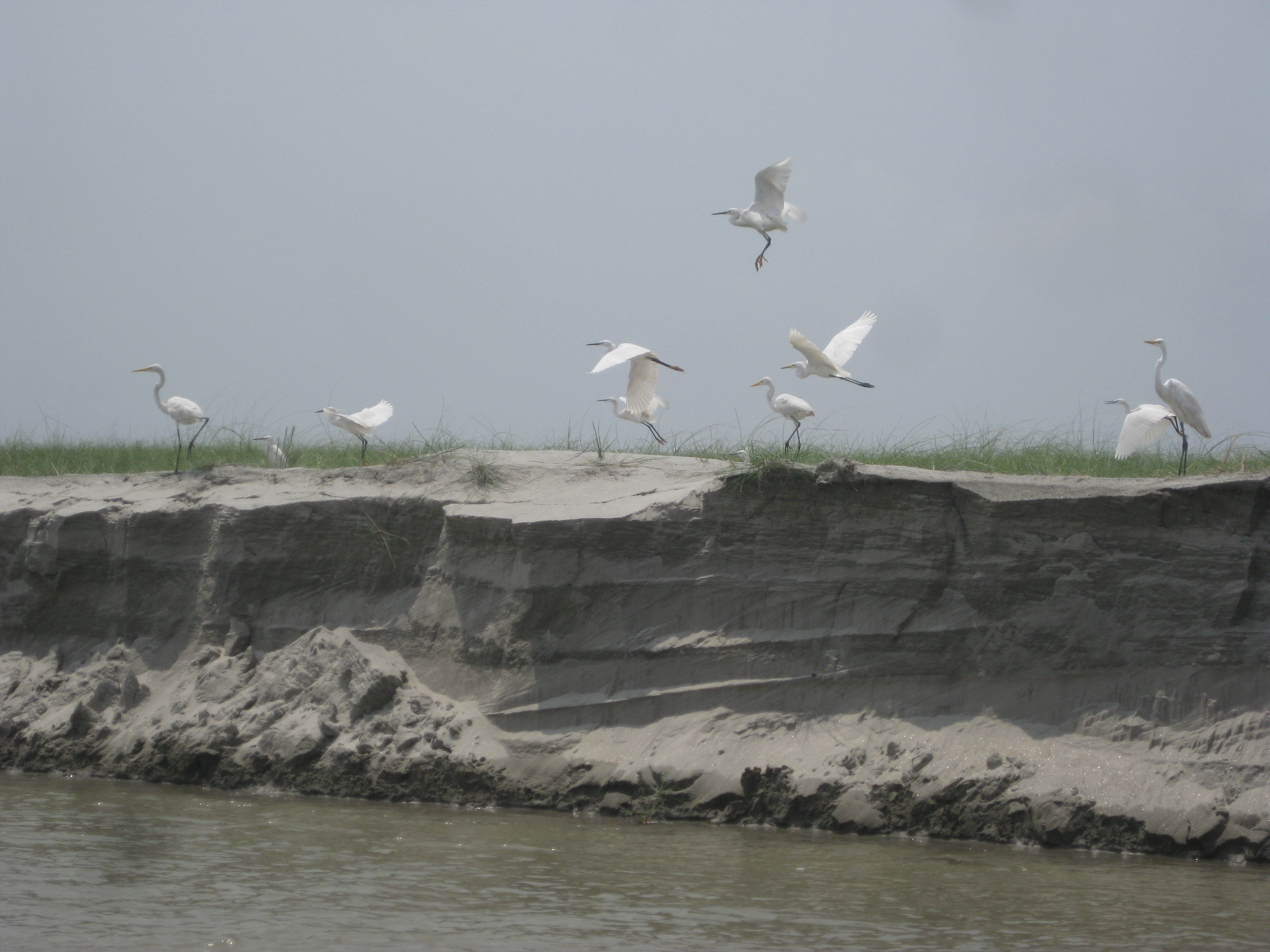
The chars of the Jamuna, where the Sirajganj bird was first found, are exactly the kind of open, sparsely settled ground where a tired vulture is likely to land. According to Banglapedia, Sirajganj district in the Rajshahi Division covers about 2,402 square kilometres and is crossed by the Jamuna, one of the country's largest rivers; farming is the main source of income for just over half its people. The wide sandy islands that form and shift in the river each year give migrating birds room to rest, but also bring them close to people.
Why vultures have become so rare
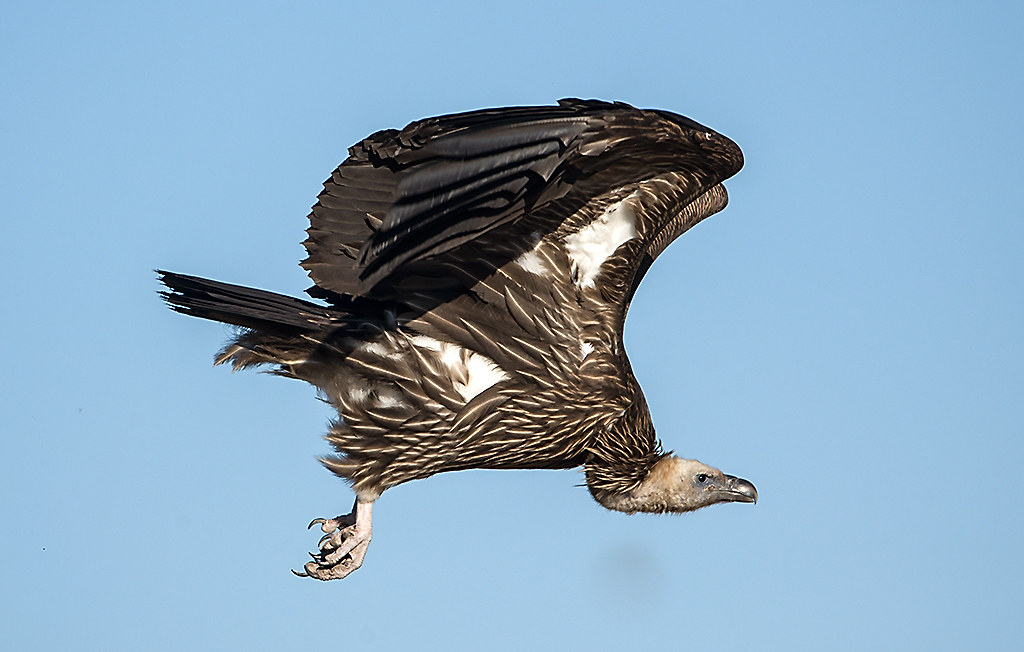
The rescue of a single griffon draws attention because vultures of every kind have become scarce across South Asia. According to a 2022 report by the environmental news service Mongabay, Bangladesh once had seven species of vulture. The red-headed vulture is now considered locally extinct, and the resident white-rumped and slender-billed vultures are listed as critically endangered both in Bangladesh and worldwide. The remaining four species, including the Himalayan griffon, are migratory winter visitors.
Across the Indian subcontinent vultures were common until the late 1980s, but by 2017 the populations of some species had collapsed by about 95 per cent. The main cause was identified as diclofenac, a cheap anti-inflammatory drug given to cattle. Vultures that fed on the carcasses of animals treated with the drug suffered kidney failure and died; research has shown that even tiny residues of the drug in a carcass are lethal to Gyps vultures. The Peregrine Fund identified diclofenac as the killer in 2003, and the collapse it caused is counted among the fastest declines of any bird group on record.
The resident Gyps vultures of the subcontinent, chiefly the white-rumped and slender-billed in Bangladesh, were hit hardest, but the same veterinary drugs threaten any vulture that feeds on treated carcasses, including winter visitors like the Himalayan griffon. That shared danger is why conservation measures in Bangladesh, such as the drug bans and the safe zones, are meant to protect migrants and residents alike.
The Himalayan griffon itself is listed as Near Threatened on the IUCN Red List. The assessment, maintained by BirdLife International, rests on a suspected decline driven largely by the impact of diclofenac and other veterinary drugs across its range. Although the species has not fallen as sharply as the resident Gyps vultures, conservationists treat every bird as valuable, which is why rescues such as the one in Sirajganj are reported to and followed up by national organisations.
How Bangladesh has tried to protect its vultures
Bangladesh has taken a series of steps to slow the decline. Diclofenac had been used widely on livestock since the early 1990s. IUCN Bangladesh recommended a ban in 2010, and the Ministry of Environment, Forest and Climate Change banned the drug for livestock use in 2011. A second harmful drug, ketoprofen, was later targeted, and in 2021 Bangladesh became the first country to ban such vulture-toxic drugs in its vulture areas, according to Mongabay. India, Nepal and Pakistan had earlier passed laws against diclofenac in 2006.
The Forest Department and IUCN Bangladesh together drew up a National Vulture Conservation Action Plan in 2015, covering the years 2016 to 2025. Under the plan the government set up two Vulture Safe Zones, in the greater Sylhet and Khulna regions, where diclofenac and ketoprofen are kept out so that vultures can feed on carcasses safely. Mongabay gave the Khulna zone as about 27,700 square kilometres and the Sylhet zone as about 9,660 square kilometres. IUCN Bangladesh also works with local communities through conservation teams and feeding stations.
Bangladesh's remaining vultures
The resident vultures that still breed in Bangladesh are far fewer than the winter visitors. The white-rumped vulture, once the commonest vulture in the countryside, had fallen to around 260 birds in a 2015 count, according to figures cited in conservation reports. IUCN Bangladesh has said that vulture numbers in the country have stayed almost the same since that last census, a sign that the steep fall of earlier decades may at least have slowed.
To keep the remaining birds fed safely, conservationists run community feeding stations, sometimes called vulture restaurants, where carcasses free of harmful drugs are left out. Local vulture conservation teams, made up of trained volunteers in villages inside the safe zones, watch over nesting birds and report sick or grounded vultures. The winter arrival of migrants such as the Himalayan griffon adds to the small resident population, and every bird returned to the wild counts.
The Dinajpur rescue centre
Birds that arrive exhausted need a place to recover, and that is the role of the Vulture Rescue and Care Centre at Singra National Park in Dinajpur, in the north-west of the country. According to Prothom Alo, IUCN began the Singra rescue and care project in 2014; Mongabay reported that the centre itself was established in 2016. Over its first six years it rescued, treated and released about 99 vultures, and by 2022 the total had passed 100.
The centre's routine fits the needs of a starving migrant. Rescued griffons are fed and treated for about three months and are usually released in early April, around the time the surviving wild birds begin their return journey to the mountains. In one season alone, Prothom Alo reported, 18 Himalayan griffons were brought in. The Forest Department and local wildlife offices receive reports of grounded birds and send teams to collect them, working with volunteers and groups such as the one in Sirajganj.
Why vultures matter
Vultures are often called nature's cleaners. By quickly consuming the carcasses of dead animals, they remove rotting flesh before it can spread disease and keep the countryside clear of waste that would otherwise attract rats and feral dogs. A large flock can reduce a carcass to bones in a short time, which is why farmers in earlier decades relied heavily on vultures to dispose of dead cattle.
The loss of vultures across South Asia has had real consequences. As their numbers fell, carcasses were left to rot, and the gap was filled by feral dogs and other scavengers, which conservationists link to a higher risk of rabies and the spread of disease. This is one reason governments and researchers treat the recovery of vulture populations as a matter of public health as well as wildlife conservation, and why the arrival of winter migrants such as the Himalayan griffon is watched with care.
The law that protects the vulture
In December 2025 the law in force was the Wildlife (Conservation and Security) Act 2012, which protects wild birds and animals in Bangladesh. Under the Act, hunting, killing, capturing, trading or keeping protected wild animals without a licence is an offence, and species are listed in schedules according to how threatened they are. Vultures are protected birds, so a rescued vulture must be handed to the authorities rather than kept, which is the course the Sirajganj rescuers followed.
The same law gives the Forest Department the task of conserving wildlife and running the safe zones and rescue work. Reports in the national press have described penalties under the Act for offences involving wild birds, including imprisonment and fines, though its main purpose is protection rather than punishment. For an ordinary person who finds a weak or injured vulture, the practical step the authorities ask for is simple: do not harm or sell the bird, keep it calm and away from crowds, and inform the nearest forest or wildlife office so trained staff can take over.
Photo: Jan Reurink / Wikimedia Commons (CC BY 2.0)
Sources: Jagonews24, Prothom Alo, Mongabay, BirdLife International (IUCN Red List), Wikipedia, Banglapedia
Comments
(0)