
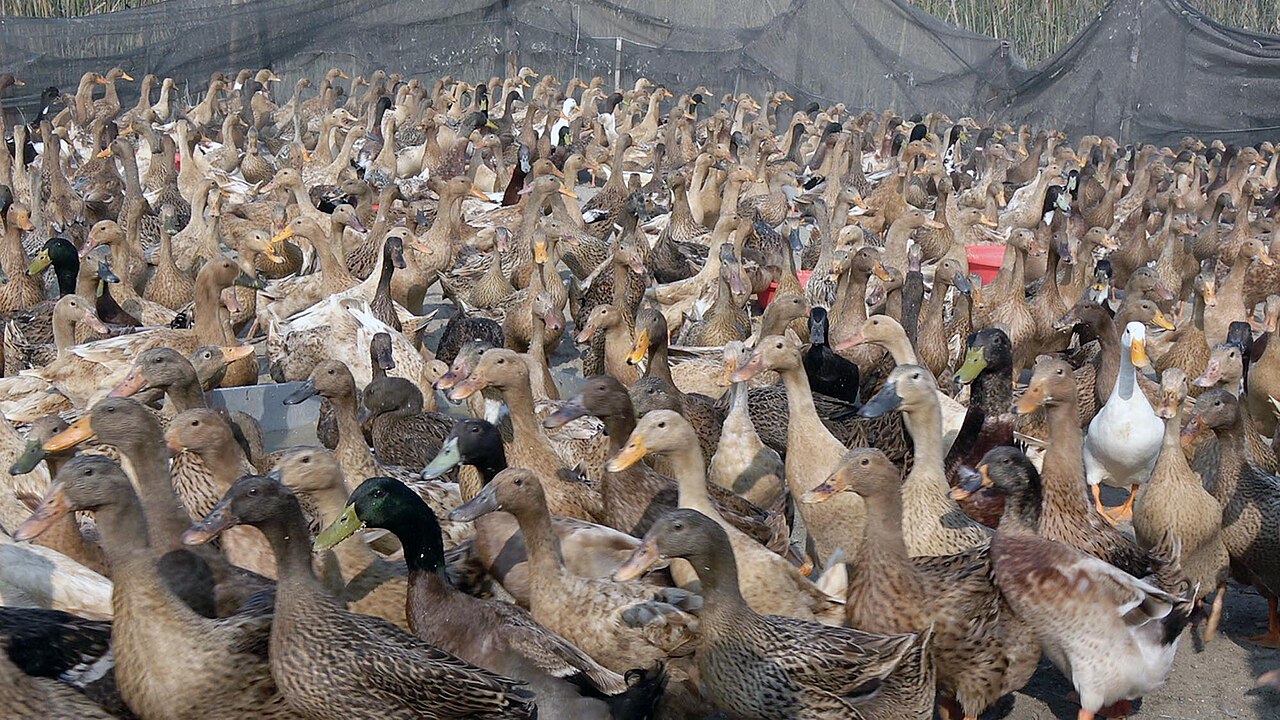
Md Bahulul Bepari of Purbapara village in Chauhali upazila, Sirajganj, got the idea of a duck farm from watching YouTube videos. He borrowed Tk 465,000 from his son-in-law and started with 941 ducks aged four to five months.
Some 275 of the ducks died after he started. His farm, on one and a half bighas, now holds 666 ducks, and the 444 laying ducks among them produce 435 to 440 eggs a day, which he sells at Tk 15 to 16 each. After meeting local demand, his eggs go to markets in the surrounding area.
In many parts of Khaskaulia union water stands for much of the year during the monsoon, and in the dry season the ponds, canals and beels suit duck rearing. Bahulul Bepari used that to start a farm on little capital, and he plans to expand.
He says the farm has changed his life, paying for his three children's schooling and everything else the household needs. His wife, Morjina Begum, says it has given them the courage to dream bigger. Local people say his example has set many unemployed young men in the village thinking about work of their own.
Chauhali's upazila livestock officer, Dr Shah Alam, said duck rearing is not only raising family incomes but also strengthening local nutrition by supplying eggs and meat, and is promising, profitable work for unemployed young people and rural women. The upazila livestock office gives farmers regular advice, vaccination and technical support on modern management, he said, and the upazila's chars and river-bound areas have great potential for duck farming.
People involved in the sector say that with the right advice and loans on easy terms, duck farming would spread further in char and wetland areas. The report is by Krishi Shomoy's Sirajganj correspondent.
Photo: DelwarHossain / Wikimedia Commons (CC BY-SA 4.0)
Source: Krishi Shomoy

Comments
(0)