
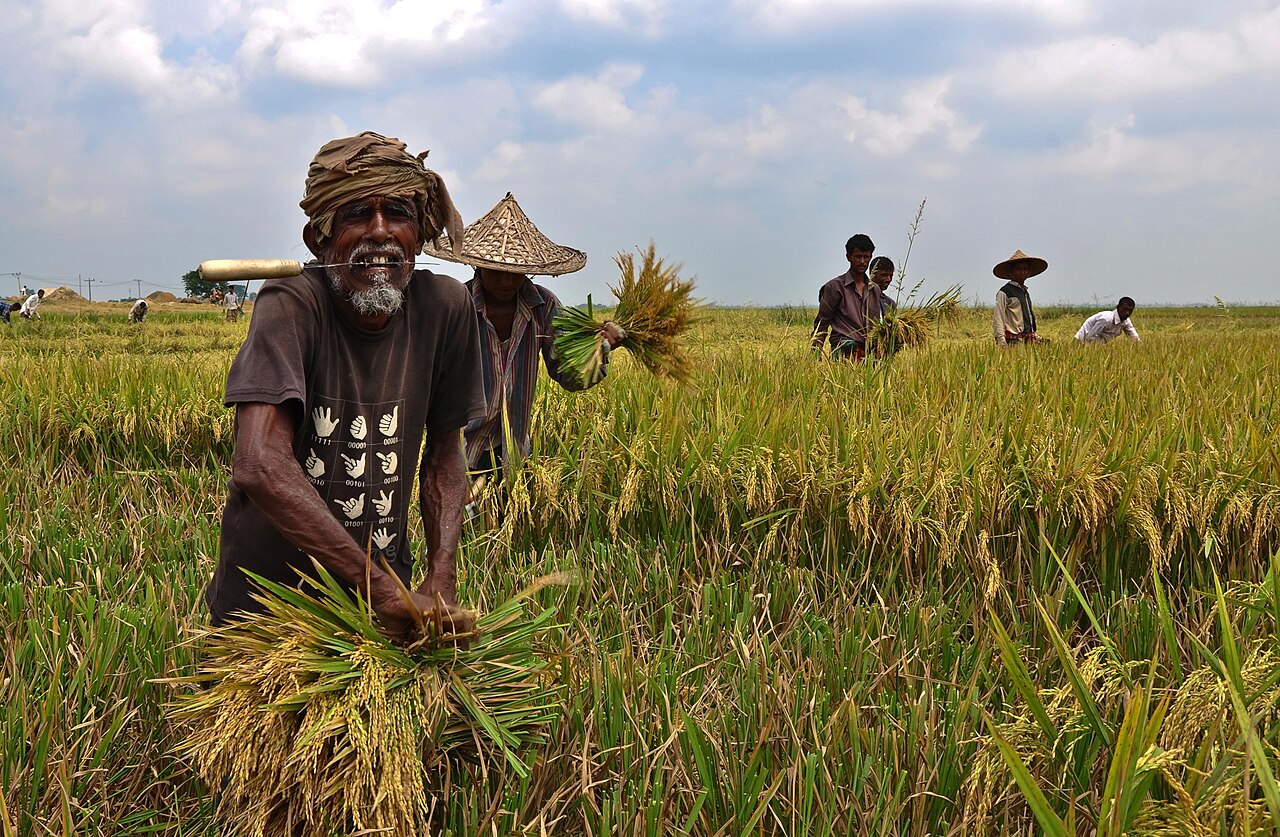
Farmers should cut aman rice on a sunny day once 80 per cent of the grain is ripe, and drain the field 15 days before harvest, according to the agro-meteorological advisory bulletin of 28 November. The bulletin sets out early-winter tasks for crops, livestock, poultry and fish.
Wheat: the weather now favours germination, so farmers should prepare land at the right soil moisture and sow approved varieties. Before the final ploughing it recommends 10 tonnes of rotted manure or compost per hectare, plus a basal dose of 150 kg urea, 135 kg TSP, 100 kg MOP, 110 kg gypsum and 6 kg boric acid per hectare.
Boro: seedbeds should be made on high ground with drainage, and can be shared on a cooperative basis. If seedlings turn yellow, apply 283 grams of urea per decimal, and if that does not help, 400 grams of gypsum per decimal.
Vegetables and fruit: give light irrigation. For brinjal shoot and fruit borer, cut and destroy infested shoots with the larvae and use pheromone traps; for powdery mildew in cucurbits, a hexaconazole or mancozeb fungicide; for aphids on beans and cabbage, an approved pesticide. If mites attack coconut palms, remove and burn all young nuts on affected trees and spray a miticide on them and on young palms nearby. Bag banana bunches in perforated polythene before the fruit emerges from the bud to keep off beetles, and spray guava against mealybugs with 5 grams of powdered soap per litre of water.
Mustard and potato: irrigate mustard 20 to 25 days after sowing, before flowering, if the soil is dry, and spray chlorpyrifos at the approved rate if cutworms appear. Irrigate potatoes for good tuber formation, and against the potato tuber moth use sex pheromone traps and earth up the plants 60 days before harvest.
Livestock and poultry: deworm animals not yet treated, vaccinate according to age and health, and keep sheds clean. With night temperatures falling, cover milking cows and calves with jute sacks morning and evening to protect them from pneumonia. The bulletin says keeping a bulb of 100 watts or more on in the poultry house for one to two hours after dusk raises egg production. Call a veterinarian promptly at any sign of disease.
Fish: cut feed in winter, or stop it if needed; dry ponds and remove black, rotting mud from the bottom, and repair damaged banks. The bulletin advises applying 250 grams of lime per decimal at the start of winter, and contacting the upazila fisheries office if fish fall sick or fail to grow.
Written from the agro-meteorological advisory bulletin as published by Krishi Sangbad.
Photo: Balaram Mahalder / Wikimedia Commons (CC BY-SA 3.0)
Source: Krishi Sangbad
Comments
(0)