
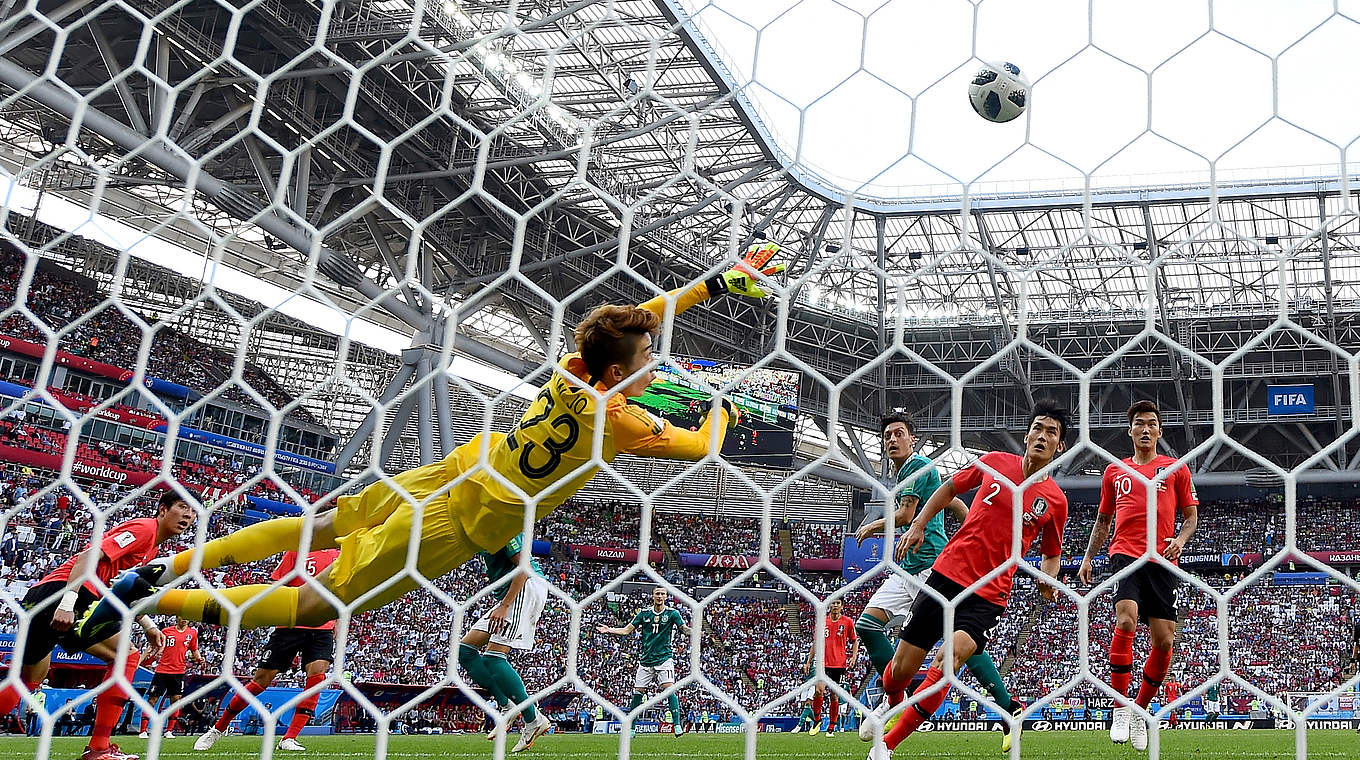
Recently a young man came to my house from our village home. His name is Muktar, and he is from Haimchar in Chandpur. He grew up in an entirely rural setting and his work is helping with farming. He knows little of the wider world, and the global frenzy over football does not touch him at all. In my last column I wrote that there is no one who escapes World Cup fever. After seeing him I realised there are people untouched by the World Cup winds. We had a good deal of fun with him.
When the World Cup comes, everyone in my joint-family household sits down together to watch the matches like a festival: my brothers and their wives, the children, nephews and nieces. Whichever team each of us supports, we all enjoy the games equally. We were all astonished at Muktar's complete indifference to football. It seemed he had never played or watched a match in his life. Far from being gripped by the World Cup, he seemed not to notice it at all, an exceptional character in a football-crazy country.
Muktar's "Messi"
Anyway, on 16 June Iceland played Argentina. There were several World Cup replica balls in the house. My younger son Bijoy is a great football fan who stays caught up in the excitement all year; the collection is for him. I brought a ball and put it in Muktar's hands and told him to sit with it and watch. I told him that among the 22 players on the field was a famous one, the best of them all, named Messi, and that he should tell me which player that was.
Towards the end of the match we were hurt. After all the hype and waiting, we ourselves could not find Argentina. I asked Muktar who had played best, meaning which one was Messi. The player he pointed to was Iceland's goalkeeper. Everyone roared with laughter and I was hugely amused too: for Muktar, that was "Messi". But the next moment it struck me that this rural youth, wholly indifferent to football, may not understand the game but knows how to recognise what is good. Truly, did any of us find the Messi everyone was shouting about? We did not. Reader, I think the verdict of this village boy is enough to understand the state of football today.
I am watching match after match, but I am not getting the pleasure of the 2010 and 2014 World Cups, or earlier ones. The athletic skill and rhythm I once saw seem lost. The higher the hopes for a team or a player, the greater the disappointment. Again and again I think of the players I watched when I went to the grounds in Dhaka in the 1960s. Next to the skill of the great footballers I saw from that time until just after independence, even the world's biggest football event seems pale, though this is entirely my personal view.
Memories of Dhaka stadium
I remember the Makrani footballers, especially Jabbar, Kala Gafur, Hashem Deen, Abbas and Omar, and our own Balai and Tipu through to Zakaria Pintu. After independence modern football was brought by Salahuddin, Nannu and Chunnu through to Aslam, Munna and Kaiser Hamid, whose play many of today's young people will have seen.
From my school days in the 1960s I was a regular at Dhaka Stadium. Mohammedan Sporting Club was then where the National Sports Council stands today, with the swimming pool beside it and then the stadium. Mohammedan's players entered the stadium through the gate by the swimming pool; all other players came in from the Paltan end, which was the players' gate. I went to the Mohammedan club regularly, knew most of the players and often got a club pass to watch. I was such a fan that I went to the stadium ticket or no ticket, and even climbed into the gallery hanging on a rope from the back of the stadium, suffering a couple of minor accidents along the way.
Watching from the gallery, I did not always see where a foul or mishap happened. Today, in an age of advanced technology and media, no scene on the field escapes the eye, and those watching on television see far better than those in the stadium. Yet I keep asking: where are the players? Where is the skill we expect of them? Where is that beauty?
Skill then, play-acting now
In the 1960s I saw Jabbar and Kala Gafur take the ball from midfield past four or five opponents and score from right inside the D. Now I see famous players of big teams, especially the popular stars, struggle to get past two defenders and sometimes fall at the slightest push. Sometimes the fall is real, sometimes it is acting, a kind of pretence. This time more than ever, star players are being accused of play-acting and theatrics.
In the 1960s Pele burst on to international football with his magic, and there was no such play-acting then. In 1986 Maradona too produced supreme magic, beating six players for an astonishing goal against England, a scene still vivid in fans' eyes. I also saw Samad, the magician of the Dhaka football grounds, who had such magic in his feet that he could measure his shots precisely. The story goes that once, when his shots kept hitting the crossbar and bouncing back, he claimed the bar was the wrong height. It was measured, and he was right.
I remember Mohammedan's Pratap. If Mohammedan won a corner and Pratap took it, a goal was almost certain. A pin-drop silence would fall over the stadium. His shot curved like a rainbow and entered the net through the triangular space near the post, a spot very hard and awkward for a goalkeeper to defend.
The players who used to light up the field had a different kind of wealth. When they ran with the ball it was a beautiful sight, full of pace and rhythm, and that rhythm is being lost day by day. I think most of the players capable of offering aesthetic football at the World Cup have retired. The style of play has also changed in many ways. We no longer see players sustaining that artistry on the field. In truth, the "finisher" who stays with the ball and shows artistry to the end is gone.
This time Channel i has organised several World Cup programmes, including regular opinion and analysis in and outside the news. Among those invited is Golam Sarwar Tipu, a footballer who shook the Dhaka grounds in the 1960s and 1970s. He played for Mohammedan as a stopper, as a defender was then called. He never hurt anyone; to keep the ball he planted his muscular legs firmly, and that became a wall of defence. Beating those legs to win the ball was hard; opponents would instead bounce off them.
The other day I saw Brazil's most popular star, Neymar, go sprawling at the mere touch of a Costa Rican player's hand. Replayed again and again through the video assistant referee, everyone understood it was pure acting, and media at home and abroad wrote about it with relish. Technology has advanced a great deal, with third and fourth umpires added, and nothing escapes the spectators.
This World Cup is also unusual in many ways, because many big teams that carried fans' hopes have disappointed. Winning and losing are part of the game, but people's hopes have limits, and those limits seem to have been crossed. The exit of defending champions Germany is one such event. Many called it unbelievable; some said it was not to be expected of Germany. So one has to accept that South Korea played as well as Germany played badly. Germany's fans are bitterly disappointed.
Glamour, commerce and club football
Players come on to the field to show their skill and win for their team. But the behaviour of many players today suggests a different purpose; showing off their glamour seems more important than the game. Seeing all the haircuts and hair colours, one wonders whether they have come to play or to display themselves. I notice that after kicking the ball they look at the screen to see whether the camera has caught them. If a player's attention is elsewhere, what becomes of his attention to the game?
There is talk now of "fair play". Yet pushing and unwarranted attacks are increasing, and almost every minute we see this unpleasant jostling and players attacking one another. There seems to be more interest in attacking the opponent's body than in the ball. Many readers may be hurt by this or disagree with me. Having loved football since childhood, I felt compelled to write what the World Cup matches so far have made me feel. Dear reader, I ask you too: as a citizen of one of the world's most football-loving countries, are you seeing the football skill you hoped for? Is your favourite team or player meeting your expectations? They are not.
In truth, players are so busy with club football all year that they are not as attentive to their national teams. Club football is far more lucrative for them. Before the World Cup they gave their national teams just 15 days to a month, which is not nearly enough for an event of this size.
I have cited much of Dhaka's football, and many may ask why, playing so well in the 1960s, Bangladesh could not reach the World Cup. I would say there was a lack of international-standard training, liaison and proper sponsorship. Even so, many good players emerged individually and showed skill and success abroad. In the late 1980s our Munna and Aslam set records of success playing for East Bengal. Yet we could not build on that to develop our own team with a dream of long-term success. India is preparing itself, and China has tried and come close to qualifying for the World Cup.
Across the world, not only football and cricket but all sports are becoming commercial; it seems less a game than a television show. With football following cricket down the commercial road, its standard is declining day by day. As a fan I watched matches at the stadium from the 1960s to the 1990s, and I have watched the World Cup regularly since it began to be broadcast on television in 1986. I still stay up at night trying to watch every match, and each time I sit down I am disappointed in many ways. It seems that every four years football loses its skill at a certain rate.
Source: Shykh Seraj. First published in Bengali on The Agro News.
Comments
(0)