
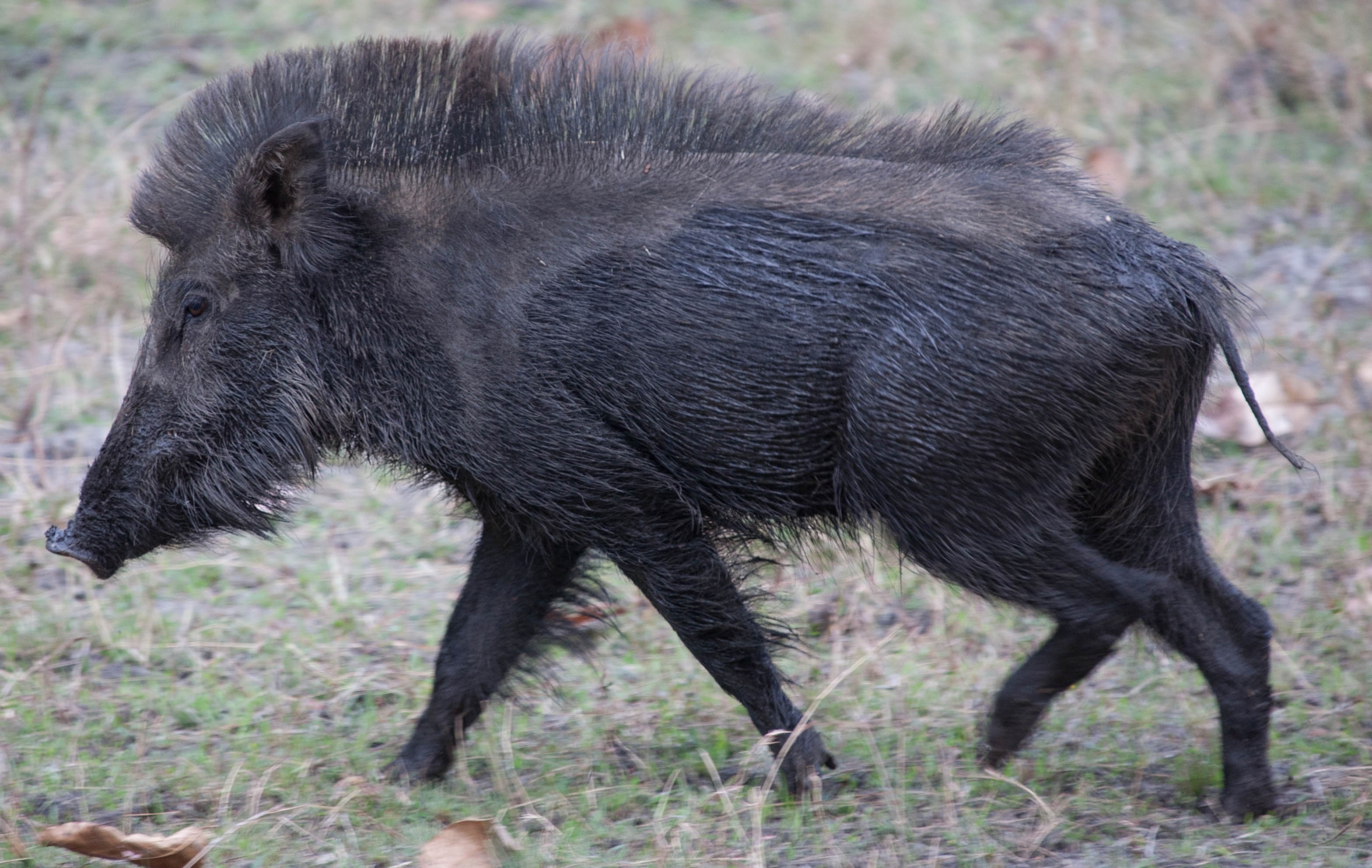
Four people were injured in attacks by a wild boar in Shibganj upazila of Chapainawabganj, the district on Bangladesh's north-western border with India, around midday on Thursday, 2 April 2026. Jagonews24 reported that the attacks took place in Binodpur union and in Kamat village of Shyampur union. Residents said the animal had come from India, and the upazila agriculture officer said that wild boars crossing from the Indian side after dark had been damaging crops in the border area, with farmers staying up at night to guard their fields.
How the two attacks happened
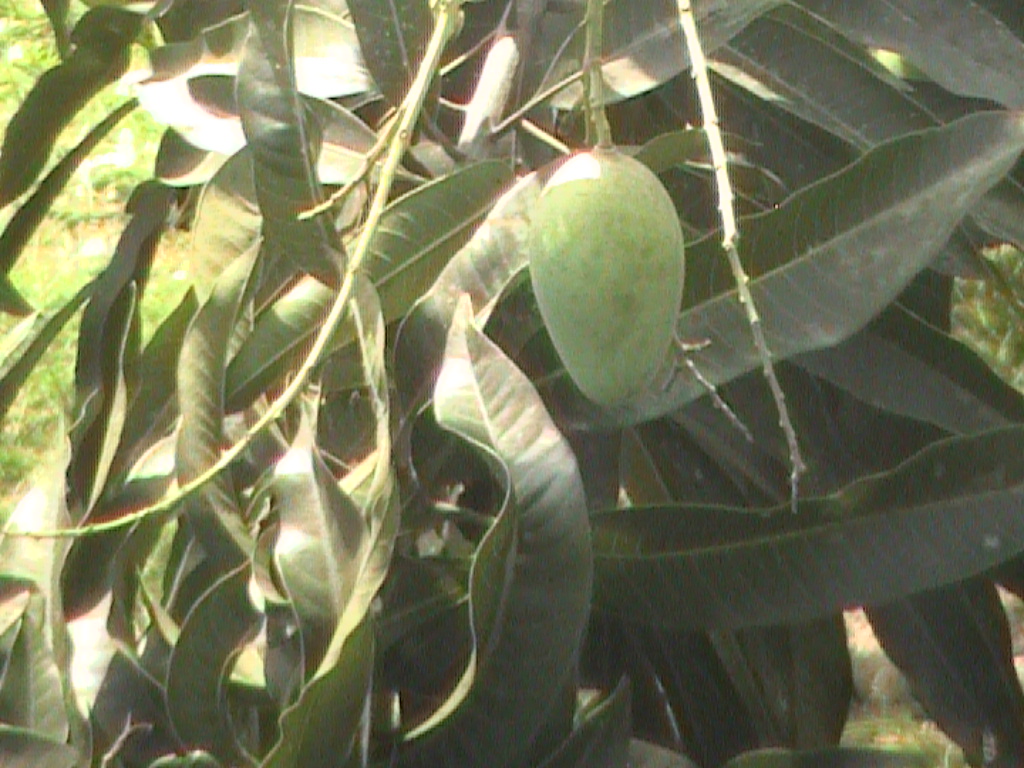
According to Shahidul Islam, a resident of Shyampur union, Nasir Uddin of Baro Hadinagar village was riding his bicycle home from Binodpur bazar at midday, carrying grass for his goats. As he passed along a path through a mango orchard, a wild boar suddenly attacked him, and he was seriously injured. Local people rescued him and admitted him to Chapainawabganj District Hospital, where he was under treatment when the report was filed. The Daily Ittefaq, whose Shibganj correspondent reported the incident earlier the same evening, described the hospital as the 250-bed Chapainawabganj District Hospital.
In the second incident, several workers were spraying mangoes in an orchard in Binodpur union when the boar attacked them, injuring three. Ittefaq wrote that the three were attacked while spraying in another mango orchard in the same area on the same day. The injured named in both reports are Jony, son of Monirul Islam; Dalim, son of Mofizuddin; and Muli, son of Abdul Hakim, all of Kamat village in Shyampur union; and Nasir Uddin of Hadinagar village.
Local people told Jagonews24 that the boar's body had features like those of a cat and that the animal comes from India. When villagers chased it, it ran off quickly and could not be found afterwards. Neither report records the animal being caught or examined by wildlife officials, so the description of it rests on what the villagers saw.
Treatment in Chapainawabganj and Rajshahi
Dr Kamal Uddin, the Shibganj Upazila Health and Family Planning Officer, said the injured had been given first aid. One of them was in a serious condition and was sent to Rajshahi Medical College Hospital for better treatment. Ittefaq, citing local people, also reported that one of the four had been taken to Rajshahi Medical College Hospital in a critical condition. Neither report described the injuries in detail.
The upazila's own health network, as listed in Banglapedia, the national encyclopedia of the Asiatic Society of Bangladesh, consists of one upazila health centre, eight union satellite centres, two health and family welfare centres, a mother and child health centre, five family welfare centres, 128 satellite clinics and 18 clinics. Beyond that, patients go to the district hospital, where Nasir Uddin was admitted, and to Rajshahi, where the most seriously injured of the four was sent.
Crop damage along the border, in the agriculture officer's words
Nayan Mia, the Shibganj Upazila Agriculture Officer, told Jagonews24 that wild boars were attacking crop fields in the border area and damaging various crops. In his account, the boars, which he called Indian wild boars, enter the country when darkness falls after dusk and go back to the jungles of India before dawn. Farmers had been staying awake at night to guard their land, he said, and the matter had been reported to higher authorities.
The officer did not name the crops affected or give an estimate of the losses, and neither report gives a figure. Banglapedia's profile of Shibganj, based on the 2001 and 2011 censuses of the Bangladesh Bureau of Statistics, lists the upazila's main crops as paddy, sugarcane, wheat, maize, potato, betel leaf and vegetables, and its main fruits as mango, jackfruit and litchi. It gives agriculture as the main source of income at 59.25 per cent, followed by commerce at 18.89 per cent, and records 48.71 per cent of people as owning no agricultural land.
A pattern of animals coming out after dark matches what zoologists record of the species. The Animal Diversity Web, a species database run by the University of Michigan, notes that wild boars may be active by day or by night depending on their habitat. In warm weather they tend to stay fairly inactive during the day, resting in the shade and wallowing in water to keep cool, and their foraging usually increases in the late evening, when they come out into open areas to search for food. If they do feed in daylight, they tend to avoid open ground where they would be more exposed.
Shibganj, a border upazila of the Padma and the Mahananda
Chapainawabganj, listed in Banglapedia as Nawabganj District of Rajshahi Division, covers 1,702.55 square kilometres. It is bounded by the West Bengal state of India on the north, south and west, and by Rajshahi and Naogaon districts on the east, and it is made up of Barind Tract, diara and char lands. Until 1947 Nawabganj was a thana under the district of Maldah; at the partition of Bengal it became a subdivision of Rajshahi district, and it was made a district in 1984. The 2011 census counted 1,647,521 people in the district.
Of the district's five upazilas, Shibganj is the largest, at 525.42 square kilometres, or 30.86 per cent of the district's area. It is bounded by Bholahat upazila and West Bengal on the north, by Nawabganj Sadar and West Bengal on the south, by Bholahat, Gomastapur, Nachole and Nawabganj Sadar upazilas on the east, and by West Bengal on the west. Its main rivers are the Padma, the Mahananda, the Pagla and the Mara Ganga. Banglapedia notes that in Bangladesh the Ganges is popularly known as the Padma from its point of entry at Manakosa and Durlabhpur unions of Shibganj. Shibganj thana, now an upazila, was formed in 1913, and the 2011 census put its population at 591,178.
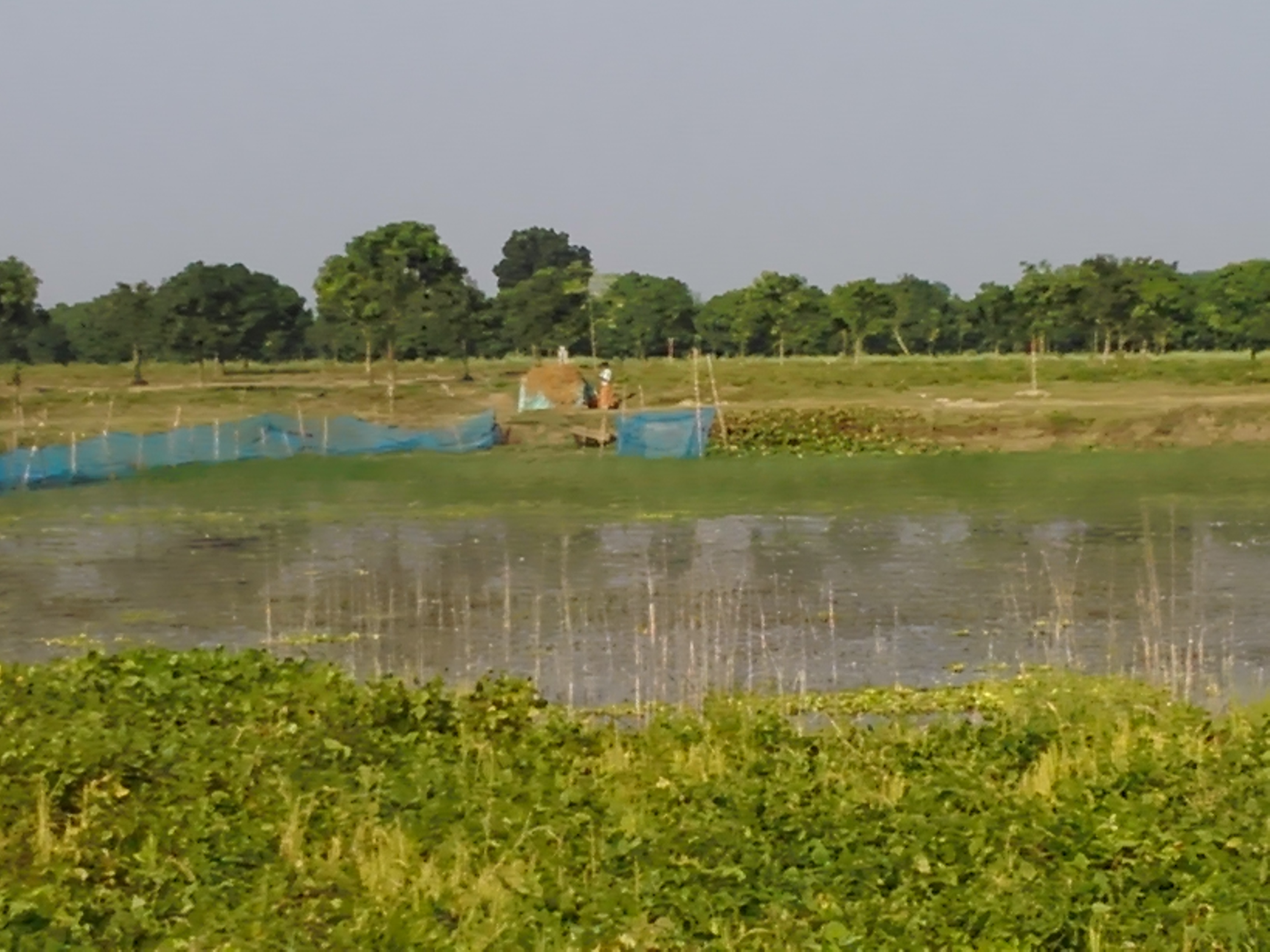
The upazila has one municipality and 15 unions, among them Binodpur and Shyampur, the two unions where the attacks took place. Banglapedia's union table gives Binodpur an area of 7,243 acres and Shyampur 7,426 acres. Shibganj is also known for its old monuments, including the Chhota Sona Mosque, the Darashbari Mosque and Madrasa of 1479, the Kachari Bari of Shah Suja known as the Tohakhana, and the tomb of Shah Niamatullah of 1668-1669. Its main exports, Banglapedia records, are mango, molasses, silk saris, cotton piece goods and lac dye, and its best-known markets include the Kansat, Shibganj, Ranihati and Manakosa hats.

Early April in the mango orchards
The workers attacked in Binodpur were spraying mangoes, a routine task in the orchards at that point of the season. Banglapedia notes that mango trees in Bangladesh flower in January to March and that fruit setting is harmed by fog, rain or cloudy weather while the trees are in flower. Mild showers help while the young fruits develop and grow, but storms, particularly hailstorms, often make immature fruit drop.
Pests and diseases are among the main reasons for poor mango harvests. About three dozen insect pests attack mango plants in Bangladesh from the nursery stage to maturity, according to Banglapedia; the major ones include mango hoppers, mango fruit weevils, the mango stem borer, the mango shoot borer and the mango fruit fly. Fungal diseases such as anthracnose, sooty mould, leaf blight, die back and powdery mildew, and a bacterial leaf spot, also cause considerable damage. Infested inflorescences bear few or no fruits, and infested fruits drop early or become unfit to eat, which is why orchard owners protect the crop through flowering and fruit set.
Bangladesh's superior mango varieties are mostly grown in Rajshahi, Nawabganj and Dinajpur. Among nearly 100 cultivars available in the country, the elite ones include Fazlee, Langda, Gopalbhog, Himsagar, Khirsapat, Ashhwina, Kohitoor, Laksmanbhog and Mohanbhog. Banglapedia records national output of about 639,820 tonnes from about 641,525 acres in 2005-06, and lists old and unproductive trees, a lack of care, the absence of protection against insect pests and diseases, the raising of trees from seed, and the felling of productive trees among the reasons for low production.
The Bangladesh Agricultural Research Institute (BARI) set up a Mango Research Station at Nawabganj in 1985 under its Horticulture Division, to research the cultivation, varietal improvement and production of mango. The station covers about 12.40 hectares and holds more than 300 mango trees of about 65 cultivars. The Department of Agricultural Extension also produces and distributes grafts of elite mango cultivars from its orchards, horticultural bases and nurseries across the country.
What the wild boar is
The wild boar (Sus scrofa) is the same species as the domestic pig, which is classed as the subspecies Sus scrofa domesticus. The Animal Diversity Web describes it as a cosmopolitan species that originated in Europe and Asia and is common throughout Eurasia; it has been widely introduced elsewhere and is considered invasive in the south-eastern United States and California. Wild boars live in grassy savanna, wooded forests, agricultural areas, shrublands and marshy swamps. They need a nearby source of water and dense vegetation for shelter, and they generally avoid extreme heat or cold.
Adult wild boars range from 153 to 240 centimetres in total length and weigh 66 to 272 kilograms, with females smaller than males of the same age. They can stand as tall as 0.9 metres at their bulky shoulders. Their thick, coarse coat ranges from black to brownish-red to white, and some have longer bristly hairs running down the middle of the back. Piglets are born with yellowish-brown stripes along the back, which disappear within about four months. The upper canine teeth, the tusks, usually measure 5 to 10 centimetres and are generally visible even when the mouth is closed.
Females live in groups called sounders, usually made up of 6 to 20 closely related females, though a sounder may contain more than 100 animals. Males stay with their mothers until they are one to two years old, then leave and generally join a sounder only in the mating season, when they become very aggressive in competing to breed. Wild boars can breed at any time of year; females can reproduce from about ten months of age, gestation lasts 108 to 120 days, and a litter averages five to six piglets, with up to two litters a year.
Wild boars rely mostly on their well-developed senses of smell and hearing; their eyes, on the sides of the head, give them good peripheral vision. They growl to show aggression. They are omnivores that eat mainly plant matter, particularly crops, fruits, nuts, roots and green plants, along with bird eggs, carrion, small rodents, insects and worms, and they adjust their diet to what is available with the season and the weather. Their home ranges average 1.1 to 3.9 square kilometres, and the maximum known lifespan in the wild is 9 to 10 years.
The species is listed as Least Concern on the IUCN Red List, the Animal Diversity Web notes, citing the 2008 assessment by Oliver and Leus. In Bangladesh, Banglapedia's survey of the country's wildlife lists one species of wild boar, Sus scrofa, among the even-toed hoofed mammals, alongside three species of deer and one serow, out of about 120 species of inland mammals. The same entry notes that most wild animals depend on forests, that the country's forest cover is estimated to have shrunk by more than 50 per cent since the 1970s, and that less than 8 per cent of the country is under forest.
Boars and farmland
The Animal Diversity Web notes that wild boars can be very problematic for farmers. Crops are often damaged where boars are common, because the animals trample through fields while foraging and seeking shelter, and boars can carry diseases and parasites that may pass to livestock and people. Farmers may also have to build better barriers to keep them out. The database adds that studies have found hunting to be the most effective way to keep boar numbers stable, with fencing, trapping and feeders placed to draw the animals away from unwanted areas as other options.
Research in Nepal's lowlands, along its border with India, shows how this plays out in South Asian farming villages. A study published in PLOS One in April 2023 analysed human-wildlife conflict records from 2016 to 2021 in the buffer zone of Shuklaphanta National Park, which borders Indian grasslands and forests to the south. Nineteen people were attacked by wildlife there, primarily by wild boar, which caused nine injuries and one death. Most attacks happened in summer, near homes or on farmland, and more of them took place in daylight than at night.
In the same study, crops were damaged most often by Asian elephants, followed by wild boars, whose recorded losses included 11,096 US dollars of rice and 9,324 dollars of wheat. Respondents described wild boars acting aggressively when people tried to drive them out of cultivated areas, and the authors found that mitigation measures which help against large animals such as elephants and rhinos appear less effective for wild boar, deer and other smaller mammals.
An earlier PLOS One study, published in April 2018, examined wildlife damage reported to the authorities of Chitwan National Park in Nepal between 1998 and 2016. Of 732 attacks on people, wild boars accounted for two deaths and 41 injuries. The authors noted that although crop raiding by deer and wild boar was widespread, it went unreported, because the government's relief scheme covered crop damage only by elephant, rhino and wild water buffalo.
What research says about boar attacks on people
Attacks by wild pigs on people have been documented since ancient times, but few studies have examined them. A paper by John J. Mayer of the Savannah River National Laboratory, published in the Proceedings of the 15th Wildlife Damage Management Conference in 2013, compiled 412 wild pig attacks on humans from seven zoogeographic realms. Most attacks occurred within the species' native range and in rural areas, most often in the winter months and in daylight hours. Most happened outside hunting and appeared to be unprovoked, and the animals involved were typically solitary, male and large. Most of the animals escaped uninjured.
Most of the human victims in that compilation were adult males travelling on foot and alone, and the most frequent outcome was physical contact or mauling. Injuries ranged from minor to fatal. Most mauled victims were injured in only one part of the body, legs and feet most often, mainly through lacerations and punctures; deaths were typically from blood loss, and in some cases serious infections or toxaemia followed the injuries. Data from the Savannah River Site in South Carolina showed that such incidents are rare.
A case report from Nagpur in India, published in the Journal of Maxillofacial and Oral Surgery in 2011, observed that interaction between people and animals had increased with the competition for habitat. Its authors noted that injuries inflicted by animals are mostly soft-tissue injuries and facial fractures, and that, as the literature documents, they are most often seen in rural communities. The case they described involved soft-tissue injury with a fracture of the lower jaw and an undisplaced fracture of the cervical spine.
The Shibganj attacks share several features of these records: they happened in rural orchards, in the middle of the day, to men going about farm work or travelling home on a bicycle.
An earlier attack in Bangladesh, and the law that applied
Wild boar attacks on farmers had been reported in Bangladesh before. On 27 March 2024, Bangla Tribune reported that five farmers, a woman among them, were injured by a wild boar around noon in Gabbaria and Tengra villages of Patharghata Sadar union in Barguna district, on the bank of the Baleshwar river. The boar attacked people behind and near their homes and on the road, and went back into the forest when people gathered with sticks. The injured had large wounds from the boar's teeth, and one man whose arm tendon was torn was sent to Sher-e-Bangla Medical College Hospital in Barishal.
Forest Department officials told Bangla Tribune that the boars lived in the Tengragiri reserved forest and came into villages and damaged crops on farmland because of a shortage of food in the forest. The department's divisional forest officer for Patuakhali said there was no provision to kill the boars of the reserved forest, and that the department would take the necessary steps to raise people's awareness and reduce conflict between people and wildlife.
Bangladesh's wildlife laws go back to the Bangladesh Wildlife (Preservation) Order of 1973, enacted as an act in 1973 and amended and re-enacted in 1974, Banglapedia records. Its schedules listed animals that could be hunted on permit, animals whose trophies or meat needed a certificate of lawful possession, and protected animals that could not be hunted, killed or captured. The Wildlife (Conservation and Security) Act of 10 July 2012 repealed the existing law to provide for the conservation and safety of the country's biodiversity, forests and wildlife.
On the date of the attacks, the wildlife law in force was the Wildlife (Conservation and Security) Ordinance 2026, which had replaced the 2012 Act from 7 January 2026. In Shibganj, the villagers chased the animal away rather than harming it, and the upazila agriculture officer said the matter had been reported to higher authorities.
Photo: JP Bennett / Wikimedia Commons (CC BY 2.0)
Sources: Jagonews24; The Daily Ittefaq; Bangla Tribune; Banglapedia (Nawabganj District; Shibganj Upazila; Padma River; Mango; Mango Research Station; Wildlife); Animal Diversity Web, University of Michigan (Sus scrofa); PLOS One (Pant et al. 2023; Lamichhane et al. 2018); Mayer, Wild Pig Attacks on Humans, Wildlife Damage Management Conference proceedings, 2013; Journal of Maxillofacial and Oral Surgery (2011); Wildlife (Conservation and Security) Act, 2012.
Comments
(0)