
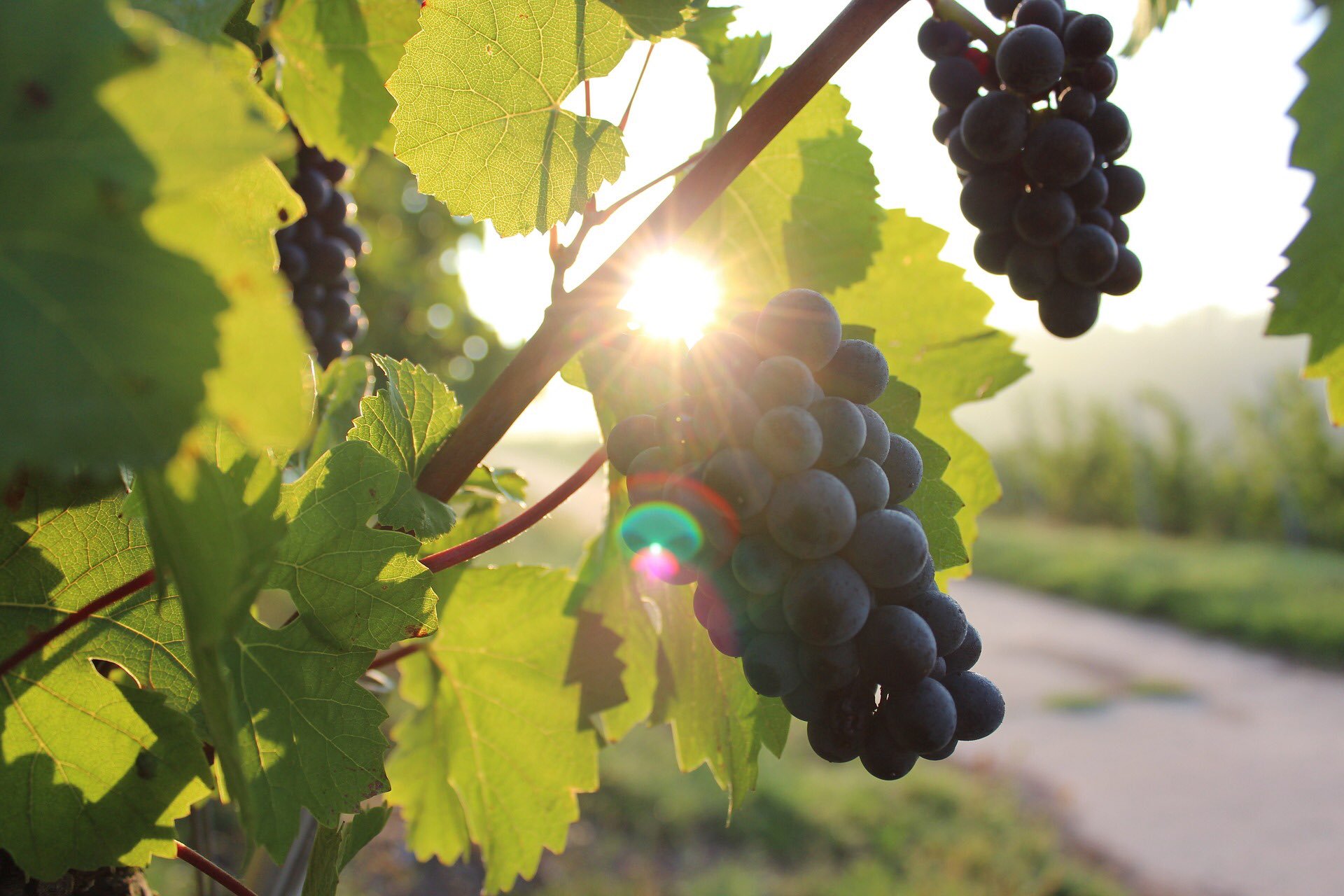
In the summer of 2025 a hill village on Bangladesh's northern border drew visitors for an unusual crop. In Meghadal, a village of Sreebardi upazila in Sherpur district at the foot of the Garo Hills, agricultural entrepreneur Mizanur Rahman was growing grapes of about 50 foreign varieties, red, black and green, on 30 decimals of land in his home yard, Jagonews24 reported on 2 August 2025. Among the varieties he named were Akelo, Dixon, Black Magic, Bainuka, Isabella, Perlette, Green Long and Anab-e-Shahi. The harvest was good enough that local people were coming to see the vines, and the district office of the Department of Agricultural Extension (DAE) said it was giving him regular advice.
The same garden had been described five weeks earlier, on 29 June 2025, by Prothom Alo's correspondent in Nalitabari, who counted the same 150 plants and reported the same selling price. The two reports differ on a few figures, and those are given below as each newspaper published them. Neither report rests on an official trial of the varieties; the yields, prices and costs are the grower's own account.
Ten saplings from India in 2022
Mizanur told Jagonews24 that his father, A. Jalil Mia, travelled to India in 2022 and, on a whim, brought home 10 saplings of two grape varieties. He planted them on his own land, and about 10 months later the vines began to bear sweet fruit. Prothom Alo gave the same account of the beginning: 10 saplings of two varieties, brought from India in 2022 as a hobby, fruiting about 10 months after planting.
Jalil Mia told both newspapers that he later brought more saplings in two further stages. "I brought the grape saplings from India as a hobby," he told Jagonews24. "I thought they would not survive, but slowly they grew and bore fruit."
His father's vines made Mizanur want to try grapes himself. He started growing them on a trial basis and planted 50 varieties. On where those plants came from, the two reports differ. Jagonews24 quoted him as saying: "I collected Akelo, Dixon, Black Magic, Bainuka, Isabella, Perlette, Anab-e-Shahi and the other varieties online from about eight countries, including Russia, Ukraine, Pakistan and China." Prothom Alo wrote that after the first vines fruited he learned about grape growing from YouTube and then collected saplings of the 50 varieties from Dhaka. The variety names are those the grower uses; neither newspaper gives any record that identifies the plants.
By the time of the August report, Mizanur had been growing grapes experimentally for two years, according to the deputy director of the DAE in Sherpur. Prothom Alo described him as a young entrepreneur and gave no age; neither report says what he did before he took up grapes.
The orchard in figures
When the Jagonews24 reporter visited, the garden had 150 plants, 50 of which had fruited. Twenty plants carried 10 to 12 kg of fruit each. The rest were younger and had borne one and a half to two kg each. Prothom Alo's June report counted the same 150 plants but said 40 of them had fruited, that 15 to 20 plants had produced 10 to 12 kg each, and that the trial plot covered 20 decimals rather than the 30 given by Jagonews24.
Both newspapers reported that Mizanur had recently sold a small quantity of green grapes at Tk 250 to 300 a kg, and Jagonews24 added that the buyers were local people. He put his spending on planting and care at about Tk 2.5 lakh. Asked about costs, he told Jagonews24 that his village lies in a hilly area where labour is comparatively cheap.
He said he was hopeful about the yield and planned to grow grapes commercially. Jagonews24 reported that he was already preparing one and a half acres in Meghadal, a village that lies along the Indian border, for a larger vineyard, and both newspapers reported that he and his father were also raising grape saplings. His aim, in Prothom Alo's words, was to build the garden on a large scale.
What neighbours and agriculture officials said
Both reports said people came every day from different places to see the vines, and that some of them asked Mizanur for advice on growing grapes. Dalbat Marak of the neighbouring village of Babelakona told Jagonews24: "I have eaten grapes from Mizanur's orchard, they are wonderfully sweet. They are much sweeter than the grapes we get in the market." Monir Hossain, who had come from Sherpur town, told the paper he was surprised to find grapes of better quality than those sold in the market and had bought a kilogram for his family. Ashikur Rahman, a resident of Meghadal, told Prothom Alo that the grapes were sweet and that many farmers had become interested in growing them after seeing the garden.
These are the impressions of visitors. Neither report gives a measurement of sugar content or a comparison made under controlled conditions.
Md Sakhawat Hossain, deputy director of the DAE in Sherpur, told Jagonews24: "We have visited the grape orchard. Mizanur Rahman has been growing grapes experimentally for two years. He plans to grow grapes on a larger scale in the coming days. The agriculture office is giving him regular advice. If any new entrepreneur wants to start, we will help them with advice too."
Sabrina Afrin, the Sreebardi upazila agriculture officer, gave Prothom Alo a similar account in June. She said she had seen the garden, that Mizanur had been growing grapes on a trial basis for two years and planned a much larger vineyard, and that the agriculture office would give him all-round support.
Sreebardi, a border upazila below the Garo Hills
Sreebardi is one of the five upazilas of Sherpur district in the north of Bangladesh. Banglapedia, the national encyclopedia, gives its area as 248.25 square kilometres and places it between 25°03' and 25°18' north latitude. It is bounded by the Indian state of Meghalaya on the north, Sherpur Sadar upazila on the south, Jhenaigati upazila on the east and the Bakshiganj and Islampur upazilas on the west. Its main rivers are the Shomeshwari and the Mrigi, and the Katakhali canal and several beels, among them Chhapa, Basa and Mrigi, are notable water bodies. Sreebardi thana was formed on 31 March 1918 and the municipality on 24 September 2004.
The 2011 census, as Banglapedia reports it, counted 259,648 people in the upazila. The 2022 census of the Bangladesh Bureau of Statistics recorded 279,142 people in 74,352 households; the ethnic population was 1,484, of whom 1,100 were Garo.
Farming is the main living. Banglapedia lists agriculture as the main source of income for 69.39 per cent of households, with landowners at 57.28 per cent and the landless at 42.72 per cent. The main crops are paddy, wheat, mustard, jute, potato and vegetables, and the main fruits are mango, blackberry (jam), jackfruit and banana. Grapes are not among them, which is why a vineyard in the area drew so much attention.
Sherpur district as a whole covers 1,364.67 square kilometres, according to Banglapedia, and agriculture is the main source of income for 65.71 per cent of its households. It was a subdivision of Jamalpur until it became a district in 1984. Its annual rainfall is about 2,174 millimetres, with temperatures that range from a maximum of 33.3 °C to a minimum of 12 °C.
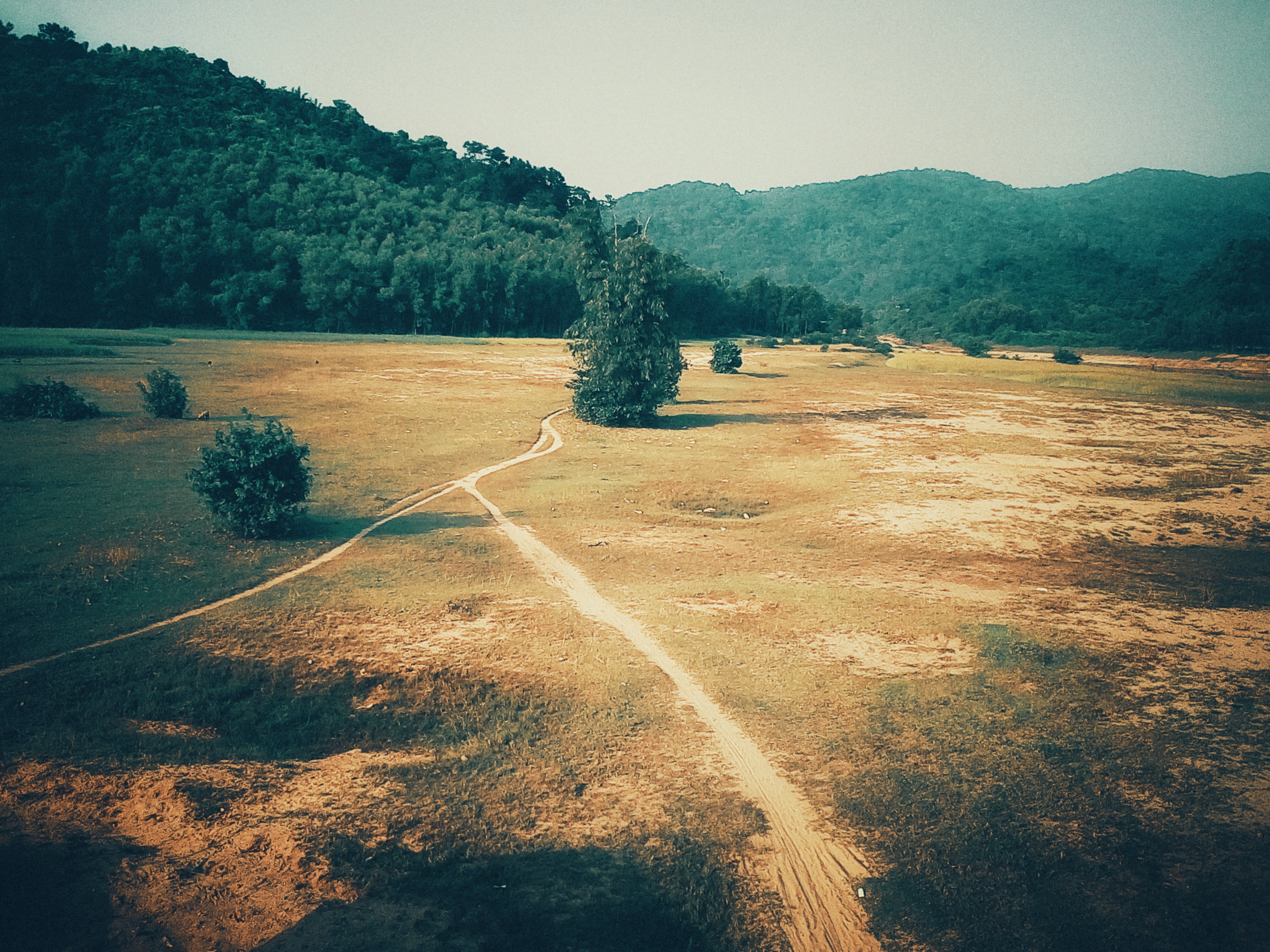
The Garo Hills rise across the border. They are part of the Garo-Khasi range in Meghalaya, belong to the Meghalaya subtropical forests ecoregion and are counted among the wettest places in the world; their highest point, Nokrek Peak, stands at 1,412 metres. The low hills and foothills on the Bangladesh side of the border, in Sherpur's northern upazilas, are known locally by the same name. The hills take their name from the Garo people, who call themselves A·chik Mande, "hill people". Most Garo live in Meghalaya; in Bangladesh some of the largest communities are in Nalitabari and Jhenaigati upazilas of Sherpur, next to Sreebardi, and in Haluaghat and Dhobaura of Mymensingh, Durgapur and Kalmakanda of Netrokona, and Madhupur of Tangail.
The grapevine and the varieties named
The grape grown for the table and for juice is mostly Vitis vinifera, the common grapevine, native to the Mediterranean region, Central Europe and south-western Asia. Changes in seed shape suggest it was domesticated about 4100 to 3000 BC in south-west Asia, the South Caucasus or the western shore of the Black Sea, and the earliest evidence of domesticated grapes, from Gadachrili Gora in Georgia, has been dated to about 6000 BC. As of 2012 there were between 5,000 and 10,000 varieties of Vitis vinifera, though only a few were of commercial importance. The fruit is eaten fresh, dried as raisins and sultanas, or pressed for juice, and the leaves are used in cooking in many countries.
Isabella, one of the varieties in the Meghadal garden, is not a pure vinifera grape. It was derived from Vitis labrusca, the American "fox grape", and DNA studies have traced its parents to the American cultivar Ives' Seedling and the rare French white grape Petit Meslier. Its ripe skin is dark purple, almost black, around a tender green-yellow flesh, and it is a slip-skin grape whose skin separates easily from the pulp. Because it yields heavily and withstands tropical and semi-tropical conditions, it has been planted in Brazil and Colombia, where it is a leading variety, as well as in Portugal, Bali and Japan. In India it is grown as Bangalore Blue.
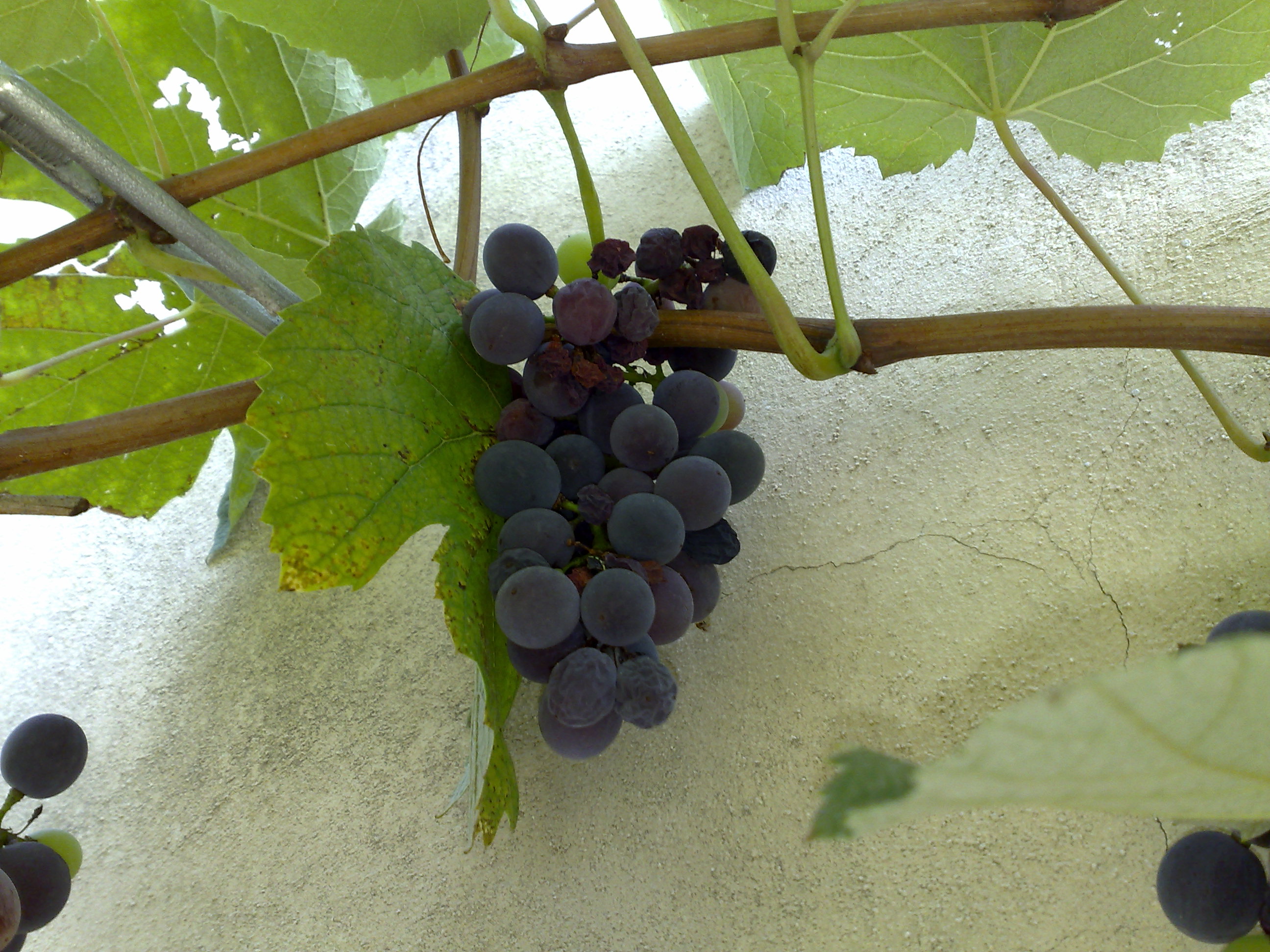
Anab-e-Shahi and Perlette are well documented in India. In the chapter on India in the Food and Agriculture Organization's 2001 volume Grape Production in the Asia-Pacific Region, S.D. Shikhamany, then director of the National Research Centre for Grapes of the Indian Council of Agricultural Research in Pune, listed both among India's main varieties. He reported Anab-e-Shahi on about 3,000 hectares producing 135,000 tonnes, with an average yield of 45 tonnes a hectare against a potential of 90, and noted yields of 100 tonnes a hectare recorded in the Hyderabad region. Perlette, with an average yield of 40 tonnes a hectare, was described as the only early-ripening variety of India's sub-tropical north. He wrote that the overhead bower system suits vigorous varieties such as Anab-e-Shahi, Bangalore Blue (Isabella) and Gulabi.
Akelo, Dixon, Black Magic, Bainuka and Green Long are the names the grower gave for other plants in his collection. The newspaper reports do not describe them, and the sources read for this report give no description of their origin or performance.
Grapes in the tropics: what Asian growers had learned
Growing grapes in a hot, wet climate brings its own problems. The FAO volume of 2001 gathered the experience of growers in tropical and sub-tropical Asia from an expert consultation held in Bangkok on 2 to 4 May 2000, and several of its findings bear directly on a garden like the one in Sreebardi.
In India, Shikhamany wrote, grapes are grown in three climatic zones. In the hot tropical zone of Maharashtra, Andhra Pradesh and northern Karnataka, which held about 70 per cent of the grape area, the vines do not go dormant; they are pruned twice a year and give one crop. In the mild tropical zone around Bangalore and Tamil Nadu they are pruned twice and harvested twice a year. In the sub-tropical north, where the rains arrive in early June, vines are pruned once in December and give a single harvest. Downy mildew was the most devastating disease in the tropical regions, followed by powdery mildew and anthracnose, and unusually heavy rain at flowering and fruit set cut the yield of mildew-susceptible vinifera varieties.
In Thailand, Surasak Nilnond of Kasetsart University wrote that the tropical climate speeds vine growth, but heat, rain and humidity limit fruit quality, and fruit ripened in the dry season has more sugar and a better appearance. Thai growers usually pruned twice a year for two crops, one in the rainy season from May to October and one in the dry season from November to April, and considered the dry-season crop superior. The first crop came 14 to 16 months after planting. Anthracnose and berry rots were worst during the rains, and some growers covered the vines with plastic roofs. Vines were trained on arbors about 1.5 metres high, and on the poorly drained clay of the Central Plain they were planted on raised beds about 6 metres wide between ditches about 1 metre wide and 1 metre deep. In 1998 Thailand had 2,717.9 hectares of grapes producing 31,677.1 tonnes.
In Myanmar, Hla San of the Myanmar Agriculture Service wrote that grapes were grown in the very dry central zone. Rain at flowering in April and May caused flower drop, and fruit set in the rains was less sweet, so pruning was timed for fruit to set in the drier months of February and March, with heavy pruning twice a year, from mid-October to mid-November and from mid-March to mid-April. In the first year most flower clusters were removed so that the vines could establish, and commercial harvest began in the second year. Irrigation was stopped a month before harvest to raise the sugar content, and the Kniffin and Y-type trellis systems were recommended for wetter, more humid areas.
Those regions are drier than Sherpur. The Thai growing areas described in the FAO volume receive about 1,200 to 1,500 millimetres of rain a year, against about 2,174 millimetres in Sherpur. Neither Jagonews24 nor Prothom Alo reported which training system, pruning calendar or disease control the Meghadal garden used. Farmers who want to try grapes are advised to take variety, pruning and plant-protection advice from their upazila agriculture office, as the Sherpur DAE offered to give new growers.
An imported fruit that farmers began to try
For most Bangladeshis the grape has been a fruit from abroad. Banglapedia lists it with orange, apple, pomegranate, date and mandarin among the country's common imported fruits, and notes that temperate fruits have not succeeded in Bangladesh except grapes in some places.
The Daily Star reported in September 2019, using data from the DAE's Plant Quarantine Wing and Bangladesh Bank, that fruit imports had risen 72 per cent between fiscal 2014-15 and 2018-19 to 5.99 lakh tonnes, and that orange, tangerine, apple and grape together made up 85 per cent of the imports. Md Serajul Islam of the Bangladesh Fresh Fruits Importers Association told the paper that local production met about 30 per cent of annual fruit demand, which was growing about 5 per cent a year.
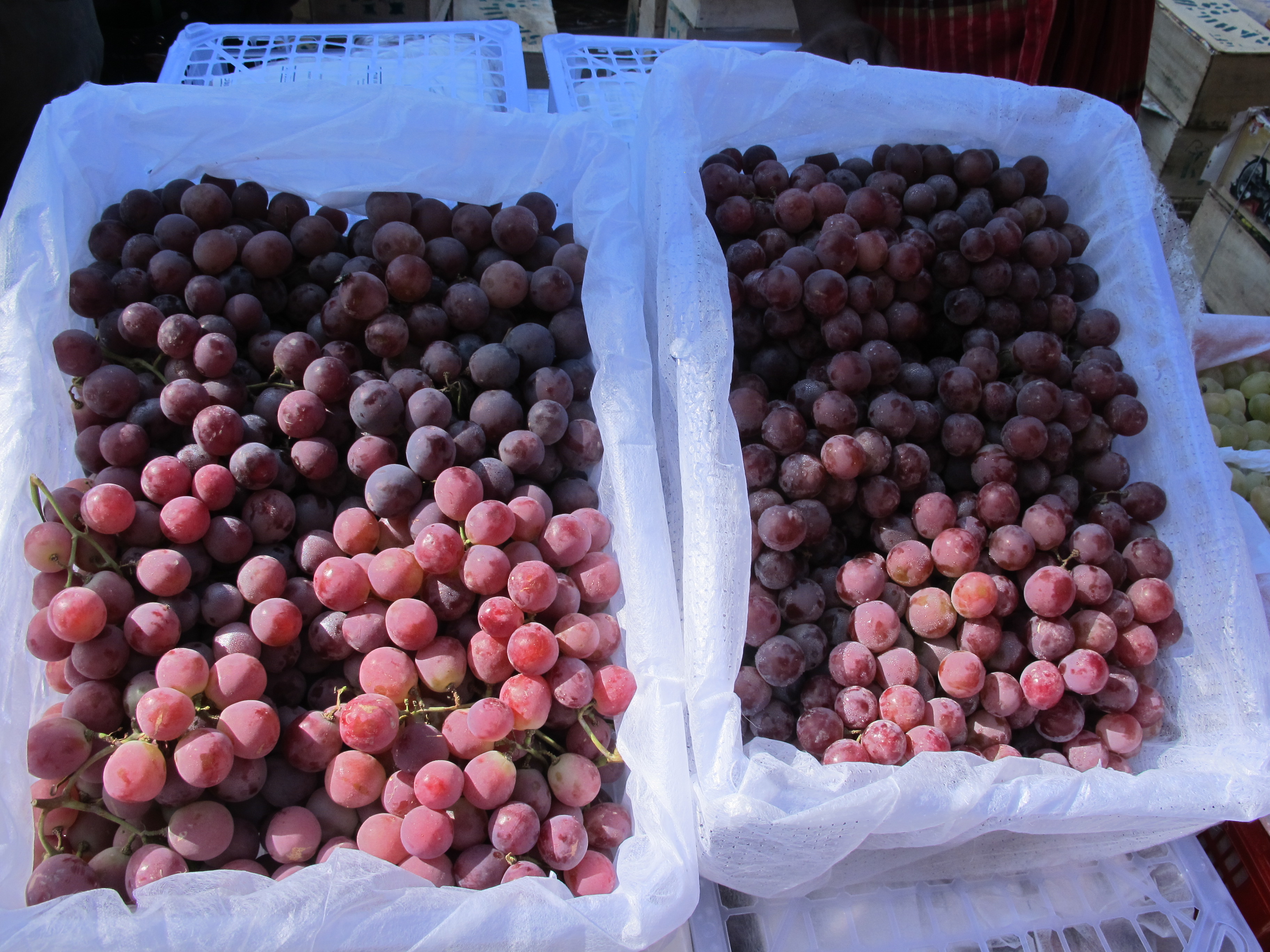
In the years before the Sherpur report, newspapers carried a series of similar accounts from other districts, among them Kurigram, Cumilla, Faridpur, Rajbari, Chuadanga and Chandpur. Bangladesh Pratidin reported on 26 April 2025 that Kamruzzaman Pradhania, an entrepreneur in Kalibhangti on the Chandpur-Matlab road in Chandpur Sadar upazila, had 85 grape varieties from 18 countries. According to that report he had been working with grapes since 2019, collected most of his foreign varieties in 2022-23, got a good crop on his rooftop garden in 2024, began planting in the field in June that year and had sold 50 kg of grapes. The report said that vines pruned in October and November fruit in March and April and give another crop in winter, and that grapes do well in loamy red soil, gravelly soil rich in organic matter and the alluvial soil of hilly areas.
The rules on bringing plants into Bangladesh
Planting material that comes from abroad falls under the Plant Quarantine Act 2011 (Act No. 5 of 2011), passed on 5 April 2011 to stop pests and diseases entering and spreading in Bangladesh through the international movement of plants and plant products. Under section 3, until a separate National Plant Quarantine Authority is set up, the Director of the DAE's Plant Protection Wing acts as that authority.
Section 9 says no importer may bring any plant or plant product, beneficial organism, soil or packing material into Bangladesh without an import permit. Section 10 says such material may enter only through designated entry points, with the permit and a phytosanitary certificate issued by the plant quarantine authority of the exporting country, for inspection by a plant quarantine officer, and that the permit sets out any treatment or post-entry quarantine required. Section 12 says anyone who receives plant material from outside Bangladesh, with or without their consent, must declare it to the nearest plant quarantine officer, who may release, treat or destroy it after inspection.
Photo: Savitr1915 / Wikimedia Commons (CC BY-SA 4.0)
Sources: Jagonews24, Prothom Alo, Banglapedia, Bangladesh Bureau of Statistics (Population and Housing Census 2022), Food and Agriculture Organization of the United Nations (Grape Production in the Asia-Pacific Region, 2001), The Daily Star, Bangladesh Pratidin, Plant Quarantine Act 2011 (Bangladesh Laws), Wikipedia (Vitis vinifera, Isabella grape, Garo Hills, Garo people, Sherpur District, Sreebardi Upazila)
Comments
(0)