
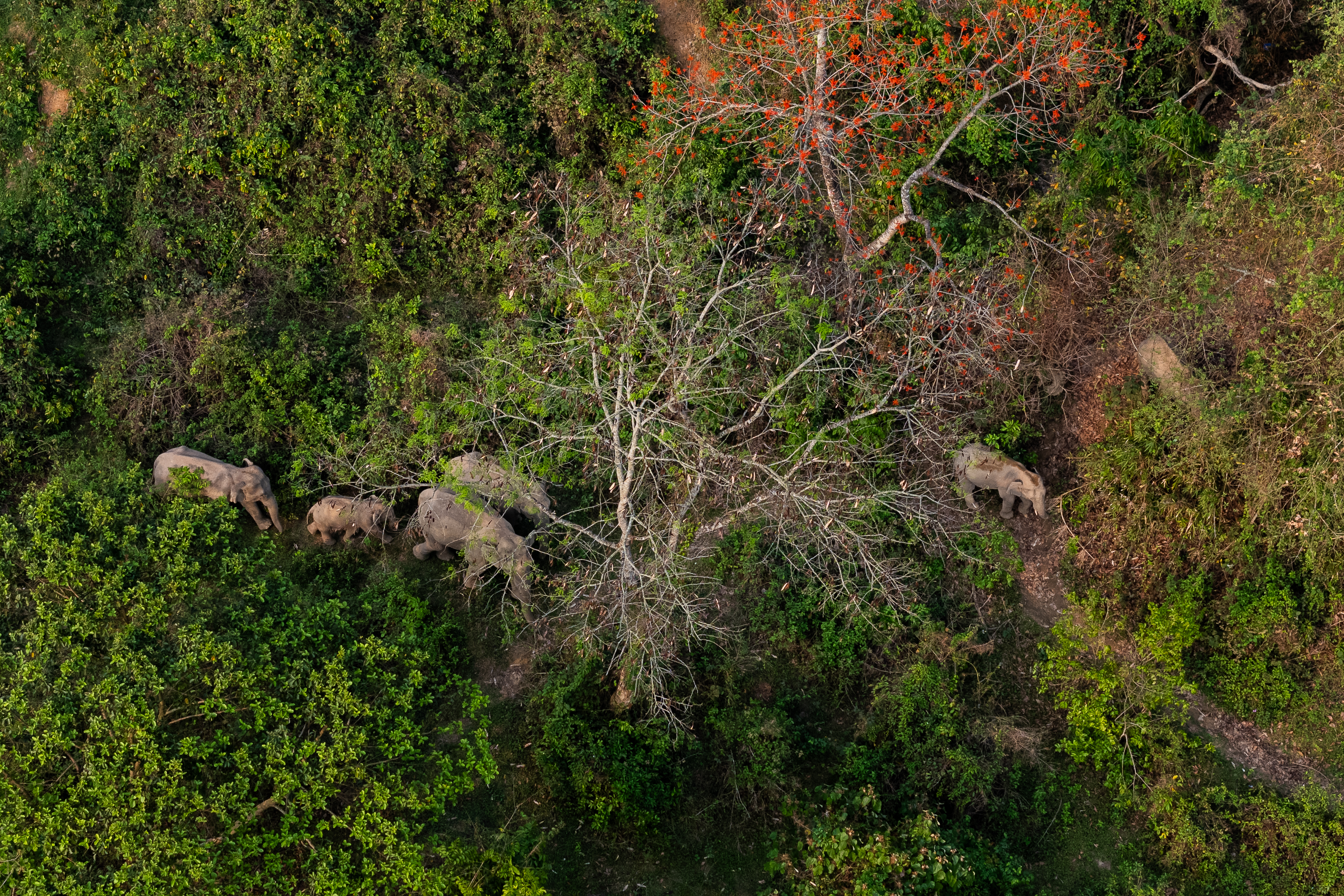
Every time the paddy ripens in the border upazilas of Jhenaigati, Sreebordi and Nalitabari in Sherpur, herds of wild elephants come down into the villages. The conflict has gone on for nearly three decades and has killed some 33 to 39 elephants and 35 people. Residents say the root cause is that the elephants have no secure habitat.
Short of food and space in the forest, the herds leave it to forage, drawn above all by ripe rice. They eat the grain, trample wide stretches of crop and sometimes break houses. Months of work can be gone in a few hours.
To save their crops, farmers guard the fields at night in groups, with torches, flashlights, drums and other noise makers to drive the herds away. Local growers say nothing they try stops the elephants. For a farming family the loss is more than paddy: it is a year's food, loan repayments and children's schooling.
Residents say chasing the elephants off is not enough and a long-term plan is needed. They want the elephants' habitat and corridors protected, more food available in the forest, working early warning in high-risk areas, fair compensation for farmers who lose crops, and joint action by the Forest Department and the local administration.
Elephants die in the conflict as well as people. As residents put it, elephants have a right to live and eat just as people do. They want a solution that keeps farmers' crops and lives safe and gives the elephants back a safe home, and have asked the government and others concerned to act quickly.
The report is by Krishi Shomoy's Sherpur correspondent.
Photo: Ayman Nakib Badhan / Wikimedia Commons (CC BY-SA 4.0)
Source: Krishi Shomoy


Comments
(0)