
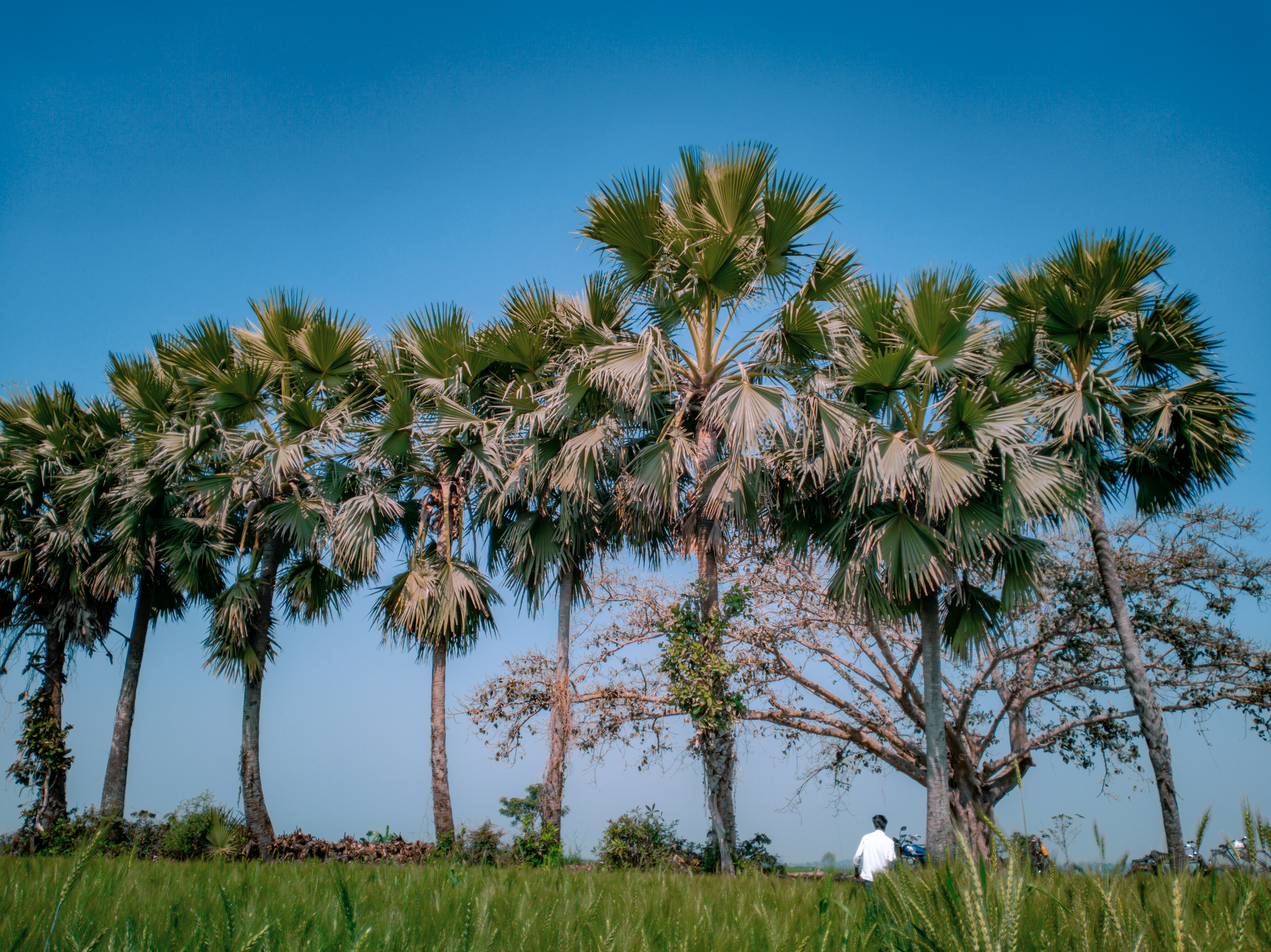
In mid-June 2026, at the height of the Bengali month of Jaishtha, demand for tender palm kernels (tal shaans) was rising in the Sharsha and Benapole area of Jashore district, Jagonews24 reported on 15 June 2026. People were buying the soft, watery kernels for a little relief from the heat and to fight dehydration, the report said. A poor crop that season had pushed prices up somewhat, but buyers were not holding back from the fruit. While it quenched people's thirst, the report said, nearly a hundred local families were making their living from the seasonal trade.
The report presented the trade as a change of fortune for these families. The figures behind that description come from the sellers and the upazila agriculture officer it interviewed, and they are set out below as the report gave them.
Where the kernels were sold, and at what price
Sellers were offering palm kernels at the corners of haats and bazaars across the 11 unions and one municipality of Sharsha-Benapole, according to the report, and there was no shortage of mobile sellers going round on vans either. At the time each kernel sold for Tk 5 to 7.
Seasonal trader Abdus Sattar described his costs and earnings to the paper: "I bought the palms from three trees for Tk 4,000. I paid two workers Tk 1,000 to bring the fruit down, and transport cost Tk 200. By the roadside in Benapole bazaar each palm fruit sells for Tk 15 to 25. Selling palm kernels for one to one and a half months brings in about Tk 20,000 to 30,000."
Traders Salauddin and Ashikur of Navaran and Bagachra told the report that the low yield that season had left palm kernels in short supply, so they had to sell at high prices. They put the price at Tk 15 to 25 apiece and said they earned Tk 400 to 500 a day from the trade.
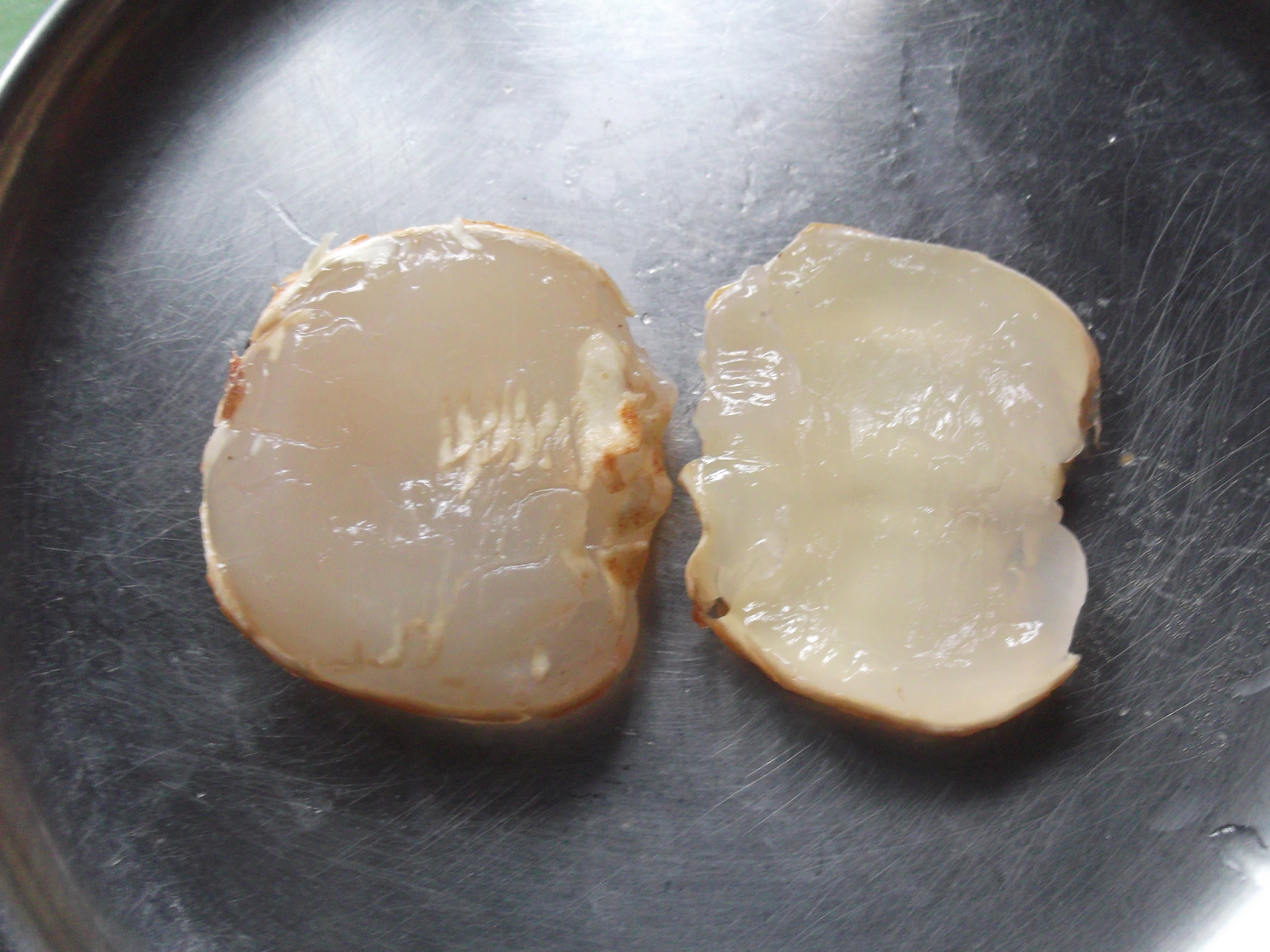
The two prices reflect how the fruit is sold. A palmyra fruit is fleshy and fibrous and holds one to three seeds; in a young fruit each seed contains a semi-solid white kernel filled with a watery, sweet juice. Sellers therefore quote one price for a single kernel and another for a whole fruit. A report by the state news agency BSS from Rajshahi on 23 May 2026 described the same pattern there: a tender palm holding three to four kernels sold for Tk 15 to 25 depending on its size, while single kernels sold for Tk 5 to 8 in many places.
Abdus Sattar's account shows how the business runs: the trader buys a season's fruit on standing trees, pays workers to bring it down, and sells it at the market over a few weeks. In Natore, BSS reported on 9 June 2026, a trader who had sold kernels for more than a decade said he had bought 17 trees that season at Tk 600 to 800 each and was selling single kernels at Tk 5. The BSS report from Rajshahi described traders collecting tender palms at dawn from villages in Godagari, Bagha, Charghat, Tanore and Paba upazilas on contracts for whole trees, and bringing them into the city.
A poor crop and fewer palm trees
Sharsha Upazila Agriculture Officer Dipak Kumar Saha told the report that the shortage had a simple cause. "Because the palm yield is low this season, the kernels sellers bring in are gone in moments," he said. "In summer, a palm-leaf fan gives village people a cool breeze, and palm trees protect homes from storms and rain and keep nature in balance. For want of palm trees, weaver bird nests are no longer seen. Without care and upkeep, palm trees are now almost extinct in this area. As a result, traditional palm juice, palm gur and palm patali are also on the way to disappearing."
His account of the tree's decline matched what agriculture officers elsewhere were saying that month. In Bhola, Desh Rupantor reported on 9 June 2026 that a tender palm was selling for Tk 30 in the town. The Bhola Sadar Upazila Agriculture Officer, Md. Kamrul Hasan, told the paper that homesteads and roadsides once had plenty of palm trees, but that infrastructure and agricultural development were reducing their number day by day, and with them the output of tender palms. His office planted two to three hundred palm seedlings every financial year under the agricultural rehabilitation programme, he said, so that the number of trees would grow and people would be encouraged to plant them themselves.
In Bagerhat's Fakirhat upazila, Jugantor reported on 7 June 2026 that the upazila agriculture office had planted about 1,500 palm seedlings over the previous 12 years, and about 200 more the year before through incentives and encouragement to farmers. The upazila agriculture officer, Sekh Sakhawat Hossain, called the palm an environment-friendly and climate-resilient tree that also works as a natural protective belt in coastal areas prone to storms and tidal surges, which is why, he said, his office was putting weight on conserving palms and planting new ones.
Jashore in the June heat
The report's "searing heat of Jaishtha" was measured in Jashore in the days before it appeared. On Thursday 4 June 2026 Jashore recorded a maximum temperature of 38.6 degrees Celsius, the highest in the country that day, Dhaka Tribune Bangla reported, citing the meteorological office at Jashore's Bir Shreshtha Matiur Rahman air base. The day before, 3 June, the district had recorded 38.2 degrees. After nearly two weeks of a mild heatwave, the paper said, a moderate heatwave had begun in the district.
By 9 June the heat had eased elsewhere, but not in Jashore. In the 24 hours to 6 pm that day, Jashore was the only district under a mild heatwave, with a maximum of 37.2 degrees Celsius, Bangla Tribune reported from the Bangladesh Meteorological Department's forecast. The department classes 36 to 37.9 degrees as a mild heatwave, 38 to 39.9 as moderate, 40 to 41.9 as severe and above 42 as very severe. The same forecast said the south-west monsoon had advanced as far as the Barishal, Chattogram, Sylhet, Mymensingh and Rangpur divisions and was expected to spread over the rest of the country within two to three days.
The heat was also showing up in Jashore's hospitals. Dhaka Tribune Bangla reported that patients with heat-related illness were rising at Jashore General Hospital and at clinics and upazila health complexes across the district. The district's deputy civil surgeon, Dr Nazmus Sadiq Rasel, told the paper that high humidity on top of the temperature was making people more uncomfortable, and that heavy sweating was drawing water and electrolytes out of the body, leaving many people dehydrated, weak or dizzy. He advised pedestrians, labourers, students and older people in particular to take enough safe drinking water and oral saline to cut the risk of heatstroke and dehydration, and said it was better not to go out in the sun unless necessary. Anyone who feels unwell in the heat should see a doctor.
Sharsha and Benapole
Sharsha is an upazila of Jashore district on the border with India. Banglapedia, the national encyclopaedia of Bangladesh, gives its area as 336.28 square kilometres. It is bounded by West Bengal and Chaugachha upazila to the north, Kalaroa upazila to the south, Jhikargachha upazila to the east and the Indian state of West Bengal to the west. Sharsha thana was formed in 1910 and became an upazila on 3 July 1983. The 2011 census counted 341,328 people there. Its main river is the Betna.
The upazila has one municipality, with nine wards, and 11 unions: Ulashi, Kayba, Goga, Dihi, Nizampur, Putkhali, Bagachra, Bahadurpur, Benapole, Lakshmanpur and Sharsha. These are the "11 unions and one municipality" across which, the report said, palm kernels were being sold. Banglapedia counts 30 haats and bazaars in the upazila and names Sharsha, Navaran, Benapole, Bagachra, Ulashi, Lakshmanpur, Nizampur, Tengra, Kayba, Kashipur, Goga and Bahadurpur haats among the best known, including the Navaran and Bagachra markets where two of the report's traders worked.
Farming is the main source of income for 66.32 per cent of Sharsha's households and commerce for 12.40 per cent, according to Banglapedia. The main crops are paddy, jute, potato, wheat, mustard, lentil, sesame and vegetables, and the main fruits are mango, jackfruit, plum, coconut, hog plum and date. Date molasses, sesame and vegetables are listed as its main exports.
Benapole, the town in Sharsha upazila where Abdus Sattar sold his fruit by the roadside, faces the Indian customs station of Petrapole across the border. Benapole is the site of the largest land port in Bangladesh, run by the Bangladesh Land Port Authority, and Kolkata lies about 80 kilometres from the Petrapole-Benapole crossing. Jashore district itself, formed in 1781, covers 2,606.94 square kilometres in Khulna division and has eight upazilas, of which Sharsha is one.
The palmyra palm and its tender fruit
The tree behind the trade is the palmyra palm, Borassus flabellifer, called tal in Bengali. Banglapedia notes that at least 20 species of palm grow naturally in Bangladesh, and that the fruits of the date palm and the palmyra palm are "minor but popular". The palmyra is a fan palm native to the tropical and subtropical regions of South and Southeast Asia. It grows 20 to 30 metres tall, with a crown of large fan-shaped leaves.
The palmyra is dioecious: each tree is either male or female, and the two look identical until they flower. Only female trees bear fruit. Each fruit measures 15 to 20 centimetres across and weighs 1.5 to 2.5 kilograms; it is bluish when young and turns black to brown as it ripens. A mature tree produces 200 to 300 fruits a year. The tree takes about 12 to 20 years to mature but can stay productive for more than a hundred years.
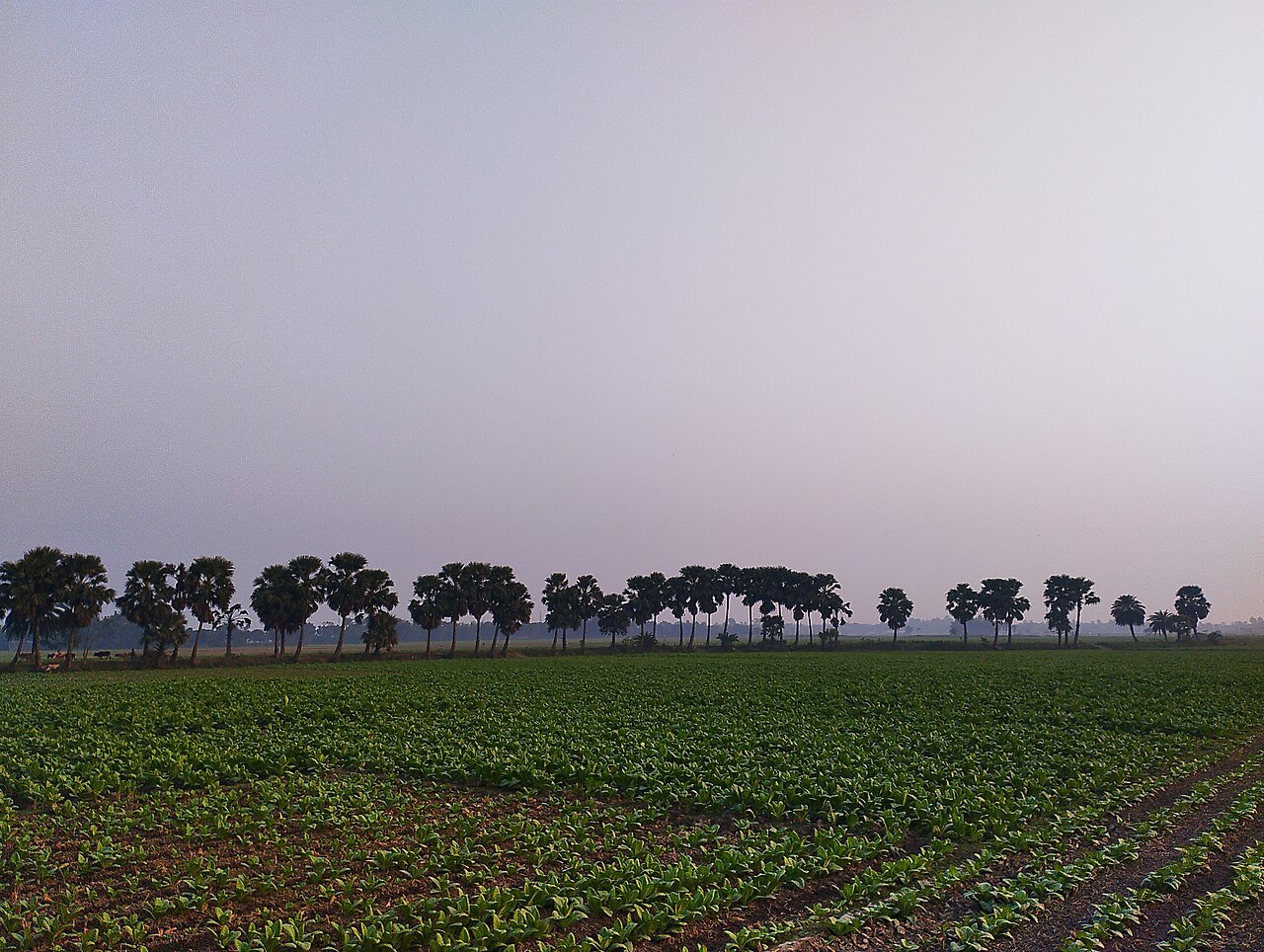
The palm tolerates drought to a degree and grows in habitats from dry land to coastal sandy soils. It is usually grown along the edges of rice fields and around homesteads, and because its deep roots make it hard to transplant once it has germinated, its seeds are normally sown where the tree is meant to stand.
The season elsewhere in Bangladesh
Reports from other districts in the weeks before the Jashore story describe the same season. In Chattogram, Prothom Alo reported on 18 May 2026 that tender palms had begun arriving at the Fol Mandi wholesale market, selling at Tk 7 to 15 each depending on size, with most of them coming from Noakhali, Chandpur, Mymensingh, Cumilla, Rajshahi and Khulna. Sales of the kernels rise with the temperature, the paper noted.
In Rajshahi, BSS reported on 23 May 2026 that seasonal traders had set up van stalls at Shaheb Bazar Zero Point, the railway station, Laxmipur and Bhadra crossings, the court area and other spots in the city. A wholesale trader from Bagha told the agency that 100 tender palms had cost Tk 700 to 900 the previous year but now cost Tk 1,000 to 1,200, which, with transport, had pushed retail prices up a little.
In Fakirhat, Bagerhat, the upazila agriculture office counted 10,504 fruiting palm trees, Jugantor reported on 7 June 2026. Each tree carries 20 to 25 bunches on average, with about 15 fruits in a bunch. A fruit with its kernels sold for only Tk 1 at the farm level but reached Tk 5 to 10 for consumers, and by the agriculture department's estimate the kernel trade alone brought about Tk 1.10 crore a year into Fakirhat's rural economy. Wholesalers carried the kernels from the upazila to Dhaka and Chattogram.
In Natore, BSS reported on 9 June 2026, the district office of the Department of Agricultural Extension (DAE) put the number of palm trees at about 40,000, of which about 20,000 bear fruit once barren and male trees are left out. The DAE's deputy director in Natore, Md. Habibul Islam Khan, told the agency that new planting was increasing the number of trees in the district and that kernel sales had given many people seasonal work.
Palm juice, gur and patali
The officer's warning that palm juice, palm gur and patali were disappearing refers to a second harvest from the same tree. Banglapedia describes palm gur as made by boiling the juice drawn by cutting the flower stalks of the palm. The fruit-bearing stalks give more juice than the barren ones. The juice is usually collected from mid-April to mid-June: tappers climb the tree with long bamboos, cut the stalks with a sharp knife, and let the drops fall into a pitcher. The cutting is done twice a day, and the juice has to be boiled quickly to stop it fermenting. Palm gur is popular, and a variety of cakes and dishes are made with it.
The palm sugar industry is an age-old practice in Bangladesh, and the juice of the wild date palm and the palmyra palm are the favourite sources of commercial palm sugar, according to Banglapedia, which puts annual palm sugar production at about 30,000 tonnes. In raw sap the sugar content is about 10 to 20 per cent. Jashore is better known for the date palm than the palmyra: Banglapedia describes the special dry cakes of Jessore's date gur, alongside the hazari gud of Madaripur, as famous, and notes that the felling of date trees for house building and as fuel in brick kilns has greatly reduced gur production.
Raw palm sap carries a health risk. The World Health Organization says Nipah virus can pass to people who drink raw date palm juice contaminated by infected fruit bats, the virus's natural host, and that outbreaks have been reported in Bangladesh almost every year since 2001. WHO advises keeping bats away from sap collection sites with protective coverings and boiling freshly collected date palm juice before drinking it. Fruits with any sign of bat bites should be thrown away. Do not drink raw sap.
Fans, weaver birds and the effort to plant palms
The palm-leaf fan the officer mentioned is one of many uses of the tree. Almost every part of the palmyra is put to work: the fruit and sprouts are eaten, the sap becomes palm wine, sugar, jaggery and palm candy, the leaves and fibres are used for thatching, weaving and handicrafts, and the strong trunk is used for building and furniture. Its height and form also make it a natural shield against wind.

The weaver birds whose nests the officer missed are the babui of Bengali villages. Banglapedia counts about 117 species of weaver worldwide and three in Bangladesh: the black-breasted weaver, the streaked weaver and the baya weaver, the last found in flocks in open cultivation. Weavers are named for nests woven from leaf fibres like a basket, hanging with complex entrance tunnels; the baya weaver usually hangs them from thorny trees or palm fronds. In January 2026, Manobkantha reported from Jibannagar in Chuadanga that weaver nests once common on village palm trees had become rare. Local people blamed the indiscriminate felling of palm trees, heavy pesticide use on farmland, hunters and the effects of climate change, and the paper noted that one male weaver can build up to six nests in a season.
Palm trees have also been planted as a safeguard against lightning. In January 2017 the government began planting one million palm trees across the country, AFP reported through the South China Morning Post, with the disaster management secretary, Shah Kamal, saying the planting would be done by June that year. The authorities had declared lightning a natural disaster in 2016 after official tallies recorded more than 200 deaths that year. In December 2023 Prothom Alo reported that the Department of Disaster Management had decided in 2017 to plant 4 million palm trees under the Kabikha and TR programmes and had spent about Tk 1 billion on planting. The paper reported that within two years trees had died in some places and that in others money had been misappropriated without trees being planted, and that a state minister had said in May 2022 that the project was scrapped because a palm tree takes 30 to 40 years to mature. The department put the average number of lightning deaths at 242 a year.
Photo: Ashikul Islam Anik / Wikimedia Commons (CC BY 4.0)
Sources: Jagonews24, Prothom Alo, Bangladesh Sangbad Sangstha (BSS), Jugantor, Desh Rupantor, Dhaka Tribune Bangla, Bangla Tribune, Manobkantha, Banglapedia, World Health Organization, South China Morning Post (AFP), Prothom Alo English, Wikipedia
Comments
(0)