
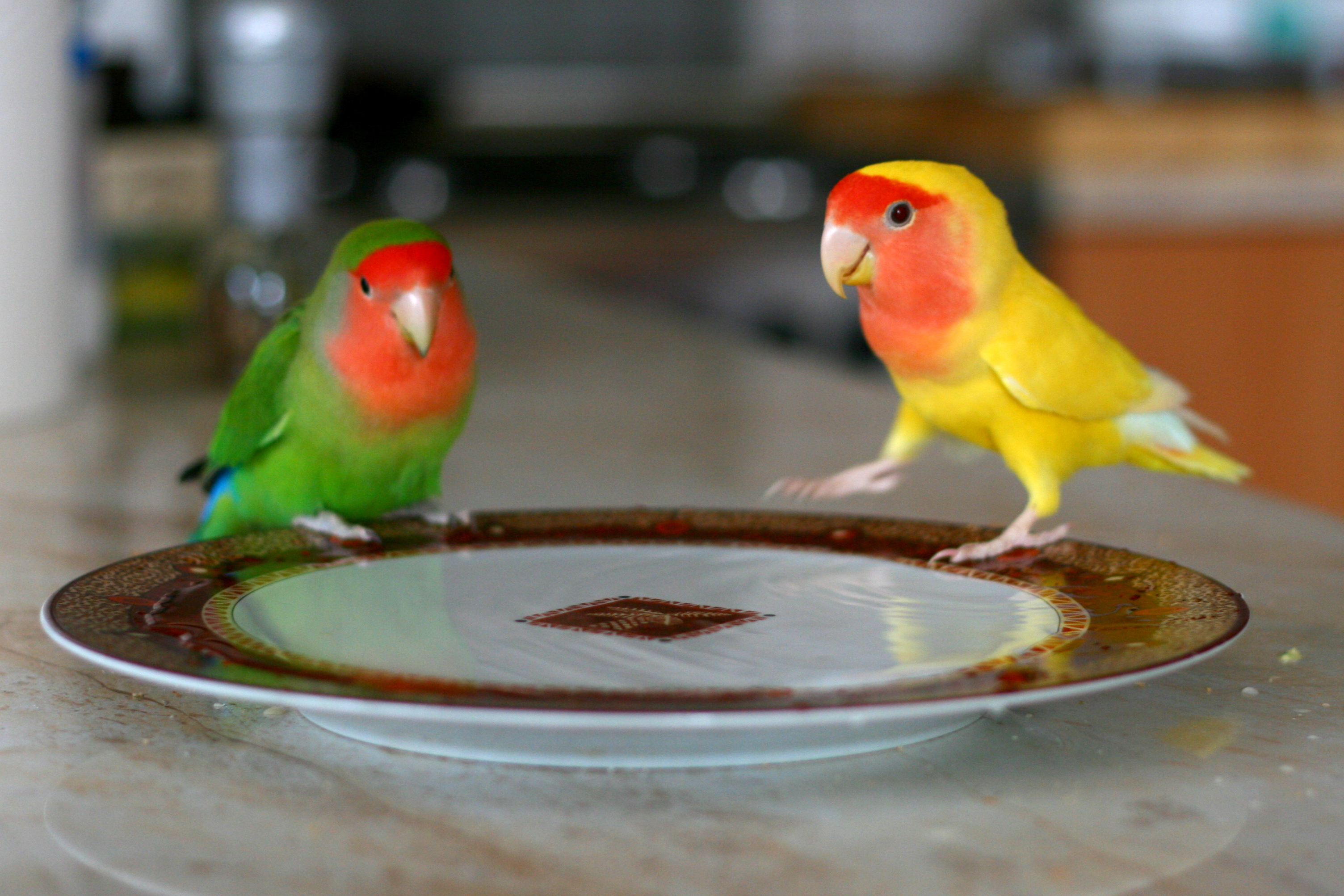
Forty-eight lovebird cages stood in rows on a farm in Naria upazila of Shariatpur district in January 2024, each fitted at the front with a small wooden box lined with straw. Inside the boxes the birds were getting ready to sit on their eggs, and the chicks were to be taken out of the cages 15 days after hatching. The farm belonged to Arifuzzaman Khan, a 40-year-old physically disabled engineer, who had built it after giving up a job in Dhaka. Jagonews24's Shariatpur district correspondent reported on 18 January 2024 that the farm had become a success and that it had also given work to young people who had been without jobs.
Arifuzzaman Khan lives in the Narkalikata area of Bhojeshwar union in Naria. His story, as he and his neighbours told it to the newspaper, runs from a childhood illness in the village, through study and work in the capital, and back to the village with a plan to earn a living from ornamental cage birds.
From a village school to a job in Dhaka
When Arifuzzaman Khan was six months old, polio damaged his left leg. As a child he had to walk with his family's help, and to make the journey to school easier he was enrolled in the same class as his younger sister. As he grew up and understood that his condition would weigh on his family, he decided that he did not want to be a burden on anyone and that he would try to do something himself.
He finished primary and high school in the village and then enrolled at the Dhaka Polytechnic Institute. He later completed his studies at Stamford University. The Dhaka Polytechnic Institute, in the Tejgaon Industrial Area of Dhaka, was established in May 1955 by Oklahoma State University with funding from the Ford Foundation; it works under the Ministry of Education through the Directorate of Technical Education, and its courses are regulated by the Bangladesh Technical Education Board. Stamford University Bangladesh is a private university founded in 2002 under the Private University Act; its predecessor, the Stamford College Group, was set up in 1994, and the university has departments of civil engineering and of electrical and electronic engineering.
His student days in Dhaka were hard. Because of his disability he was injured several times while getting off buses. Finding a job after his studies was harder still, but he did not give up, and at every organisation where he worked he was promoted within a few months on the strength of his skill.
Leaving the job in 2021 and starting the farm
He then decided to leave salaried work and build something of his own. In 2021 he quit his job and went home. Back in Naria he began designing buildings and doing interior design work, and alongside it he leased 45 decimals of land and set up a breeding farm for ornamental lovebirds. He also started fish farming using the biofloc method, but when the report was written only the lovebird farm was running.
After two years of effort, the farm was breeding 15 kinds of lovebirds. A pair sold for between Tk 1,500 and Tk 15,000 depending on the type. The farm held 48 adult pairs and at least 30 more pairs of birds of different ages. He had not yet begun selling commercially, but he had started selling some birds to hobbyists, and the report said the farm could earn a lakh taka within a few years. Two people were working on the farm.
On the day the correspondent visited, the farm was loud with birdsong. Yellow, green, blue and mixed-colour lovebirds peered out of the 48 cages. The wooden nest boxes fixed in front of the cages measured 10 inches long, 8 inches wide and 7.5 inches high, and birds in 36 of the boxes had laid eggs. Some of the chicks had been gathered into two small cages, and Arifuzzaman Khan was feeding them.
"Since childhood I have seen that physically disabled people think of themselves as a burden on society," Arifuzzaman Khan told the newspaper. "I did not want to be a burden, so I studied and took a job. But I felt it would be best if I could do something myself. So I left my job, returned to the village and started designing buildings and doing interior design. Alongside that, I started the lovebird breeding farm and biofloc fish farming. For now the lovebird breeding farm is running. After two long years of effort, I started getting chicks from the lovebirds. Two people are working on my farm at present, and I plan to make it bigger in future."
He said that if unemployed young people set up bird farms like his instead of waiting for jobs, they could earn quite well.
Shakil Hossain, 22, who looks after the farm, said: "I have been here with bhai from the start. I care for the birds with him. There are different species here, and I really like looking at all the different lovebirds."
What lovebirds are
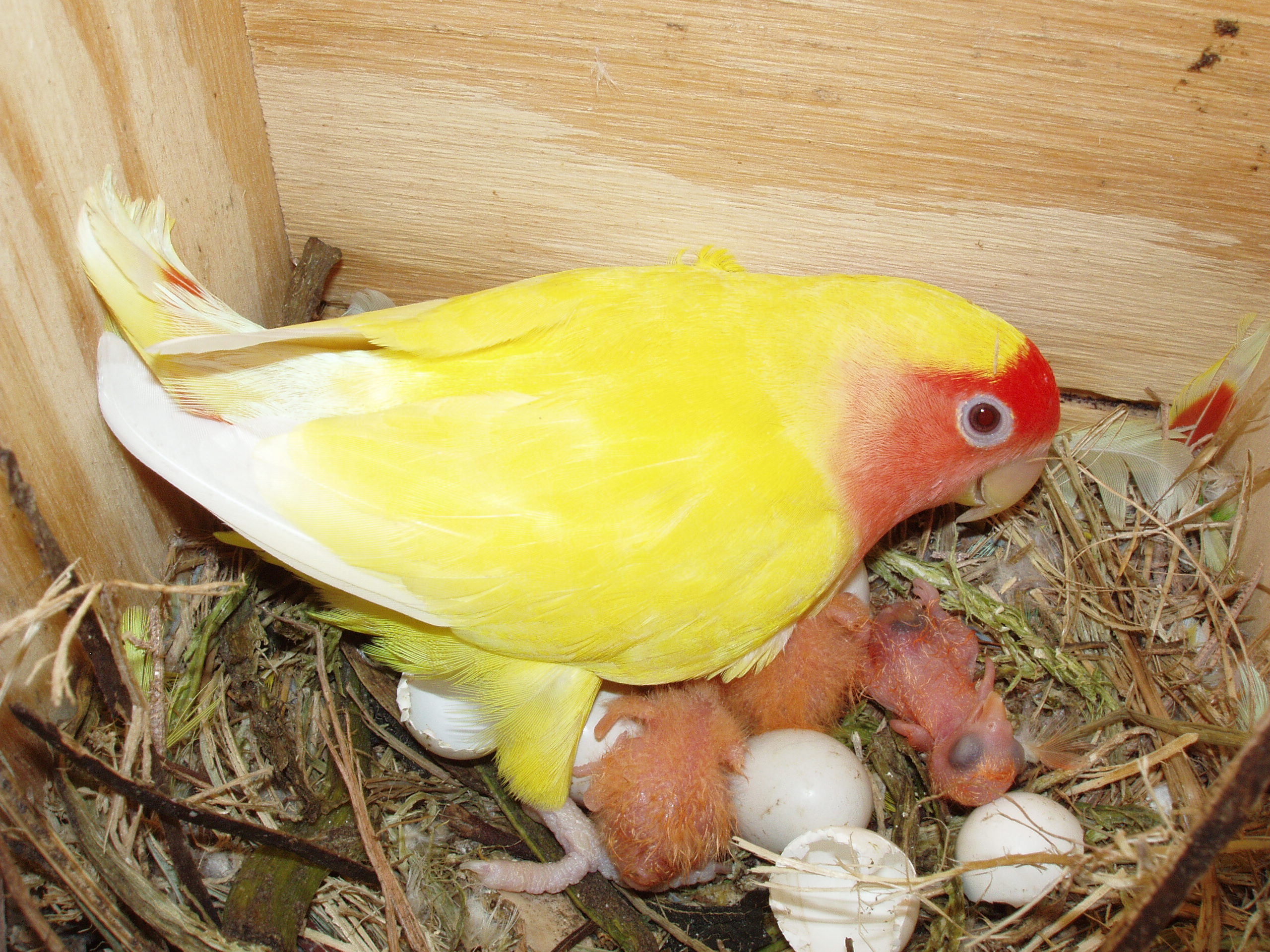
Lovebirds are small parrots of the genus Agapornis, described by the English naturalist Prideaux John Selby in 1836. The name comes from the Ancient Greek words agape, love, and ornis, bird, and refers to the strong, monogamous bond that pairs form. They belong to the Old World parrot family Psittaculidae and are native to Africa and Madagascar; none is native to Bangladesh, and the birds on farms such as the one in Naria are cage-bred stock.
Nine species are living today:
- Rosy-faced or peach-faced lovebird (Agapornis roseicollis), of south-western Africa
- Yellow-collared or masked lovebird (A. personatus), of north-eastern Tanzania
- Fischer's lovebird (A. fischeri), from the south and south-east of Lake Victoria in northern Tanzania
- Lilian's or Nyasa lovebird (A. lilianae), of Malawi and neighbouring countries
- Black-cheeked lovebird (A. nigrigenis), of Zambia
- Grey-headed or Madagascar lovebird (A. canus), of Madagascar
- Black-winged or Abyssinian lovebird (A. taranta), from southern Eritrea to south-western Ethiopia
- Red-headed lovebird (A. pullarius), across much of central Africa
- Black-collared or Swindern's lovebird (A. swindernianus), of equatorial Africa
On the IUCN Red List most of these are of least concern; Fischer's and Lilian's lovebirds are listed as near threatened and the black-cheeked lovebird as vulnerable. The report spoke of 15 species on the farm; the genus itself has nine living species, and selective breeding in captivity has produced many colour mutants besides: by 2019 some 30 plumage colour variations were known, caused by pigments called psittacofulvins.
Lovebirds are 13 to 17 centimetres long, with a wingspan of up to 24 centimetres, and weigh 40 to 60 grams. On average they live 10 to 12 years. Wild birds are mostly green, with colours on the head and upper body that differ from species to species; Fischer's, Lilian's, black-cheeked and masked lovebirds have a prominent white ring round the eye. In the wild they live in small flocks and feed on seeds, grains and leaves from trees, shrubs and tall grass, and paired birds spend long periods sitting together.
The rosy-faced lovebird lives in dry, open country in south-western Africa, from south-west Angola across most of Namibia to the lower Orange River valley in north-west South Africa, at up to 1,600 metres. It depends on water and gathers at pools to drink, and it eats mainly seeds and berries. It is one of the more common parrots kept in captivity because it is small and easy to care for and to breed, and it has the widest range of colour mutations in the genus, among them lutino, pied, turquoise, aqua, opaline and whiteface violet. Keepers are advised to keep these birds in pairs and not with smaller bird species, because they can be aggressive.
How lovebirds breed
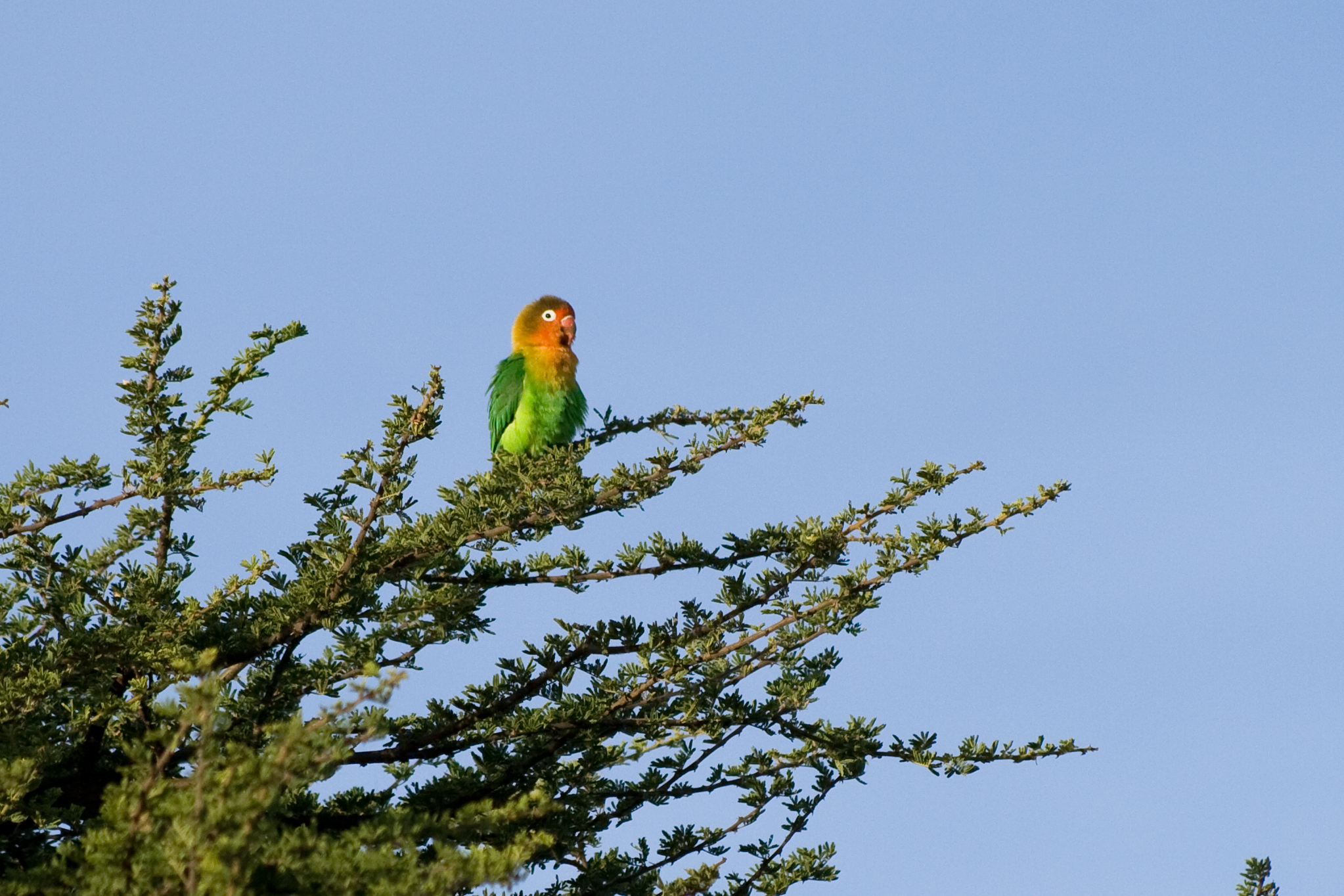
The nest boxes on the Naria farm stand in for the holes and crevices lovebirds use in the wild. The rosy-faced lovebird nests in rock crevices, in the chambers of sociable weaver colonies or in man-made structures such as house roofs. The female tears plant material into long strips and tucks them into the feathers of her back and rump to carry them, sometimes over considerable distances, back to the nest. A clutch is four to six eggs, incubation takes about 23 days, and the young leave the nest at about 43 days.
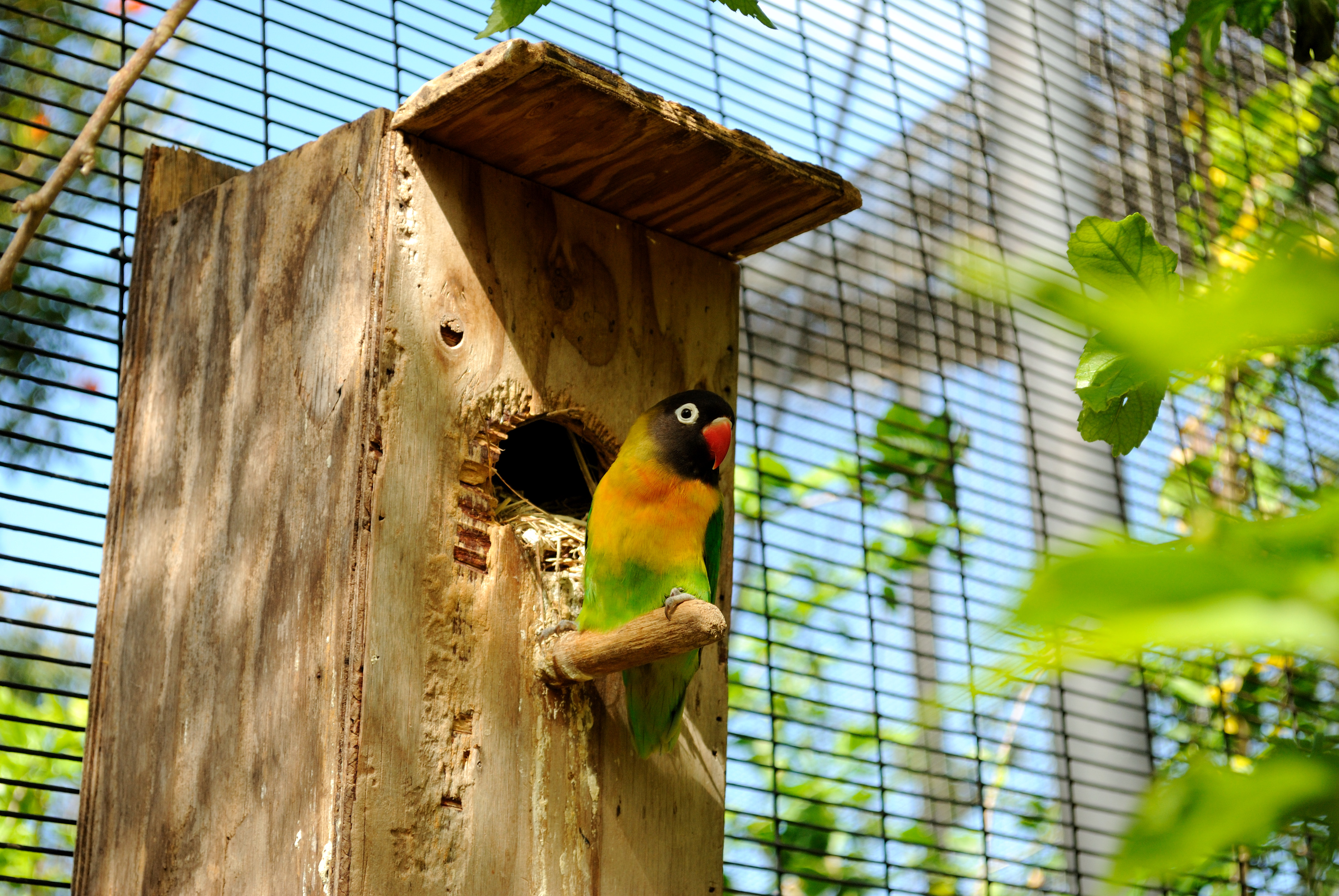
The yellow-collared lovebird mostly breeds in colonies and builds its nest from strips of twigs and bark. It usually lays four or five white eggs, which the female incubates for about 23 days, and the chicks leave the nest about 42 days after hatching. Its blue colour mutation, first found in wild birds in the 1920s, is the oldest colour mutation known in the genus, and breeders have since produced cobalt, mauve, slate, violet, lutino and albino forms.
Fischer's lovebird nests in tree holes 2 to 15 metres above the ground. Pairs mate for life; the clutch is usually four or five white eggs, with a range of three to eight, which the female incubates for about 23 days, and the young fledge 38 to 42 days after hatching.
The rules for pet bird farms in Bangladesh
Breeding and selling cage birds in Bangladesh came under the Wildlife (Conservation and Security) Act, 2012, which was in force when the report appeared. Section 24 of the Act requires anyone who wants to rear, export or import any wild animal or part of one to obtain a licence from the Chief Warden, or an officer he authorises, in the manner the rules prescribe and on payment of a fee. A licence is valid for one year and must be renewed. Under section 40, breaking section 24, or section 27 on keeping licence records, is punishable with up to one year in prison, a fine of up to Tk 50,000, or both, and a repeat offence with up to two years, a fine of up to Tk 1 lakh, or both. Section 52 lets the government make rules for licence forms, terms and fees.
Under that power the Ministry of Environment, Forest and Climate Change issued the Pet Bird Management Rules, 2020 (Posha Pakhi Bidhimala), published in the Bangladesh Gazette on 18 January 2020, according to a summary by the Dhaka law firm OGR Legal. The rules define a pet bird as a captive bird, whether or not listed in Appendix II or III of CITES, the Convention on International Trade in Endangered Species of Wild Fauna and Flora, together with its colour mutants, that has been imported, bred, bought or sold under international rules. Fischer's and yellow-collared lovebirds are among the species in CITES Appendix II. The rules' main provisions, as that summary describes them, were these:
- A farm is a place where more than 10 pet birds of one species are bred and kept for commercial purposes; a hobbyist keeper is a person who keeps pet birds as a hobby and has no more than 10 birds of any one species.
- No farmer may breed, keep, set up a farm, buy, sell, import or export pet birds, and no pet shop may buy or sell them, without a licence from the Chief Conservator of Forests or an officer he authorises; operators already in business were given 60 days to obtain one (Rule 4).
- A licence is valid for one year, and renewal must be sought at least 30 days before it expires; licensed farmers also need a yearly possession certificate for their birds, whose number goes on sales receipts.
- Cages must meet the minimum sizes set for each species and hold food, mineral salt and clean water in separate containers; chicks born on a farm must be ringed and the ring number reported; pet birds must not be released into the wild; and dead birds must be buried.
- Farms and pet shops must keep registers of their birds and send copies to the conservator of forests' office each January, and authorised officers may inspect them without notice.
- Working without a licence or possession certificate, or failing to keep or show the registers, is an offence punishable under section 40 of the 2012 Act (Rule 17).
Cage-bird breeding as a trade
Arifuzzaman Khan was not the only young person in Bangladesh to turn a liking for cage birds into a business. In August 2022 Prothom Alo described a breeder of about 20 in Sylhet city who had started in 2011 with a budgerigar, began selling online in 2017, and by then kept about 700 birds of some 70 species, lovebirds among them, at a sales outlet in Sylhet and two breeding farms. In peak months, from August to February, he sold birds worth about six lakh taka a month on average, and two to three lakh taka in other months. His birds won first prize at a 2022 livestock exhibition organised by the Sylhet Sadar upazila livestock office. He told the paper that Bangladesh still lagged behind in treating birds, that many birds died for lack of proper advice and medicine, and that the market was not always stable.
Arifuzzaman Khan's other venture, biofloc fish farming, is a method in which fish are raised at high stocking density in tanks with strong aeration and little or no exchange of water. A review published in the Polish Journal of Microbiology in 2020 describes how microbes in the water convert toxic nitrogen waste into protein that the fish and crustaceans can eat as supplementary feed. Researchers at Khulna University and Jashore University of Science and Technology tried the method on pabda (Ompok pabda) fry in cement tanks over 90 days, using molasses as the carbon source; in a study published in December 2023 in the journal Animals they recorded 98.33 percent survival in one biofloc treatment against 86.67 percent in one traditional treatment.
Shariatpur and Naria
Shariatpur district has Munshiganj to the north, Barishal to the south, Chandpur to the east and Madaripur to the west. It covers 1,174.05 square kilometres and its main rivers are the Padma, the Meghna, the Palong and the Jayanti. It became a district on 1 March 1984 and is named after Haji Shariatullah (1781 to 1840), the founder of the Faraizi movement, who was born in the village of Shamail under what was then the Madaripur subdivision of greater Faridpur. The district has six upazilas: Gosairhat, Zanjira, Damudya, Naria, Bhedarganj and Shariatpur Sadar. At the 2011 census it had 1,155,824 people, and agriculture was the main source of income for 61.66 percent of households.
Naria upazila covers 203.58 square kilometres, on the Padma and the Palong. It became a thana in 1930 and an upazila in 1983, and it has one municipality and 14 unions, Bhojeshwar among them. The 2011 census counted 231,644 people. Agriculture was the main source of income for 47.63 percent of households and commerce for 20.23 percent. The main crops are paddy, jute, wheat, chilli, garlic, onion and coriander, and Banglapedia lists six fishery farms and 50 poultry farms in the upazila.
Polio, disability and work
Polio is a highly infectious viral disease that mainly affects children under five, the World Health Organization says. It spreads from person to person, mainly through the faecal-oral route, and about one in 200 infections leads to irreversible paralysis. There is no cure; it can only be prevented with vaccine, which given several times can protect a child for life. On 27 March 2014 an independent commission certified the WHO South-East Asia Region, which includes Bangladesh, free of polio.
The Bangladesh Bureau of Statistics' National Survey of Persons with Disabilities, published on 27 December 2022, found that 2.8 percent of the population, about 46.2 lakh people, had a disability. Physical disability was the most common type, at 1.35 percent of the population. Around a third of persons with disabilities aged 15 to 64 were employed, most of them self-employed.
Arifuzzaman Khan's neighbours spoke of him with pride. "Arif is a son of our area," said local resident Abdur Rob Khan. "Despite being disabled himself, he has built a fine farm, which is truly praiseworthy. I also want to build a bird farm like this."
Kanchan Hossain, the entrepreneur at the Bhojeshwar union parishad digital centre, said: "Arifuzzaman is an example that disabled people are not a burden on society. Overcoming every obstacle, he is a successful engineer. He has also set up a fine bird and fish farm himself to create jobs for unemployed youths, and several young people have found work there. We salute his work. Everyone, please keep him in your prayers." Union digital centres are technology-based service points at the union parishads, run by local entrepreneurs; they opened in 4,501 unions on 11 November 2010, and by 2020 they offered 270 types of service and had created some 13,372 entrepreneurs, The Business Standard reported.
Photo: Peter Békési / Wikimedia Commons (CC BY-SA 2.0)
Sources: Jagonews24, Banglapedia, Wikipedia, Wildlife (Conservation and Security) Act 2012, OGR Legal, Prothom Alo, World Health Organization, Bangladesh Bureau of Statistics (via The Business Standard), The Business Standard, Polish Journal of Microbiology, Animals (MDPI)
Comments
(0)