
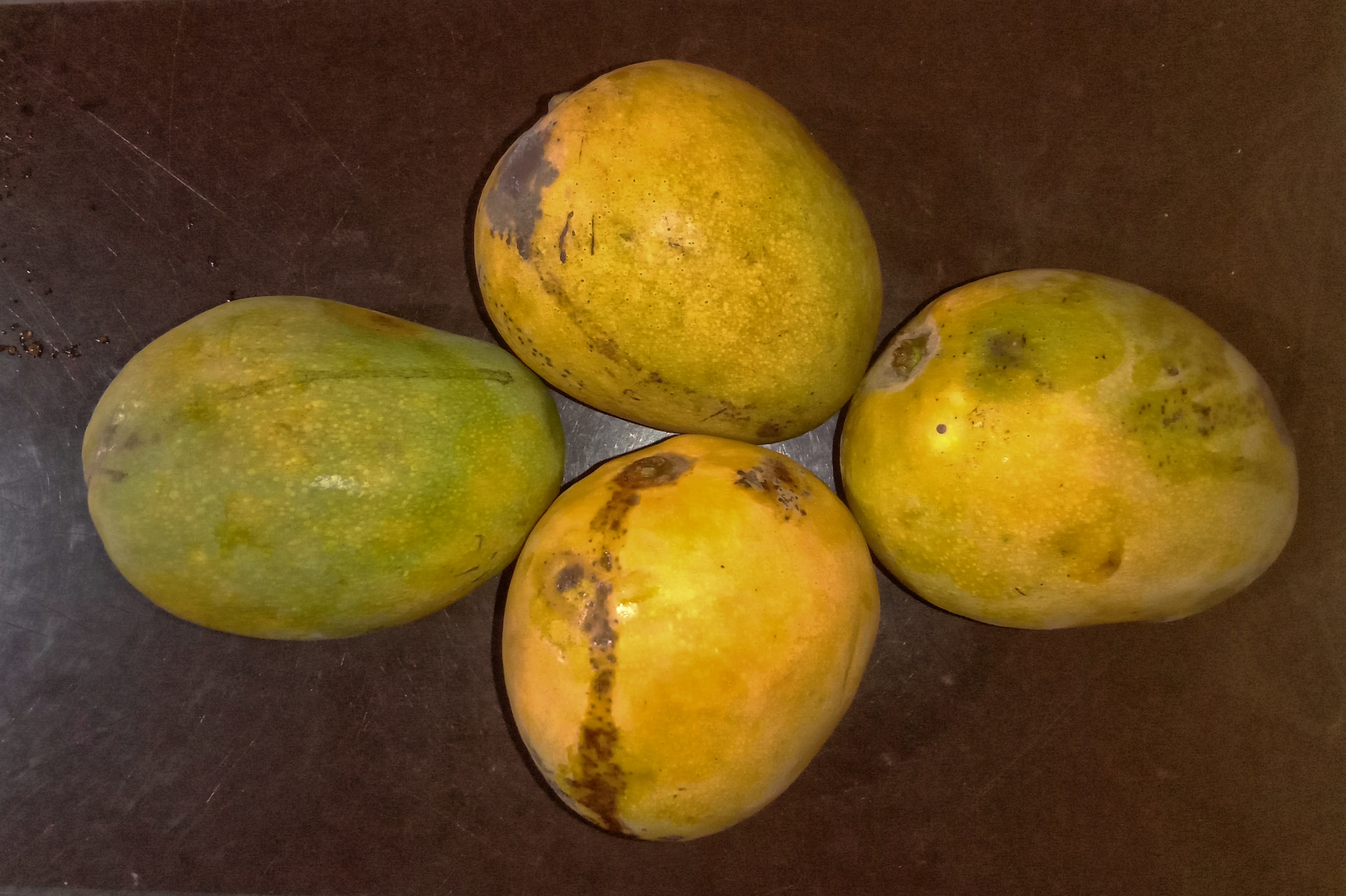
Satkhira formally began picking and marketing the season's mangoes on Tuesday, 5 May 2026. Under the mango calendar set by the district administration, growers in different parts of the south-western district started taking fruit from their trees that day, and they said they were hoping for good prices, Jagonews24 reported that afternoon.
The harvest was opened at a ceremony in the orchard of grower Abu Said in Fingri union of Satkhira Sadar upazila. The acting Deputy Commissioner, Bishnupada Pal, was the chief guest, and the Sadar Upazila Nirbahi Officer (UNO), Arnab Dutta, presided. District agriculture officer Agriculturist Saiful Islam, Sadar Upazila Agriculture Officer Monir Hossain, other officials of the Department of Agricultural Extension (DAE), representatives of the district administration, local public representatives and mango growers from different areas also attended.
Soon after the opening the orchard grew busy. Workers carrying ropes, baskets and bamboo ladders set about picking the fruit, and the scene gave the whole area a festive air.
In the first phase, local varieties including Gopalbhog, Gobindabhog, Golapkhas, Baishakhi and Bombai began coming to market from the district's upazilas. Under the same calendar, picking of Himsagar was set to begin on 15 May, Langra on 27 May and Amrapali on 5 June.
Growers' hopes on the opening day
Abu Said, in whose orchard the season was opened, said growers wait all year for this moment. The trees had fruited well this time, he said, and because picking had started at the time set by the government he hoped for good prices. If the weather stayed favourable, he said, the season would be profitable.
Another grower, Shafiqul Islam, said the yield was better than in the previous year. He said he hoped farmers would make a good profit as long as there was no storm or heavy rain.
Wholesalers from different parts of the district had started contacting orchard owners before the season began, Jagonews24 reported, and growers were hoping for both a good yield and fair prices.
The agriculture department said that starting the harvest on schedule would keep the fruit's natural maturity, protecting the quality and the market reputation of Satkhira's mangoes. The administration and law enforcers had also stepped up field monitoring to stop immature and chemically treated mangoes from reaching the market.
According to DAE sources, the picking dates for Langra and Amrapali had been brought forward somewhat at growers' request, and officials believed these mangoes would ripen within the set time. Sadar Upazila Agriculture Officer Monir Hossain said the district had a production target of about 70,900 tonnes from mango orchards covering 4,120 hectares this season.
The day before the opening, The Business Standard's Bangla edition reported (4 May 2026) that traders from different parts of the country had taken up positions in Satkhira town and were visiting markets and orchards. A former general secretary of the Satkhira Bara Bazar raw goods traders' association told the paper that prices could not yet be stated: they would be known only once the fruit reached the market under the calendar the next morning. Monir Hossain told the same paper that traders had been instructed not to market any chemically treated mango, that legal action would be taken against anyone caught, and that he expected mango sales of three hundred to three hundred and fifty crore taka in Satkhira over the following month.
How the 2026 mango calendar was set
The district administration announced the 2026 schedule on Sunday, 26 April 2026, at a meeting on 'safe mango marketing' in the Deputy Commissioner's conference room, Prothom Alo and Bangla Tribune reported that evening. Its stated purpose was to stop immature mangoes from being picked and sold. Deputy Commissioner Afroza Akhter told the meeting that no leeway would be given for picking, storing or marketing mangoes before the set dates, and that there would be strict monitoring with the help of law enforcers and the agriculture department.
Under the calendar, Gopalbhog, Gobindabhog, Bombai, Golapkhas and other Baishakhi varieties could be picked and sold from 5 May; the popular, fragrant Himsagar from 15 May; Langra from 27 May; and Amrapali from 5 June.
The meeting was told that the season's target was to export 100 tonnes of Satkhira mangoes. To keep the fruit at export quality, early picking would be stopped, and mobile courts, checkpoints and special monitoring teams would work in the field, alongside a publicity campaign to make farmers and traders aware of the rules. District agriculture officials explained that each variety has a set time to mature; fruit picked before then loses taste and quality, which is a major barrier in international markets.
The schedule is not new to Satkhira. In April 2023 the administration set 12 May for Gopalbhog, Gobindabhog, Bombai, Golapkhas and other local mangoes, 25 May for Himsagar, 1 June for Langra and 15 June for Amrapali, Bangla Tribune reported on 25 April 2023. In 2025 picking of local varieties opened on 5 May, in an orchard in the same Fingri union, with Himsagar set for 20 May, Langra for 27 May and Amrapali for 5 June, The Business Standard reported. On 14 May 2025, after a meeting with growers and upazila agriculture officers, the Deputy Commissioner brought the Himsagar date forward by five days to 15 May because the fruit had started to ripen earlier than in other years, Prothom Alo reported.
The district's mango figures before the harvest
On 24 February 2026, when the trees were in blossom, the district office of the DAE gave Dhaka Times its figures for the 2025-26 season: mangoes were grown on 4,137 hectares in total. By variety, Himsagar covered 899 hectares, Amrapali 564, Gobindabhog 382, Gopalbhog 219, Lata 143, Mallika 80, Bombai 50 and other local varieties 243 hectares.
By upazila, Satkhira Sadar had 1,250 hectares, Kaliganj 839, Tala 715, Kalaroa 658, Debhata 370, Shyamnagar 160 and Assasuni 145. The district had produced 70,880 tonnes in the previous season, and the target for 2025-26 was set at 70,900 tonnes, which the department thought could be exceeded if the weather stayed favourable. The district had 5,299 orchards and 50,745 mango growers, of whom 351 were registered, according to the same report.
At the 26 April meeting, DAE deputy director Saiful Islam put the area at 4,140 hectares, in 5,350 orchards tended by about 12,300 growers, with a production target of 70,000 tonnes, Prothom Alo reported. He said Satkhira's soil and climate give its mangoes a distinct taste and aroma, and that the trees flower earlier and the fruit ripens sooner here than in other parts of the country.
On the morning of 5 May, the state news agency BSS, citing DAE's Khulna region, gave Satkhira's mango area as 4,140 hectares, the potential production as 70,965 tonnes and the sales target as 354 crore 82 lakh 50 thousand taka. The Business Standard, a day earlier, quoted the agriculture department as saying more than 50,000 growers and traders were involved in the district and the production target was 70,000 tonnes. The figures given to different newspapers in the weeks before the harvest differ slightly; each is reported here as its source gave it.
Satkhira lies in the DAE's Khulna region. According to the region's figures reported by BSS on 5 May 2026, mangoes were grown on 7,753 hectares in Khulna, Bagerhat, Satkhira and Narail in the 2025-26 year, against 7,740 hectares the year before. Barring bad weather, particularly hailstorms, the region's potential output was put at 112,700 tonnes, with a sales target of more than 563 crore taka, calculated by the department at an average of 50 taka a kilogram, and about 100 tonnes could be exported. Narail alone had 542 hectares, a potential output of 7,060 tonnes and a sales target of 35 crore 30 lakh taka.
The DAE's additional director for the Khulna region, Agriculturist Md Rafiqul Islam, told BSS that if there were no major natural disaster, particularly hail, the region's mangoes would meet people's nutritional needs at home and could also be exported.
Field staff described the work behind the season. A sub-assistant agriculture officer in Kalaroa told BSS that his two blocks had about 150 hectares of mango and more than 1,200 growers; another in Sadar upazila said his block had 80 hectares and more than 200 growers. Both said they were urging growers not to pick immature fruit and were advising them on protecting the crop from fruit borers and fruit flies, because Satkhira's mangoes are exported and immature fruit could damage that reputation. Growers seeking advice on pest control are directed to their upazila agriculture office.
Action against immature and chemically ripened fruit
In the days before the harvest opened, mobile courts in the district destroyed consignments that officials said were immature and ripened with chemicals. On the afternoon of 23 April 2026, a mobile court in Kaliganj upazila, with the help of the Border Guard Bangladesh (BGB), seized 3,360 kilograms of Gobindabhog mangoes in 168 crates from a pickup bound for Dhaka in the Shuilpur area of Bhara Shimla union, Bangla Tribune reported. The executive magistrate, Assistant Commissioner (Land) Mainul Islam Khan, said the fruit had been found immature and chemically treated and was crushed under truck wheels on an embankment road. The pickup's driver was fined 1,000 taka for carrying it, or three days' simple imprisonment in default.
On 29 April 2026, police seized a truck carrying about 9,000 kilograms of immature Gobindabhog mangoes in the Puraton Satkhira area of the town, Bangla Tribune reported. Police said they had acted on a tip that immature mangoes were being ripened with chemicals for sale; the truck was heading for Chattogram. A mobile court had the fruit crushed under the wheels of a truck and an excavator at a dumping point in Binerpota the same afternoon. Sadar Assistant Commissioner (Land) Md Badruddoza said action would be taken against anyone who tried to market immature mangoes by dishonest means.
Why Satkhira's mangoes reach the market first
Agriculture officials have repeatedly said that Satkhira's soil and weather bring the mango blossom earlier than elsewhere in Bangladesh and the fruit ripens sooner. Dhaka Times reported in February 2026 that, because of the weather, mangoes ripen in Satkhira every year before any other district, and The Daily Ittefaq reported in May 2025 that, because the fruit reaches the market early, growers in the region get comparatively good prices.
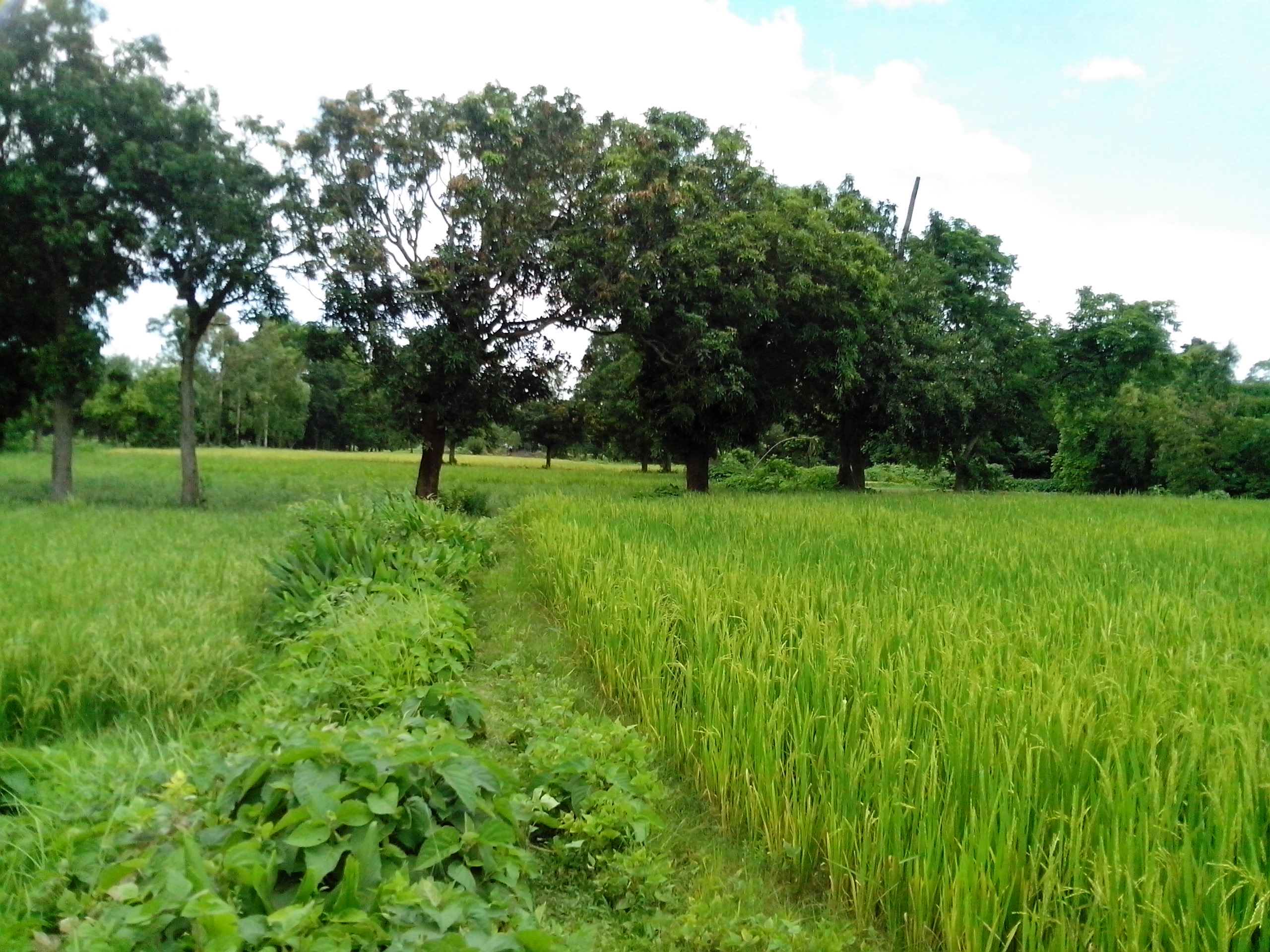
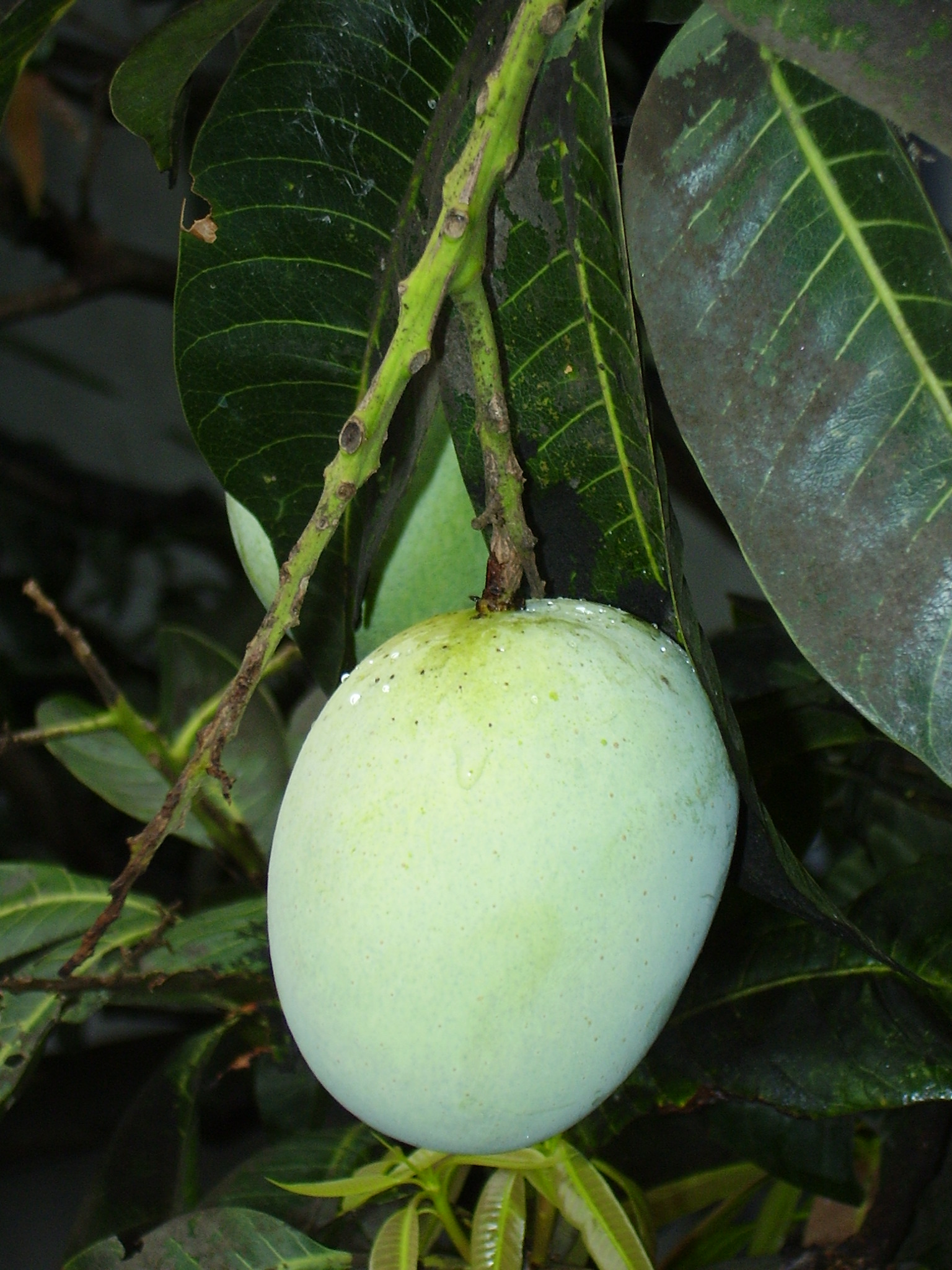
The mango, Mangifera indica of the family Anacardiaceae, is considered indigenous to the eastern part of the Indian subcontinent, including Bangladesh, according to Banglapedia, the national encyclopaedia. Its small, fragrant flowers are borne in large clusters at the ends of branches; a single inflorescence may contain 100 to 250 flower buds, and only about one or two flowers in a thousand may lead to a mature fruit.
Banglapedia notes that fruit setting is harmed by fog, rain or cloudy weather in January to March, when the trees flower. Mild showers while the fruit develops and enlarges are beneficial, but storms, and hailstorms in particular, damage the crop and often cause immature fruit to drop. Both growers quoted at the Fingri opening named storms and heavy rain as the risk to their season.
Bangladesh has nearly 100 mango cultivars, Banglapedia says. They fall into two groups: superior or elite varieties propagated by grafting, and local seedling mangoes known as 'deshi' or 'guti' mangoes, which have no recognised varietal names. Grafted trees begin to bear in the fourth year after planting and stay productive until about the 45th year. The DAE produces and distributes grafts of elite cultivars from its orchards, horticultural centres and nurseries, and the Bangladesh Agricultural Research Institute (BARI) runs mango research at stations in Rajshahi, Nawabganj and Joydebpur.
The varieties on the calendar
Himsagar, grown on 899 hectares of Satkhira in 2025-26, is a Bengal cultivar grown in Bangladesh and in West Bengal, India. Its yellow to orange flesh has no fibre; the fruit is medium-sized at 250 to 350 grams, about 77 per cent of it pulp, and it keeps well. It ripens in May and is usually on the market from the second week of May to the end of June. In 2025 the district's deputy director said Himsagar covered about a quarter of the mango land in Satkhira and was also exported, Prothom Alo reported.
Langra, also known as Benarasi Langra, was first cultivated in Banaras in present-day Uttar Pradesh, India, 250 to 300 years ago and is grown in Bihar and West Bengal as well. It keeps a greenish tinge when ripe and is considered suitable for slicing and canning.
Amrapali is a hybrid of the Dasheri and Neelum varieties, introduced in 1971 by Dr Pijush Kanti Majumdar at the Indian Agricultural Research Institute in Delhi. The tree is a dwarf, regular bearer with clusters of small fruit; the flesh is deep orange-red and contains roughly 2.5 to 3 times more beta-carotene than other commercial varieties, though the fruit has a shorter shelf life. Amrapali accounts for about 80 per cent of Bangladesh's mango exports, the DAE told The Daily Star in September 2025.
The first-phase mangoes, Gopalbhog, Gobindabhog, Golapkhas, Bombai and the other Baishakhi varieties, are the early fruit that open Satkhira's season each May. Banglapedia lists Gopalbhog and Bombai among the country's elite varieties, alongside Fazli, Langra, Himsagar, Khirsapat and others.
Satkhira district and its mango market
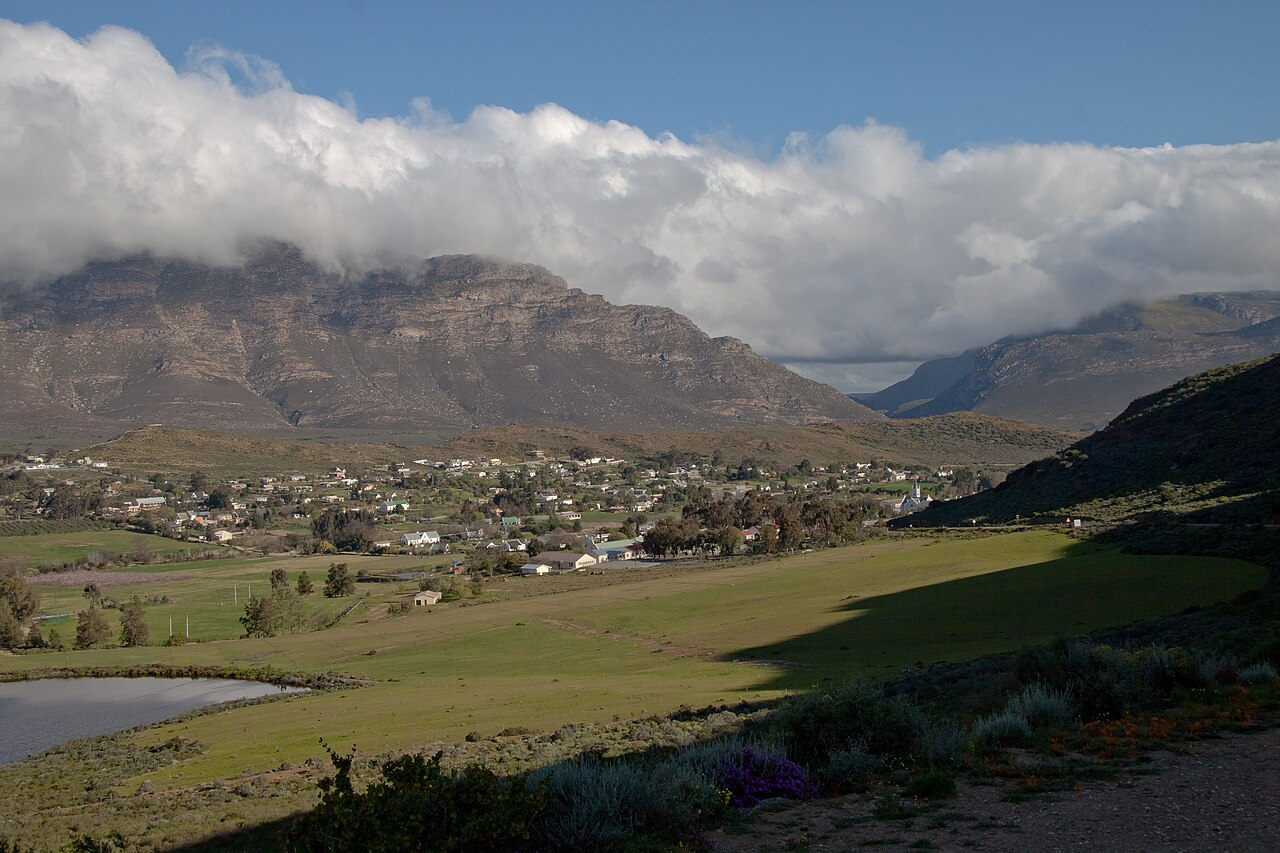
Satkhira district, in Khulna division, covers 3,817.29 square kilometres at the south-western extremity of Bangladesh, according to Banglapedia. It is bounded by Jessore district to the north, the Bay of Bengal to the south, Khulna district to the east and the Indian state of West Bengal to the west. Its main rivers include the Kalindi-Jamuna, Arpangachhia, Kobadak, Raimangal, Betna, Hariabhanga and Ichamati. Of its seven upazilas, Shyamnagar is the largest and Debhata the smallest.
Satkhira became a subdivision under Jessore in 1861, was placed in Khulna district in 1882, and became a district in 1984; Satkhira Municipality was formed in 1889. Banglapedia records agriculture as the main source of income for 62.56 per cent of the district's households. The 2022 census of the Bangladesh Bureau of Statistics counted 2,196,582 people in the district.
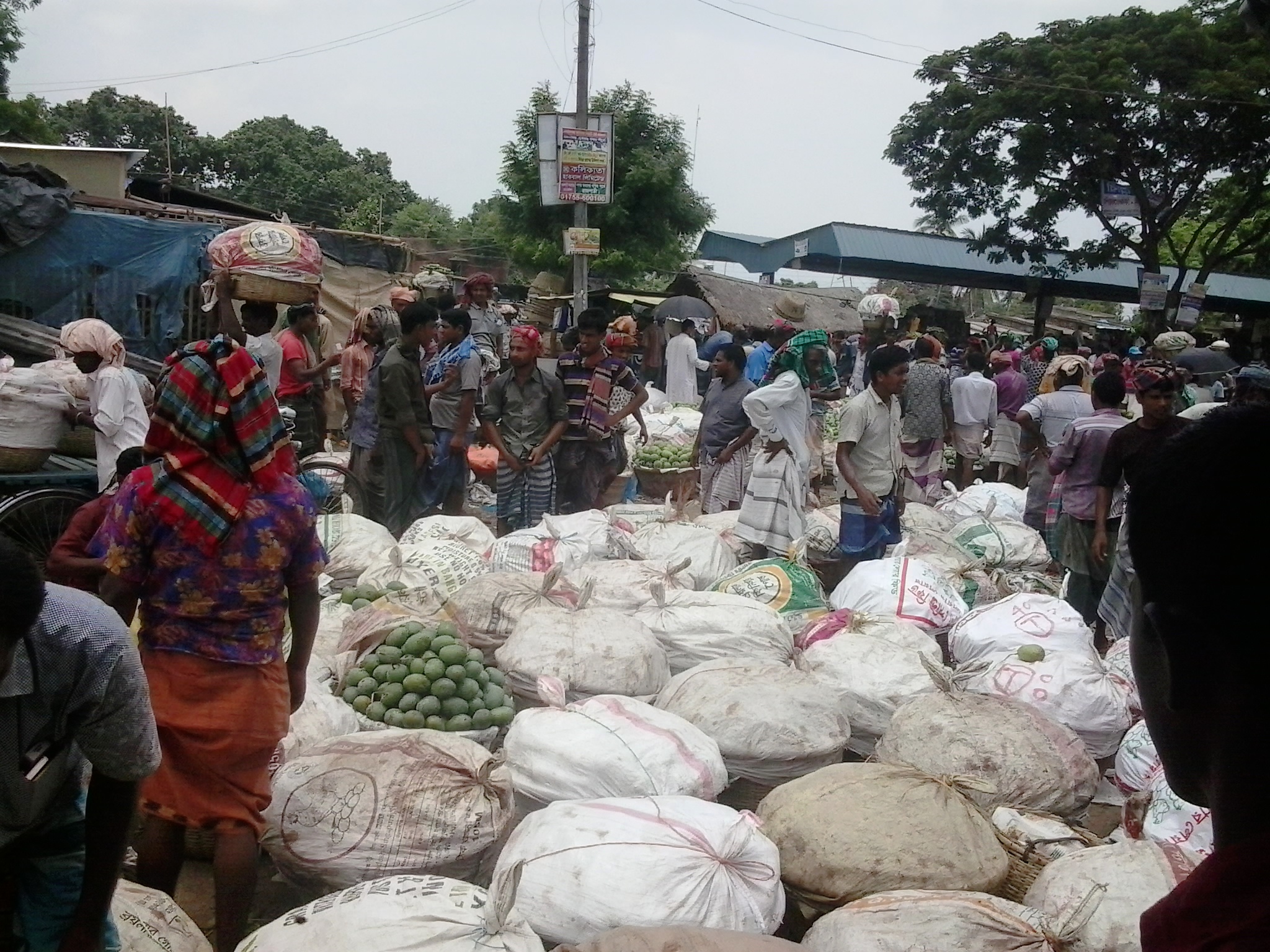
The district's big mango market is the Sultanpur Bara Bazar in Satkhira town. On the first day of the 2025 season that market was flooded with Gopalbhog and Gobindabhog, which traders sent on to Dhaka and other parts of the country, The Business Standard reported. Growers and traders told The Daily Ittefaq in May 2025 that because the district had only one big mango market, lack of space caused hardship for growers, wholesalers and buyers alike; they said this kept growers from getting fair prices and asked for several mobile markets alongside Sultanpur Bara Bazar.
Exports and the national picture
Satkhira's mangoes have been exported regularly to Europe and other countries since 2015, Prothom Alo reported at the time of the 2026 calendar. According to the DAE deputy director quoted by Dhaka Times, the district exported 180 tonnes in 2022-23, 60 tonnes in 2023-24 and 72 tonnes in the 2024-25 season, and the department was working towards at least 100 tonnes in 2025-26. In 2023 Bangla Tribune reported that the district's mangoes were going to England and other European countries for the ninth time, with growers trained in safe, pesticide-free production for shops in Italy, France, Denmark, Germany and England.
Nationally, Bangladesh produces 2.4 to 2.5 million tonnes of mangoes a year for a domestic market worth 13,000 to 14,000 crore taka, The Daily Star reported in September 2025. Commercial cultivation covered 23 districts with 72 varieties, and exports, which run from late May to late September, began in 2015.
The DAE figures in the same report put exports at 3,100 tonnes in 2023 and 1,321 tonnes in 2024, rising to 2,194 tonnes in the 2025 season, up 66 per cent. Only seven or eight varieties go abroad; besides Amrapali these include Himsagar, Langra, BARI-4 and Fazli. In 2025 Bangladeshi mangoes reached 26 countries, led by the United Kingdom with 686 tonnes, Saudi Arabia with more than 356 tonnes, Italy with more than 264 tonnes, Kuwait with more than 167 tonnes and Qatar with 163 tonnes, while China took 5 tonnes as a new destination. Exporters named high air freight charges and the lack of vapour heat treatment facilities as the main obstacles.
Earlier seasons in Satkhira
In April 2023 the DAE gave Bangla Tribune an area of 4,115 hectares and a production target of 45,500 tonnes for the district, with 5,299 government-listed orchards and 13,100 growers. The deputy director said that at an average of 50 taka a kilogram the crop would be worth 225 crore taka. A commission agent at the Sultanpur market told the paper that raw mangoes were selling at 1,400 to 1,500 taka a maund that year and that ripe mangoes had sold at 50 taka a kilogram the year before.
At the 2025 opening on 5 May in Fingri union, the Deputy Commissioner said no syndicate would be tolerated in mango marketing and action would be taken if chemically ripened mangoes reached the market, The Business Standard reported. Monir Hossain, the Sadar Upazila Agriculture Officer, said then that many growers were under pressure from advance loans (dadan) taken from traders and so did not get fair prices, and that the agriculture department was working on farm credit and other support.
Later that month the DAE deputy director told Prothom Alo that the district had 4,135 hectares under mango in 5,299 large and small orchards worked by 13,100 growers, with a production target of 62,800 tonnes and a Himsagar export target of 70 tonnes. By the DAE's figures given in February 2026, the district produced 70,880 tonnes in that season.
Photo: Billjones94 / Wikimedia Commons (CC BY-SA 4.0)
Sources: Jagonews24, Prothom Alo, Bangla Tribune, The Business Standard, Bangladesh Sangbad Sangstha (BSS), Dhaka Times, The Daily Ittefaq, The Daily Star, Banglapedia, Wikipedia
Comments
(0)