
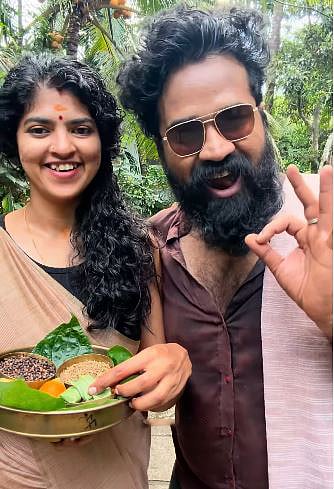
No morning trip to the market for vegetables, because they come from the garden; cooking gas made from the household's own organic waste; light after dark from the sun. That is how day after day runs at the home of Sangeeth and Kavya in Kerala, India. Built with about 60 per cent of their savings, the house looks ordinary from outside, but within it the garden, the cows and chickens and the kitchen waste are linked to one another in a self-reliant system that meets most of the couple's needs.
The life began on the road. Before settling here, the couple spent more than ten years travelling across India; when their jobs got in the way, both quit and took up freelance work. They cooked in the car, carried a tent and a few clothes, and did without hotels and restaurants. The habits formed on the road, living with little and making their own food, have taken a more permanent shape around their land and home.
In the garden they grow every kind of vegetable, farm fish and are trying their hand at paddy. Cows give milk and chickens give eggs, so a large share of each day's food comes from the property and the monthly market bill has fallen sharply. In a small space they also grow mushrooms, keeping the right temperature, humidity and cleanliness and harvesting every 25 days.
Cow dung is a key part of the system. A biogas plant in one part of the property is fed kitchen scraps and dung; microbes break the material down in the absence of oxygen, the gas fuels the stove, and the residue goes back onto the land as fertiliser. Rooftop solar panels power the household and the irrigation, and any surplus could become a source of income.
Wooden beehives around the house yield honey, and the bees pollinate the garden's flowers and crops as they forage. The couple also make their own kajal, moisturiser and face wash from the coconut, orange and amla grown at home, so the trees supply daily needs as well as food.
Their relationship with nature does not stop at the boundary wall. Over the past year and a half they have planted more than 10,000 saplings along their travel routes, logging each one by GPS and arranging for volunteers reached through social media to water them; the target is 100,000 trees in five years. Food from the garden, milk and dung from the cows, gas from the dung, fertiliser from the digester, electricity from the sun, honey and pollination from the bees: in this homestead loop, the "waste" of one system returns as the resource of another. Prothom Alo compiled its report from Instagram, Times Life and The Better India.
Source: Prothom Alo
Comments
(0)