
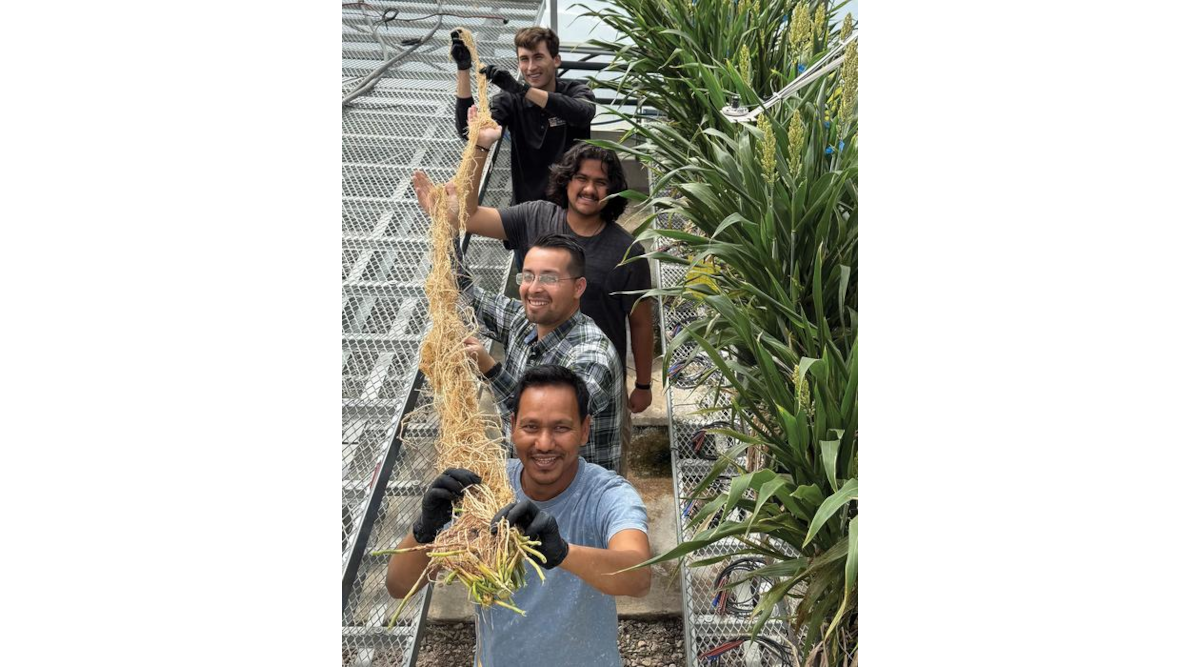
The Salk Institute has received an $18 million grant from the Bezos Earth Fund to test, in farm conditions, whether soybeans with deeper, stronger roots can store more carbon in the soil and better withstand drought and disease.
The three-year project, called ROOTS, moves Salk's Harnessing Plants Initiative into a proof-of-concept phase. It builds on a $30 million grant in 2020 that helped Salk scientists identify 347 potential genes tied to carbon-storing root traits and advance 37 projects across genes and crops.
Roots matter because deeper roots push carbon below the soil layer most disturbed by farming, larger root systems add more material underground, and roots rich in suberin, a cork-like compound that breaks down slowly, can keep carbon in the soil longer.
To move faster, the team will use RootGPT, a planned open-access AI platform that will analyse Salk data on plant genes, root traits, soil carbon and plant-fungus relationships and suggest promising genetic changes; results from lab, greenhouse and field tests will feed back to improve its predictions.
The project will extend an Illinois field study and add Midwest trials to test, over several years, whether Salk Ideal Soybean varieties store more carbon than conventional ones and cope better with stress. Salk's modelling suggests enhanced root traits could remove one to two tonnes of carbon dioxide per hectare a year — about 0.45 to 0.89 US tons an acre — if they perform as expected. "This support allows us to uncover how roots grow and function in complex environments," said Wolfgang Busch, director of the initiative.
Salk will keep working with its spinout Cquesta to take the traits into crop varieties. Soybean is the first crop; the same strategies could later be applied to maize, rice and wheat.
Source: Morning Ag Clips
Comments
(0)