
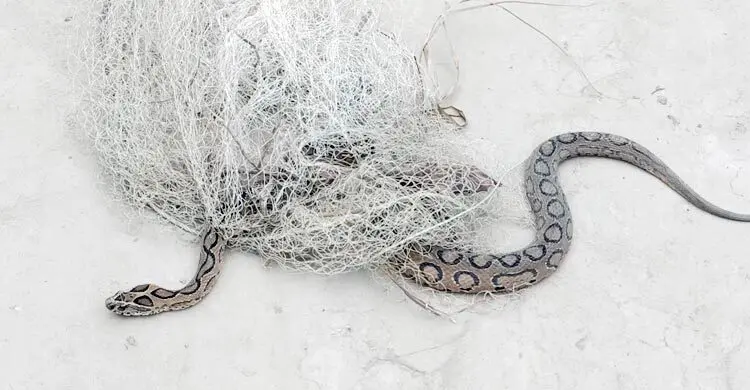
A legal notice has been sent to the relevant government officials asking them to prevent deaths from Russell's viper bites by ensuring adequate antivenom supplies and skilled doctors at every hospital, clinic and health centre in the country, and by taking steps to produce antivenom suited to local conditions inside the country.
Supreme Court lawyer Md Bahauddin Al Imran sent the notice in the public interest on Tuesday (25 June).
The notice names as respondents the secretary of the Public Security Division of the Ministry of Home Affairs, the secretary of the Health Services Division of the Ministry of Health, the director general of the Directorate General of Health Services and the director general of the Directorate General of Drug Administration.
It asks them, within seven days of receiving the notice, to store adequate antivenom at hospitals, clinics and health centres across the country, give improved training quickly to the doctors who administer it, and take proper steps to produce antivenom suited to local conditions inside the country. Otherwise, a writ petition will be filed in the High Court seeking the necessary remedy.
Fear spread on social media
The notice says fear over Russell's vipers has recently spread in a number of districts of Bangladesh, and people across the country are expressing concern because of Facebook. Many are claiming that a bite from the snake kills a person quickly, and the situation has reached the point that many are campaigning to kill Russell's vipers. Russell's vipers breed very fast, and there is a campaign claiming that their abundance in rural Bangladesh will soon threaten people. It has therefore become necessary to publicise experts' opinions.
"According to health experts, a substance that is effective against venom or can neutralise it is called antivenom. If an antivenom injection is given quickly after a snakebite, its antibodies neutralise the venom, saving the victim's life or limbs," the notice says.
It adds that several people have recently died of Russell's viper bites in some districts. Government officials have said at least five people died of venomous Russell's viper bites over the past three months in some areas of Manikganj, near Dhaka. After that, the media reported such snakes being caught in Bhola and several other districts, and farmers are spending their days in fear while growing crops in the fields.
Snakebite toll and imported antivenom
The notice says the nationwide Non-Communicable Disease Control programme (NCDC) conducted a survey of snakebite victims. According to its data published in 2023, 4,03,317 people in the country are bitten by snakes every year and 7,511 of them die. Animals are also being bitten at an alarming rate: about 19,000 domestic animals are bitten every year, of which 2,500 die, causing huge financial losses each year.
"According to media reports, many people in Bangladesh die of venomous snakebites every year simply because they do not get treatment at the right time, especially because hospitals lack enough antivenom. No antivenom is made locally in Bangladesh; the antivenom now used to treat snakebites in the country comes from India. According to World Health Organization guidance, antivenom made from local snakes is the most effective for treating snakebite patients. Antivenom from another country may not be fully effective here, because snakes differ from country to country, and the snakes from which venom is collected in India do not fully match Bangladesh's snakes. Yet for years Bangladesh's snakebite patients have been treated with Indian antivenom. Although the WHO calls antivenom an essential medicine, Bangladesh has so far failed to make antivenom from its own snakes' venom," the notice says.
It further requests that, within seven days of receiving the notice, adequate antivenom be stored at hospitals, clinics and health centres across the country, doctors who administer it be given improved training as quickly as possible, and proper steps be taken to produce antivenom suited to local conditions inside the country.
Otherwise, the notice says, a case will be filed in the High Court seeking the necessary remedy.
Source: Jagonews24. First published in Bengali on The Agro News.
Comments
(0)