
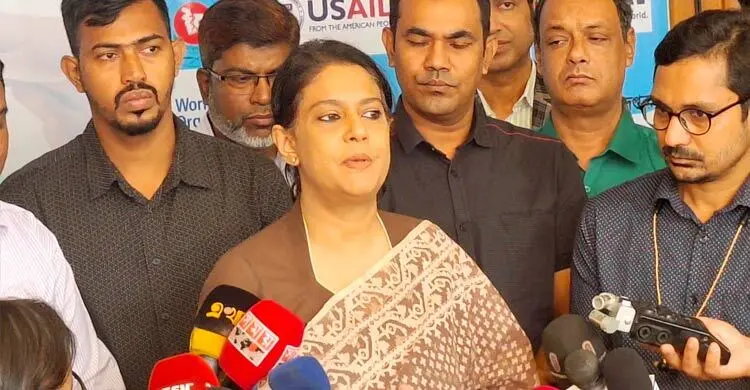
Syeda Rizwana Hasan, adviser to the Ministry of Environment, Forest and Climate Change, has said a change in humanity's outlook and responsible behaviour are urgently needed to protect forests and wildlife. Wild animals cannot speak up for their own rights, so protecting those rights is our responsibility, she said. Peaceful coexistence with nature and wildlife must be ensured.
The environment adviser was speaking as chief guest at an event on Monday (4 November) marking World One Health Day.
A joined-up approach
Syeda Rizwana Hasan said the One Health concept is an integrated approach that recognises the shared link between human health, animal health and environmental well-being. The public must be involved by raising awareness of how these are interrelated, and various programmes based on the One Health concept must be carried out.
She stressed the importance of making the One Health model work through local and international partnerships, and the need for collective effort to achieve that goal.
Answering a journalist's question after the event, the adviser said the government wants to protect both Saint Martin's and the tourism industry. All necessary steps will be taken to that end, and there is no room for confusion on the matter.
Pesticides and safe food
Speaking as special guest, Farida Akhter, adviser to the Ministry of Fisheries and Livestock, said it was not enough for One Health to include only the fisheries and livestock ministry, the health and family welfare ministry and the environment, forest and climate change ministry. Agriculture, industry and other departments must also be brought in. Because of pesticide and herbicide use in farming, the country's farm produce has become a serious threat to human and animal health, she said.
"We have increased food production, but we have not given enough importance to producing safe food," she said. If people, animals and agricultural production are managed through a One Health approach, human health will be protected.
M A Akmal Hossain Azad, senior secretary of the Health Services Division of the Ministry of Health and Family Welfare, presided. Speakers included Dr Md Sarwar Bari, secretary of the ministry's Medical Education and Family Welfare Division; Md Amir Hossain Chowdhury, chief conservator of forests at the Forest Department; Prof Dr Md Abu Jafar, director general of the Directorate General of Health Services; Dr Rajesh Narwal, acting representative of the World Health Organization office in Bangladesh; Jiaoqun Shi, FAO representative in Bangladesh; Reed J Aeschliman, USAID mission director in Bangladesh; and Prof Dr Nitish Chandra Debnath, national coordinator of One Health Bangladesh.
Source: Jagonews24. First published in Bengali on The Agro News.

Comments
(0)