
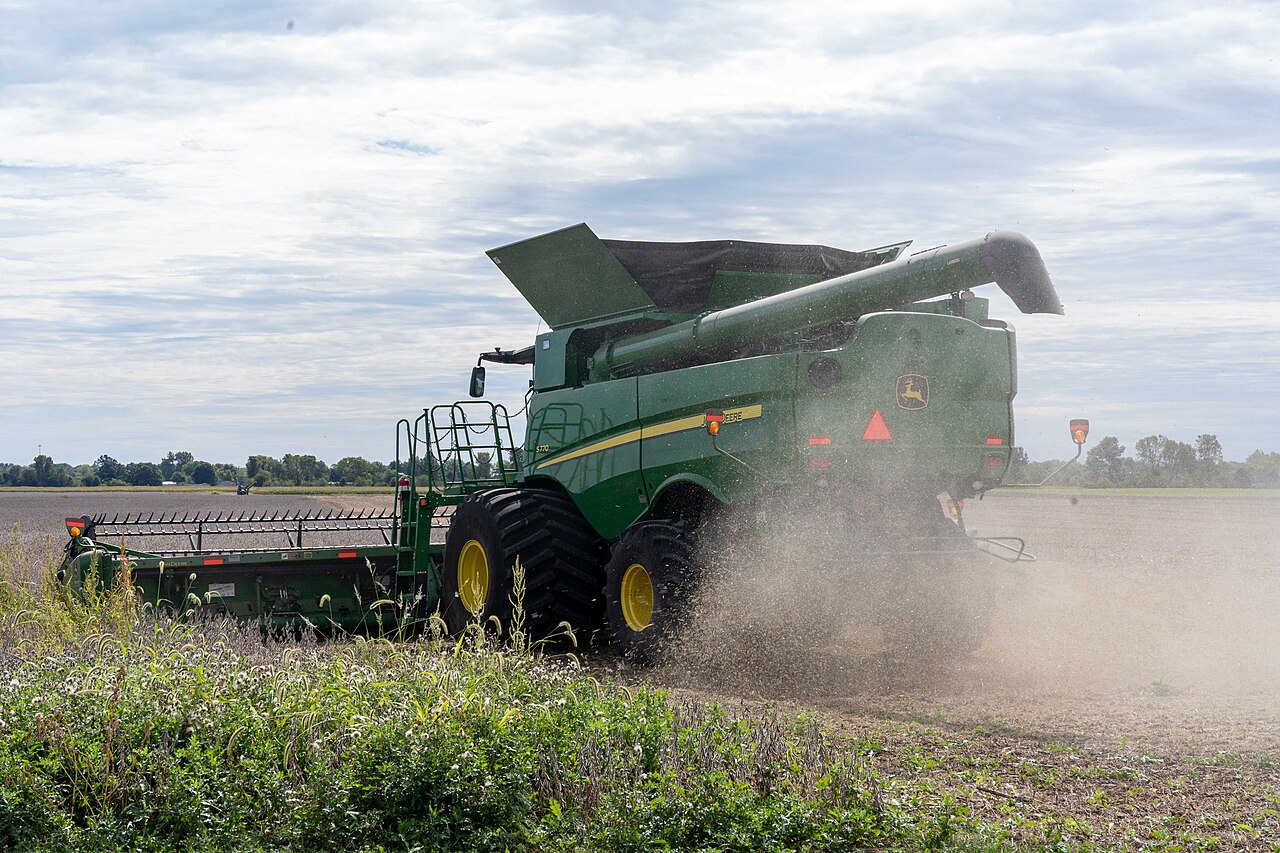
Corn and soybeans across the Midwest are maturing early after a summer of heavy rain and high late-season heat, and the advice from agronomists at the Farm Progress Show was blunt: be ready to harvest when the crop is ready, not when the calendar says so.
Cody Hornaday, a technical agronomist with Koch Agronomic Services, ran a growing degree unit calculation for southern Indiana from 1 March to the end of August and found accumulation within 50 GDUs of the highest on record, driven largely by warm nights. Northern Illinois and northern Indiana were "absolutely hammered" with record rainfall a couple of weeks earlier, he said, but the heat is what stands out across the whole region. In southern Indiana and parts of Kentucky, farmers are a week or two ahead on harvest, and some started two weeks ago.
Weather variability has shaped the crop, said Stefan Swenson, Syngenta corn product manager, with some areas getting too much rain and others not enough. Disease has been less severe across the Midwest than in 2025, but early rain caused nitrogen losses and later rain could feed fusarium crown rot, both of which weaken stalks and raise the risk of lodging at harvest.
"These diseases can impact late-season standability that you cannot now visually see but will be apparent at harvest," Swenson said, urging growers to dig roots and split stalks now and to put any fields showing rot first in the harvest order.
Weed control in soybeans has been equally uneven. Sam Breckenridge of Helena Agri-Enterprises said some fields are clean and others "starting to get a little hairy"; the clean ones received layered residual herbicides with multiple modes of action. Waterhemp keeps emerging late in the season and August rain accelerates it, and Palmer amaranth, now present in Midwestern states including Iowa, resists several herbicide modes of action.
"Overlapping residuals that stop them before they start is the best strategy for managing them," said Helena product specialist Jim Talbert. "Once they take off, they grow so aggressively that you can't outpace them with just a postemergence application." Reported by Gil Gullickson for Farm Progress.
Photo: US Department of Agriculture / Wikimedia Commons (Public domain)
Source: Farm Progress
Comments
(0)