
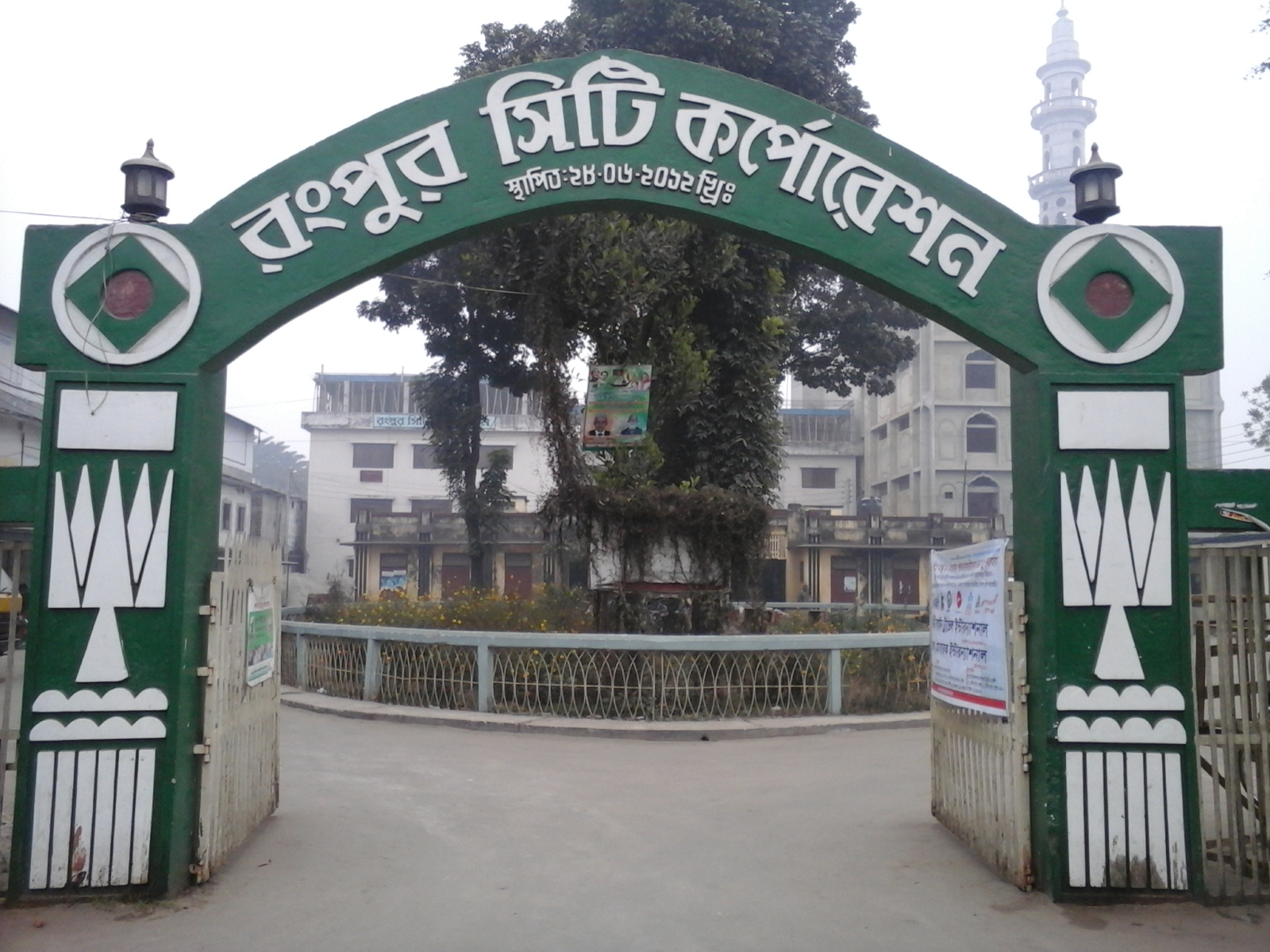
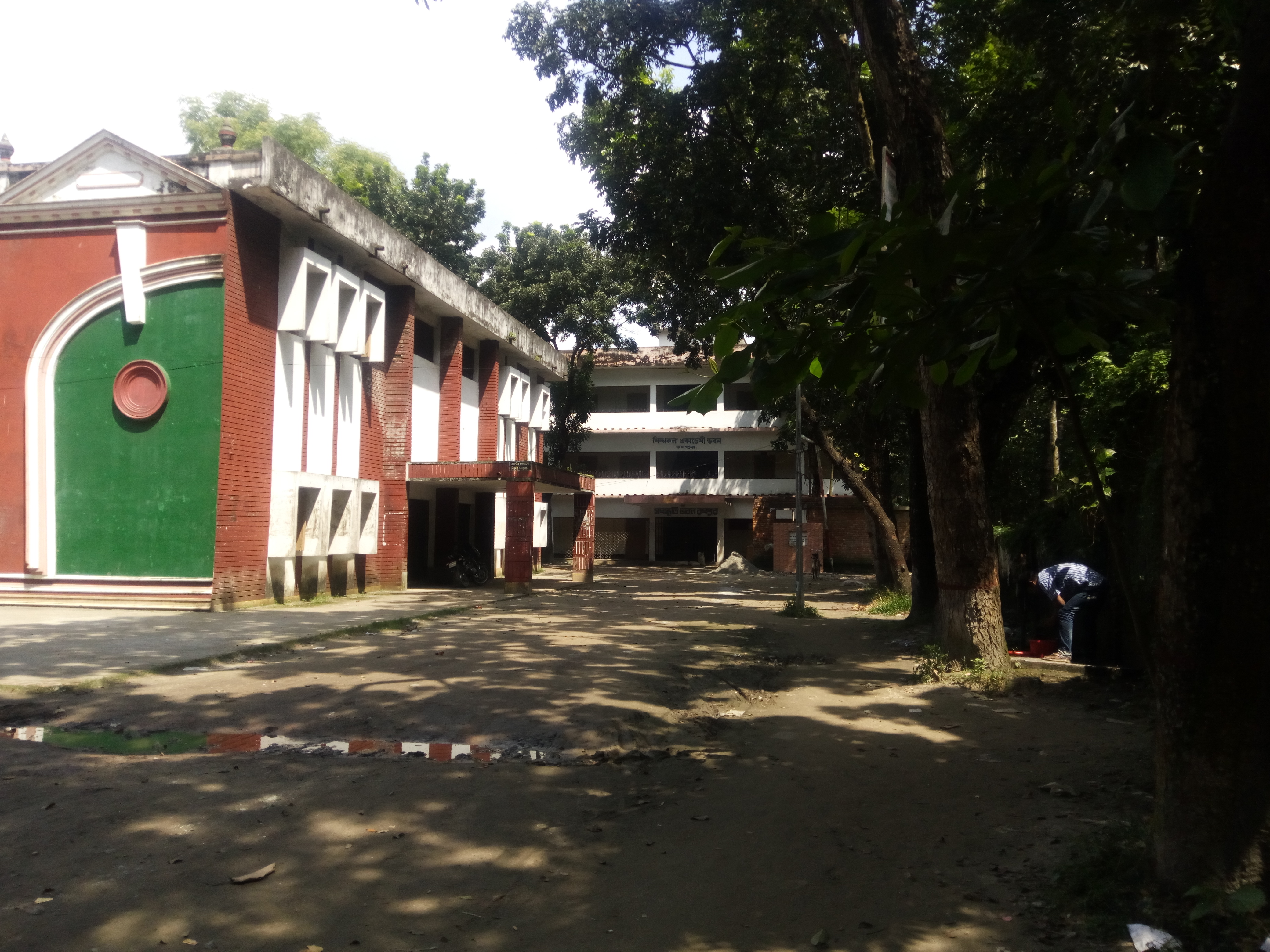
On Monday 25 May 2026, the administrator of Rangpur City Corporation (RCC), Advocate Mahfuz Un Nabi Don, said that waste from sacrificial animals in the city would be removed within 12 hours of the sacrifice. He said this at midday at an event held in the Rangpur Shilpakala Academy auditorium to hand out Eid gifts to the corporation's cleaners ahead of Eid-ul-Azha. Each of 855 cleaners received Tk 5,000. The 12-hour deadline was a target set out by the corporation and its administrator; Jagonews24 reported it three days before Eid, which Bangladesh celebrated on Thursday 28 May that year.
What the administrator told the cleaners
According to the Jagonews24 district correspondent in Rangpur, the administrator spoke directly to the cleaners. He stressed their part in keeping the city clean before and after Eid, and tied the waste-removal deadline to how sincerely they did their work. He said:
"We want to keep the city clean. Cleaners must play their part in this effort before and after Eid alike. I believe it will not take more than 12 hours to remove the waste from sacrificial animals if you carry out your duties sincerely. It is because you work tirelessly to keep the city clean that the Prime Minister has stood by you."
The 12 hours, in other words, were offered as an expectation, on condition that the cleaners did their duty with care. The report did not say from what time on the day of sacrifice the 12 hours would be counted, how many vehicles or extra workers would be deployed, or where in the city slaughter spots would be designated.
An Eid gift for 855 cleaners
The report said that for this Eid-ul-Azha each of the corporation's 855 cleaners was given Tk 5,000, the same amount they had received at the previous Eid-ul-Fitr. The money was presented as an Eid gift from the Prime Minister. The cleaners were delighted with the gift and wished the Prime Minister well. The Prime Minister at the time was Tarique Rahman, as a bdnews24.com report of March 2026 records.
Others present included Dr Nikhilendra Shankar Guha Roy, vice-president of the DAB central committee and president of its Rangpur city unit; the corporation's chief executive officer (additional charge) Rakib Hasan; chief estate officer Rubel Rana; and chief cleanliness officer Naim Hasan Khan.
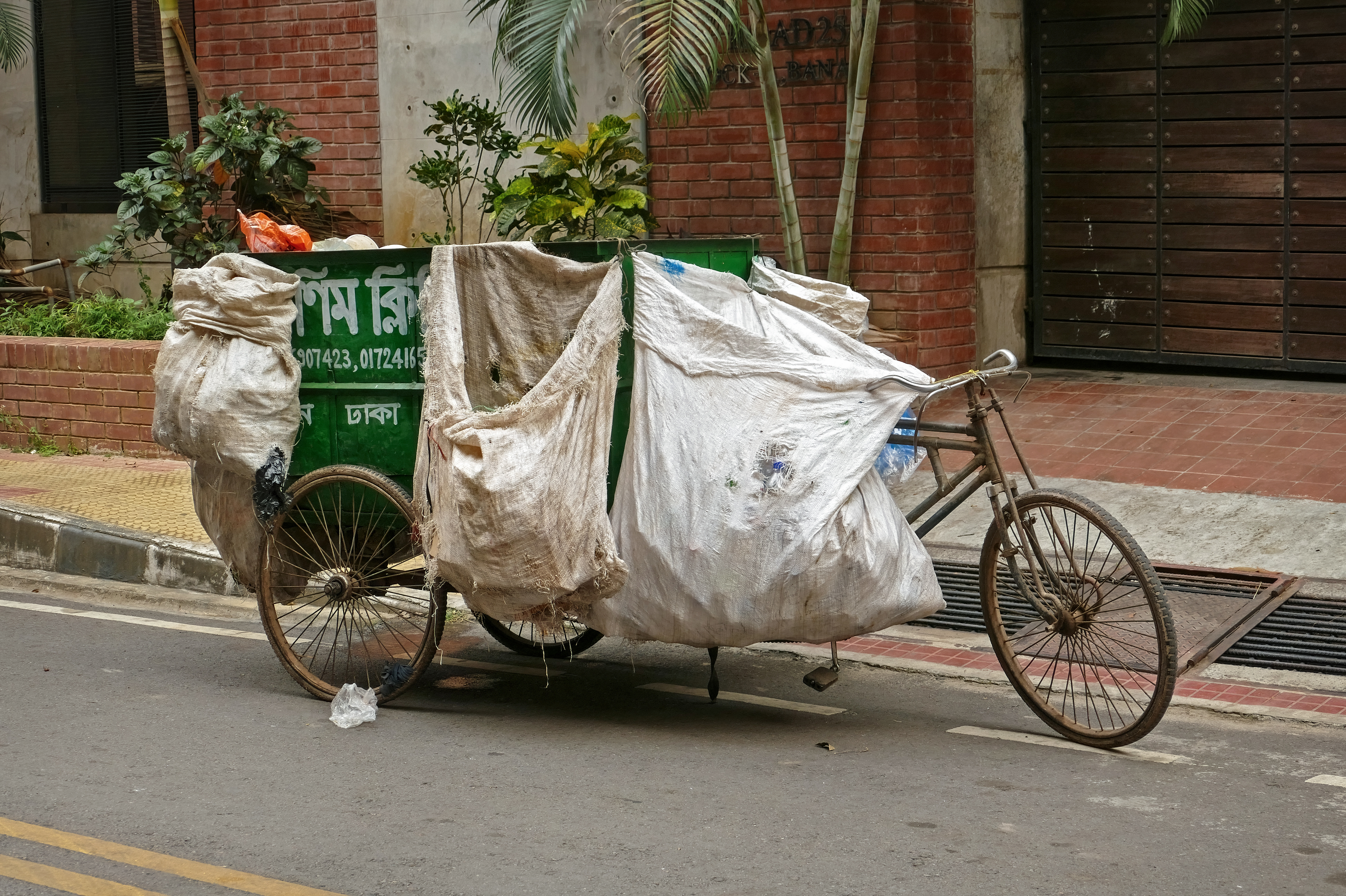
These cleaners do the core of the work of clearing sacrificial waste. In 2024 the corporation's instruction was that all waste, blood included, be cleared from neighbourhoods and streets; in its earlier Eid operations, set out below, the number of cleaners and the way their work was divided were at the centre of the plan.
Who the administrator is
Rangpur City Corporation had no elected mayor at the time; it was run by a government-appointed administrator. bdnews24.com reported on 14 March 2026 that a notification from the Local Government Ministry that day had appointed new administrators to the Barishal, Rajshahi, Mymensingh, Rangpur and Cumilla city corporations, to serve until the corporations were constituted or until further orders. The report named Mahfuz Un Nabi Chowdhury as Rangpur's administrator and described him as member secretary of the BNP's Rangpur city unit. Jagonews24 refers to him as Advocate Mahfuz Un Nabi Don.
The same bdnews24.com report said that administrators had earlier been placed in six city corporations, including Dhaka's, on 23 February 2026. Before that, after the interim government took office on 8 August 2024, the mayors of 12 city corporations were removed on 19 August 2024 and administrators appointed. So the 2026 Eid-ul-Azha clean-up in Rangpur was being run by a corporation under an administrator, working with its chief executive officer and its cleanliness department.
Rangpur City Corporation: from a 150-year-old municipality to a city corporation
Rangpur is a major city of northern Bangladesh and the administrative centre of Rangpur Division. It stands on the banks of the Ghaghat River, near the Teesta. Rangpur was declared a district seat on 16 December 1769 and became a municipality in 1869, making it one of the oldest municipalities in the country. The municipal office building went up in 1892; according to Bengali Wikipedia it was built on the land of a garden house donated by the zamindar of Dimla, and the municipality was raised to 'A' class in 1986. In 1984 the old greater Rangpur district was split into five districts: Gaibandha, Kurigram, Lalmonirhat, Nilphamari and Rangpur.
On 28 June 2012 the municipality was upgraded to a city corporation under the local government (city corporation) law, and the first election followed on 20 December that year. It is the country's tenth city corporation and the second largest by area, covering 205.70 square kilometres. Its area takes in 112 mouzas from 12 unions, ten of them in Rangpur Sadar plus Sarai in Kaunia and Kalyani in Pirgachha; seven of the unions lie wholly and five partly inside the city. The cantonment is excluded from the corporation. According to a 2020 report in the Daily Ittefaq, the city has 33 wards.
Because the city covers so much ground, it includes dense old neighbourhoods as well as semi-rural areas where households and farmers keep cattle and goats. A BSS report in May 2026 quoted farmers from the city's Mahiganj, Nazirerhat, Nisbetganj, Ashratpur, Deodoba Akalitari, Sareyartal and Amashu Kukrul areas who had prepared local and crossbred cattle and goats for that year's sacrifice. The pressure of Eid waste is therefore not confined to the city centre.
The corporation's services include solid waste management and street cleaning, drain cleaning and clearing waterlogging, and mosquito control. The Eid-ul-Azha clean-up is a large, time-bound version of that everyday duty. The corporation's first mayor was Sharfuddin Ahmed Jhantu (2012); Mostafizar Rahman Mostafa was elected mayor in 2017.
How the corporation cleared Eid waste in earlier years
Setting a deadline for clearing sacrificial waste was not new in Rangpur. On 1 August 2020, the day of Eid-ul-Azha, the Daily Ittefaq reported that the corporation had begun removing waste as announced, with the operation launched at midday from the city's Shapla Square. The then panel mayor, Mahmudur Rahman Titu, said about 200 tonnes of waste would be removed by the night of Eid. The city was using 120 trolleys, rickshaw vans and 25 trucks, and workers were collecting waste from house to house.
That year the 33 wards were divided into three zones for slaughter and quick waste removal. A total of 1,037 cleaners worked in the zones, and officers of the waste management branch supervised from a control room. In the panel mayor's words, if everyone was careful the waste could be removed in less than 24 hours.
Four years later, on Eid day, 17 June 2024, the Dhaka Tribune reported that the then mayor, Mostafizur Rahman Mostafa, had announced that all sacrificial waste in the city corporation would be cleaned within 12 hours. Launching the clean-up at Shapla Square, he said Rangpur City Corporation was one of the largest city corporations in the country, covering 200 square kilometres, and that more than 1,000 sanitation workers and several hundred trucks had been deployed.
Before that Eid, loudspeaker announcements had asked residents to put sacrificial waste in the corporation's designated dustbins, with a deadline of 5pm. The mayor directed that all waste, including blood, be cleaned from neighbourhoods and streets within the next 12 hours. The administrator's 12-hour target in 2026 thus followed the corporation's earlier practice: 24 hours had been the figure spoken of in 2020, and 12 hours in 2024 and 2026.
The numbers are worth setting side by side. In 2020 there were 1,037 cleaners in the field; in 2024 the mayor spoke of more than 1,000; in 2026 the Eid gift went to 855 cleaners. Whether these figures are directly comparable, for example whether temporary or additional workers joined on Eid day, the 2026 report does not say.
Sacrificial animals in Rangpur Division this year
The supply of animals for sacrifice in the Rangpur region was large before Eid. On 7 May 2026 the national news agency BSS, citing the divisional office of the Department of Livestock Services, reported that demand for sacrificial animals in Rangpur Division that year was 1,406,657, against 2,023,067 animals available, leaving a surplus of 556,410. The division's eight districts had about 21,000 farms of all sizes, about 4,000 of them registered farms in Rangpur district alone.
BSS also gave the department's district-by-district figures:
- Rangpur: 366,591 animals; demand 226,999
- Gaibandha: 177,900 animals; demand 137,500
- Kurigram: 336,919 animals; demand 261,246
- Nilphamari: 282,850 animals; demand 232,676
- Lalmonirhat: 206,462 animals; demand 152,884
- Dinajpur: 426,523 animals; demand 273,262
- Thakurgaon: 95,436 animals; demand 78,843
- Panchagarh: 130,303 animals; demand 103,650
According to the same report, Rangpur district had a surplus of more than 140,000 animals over its own demand. The previous year about 1.5 million animals had been sacrificed across the division's eight districts. Some 250,000 farmers had prepared around 850,000 cattle for commercial sale, and more than 200,000 households were getting about a million cattle and goats ready for market. Goats and sheep accounted for more than 300,000 of the animals prepared.
Dr Mohammad Abdul Hai Sarkar, divisional director of the Department of Livestock Services in Rangpur, told BSS that after meeting the division's needs there would be a surplus of more than 550,000 animals that could be sent to other parts of the country. Farmers said higher feed prices had raised their costs and expected prices to be higher than the year before. Because demand was strongest for local and crossbred cattle, farmers had begun fattening such animals months in advance.
The national count and the government's preparations
The national figures came from Mohammad Amin Ur Rashid, minister for fisheries and livestock and for agriculture. The Business Standard Bangla reported that at a briefing at the Ministry of Fisheries and Livestock on 3 May 2026 he said the likely demand for sacrificial animals that year had been put at 10,106,334, against 12,333,840 animals available, leaving a surplus of about 2,227,506.
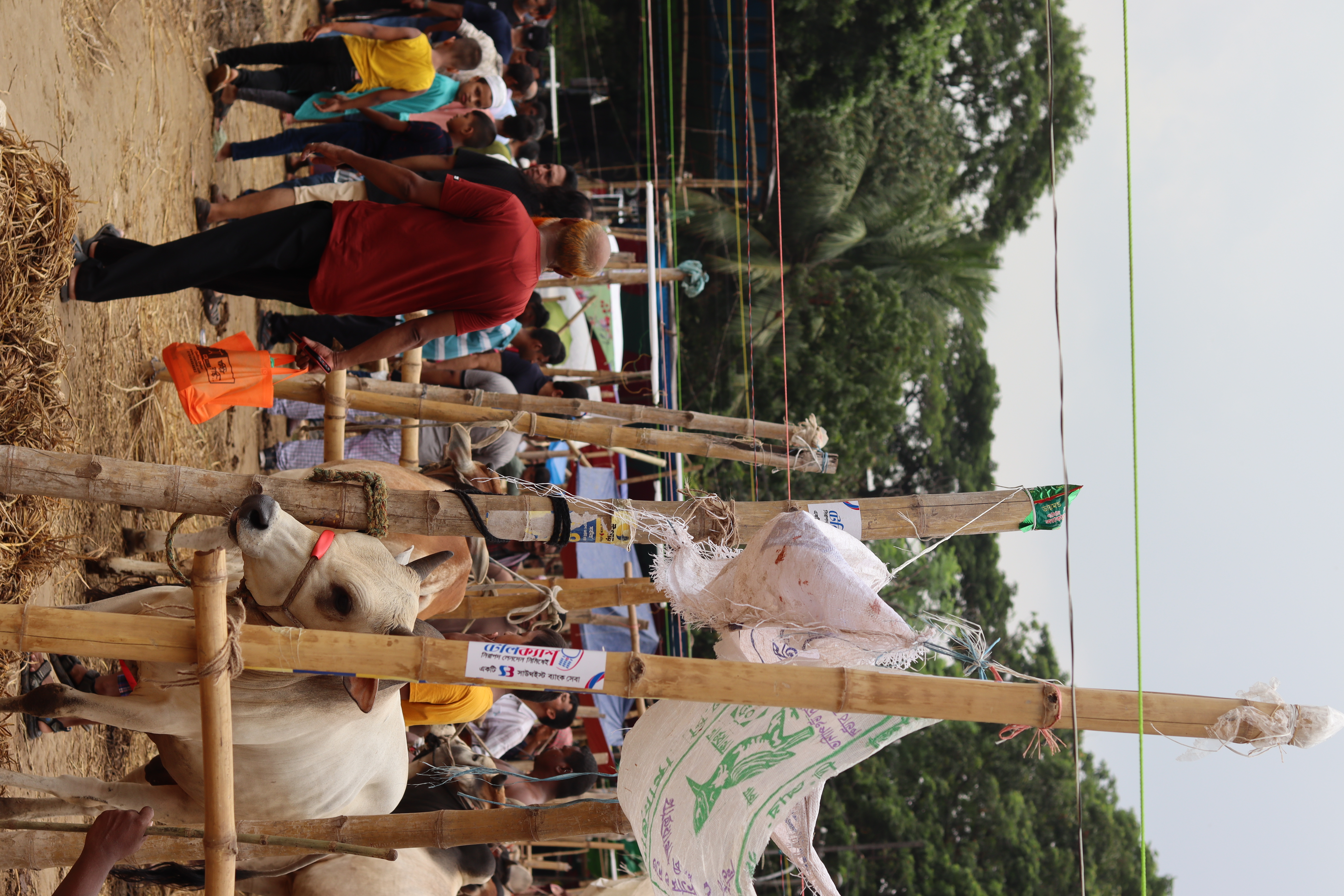
By the minister's count, the animals fit for sacrifice included 5,695,878 cattle and buffaloes, 6,632,307 goats and sheep, and 5,655 animals of other species. More than 3,600 cattle markets would be held across the country, he said, 27 of them in Dhaka: 16 in the North City Corporation and 11 in the South. Twenty veterinary medical teams were to be on duty at these markets around the clock.
Several other decisions were announced at the briefing. To protect domestic farmers, the minister said, a policy decision had been taken not to hold cattle markets in border areas. Online sales would continue, with no toll or market fee on animals bought online. Professional and occasional butchers and workers were being trained so that hides would not be damaged. The government would take a firm stand against extortion from trucks carrying animals, and law enforcement would be on watch at the markets throughout.
Cattle markets are a source of waste too. Dhaka North City Corporation's preparations for 2026 included separate equipment for clearing market waste as well as sacrificial waste, as the next section shows.
Dhaka's preparations on the same day
On the morning of 25 May, the same day as the Rangpur announcement, BSS published a special report on the preparations of Dhaka North City Corporation (DNCC); the Daily Ittefaq carried the same details at midday. They show the plan of one of the country's largest city bodies, a useful yardstick for Rangpur's.
According to DNCC's waste management department, the corporation had removed 20,889 tonnes of sacrificial waste at the previous Eid-ul-Azha: 10,616 tonnes on Eid day, 7,353 tonnes the next day and 2,922 tonnes on the third day. It aimed to remove roughly the same amount in 2026. It planned to have about 16,000 people on the job: its own 6,500 cleaners, 4,500 workers who collect household waste, and 5,500 volunteers to supervise.
DNCC's preparations included:
- distributing 1.63 million polythene bags for waste
- 3,600 bags (25 kg each) of bleaching powder to spray as a disinfectant after blood is cleared
- 752 vehicles in all: 405 hired, 261 of its own and 86 under private management
- a temporary central control room at Nagar Bhaban in Gulshan-2
- training for 1,000 meat processors across 54 wards in proper slaughter and waste handling
- awareness messages through imams in their sermons, rallies, the media and loudspeaker announcements
DNCC public relations officer Md Zobayer Hossain said 1,546 shovels, 1,284 baskets, 1,348 cans of phenyl and 3,900 cans of Savlon would also be handed out for clearing market and sacrificial waste and washing the streets. The administrator, Md Shafiqul Islam Khan, was to launch the clean-up at midday on Eid. The Rangpur report carried no such detailed list; its main points were the cleaners' Eid gift and the 12-hour target.
Eid-ul-Azha 2026 and the meaning of the sacrifice
On the evening of Monday 18 May 2026 the National Moon Sighting Committee met in the Islamic Foundation's conference room at the Baitul Mukarram national mosque. Bangla Tribune reported that after the meeting it was announced that the moon of Dhul Hijjah had been sighted, so Eid-ul-Azha would be celebrated across the country on Thursday 28 May. Religious Affairs Minister Kazi Shah Mofazzal Hossain Kaikobad gave reporters the news after the meeting. The Rangpur event was thus held three days before Eid.
In Islam, Eid-ul-Azha commemorates the sacrifice of the Prophet Ibrahim (peace be upon him), his wife Hajera and their son Ismail. Muslims offer animals in sacrifice at this time to seek nearness to Allah. In a year when the likely demand for sacrificial animals in the country exceeded ten million, city corporations set deadlines for clearing the waste ahead of Eid: Dhaka North was training meat processors in slaughter and waste handling, while Rangpur City Corporation had in earlier years asked residents to use designated dustbins.
In 2024 Rangpur City Corporation had also ordered that all waste, blood included, be cleaned up; in 2026 Dhaka North prepared bleaching powder to spray after blood was cleared. On 25 May 2026 in Rangpur, the administrator's message to the cleaners set out the same duty: keep the city clean before and after Eid, and clear the waste of sacrificial animals within 12 hours.
Photo: Mashkawat.ahsan / Wikimedia Commons (CC BY-SA 4.0)
Sources: Jagonews24, bdnews24.com, Bangladesh Sangbad Sangstha (BSS), The Business Standard Bangla, The Daily Ittefaq, Dhaka Tribune, Bangla Tribune, Wikipedia

Comments
(0)