
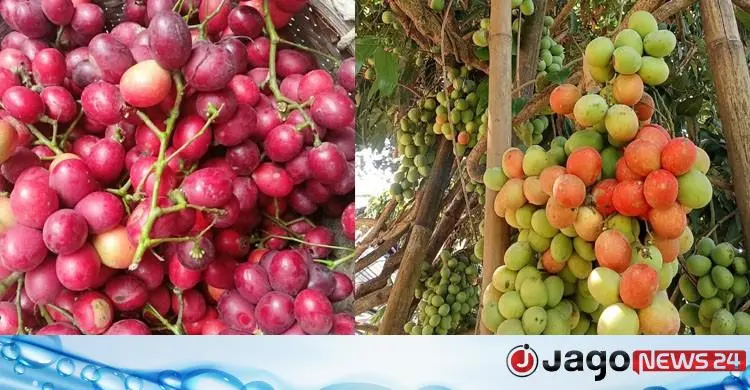
Rosko, also called blood fruit, is a tasty and popular wild fruit of the Chittagong Hill Tracts. The red, sweet-sour fruit began reaching markets in mid-March, and sellers are asking Tk 400 to 500 a kg for it. That makes it dearer than imported apples, which sell at Tk 300 to 350 a kg, even though rosko grows naturally in the hill forests.
Rosko grows in bunches on climbing vines in the hill forests and turns a deep red or vermilion colour when ripe. It is known as "rosko" in the Chakma language, "taithak" in Tripura and "loskor" among the Marma. Because of the dark red juice inside, it is also called "roktofol" or "roktogota" (blood fruit).
The fruit grows naturally in deep forests and on hill slopes across the Chittagong Hill Tracts, including Rangamati, Khagrachhari and Bandarban. It is mainly available from March to May. Ripe fruit can be eaten straight away, and many people also make it into a mash (bhorta) or jam.
No research yet, but good demand
Md Moniruzzaman, additional director of the Department of Agricultural Extension (DAE) in Rangamati, said: "No research has been done on this fruit yet. It is seen in different areas of the three hill districts. There is good demand in the market too. The climate of the Chittagong Hill Tracts suits rosko cultivation, so farmers could profit from growing it commercially."
Apart from the weekly market days of Wednesday and Saturday, the fruit is sold at Banarupa, Rajbari, Kalyanpur, College Gate and Tabalchhari markets in Rangamati town. Sellers said demand is high and that it sells for Tk 200 to 500 a kg depending on size.
Subal Chakma, a seller at Banarupa market, said: "The inside of the fruit is full of juice as red as blood. People say eating it cures anaemia, so many eat it eagerly. It used to grow plentifully in the hill forests, and back then it did not fetch much. Now the vines are rarely seen and the price is much higher. At first I sold it at Tk 500 a kg. Now I am selling it at Tk 400."
Farmers begin planting vines
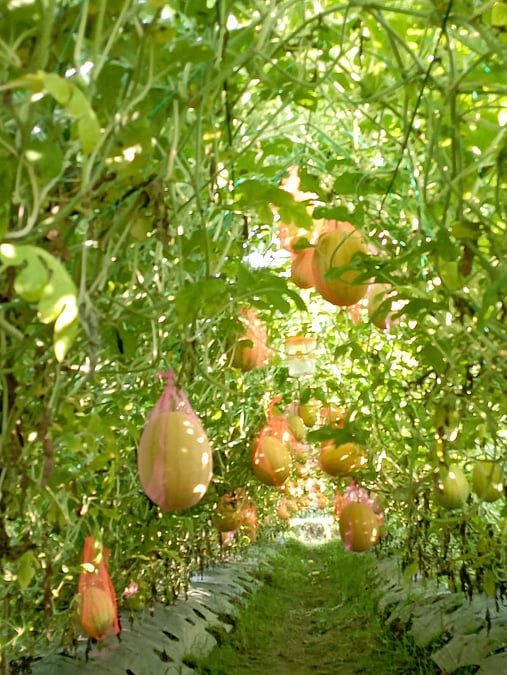
There is growing potential to grow the fruit commercially in the hills, as demand is spreading beyond the hills to Dhaka, Chattogram and other lowland areas. Many people are sowing its seeds beside their homesteads with commercial production in mind.
Subrata Bikash Chakma of Krishnamachhara in Ghilachhari union, Naniarchar upazila, has grown the fruit beside his house. "This vine is more than 18 years old," he said. "It bore fruit six to seven years after I planted it from seed. So far I have sold more than Tk 50,000 worth of fruit."
Lakshmi Kumar Chakma of Mountola in Kutukchhari union, Rangamati Sadar upazila, has one rosko vine, which has been bearing fruit for 15 years. This year he hopes to sell Tk 70,000 worth of rosko, and he has planted several more vines to expand production.
Explaining that the vine grows on large trees in natural forest, Lakshmi Kumar said: "To grow this fruit you need big, long-lived trees. The vine usually grows well on mango trees. It lives for years and years without harming the big tree."
Agriculture officer Moniruzzaman said: "In terms of nutrition, besides fibre the fruit contains vitamin A, vitamin C and vitamin B6. Hill people use the vine as a medicine for jaundice and itching. Eating the fruit also cures anaemia."
Source: Jagonews24. First published in Bengali on The Agro News.
Comments
(0)