
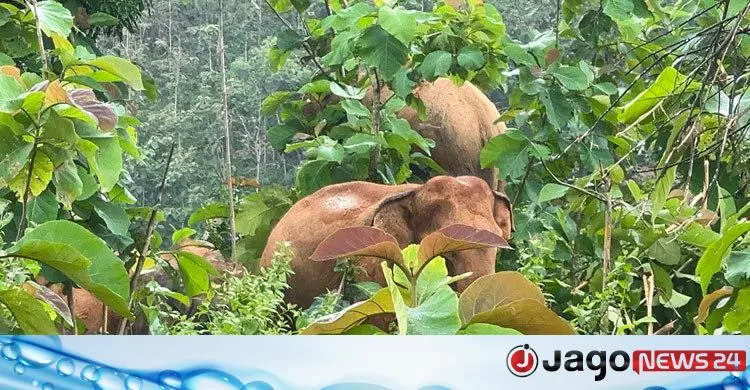
Constant conflict with people has put the wild Asian elephant, a critically endangered species, in a severe survival crisis in the hill district of Rangamati. Habitat destruction, acute food shortages and climate change have put the elephants' lives at risk. With ancient corridors cut in parts of Kaptai, Langadu and Barkal upazilas, herds are raiding villages, and conflict between people and elephants has become a daily event across the hills.
According to the forest department, unplanned development, deforestation and electrified traps have killed at least 13 elephants in the Rangamati hills over the past decade and a half, eight to ten of them in the past 10 years alone. Over the same period at least 36 people have died in elephant attacks. Only 40 to 50 elephants are thought to remain in the whole of Rangamati.
Herds in Kaptai and Langadu
The Chattogram Hill Tracts South forest division estimates that about 36 elephants roam the Kaptai area in several groups. The Chattogram Hill Tracts North forest division says 12 to 15 elephants are active in Langadu and Barkal, most of them in parts of Bhasanyadam union in Langadu upazila.
To ease the conflict, an Elephant Response Team (ERT) of local residents was set up in Langadu upazila in 2022 with the forest department's help. Its job is to alert villagers when elephants come, help the animals return to the forest without harming them, and inform the forest department if an elephant is sick.
ERT member Mainul Islam told Jagonews: "Our team has 18 members. Our main work is to make people aware so that elephants are protected. We work day and night to resolve conflict between people and elephants."
Corridors blocked, food gone
The conflict has intensified as human activity in the hills has grown. Cutting hills for roads, setting up tourist spots and unregulated settlement are blocking the routes elephants have used for generations. The clearing of natural forest and plantations of teak and eucalyptus are exhausting the elephants' main food sources.
In winter and the dry season, hill streams dry up and herds enter villages looking for water. When they raid crop fields and villages for food, people attack them to save their crops and lives, with tragic results for both sides.
Environmentalists say conserving the Asian elephant is essential for the ecological balance of the hill region, and that without quick, coordinated and effective action there is a serious risk of the animal disappearing from the Rangamati hills for good.
Dr Supriyo Chakma, assistant professor in the Department of Forestry and Environmental Sciences at Rangamati Science and Technology University, said the way forests in the elephants' natural habitat are being cleared for plantations, roads and homes could quickly drive them to extinction. Without priority for protecting their food and movement routes, it will be impossible to save them, he said.
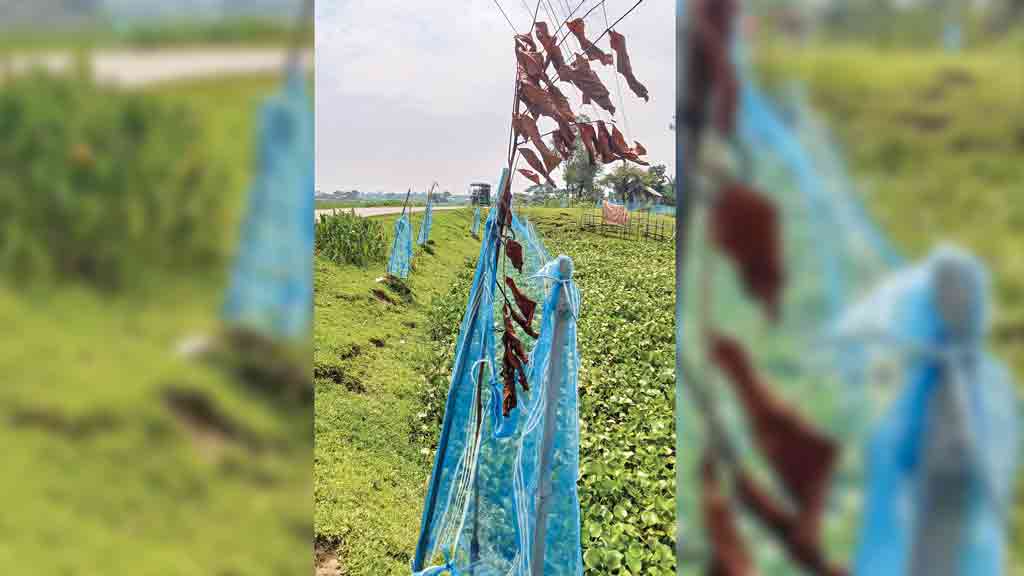
SM Sajjad Hossain, divisional forest officer of the Chattogram Hill Tracts South forest division, said the situation in Kaptai had improved somewhat since solar fencing was installed. Trees elephants like are being planted to ease their food shortage, and awareness programmes are being run in villages so that no one attacks elephants.
Source: Jagonews24. First published in Bengali on The Agro News.

Comments
(0)