
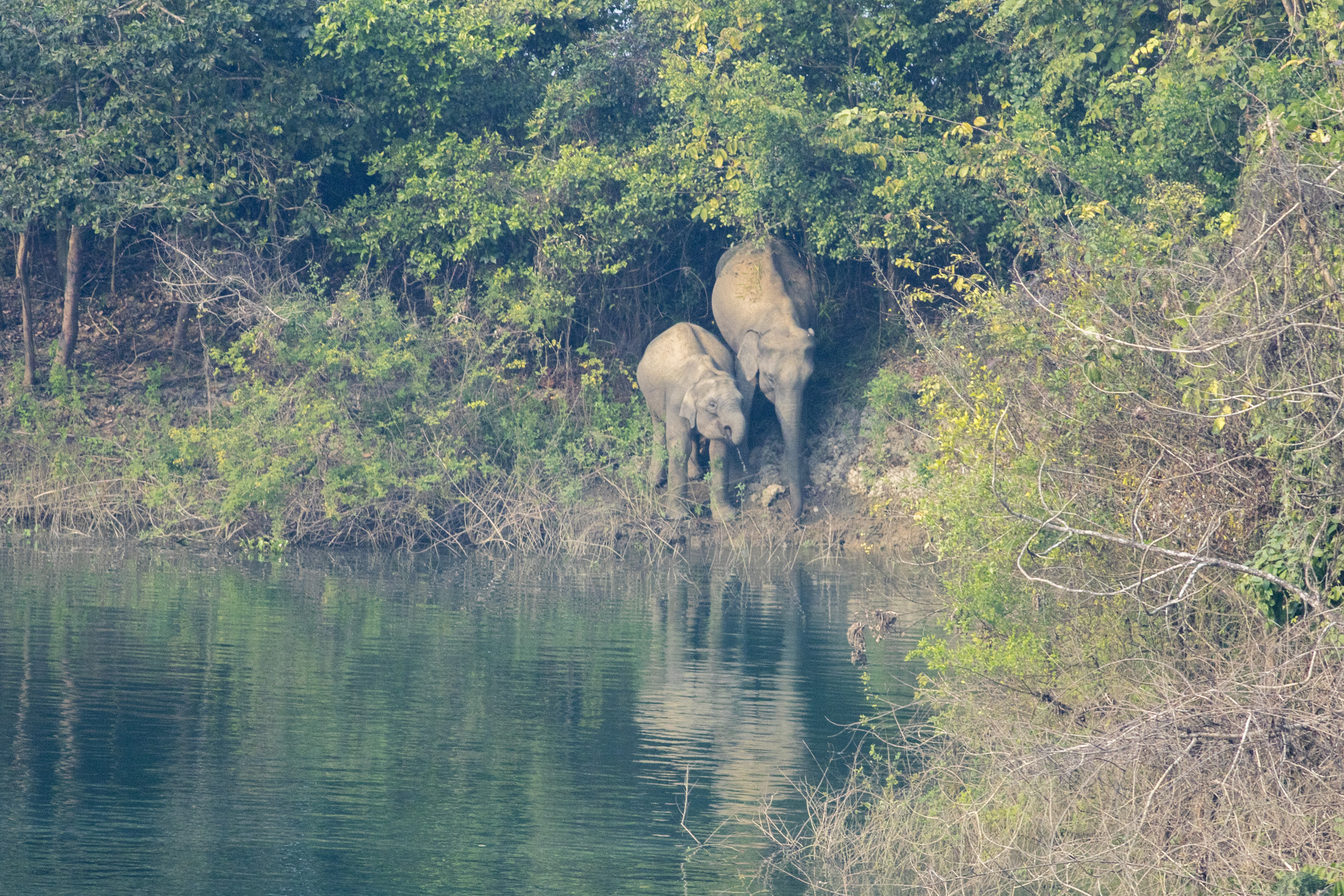
A herd of wild elephants killed a woman and her young daughter around dawn on Thursday, 30 April 2026, in Khuniapalong union of Ramu upazila in Cox's Bazar. The herd of three elephants entered a settlement known as Syed Colony in West Khuniapalong, broke the boundary walls of several homes and uprooted trees. The woman's husband escaped with the couple's six-year-old son, but the mother and daughter came face to face with the elephants and died on the spot. Police prepared an inquest report and handed the bodies to the family, and the Forest Department said the herd had been driven back into the deep forest.
The deaths were reported the same day by Jagonews24, Prothom Alo, Bangla Tribune, Jugantor and The Daily Ittefaq. The account below follows those reports. It does not name the mother and daughter: the newspapers gave their names and ages differently, and one of them was a small child.
How the attack unfolded at Syed Colony
Local residents told reporters that the herd entered the settlement suddenly in the early morning. The elephants broke down the boundary walls of several houses and pulled up trees around them, and panic spread through the area within moments. The reports differed slightly on the time. Jagonews24 put it at about 5.30am, Bangla Tribune and Jugantor at about 5am and Prothom Alo at about 5.15am, while The Daily Ittefaq reported an earlier hour, about 2am in the night between Wednesday and Thursday.
Jubairul Islam, a local madrasa teacher, told Jagonews24 and Bangla Tribune that Ekram Mia and his wife came out of their house when they heard people shouting, and that their two children were with them. Seeing the danger, Ekram Mia got away quickly with their six-year-old son, but his wife and their small daughter were caught in the attack and were killed where they stood. Ittefaq, citing local resident Belal Uddin, reported that two of the elephants charged towards the family and that the father took shelter behind the house with the boy.
Prothom Alo described the same moments from the father's side. It reported that Ekram Mia, aged 35, had come out with his wife and two children on hearing people shouting and found himself in front of the herd. He picked up his son, who was close to the elephants, and ran to a safe distance, and from there he saw the elephants attack his wife and daughter. He was unable to do anything to save them. Belal Uddin, a farmer who lives in Syed Colony, told the paper that he too had come out on hearing the commotion and found himself in front of the elephants.
The newspapers gave the woman's age as 25 or 27 and the daughter's as between two and three years. According to Jagonews24, Bangla Tribune and Jugantor, the family were Rohingya and had built a house on Forest Department land, where they had lived for several years.
What local representatives, forest officials and police said
Joynal Abedin, a member of the Khuniapalong union parishad, told Jagonews24 that there were three elephants in the herd and that they behaved very aggressively. Because the mother and daughter came upon them suddenly, he said, they had no chance to escape. Afterwards the elephants damaged houses, ate fruit from the trees nearby and went off into the neighbouring hills. Bangla Tribune, Jugantor and Prothom Alo reported that the fruit they ate was mango and jackfruit, and Prothom Alo quoted him as saying that the herd was hungry.
Abdul Haque, chairman of the Khuniapalong union parishad, told Jagonews24 that panic spread when the herd suddenly entered the settlement and began wrecking houses, and that the mother and daughter were killed on the spot.
Md Tosaddek Hossain, officer of the Dhoapalong range of the Cox's Bazar South Forest Division, told Jagonews24, Bangla Tribune and Ittefaq that the herd was chased into the deep forest immediately after the incident and that the necessary steps were being taken to control the movement of wild elephants. Speaking to Prothom Alo, the range officer said the herd had come down to the settlement in search of food, and that the affected family would be given the necessary financial assistance. None of the reports gave an amount.
Monirul Islam Bhuiyan, officer in charge of Ramu police station, told Jagonews24 that police went to the scene on hearing of the deaths and prepared an inquest report, and that the bodies were to be buried as the family decided. Md Farid, the station's inspector (investigation), told Prothom Alo, Jugantor and Ittefaq that the inquest had been completed at the scene and that the bodies had been handed over to the family; Prothom Alo reported that this was done at midday. He said a case of unnatural death would be filed.
Jugantor also reported a complaint from local people: in recent days, they said, the herd had been roaming the Khuniapalong and Dakshin Mithachhari areas in search of food, leaving the whole area in fear and, in their words, putting public safety at risk. The reports carried no further comment from the Forest Department on that complaint.
Ramu upazila and Khuniapalong union
Ramu is one of the upazilas of Cox's Bazar district, in the far south-east of Bangladesh. According to Banglapedia, the national encyclopaedia, it covers 391.71 square kilometres and lies between Chakaria and Cox's Bazar Sadar upazilas to the north, Naikhongchhari and Ukhia upazilas to the south, Naikhongchhari to the east, and Cox's Bazar Sadar and the Bay of Bengal to the west. Ramu thana was formed in 1908 and became an upazila in 1983. It has 11 unions, 39 mouzas and 102 villages, and its main river is the Bakkhali.
Banglapedia records a population of 266,640 in the 2011 census. Agriculture was the main source of income, at 47.01 per cent, and the main crops were paddy, betel leaf and rubber, with betel leaf, shrimp and rubber among the main exports. Khuniapalong, where the attack took place, covers 19,018 acres in Banglapedia's union table, with 18,497 men and 17,818 women recorded in 2011 and a literacy rate of 28.1 per cent. Dakshin Mithachhari, another Ramu union that residents named as part of the herd's recent range, covers 10,088 acres.
Elephants have been seen in Khuniapalong before. On 21 March 2020 the daily Samakal reported that a wild elephant had been found dead in a paddy field in the Goalia area of Khuniapalong union, one of two deaths found that morning in Ramu and Chakaria. Md Humayun Kabir, then divisional forest officer of the Cox's Bazar South Forest Division, said it was a male of about 30 years and that the cause would be known from the post-mortem report. Rashedul Majid, chief executive of the Cox's Bazar environmental group Environment People, told the paper that elephant habitat had been destroyed and that elephants short of food were coming into settlements.
The elephants of Cox's Bazar
The forests of Cox's Bazar hold a large share of the country's remaining wild elephants. On 4 February 2025 Prothom Alo reported that Md Monirul Islam, assistant conservator of forests for the Teknaf-Ukhiya circle of the Cox's Bazar South Forest Division, put the number of elephants in Cox's Bazar at 203, including 25 calves, of which 37 lived in the forests of Teknaf and 30 in those of Ukhiya. He said an elephant needs to walk about 87 kilometres a day, but that because refugee camps had been built inside the forest, elephants in Teknaf could not move towards Ukhiya, nor those in Ukhiya towards Teknaf.
The same report said 34 Rohingya refugee camps had been set up on 7,000 acres of forest land in Ukhiya and Teknaf, blocking five elephant corridors and more than 15 water reservoirs, and that more than 60 elephants in the area faced severe shortages of food and water. According to the Forest Department, Cox's Bazar has eight elephant corridors, five of them in Ukhiya and Teknaf: three at Kutupalong in Ukhiya had been blocked for seven years by the camps, and two at the Ghumdhum border had been closed after Myanmar built a barbed-wire fence.
Prothom Alo also reported that seven elephants had died in the previous year from electric-wire traps set by people, gunfire, accidents and disease: two in Teknaf, three in Ramu, and two in Eidgaon and Chakaria. Forest Department records showed 135 people killed by elephants in the previous six years, while 16 cases had been filed over elephant killings and not one had been resolved. Prantosh Chandra Roy, assistant conservator of forests of the Cox's Bazar North Forest Division, said the department had removed 52 electric-wire traps, each about a kilometre long, over three years, and that 25 elephant calves had been born in the forest in that time.
Citing IUCN and Forest Department officials, the paper said 23 people, 12 of them Rohingya refugees, were killed in elephant attacks between August 2017 and February 2018, and that 375 incursions by elephants into areas around the camps were recorded in that period.
The Asian elephant in Bangladesh
The elephants of Bangladesh are Asian elephants (Elephas maximus). In a 2016 study published by IUCN Bangladesh, the country's resident wild population was counted at 268, with a further 93 migratory elephants that cross the borders and 96 captive elephants. The same publication describes the species as critically endangered in Bangladesh and listed in CITES Appendix I. The study produced route maps for 44 forest ranges, identified and mapped 12 elephant corridors, and found 57 crossing points on the borders, of which 39 are natural crossings that elephants use regularly, seven are used occasionally and 11 have been abandoned.
A Dhaka Tribune report of 7 April 2018 said Bangladesh had more than 500 wild elephants in the mid-20th century. Of the 12 corridors in the IUCN survey, it said, five are in the Cox's Bazar North Forest Division, three in Cox's Bazar South and four in Chittagong South. Mongabay reported in March 2025, citing IUCN data, that elephants have been recorded in 44 forest ranges covering 1,518 square kilometres.
Worldwide the Asian elephant has been listed as Endangered on the IUCN Red List since 1986, because its population has fallen by at least 50 per cent over the last three elephant generations, about 60 to 75 years. The main threats are the loss, degradation and fragmentation of its habitat, and poaching. The wild population was estimated at 48,323 to 51,680 animals in 2019.
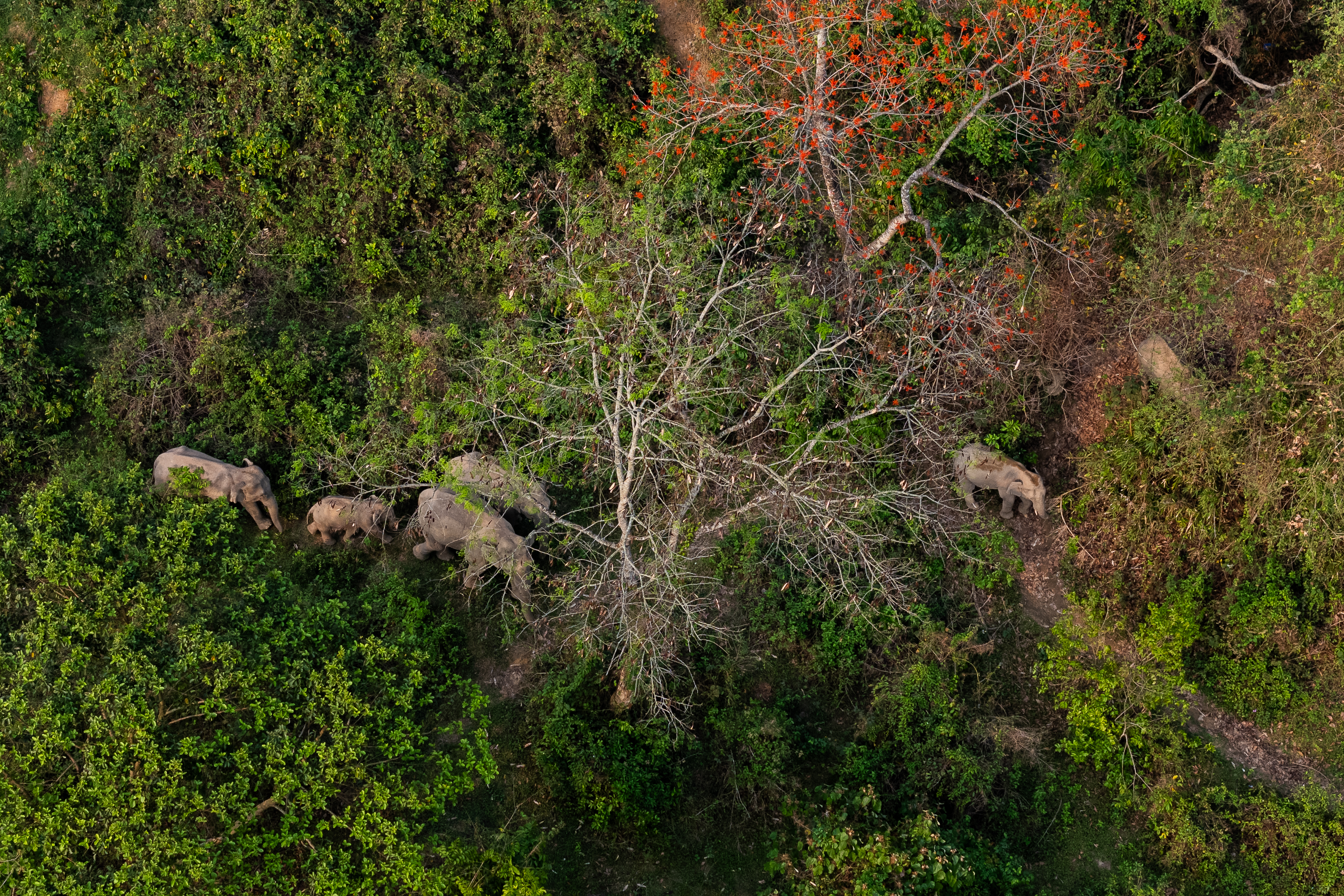
Banglapedia notes that adults stand about 2.5 metres tall, that herds usually number 5 to 20 animals, and that elephants are entirely herbivorous, eating grasses, banana plants, bamboo, bark, leaves, fruits and flowers. A cow carries a single calf for 20 to 22 months, and elephants live about 60 to 70 years. Once found in the forests of Sylhet and Madhupur, wild elephants now survive only in parts of Chattogram and the Chittagong Hill Tracts, with herds occasionally crossing from India into the northern border areas. An Asian elephant can eat up to 150 kilograms of plant matter a day and spends 50 to 75 per cent of the day feeding. Cows and calves move in family groups, while young bulls leave their mothers on reaching adolescence.
Why elephants and people meet
Conservationists and officials have long linked attacks of this kind to shrinking and broken-up forest. The IUCN survey quoted by the Dhaka Tribune in April 2018 said elephants always follow their traditional routes and corridors, and that the Kutupalong camp, in a reserved forest of the Cox's Bazar South Forest Division, lay within an active corridor where cleared hills had opened gaps through which elephants could enter. The paper reported that at least 93 people had been killed in human-elephant conflict across Bangladesh over the previous 15 years, not counting the deaths in the camps.
The toll on elephants has also been heavy. Mongabay reported in May 2023 that at least 50 elephants were killed between 2017 and 2021 in conflicts with people and by electrocution, 34 of them in 2021 alone. Monirul H. Khan, a professor of zoology at Jahangirnagar University, told Mongabay that farmers often kill this flagship animal of the forest to save their crops, and that wild elephants will certainly come into croplands where there is plenty of food.
Development has added pressure. In March 2025 Mongabay reported that about 27 kilometres of the 103-kilometre Chattogram-Cox's Bazar railway run through three protected areas, Chunati Wildlife Sanctuary, Fasiakhali Wildlife Sanctuary and Medhakachhapia National Park. Mohammed Mostafa Feeroz, a zoology professor at Jahangirnagar University, said that if the line had been taken five kilometres away from its present location, the elephant corridor could have been avoided.
In June 2024 Prothom Alo reported, citing the Forest Department, that between 90 and 110 people are killed each year in Bangladesh by attacks of elephants, bears, tigers and crocodiles.
Compensation for families of victims
Bangladesh pays compensation for deaths and injuries caused by certain wild animals under a set of rules on compensation for loss of life and property in wildlife attacks, the Bonno Prani Dwara Akranto Janmaler Khotipuron Bidhimala, 2021. Prothom Alo reported in June 2024 that the rules cover attacks by tigers, elephants, crocodiles and bears, and that a 2021 amendment added attacks by any animal in a safari park.
According to that report, the rules provide:
- 3 lakh taka (300,000 taka) to the family of a person killed by one of these animals;
- up to 1 lakh taka (100,000 taka) for a person seriously injured;
- up to 50,000 taka when the property of a person or organisation is damaged in a settlement outside government forest land.
Mongabay reported in March 2025 that the compensation package was introduced in 2010 and that the 2021 change raised the payment for a death from 100,000 taka and the payment for an injury from 50,000 taka. Under the procedure described by the Forest Department to Prothom Alo, a victim's family must apply on a prescribed form with supporting evidence; the paper reported that because the process is complicated, many people are unable to apply.
The new wildlife law also makes compensation part of the Forest Department's work. Section 5 of the Wildlife (Conservation and Security) Act, 2026 lists among the department's duties awareness, compensation, legal process, incentive programmes and the help of volunteers to resolve human-wildlife conflict and secure coexistence. Section 9 provides for a Wildlife Trust Fund whose purposes include work on the coexistence of wildlife and people.
What the law says about wild elephants
On the date of the Ramu attack the law in force was the Wildlife (Conservation and Security) Act, 2026 (Act No. 86 of 2026), dated 10 April 2026. Under its first section it is deemed to have taken effect on 7 January 2026. It repealed the Wildlife (Conservation and Security) Ordinance, 2026, which had been in force since 7 January, and the Wildlife (Conservation and Security) Act, 2012. Prothom Alo reported in December 2025, when the ordinance was approved, that tigers and elephants were placed together as flagship species in Schedule 1(a).
The Act's provisions on elephants, as set out in the official text:
- Section 41(1): no person may hunt a tiger or an elephant listed in Schedule 1(a).
- Section 44: hunting a tiger or elephant is punishable with imprisonment of two to seven years and a fine of 1 lakh to 10 lakh taka; a repeat offence carries up to 12 years and a fine of up to 15 lakh taka.
- Section 46: an offence under section 41(1) is cognisable and non-bailable.
- Section 12: where a wild animal becomes a threat to human life, a wildlife warden, with the approval of the chief wildlife warden or an authorised officer and stating the reasons, is to take effective steps to remove, cull or rehabilitate it, and must report the matter to the advisory board and the scientific committee within 15 days.
- Sections 5 and 24: the Forest Department is to identify and protect wildlife habitats and corridors, and the government may declare core zones, buffer zones and corridors by gazette notification.
In the Ramu case, the Forest Department said its staff had driven the herd back into the forest, and none of the reports said that any action had been taken against the elephants.
Response teams and earlier efforts to reduce conflict
The best-known effort to protect people from elephants in Cox's Bazar began in the Rohingya camps. On 2 March 2018 IUCN and the UN refugee agency UNHCR announced a plan for the Kutupalong-Balukhali settlement, home then to about 560,000 refugees, after at least 10 deaths in human-elephant incidents there. An IUCN survey of a 70-square-kilometre hilly area found that up to 45 elephants could be active around the site. The plan provided for watch-towers at key points, Elephant Response Teams of 10 refugee volunteers each, clearly marked elephant routes so that people knew which areas to avoid, and awareness campaigns. Raquibul Amin, IUCN's country representative, said the immediate measures were only a band-aid on a much wider environmental problem. The Dhaka Tribune reported in April 2018 that IUCN had formed 25 response teams around the camp and planned 54 bamboo watch-towers.
The government adopted a ten-year elephant conservation action plan in 2018, Mongabay reported. Under the Sustainable Forests and Livelihoods (SUFAL) project, the Forest Department and IUCN Bangladesh formed Elephant Response Teams in conflict-prone areas; their local volunteers share information on the movement of herds and teach residents how to respond safely when elephants come near. In May 2023, however, S. M. Munjirul Hannan Khan, executive director of the conservation group NACOM, told Mongabay that the teams were not working properly because their members served as volunteers without pay or other benefits.
Photo: AKM Emdadul Islam Bitu / Wikimedia Commons (CC BY-SA 4.0)
Sources: Jagonews24, Prothom Alo, Bangla Tribune, Jugantor, The Daily Ittefaq, Samakal, Banglapedia, IUCN Bangladesh, IUCN, Dhaka Tribune, Mongabay, Wikipedia, Laws of Bangladesh (Legislative and Parliamentary Affairs Division)



Comments
(0)